

We went out to check on the owls yesterday morning, and one of at least two, but I’m guessing there are three, owlets popped his head up and said “Hello World!” Thus we start another season of “Watching the Owlets Grow.”
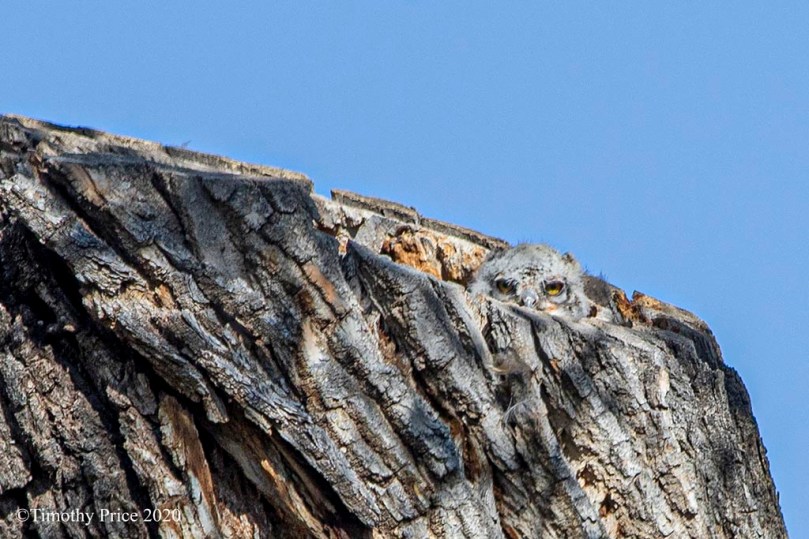
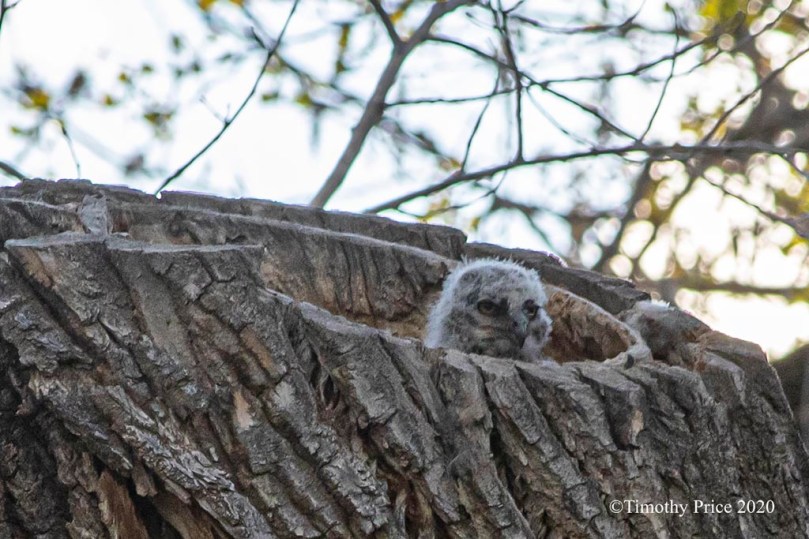
We went out to check on the owls yesterday morning, and one of at least two, but I’m guessing there are three, owlets popped his head up and said “Hello World!” Thus we start another season of “Watching the Owlets Grow.”

Loki and Lola were lounging on the bed. Loki was rolling around into different positions, grabbing Lola’s splint in between rolls.
Click on a photo in the tiled images below to enlarge the photo.




As I reported on March 22, 2020, Lola has degenerative arthritis in her paws, and it’s especially bad in her right paw where the bones have separated. She has been in three different splints over the past six weeks (we changed her splint every two weeks), with the hopes that the bones would fuse back together once her paw was stabilized by the splints. Today ended the 6th week. The vet took off Lola’s splint and x-rayed her paw. Unfortunately, Lola’s bones do not show any signs of fusing back together. Therefore, we decided to put another splint on her since she seems quite comfortable with her splints, and gets around very well with her leg splinted. Without the splint, she can hardly walk and she gets a lot of pain trying to walk on what amounts to a broken paw. Our vet is looking into other long term solutions for stabilizing Lola’s paw. Lola might end up being a bionic cat.
In case you missed the music video, Lola Limp, that I posted on March 22nd, I added it to the bottom of this post.


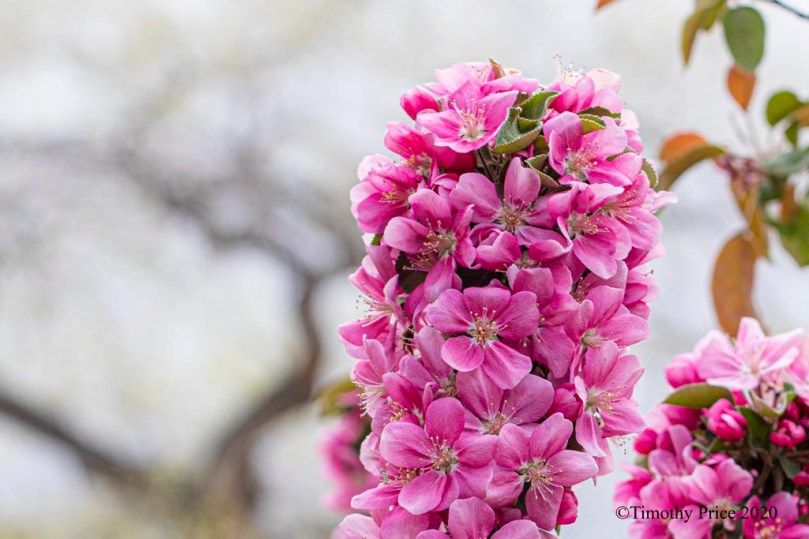
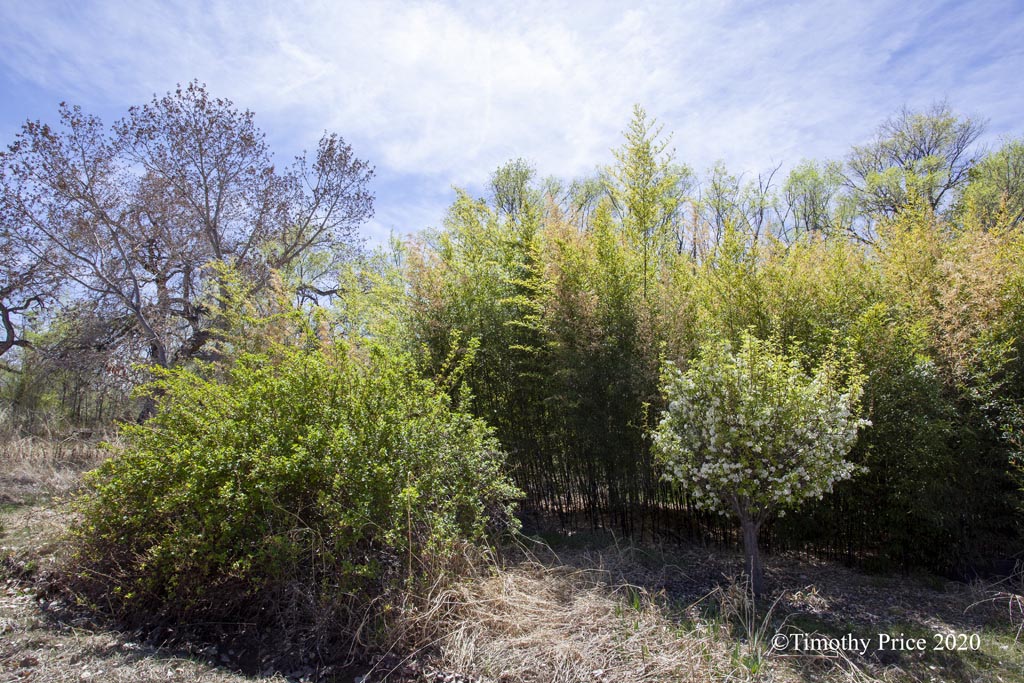
Marina at Marina Kanavaki, who is one of Resa’s Art Gown models, claimed our Pear Tree. The pear tree is hidden between our giant Dr. Huey on the left, other rose bushes on the right, and a wall of black bamboo behind it. After it blooms and leafs out fully, it blends in with the bamboo. Marina calls it her “incognito” tree. Although it looks like a small, tree it’s currently around 10 feet tall. It’s apical dominant, and before I pruned it into it’s ball shape in February, it was double it’s current height in the shape of a cone.


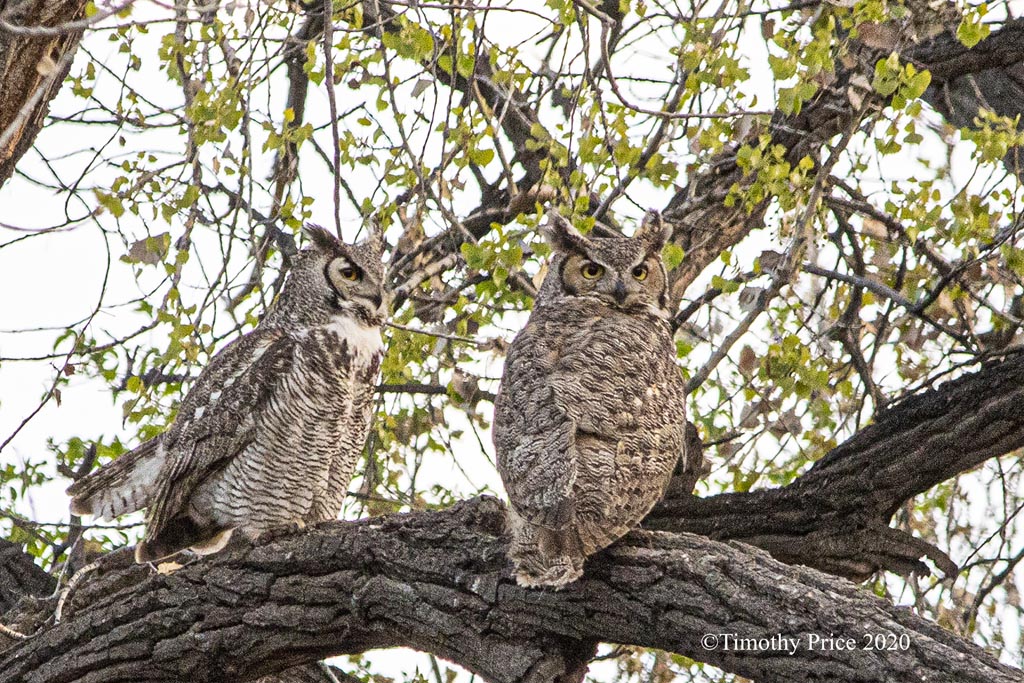
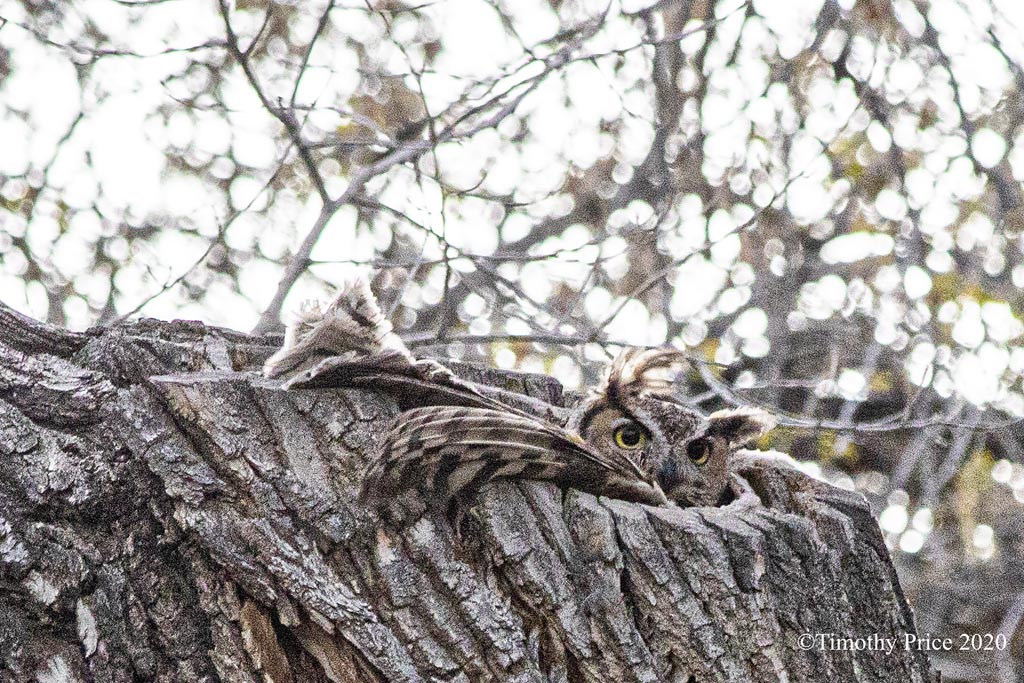
We walked down to check on the mama owl who’s been sitting in her nest for a little over a month. She and the daddy owl where sitting in a cottonwood across the irrigation ditch from their nest. Mr. Owl would hoot at Mrs. Owl and then she would peep. After he flew, I walked around to the other side of Mrs. Owl, and I could see she had something in the talons of her her left foot, but I could not make out what it was. She finally flew over to the nest and then we could see she had a gopher for her little ones. I expect we’ll start seeing the owlets poking their fuzzy heads up over the edge of the nest to look out at all the people standing on the ditch bank gawking at them in a couple of weeks.
Below is a short video of Mr. Owl hooting at Mrs. with wind and a pesky chainsaw in the background.
You can click on the photos in the group below to see each image enlarged:



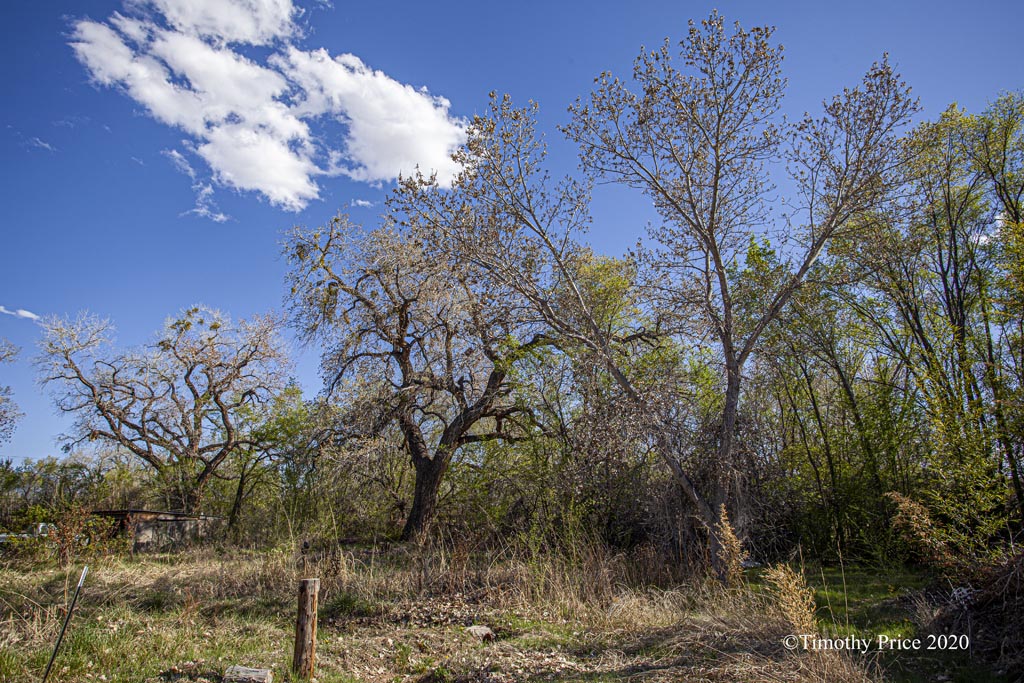
In keeping with the official New Mexican question, “Red or Green?”, cottonwood trees show their sex in red or green. Although New Mexico is a southwestern state, we have Eastern Cottonwood Trees. The catkins that form in early spring on Eastern Cottonwoods are red on male trees and green on female trees. The red catkins on male trees shrivel up and fall off as the male trees leaf out. Not much else happens to the male trees other than being tall, handsome, natural air-conditioners, and going through their normal seasonal cycles of sporting green leaves in summer, yellow leaves that turn brown in fall, and standing bare for a few months in winter before putting on catkins again in early spring.
The green catkins on the female trees turn into what we call “tatones”, shells where the cotton-like seeds forms. Around the end of June, into July, the green seedpods burst open and cottony seeds float off in search of a place to start new cottonwood trees. With the millions of cottony seeds floating around, like snowstorms in summertime, one would think we would be overrun with cottonwood trees. Cottonwoods need special conditions and flooding to propagate. With the levees and flood control dams built on the Rio Grande over the years, the conditions are not right for cottonwoods to easily propagate, so young cottonwoods are rare.
We have four males and four females on the property. Resa, Tiffany and Teagan have female trees and the one unclaimed cottonwood is female. Robin, Susan, Teagan, and Lavinia have male trees.


 Off Center & Not Even