Western Skies with Neowise

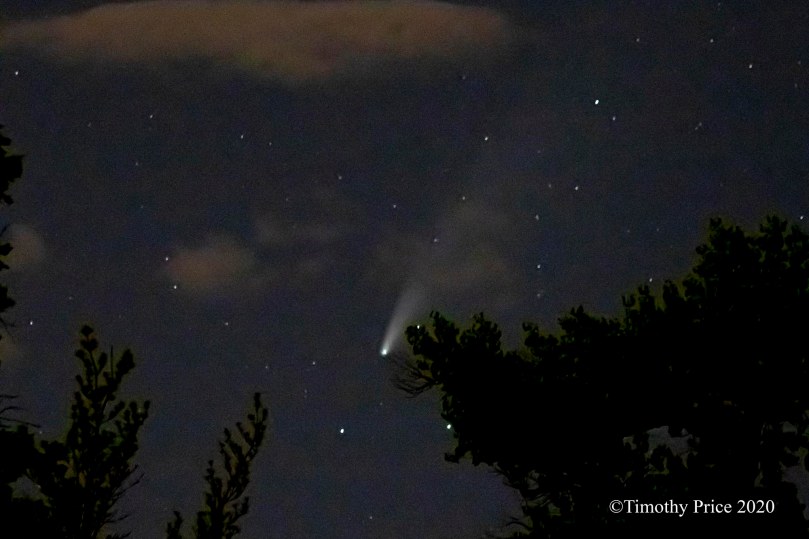
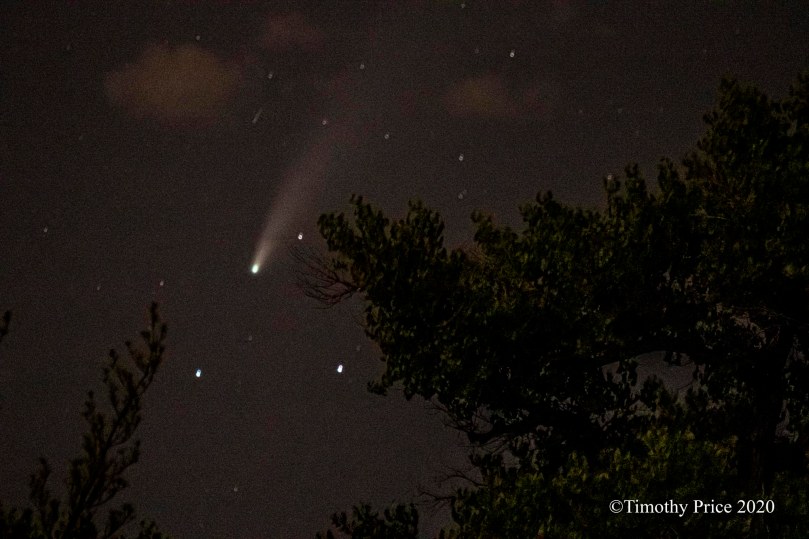
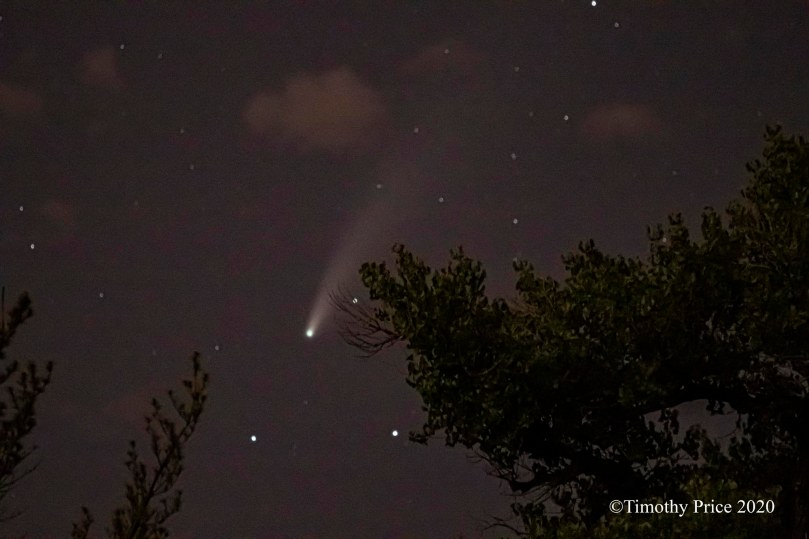
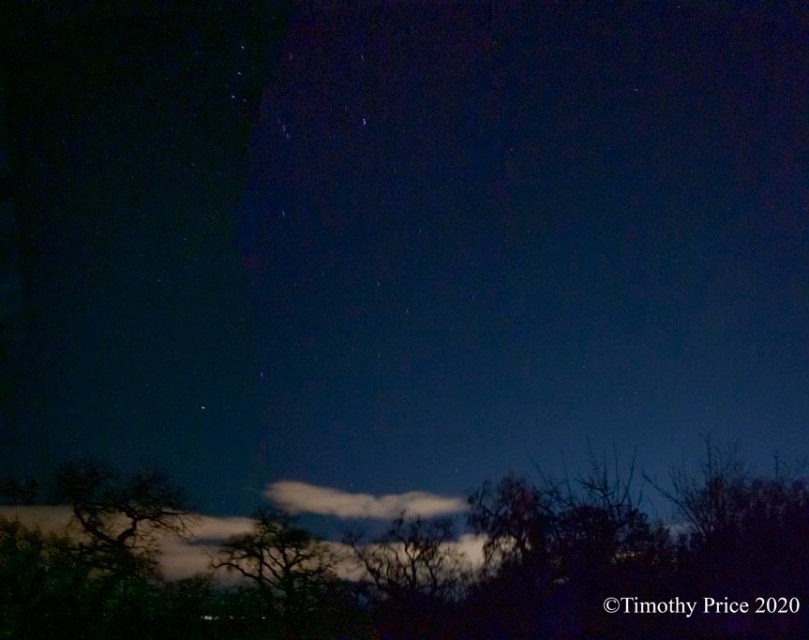
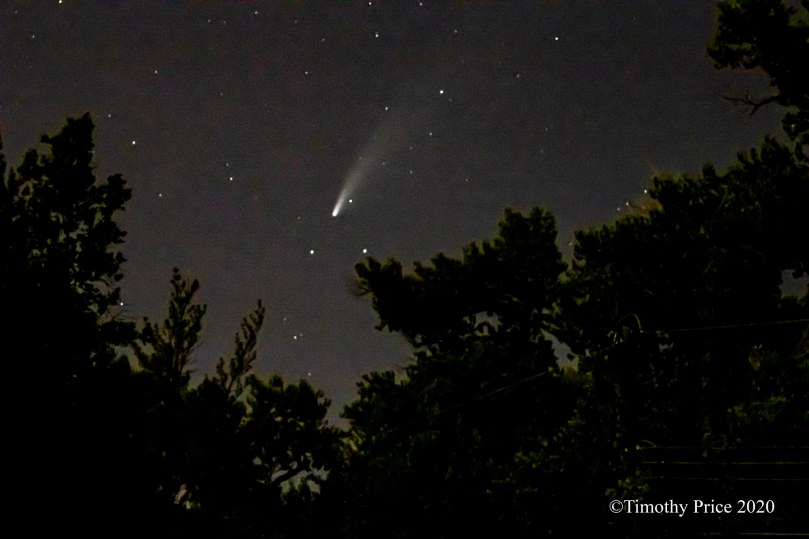
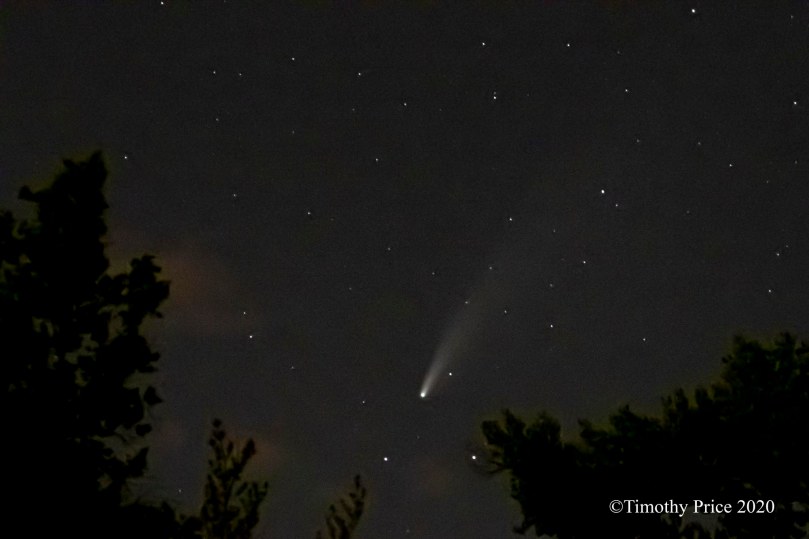
Tristan texted Laurie last night that she could see Neowise in the western sky. We went out to look, but we could not see it. I got the binoculars, and Laurie finally found it. It showed up very well in the binoculars. Tristan said it was directly below the bottom star in the big dipper. The comet makes up the apex on an equilateral triangle with two stars from Ursula Major, I believe. You can read more about how to see Neowise at https://www.nasa.gov/feature/how-to-see-comet-neowise/

I dragged out a tripod, got focused on the Big Dipper, turned off autofocus, pointed my leans in the general direction of the comet, and check shots until I saw it on the screen. There were clouds in the eastern skies that were reflecting the city’s light making it so we could not see the comet with our naked eyes. After we found where the comet was, focusing on it was a real challenge. I can’t simply set the lens on infinity and shoot like I could with the old manual focus lenses. These photos give you a decent idea of what it looked like.

Night Clouds

DSCF5131
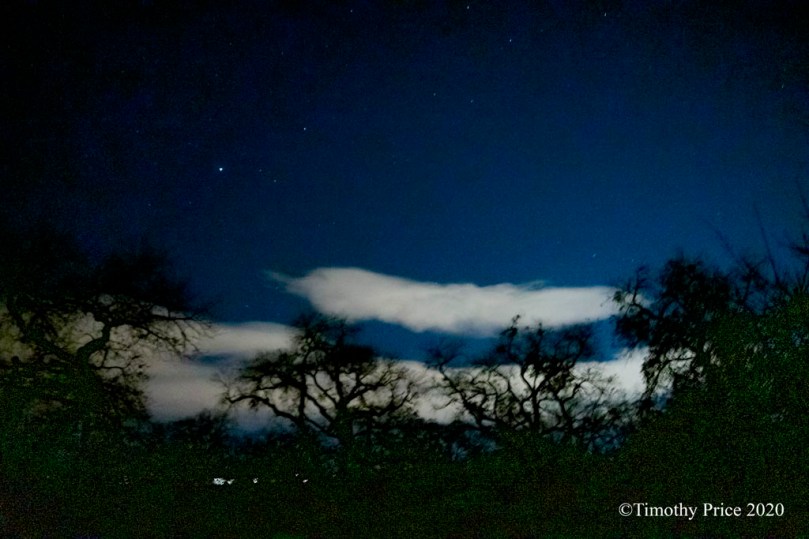
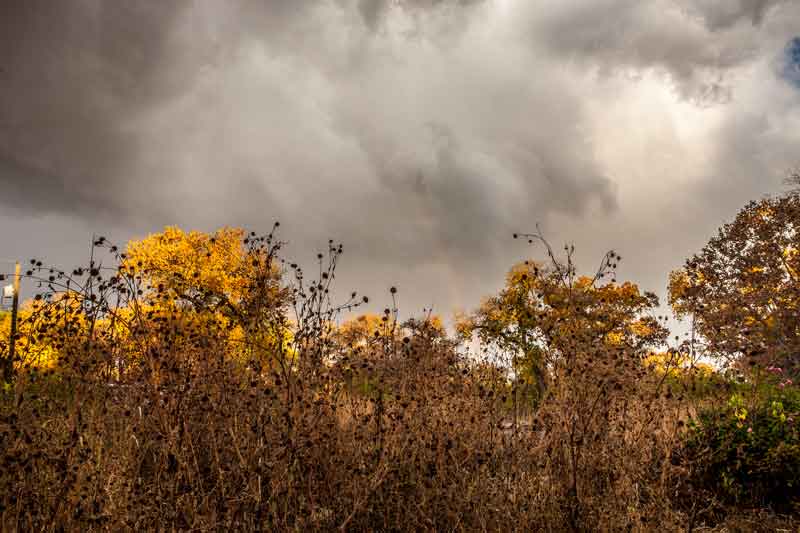
From left to right: Resa’s tree, Robin’s tree, unclaimed trees and Susan’s tree.

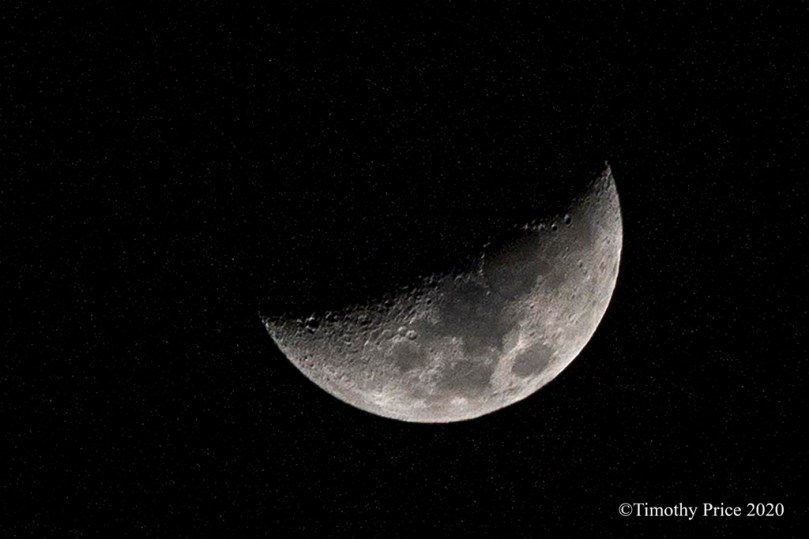
As Suzette was leaving after having black eyed peas for new year’s, she texted me that the clouds looked really cool behind the trees. I ran out and took photos. A third moon was hanging in the western sky.

0A6A7836

DSCF5134
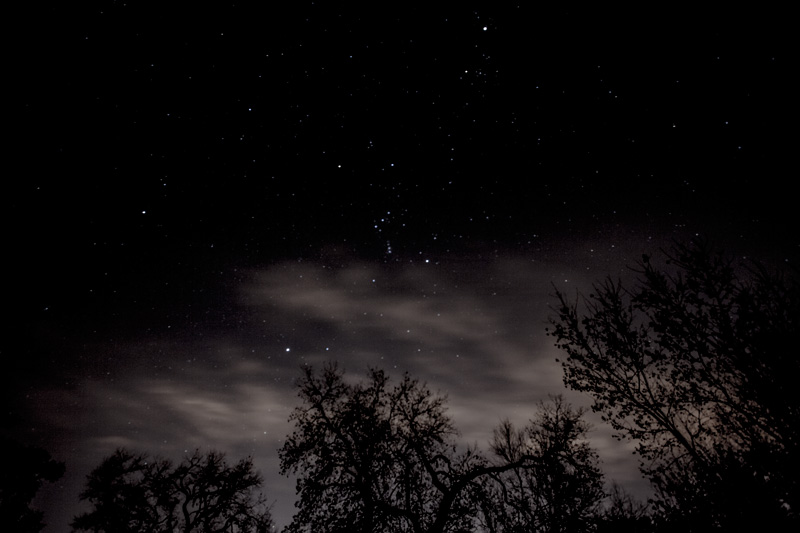
Orion’s Belt at that top of the photo.

Orion’s Belt

DSCF1697

Two o’clock in the morning and not a skunk, porcupine or raccoon in sight, so after turning in the irrigation water, I turned my camera toward the night sky. Photo stats — Camera: Fujifilm X-Pro 1. Support: hand held. Film speed: ISO 3200. Lens and aperture: 35mm at ƒ/1.4. Exposure: 1/4 second.

Bloody Moon Shot

45CU2858

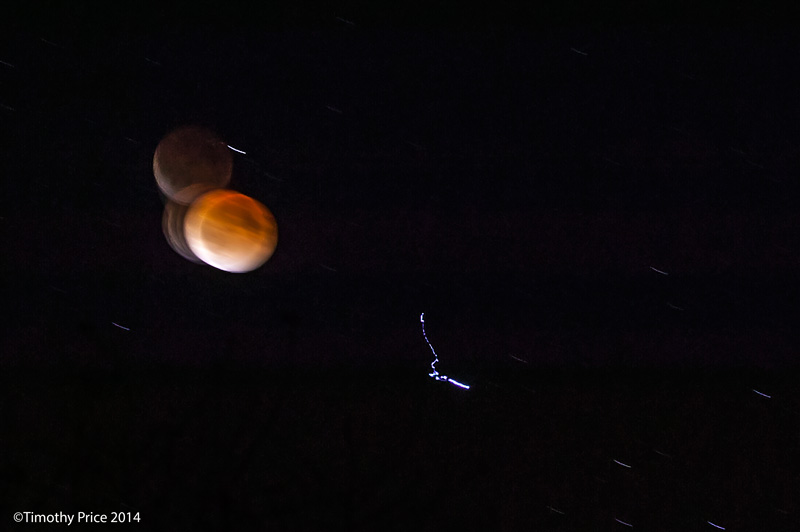
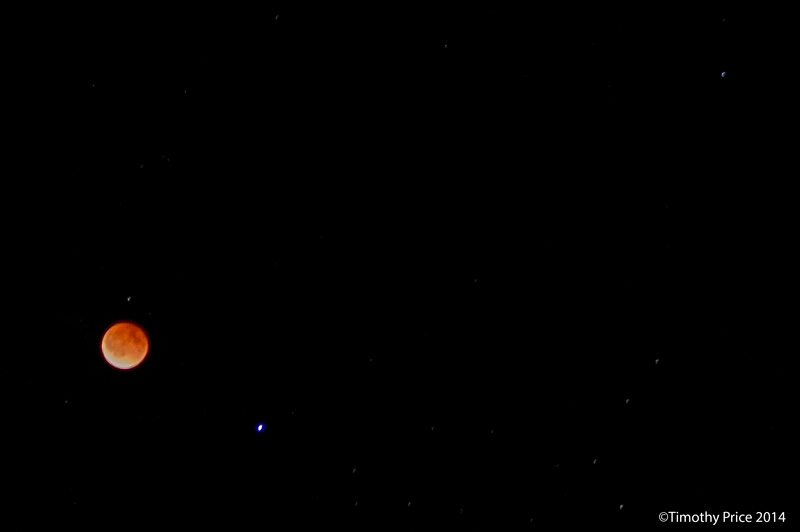
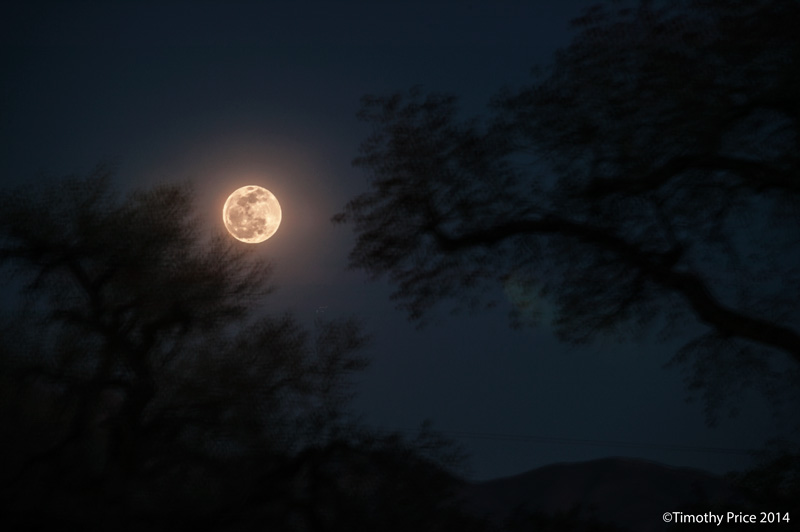
I woke up at 1:50 am, stumbled out of bed and checked the moon, which was bloody red. I grabbed my camera, ran outside into the sub-freezing, 20º F temperature, and took a few shots at the moon. The reflections off the filter on my lens, together with my state of being at 1:55 am produced some pretty funky photos of the full lunar eclipse in the wee hours of the morning. Earlier in the evening I had gone out and photographed the moonrise and got a decently clear closeup of the full moon.

DSCF9952


45CU2854


45CU2855

Moon, Clouds, Ring

Moon ƒ/5.6 at 15seconds

With an almost full moon and light cloud cover, there was a nice ring around the moon with the brighter stars visible through the clouds. Jupiter is shining bright at 1 o’clock, and Orion’s belt is barely visible between 3 and 4 o’clock. This series has three exposures take 3 minutes apart with a 17mm lens at ISO 400.

The first photo was taken at 7:27 pm MST (Mountain Standard Time) at ƒ/5.6 for 15 seconds. The clouds are slightly soft from their moving during the 15 second exposure.

The second photo was taken at 7:30 pm MST at ƒ/11 for 30 seconds. The clouds are softer, the moon appears smaller with a slight starburst.

The third photo was taken at 7:33 pm MST at ƒ/16 for 30 seconds. The moon appears to be even smaller, with a better defined starburst. More of the night sky comes through the clouds and if you look carefully, you will see the ghost of a contrail from a jet that flew below Jupiter and over the top of the moon during the exposure.

Moon ƒ/11 at 30seconds

Moon ƒ/16 at 30 seconds

Quadrantids Meteor Shower Fail

HeadingOutInCold

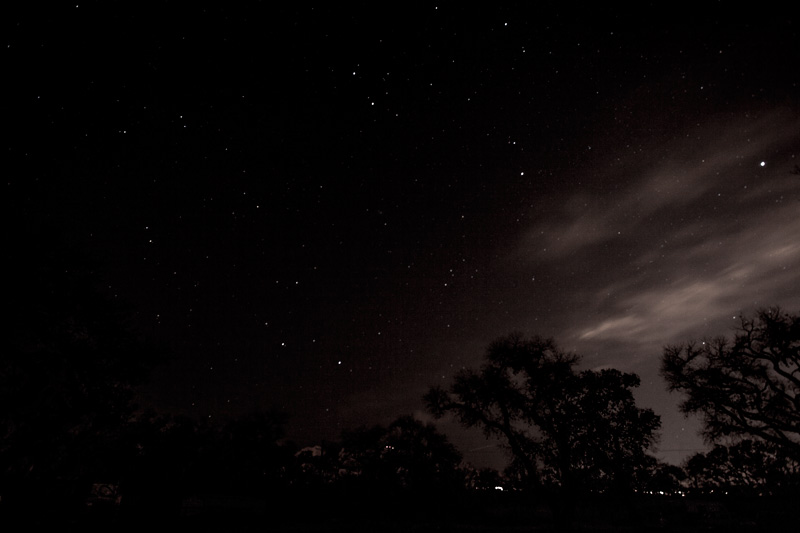
I got out my big tripod, got all bundled up, put on my 17-40mm super-wide angle lens, snapped a self portrait, and headed out into the sub-freezing temperatures to attempt to photograph the Quadrantids Meteor Shower last night starting at 9:30 pm, thinking I could get photos in the darkness before the moon came up at 11:00 pm. But when I got outside, I discovered there was a light cloud cover reflecting a lot of light off the city from the south, southeast. I followed the suggestions about how to photograph meteor showers on Spacedex.com’s Meteor Shower Guides, but it looks like I failed to capture anything but stars, planets and clouds. After an hour making exposures from different angles, I got pretty cold and went back inside. I woke up at 2:15 am, bundled up in the dark and went out the front door and tried some exposures from the front porch. The moon, at 65% full, was up to about 10 o’clock in the southeastern sky, so I made my exposures looking west and north. I got a nice shot of the Dig Dipper in the northern skies at 2:30 am, but again failed to get anything that looked like a meteors.

LookingStraightUp945pm
Looking straight up 9:45 pm
LookingStraightUp10pm
Looking straight up at 10:00 pm.
LookingEast1015pm
Looking East at 10:15 pm
LookingSouth1030pm
Looking South at 10:30 pm.
LookingWest225am
Looking West at 2:25 am.
LookingNorth230am
Looking North 2:30 am. The big dipper is in the center.