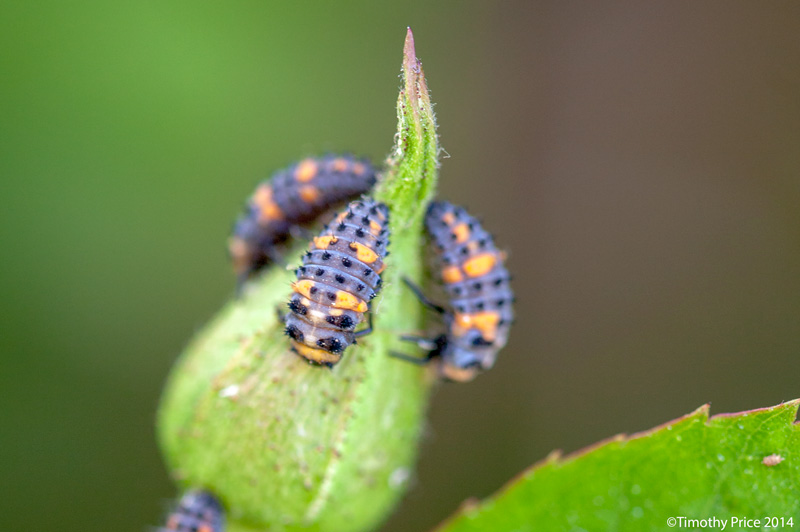
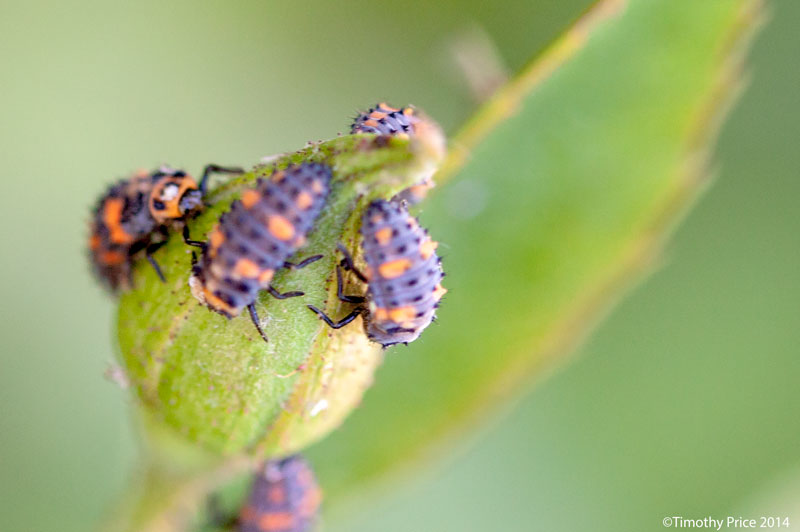
Remarkable shots and we learned somethingâ¦didnât know those guys were lady bug larvaâ¦didnât know they ate aphidsâ¦wonder if we have any. Gorgeous Tim!! P.
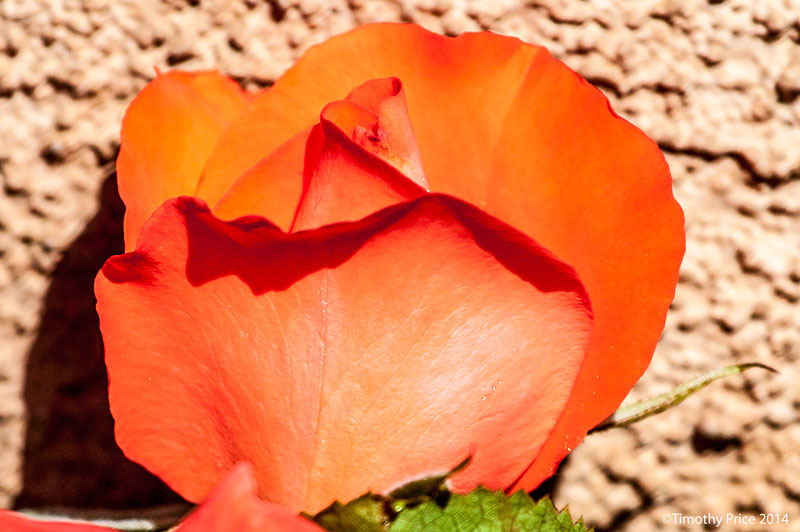
Beautiful photos! Love the closeups of the ladybug larvae. Gorgeous roses! All of ours died back to the roots this winter as we had a long spell of unusual single digit weather here up here in Oregon’s Cascade foothills They are coming back up from the roots, but they all made it. I guess we will find out soon enough which ones were grafted rootstock. A few have buds now.
Thanks, Lavinia! This is the first year since 2005 that we have not had hard frosts (so far anyway) that turned our rose canes black, down to the bud unions. It’s also the first year in the same period the wisteria didn’t get zapped by late frost. If we don’t get our usual late May early June hard frost, we might even get fruit this year.
In 2005 we had a very late, very hard frost that out right killed over 76 rose bushes in one rose bed alone. Many of those were rose bushes on their own roots. We’ve discovered over the years that J&P bare root roses and the David Austin roses have been the most durable in the face of cold winters and late frosts.
We also have a giant Dr Huey that actually blooms two, sometime three times every year. Because Corrales gets late frosts, you see lots of Dr. Huey’s blooming along Corrales road every June. I named Dr. Huey the patron rose on Corrales;)



 Off Center & Not Even
Remarkable shots and we learned somethingâ¦didnât know those guys were lady bug larvaâ¦didnât know they ate aphidsâ¦wonder if we have any. Gorgeous Tim!! P.
Ladybugs and their larvae are one of our main pest controls since we don’t spray our roses.
Beautiful pictures.
Thanks!
Wow,… i Love it ❤ beautiful color Timothy
Thanks, Leyla!
Beautiful photos! Love the closeups of the ladybug larvae. Gorgeous roses! All of ours died back to the roots this winter as we had a long spell of unusual single digit weather here up here in Oregon’s Cascade foothills They are coming back up from the roots, but they all made it. I guess we will find out soon enough which ones were grafted rootstock. A few have buds now.
Thanks, Lavinia! This is the first year since 2005 that we have not had hard frosts (so far anyway) that turned our rose canes black, down to the bud unions. It’s also the first year in the same period the wisteria didn’t get zapped by late frost. If we don’t get our usual late May early June hard frost, we might even get fruit this year.
In 2005 we had a very late, very hard frost that out right killed over 76 rose bushes in one rose bed alone. Many of those were rose bushes on their own roots. We’ve discovered over the years that J&P bare root roses and the David Austin roses have been the most durable in the face of cold winters and late frosts.
We also have a giant Dr Huey that actually blooms two, sometime three times every year. Because Corrales gets late frosts, you see lots of Dr. Huey’s blooming along Corrales road every June. I named Dr. Huey the patron rose on Corrales;)
As always, very beautiful photos! I liked the ‘Ladybug larvae’ shots…
Thanks, Herman!
Amazing pics of busy bugs….also lovely roses..
You learn something new everyday! Icky larvae turn into adorable Ladybugs. Great shots!
Thanks!
Great images, as usual! (Freeze warning for the metro tonight. 😦 )
Thanks, Susan.