Spunk Approves

Murder over the bosque

Lavinia asked if I had used a telescope to photograph the moon last night. Lavinia never lets me down on being observant and asking questions when something seems different like a whole lot of detail in the moon photo. As I answered her, I did not use a telescope, I used a 400mm lens that is equivalent to a 640mm lens on my Canon 7D Mark II body. I have been considering getting a long telephoto lens for quite some time.

I was originally looking at the Canon 100-400mm lens, which is one of Canon’s best telephoto zoom lenses for mere mortal photographers, such as myself. However, the 100-400mm lens is ƒ/4.5 to ƒ/5.6, which is a little slow for as much low light photography as I do. I really needed a faster telephoto lens. I seriously considered both the Canon 400mm ƒ/2.8 and the Canon 300mm ƒ/2.8 lenses. The problem with those lenses for me is their weight. The Canon 400mm ƒ/2.8 weighs in at 12 pounds, and the 300mm ƒ/2.8 weighs 6 pounds, 1/2 the weight of the 400mm ƒ/2.8, but still a heavy lens.

I ended up compromising on speed for lighter weight and bought a 400mm ƒ/4.0 DO lens with Refractive Optics, which enables Canon to put a 400mm ƒ/4.0 lens in the same body as the 300mm ƒ/2.8 lens, shaving 2 pounds off the weight in the process. At 4 pounds, the 400mm ƒ/4.0 DO is easy to handle, and fast enough to get decent images hand held in low light. In the photos of the owls below, we could only see outlines of the owls with our bare eyes like in the first photo, but not nearly as close up. The new lens is able to focus on the owls in relative darkness, through the branches and get an amazing amount of detail.

Spunk loves my new lens

Preening

Spunk’s a lens hugger

Intermission photographed using a Fuji XE-1 with 27mm ƒ/2.8 lens

“Who are you calling a ‘lens hugger?’ Stupid Paparazzo!”

RAW image of the owls before I cropped the image and adjusted the exposure, contrast, color balance, etc.

“Oh my! The paparazzo found us again.”

Mirroring

The streak photographed using a Canon 5Ds with a Canon 70-200mm ƒ/4.0 lens

A little over half a moon on 01/21/21


Crane Dance

Sunset on the Sandias with cranes in the foreground from Southbend.

Just after sunrise one of the cranes made quite a show of dancing for another crane. There are 21 photos in the sequence with three intermissions. At the end of the post, I included an animated GIF that shows the crane dance in motion.

Quarter moon at sunset.

Daddy Owl slept through the show.

Afterglow

“It looks like the wind is blowing in a nice afterglow tonight.” Wise words Daddy Owl.

Crows on the crow highway.

Ducks basking in the afterglow.

Cranes, ducks, and geese enjoying the glow.

More crows heading south.

Sandias catching the afterglow long after sundown.

Clouds from the bosque view.

My New Ax

Surprise! I’ll bet you thought my new Ax was going to be a new guitar? As you can see below it’s a real Ax for chopping down trees. Laurie asked me why I got a chopping ax instead of a splitting ax? It’s pretty simple: like a Lumberjack, I chop down trees.

My new ax is made by Husqvarna, and it’s a solid, heavy-duty ax.

Mama Owl and Daddy Owl are still hanging in the tree across the irrigation ditch from where they have nested for the past four years.

Like a Lumberjack, I felled two elm trees in a matter of minutes with my new ax.

Crane looking for a morsel before going to bed.

Remember Monty Python’s The Lumberjack Song?

EEK!

“EEK! A mouse!” “Nice jump Dude!”

“That was close.”

“I’m not impressed.”

Intermission

“Did someone say ‘Mouse’?”

“Meh!”

“False Alarm!”

The excitement in the Rio Grande and bosque this evening. Cranes and owls. Spunk and Sasha had to comment.

Lovers in Lace

Mama Owl and Daddy Owl in a lacy cottonwood tree. January 3, 2021.

Lovers in Lace
Lyrics & Music by Timothy Price
Guitars, Bass, and Percussion: Timothy Price

Lovers in Lace is another new, original song that is very different from Memories that I posted yesterday. Imagine yourself in the low light of a smokey bar gazing into your lover’s eyes with Lovers in Lace playing in the background.

Jupiter peeping through a tree. Saturn is barely peeking through where the lower branches meet the lacy edge of the Elm trees. January 3, 2021.

Spunk

Travel Photo Challenge Day 5 Birds Birds Birds

I’m a Bald Eagle and I approve this post.

I took a break from putting this post together to go out a see what was going on in the bosque and river. A Bald Eagle flew over in approval of this post. The clouds approved also, forming a pterodactyl being chased by a chimera.

My photographer of the day is Lukas Kondraciuk with Through Open Lens at https://throughopenlens.com/. Lukas does wonderful bird photographs, tells really bad jokes, and always has interesting facts about whatever he posts.

Pterodactyl and Chimera in the clouds.

Jupiter with 3 clear moons and maybe one faint moon, and a moon peeking out from behind Jupiter on the top right. Saturn is slowly diverging, moving further away each night.

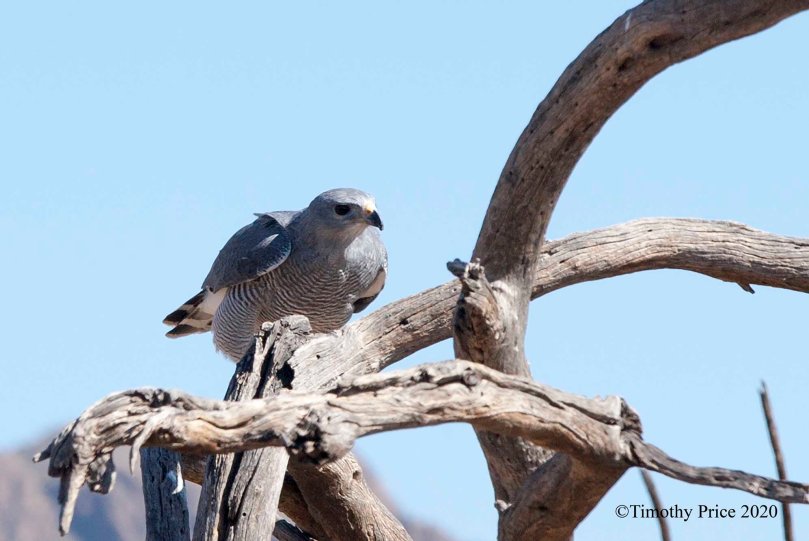
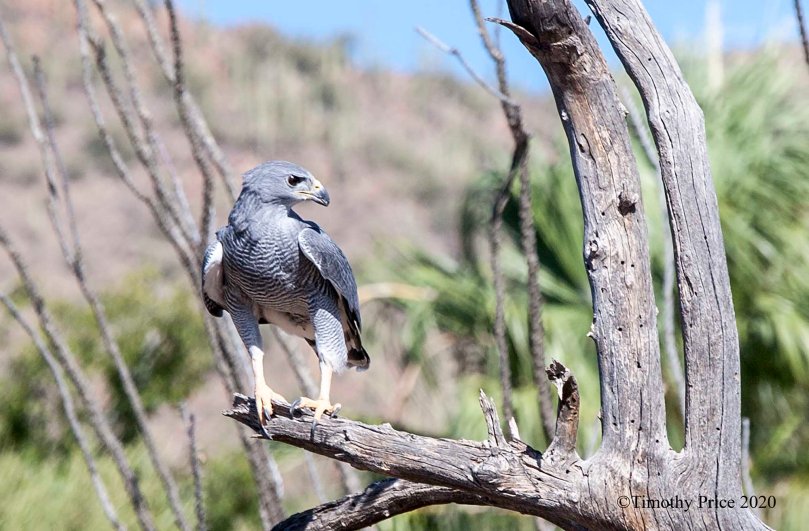
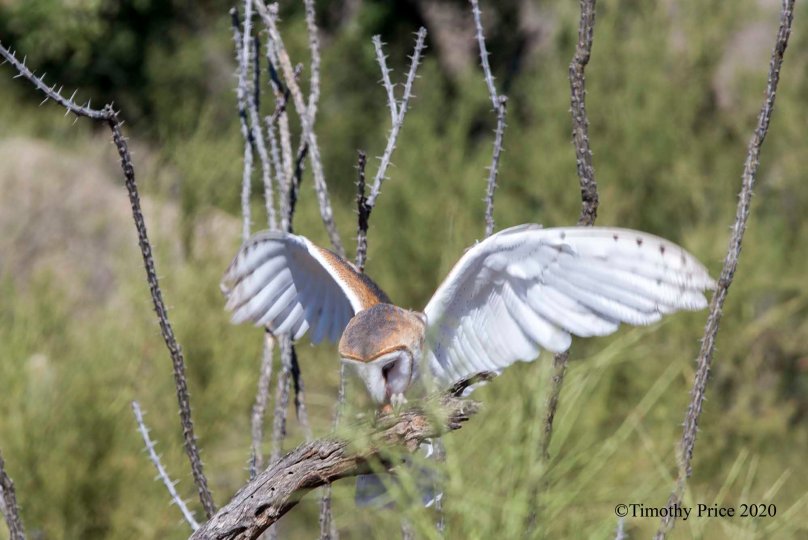
For Day 5 of the Travel Photo Challenge, I present you with a whole bunch of photos of a Gray Hawk, a Barn Owl, and a group of Harris Hawks. In October 2017, we drove to Tucson for a Linguistics conference. On the way home, we stopped by the Arizona-Sonora Desert Museum. The museum has a raptor free-flight exhibit, which we happened to be just in time for.

Gray Hawk, also known as the Mexican goshawk.

When Barney the Barn Owl flew out of the aviary, all the crowd went “Aaahhh! How cute!” He is certainly adorable. He flew silently between perches entertaining his adoring crowd.

The stars of the show we experienced were the Harris Hawks. Four Harris Hawks performed for the finale of the free-flight show. Harris Hawks have made a regional adaptation to the harsh conditions in the Sonoran Desert by hunting in groups. The Sonoran Desert is the only place that Harris Hawks have been observed hunting and working together in groups. Their distribution in the US is limited to southern Arizona, southeastern New Mexico, and southwest Texas. Their larger distribution is throughout most of Mexico, the west coast of Central America, and the lower elevations of South America. Free flight shows are great for photographing these raptors because they are close enough to get a lot of detail and action shots.