Travel Photo Challenge Day 5 Birds Birds Birds

I’m a Bald Eagle and I approve this post.

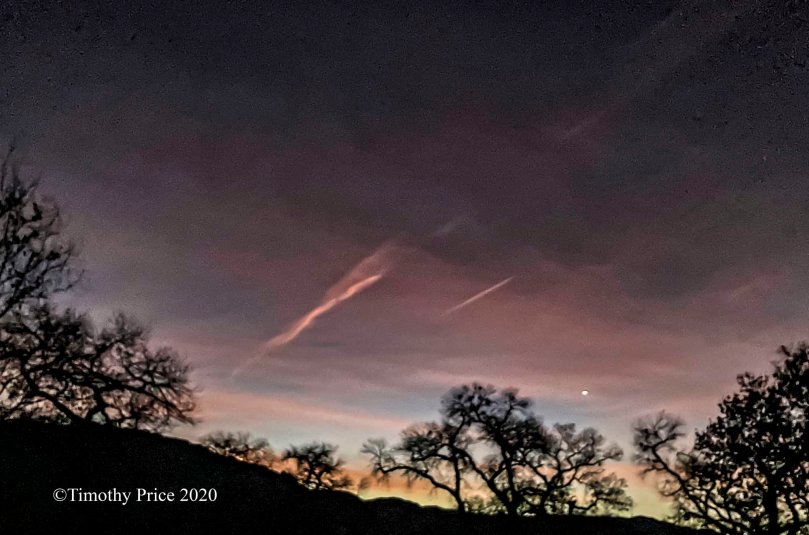
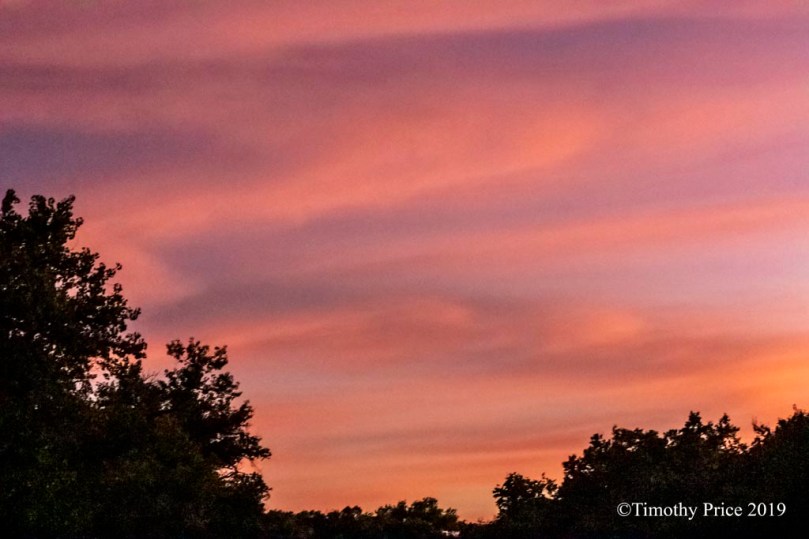
I took a break from putting this post together to go out a see what was going on in the bosque and river. A Bald Eagle flew over in approval of this post. The clouds approved also, forming a pterodactyl being chased by a chimera.

My photographer of the day is Lukas Kondraciuk with Through Open Lens at https://throughopenlens.com/. Lukas does wonderful bird photographs, tells really bad jokes, and always has interesting facts about whatever he posts.

Pterodactyl and Chimera in the clouds.

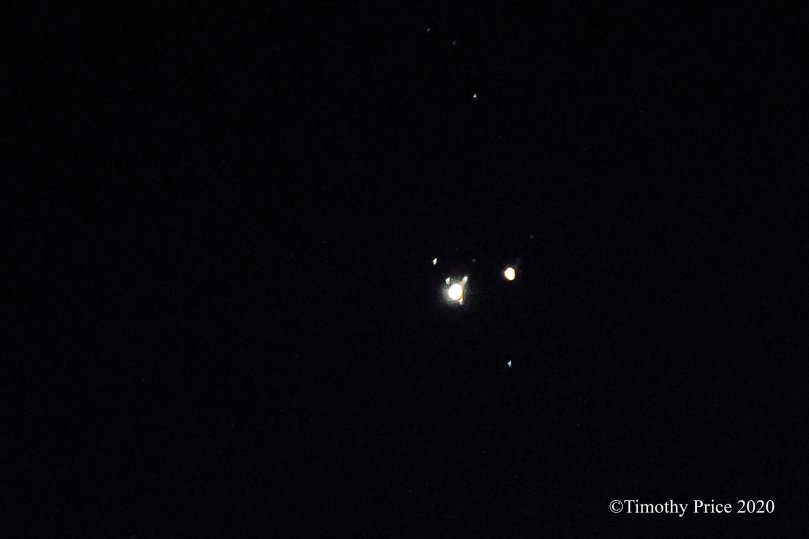
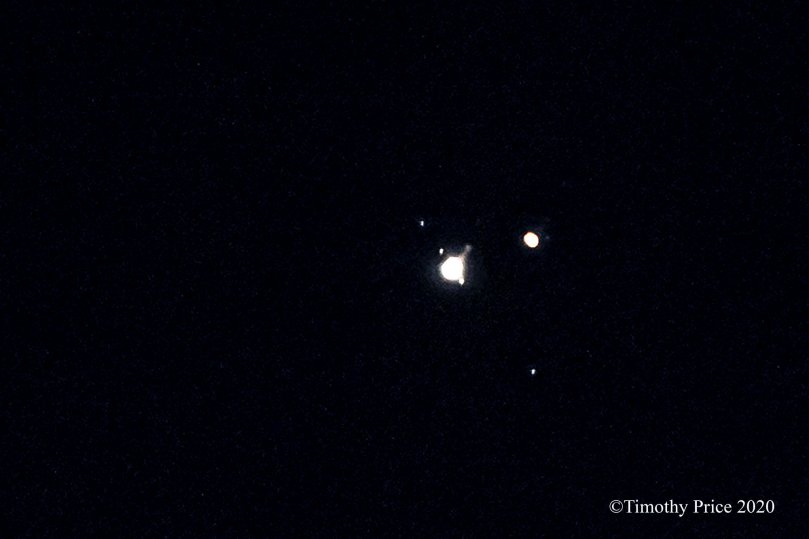
Jupiter with 3 clear moons and maybe one faint moon, and a moon peeking out from behind Jupiter on the top right. Saturn is slowly diverging, moving further away each night.

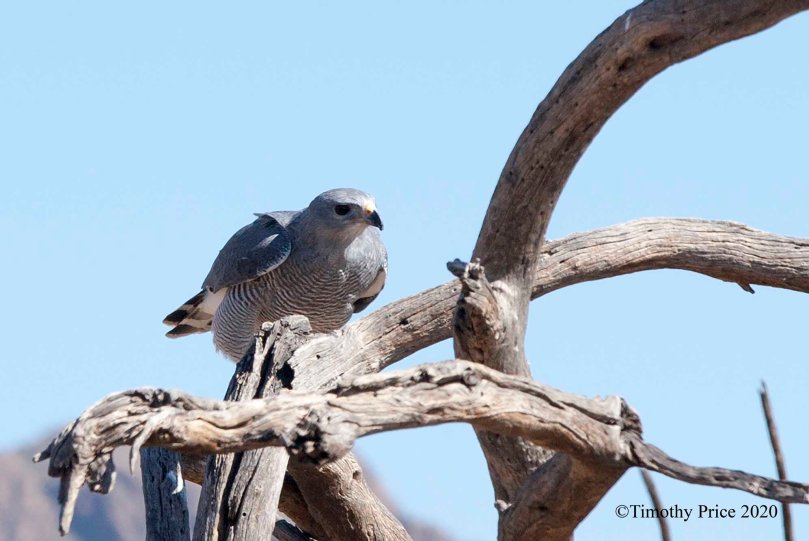
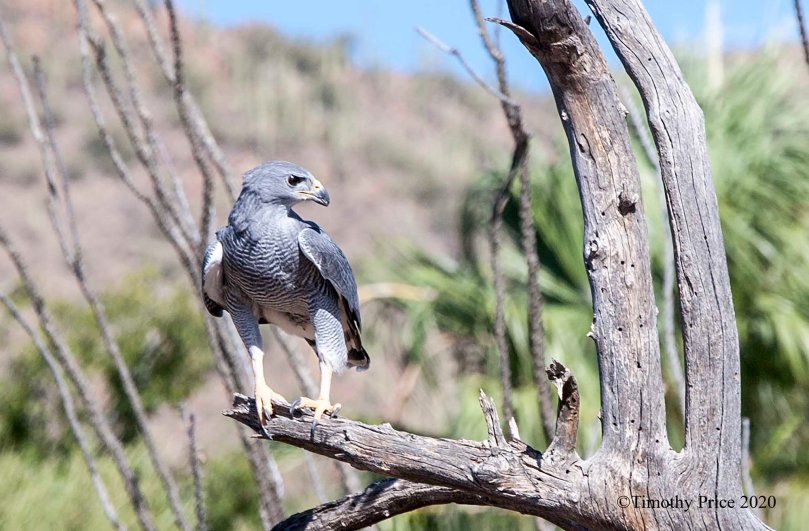
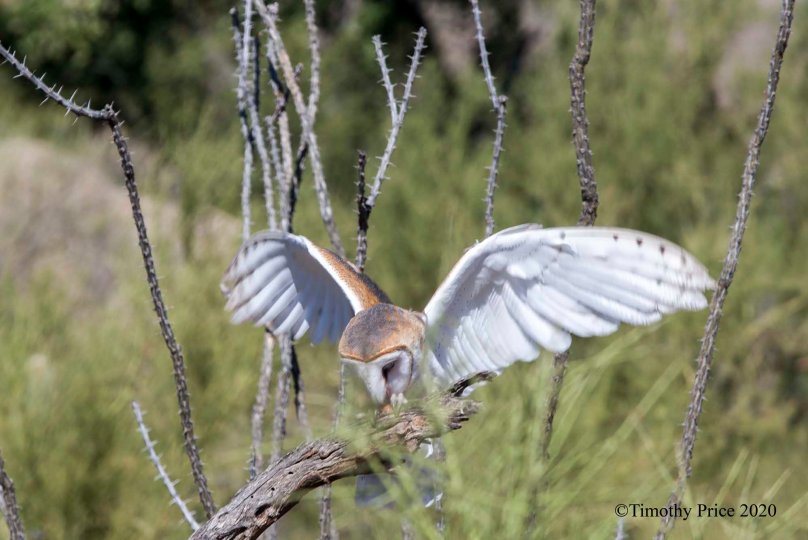
For Day 5 of the Travel Photo Challenge, I present you with a whole bunch of photos of a Gray Hawk, a Barn Owl, and a group of Harris Hawks. In October 2017, we drove to Tucson for a Linguistics conference. On the way home, we stopped by the Arizona-Sonora Desert Museum. The museum has a raptor free-flight exhibit, which we happened to be just in time for.

Gray Hawk, also known as the Mexican goshawk.

When Barney the Barn Owl flew out of the aviary, all the crowd went “Aaahhh! How cute!” He is certainly adorable. He flew silently between perches entertaining his adoring crowd.

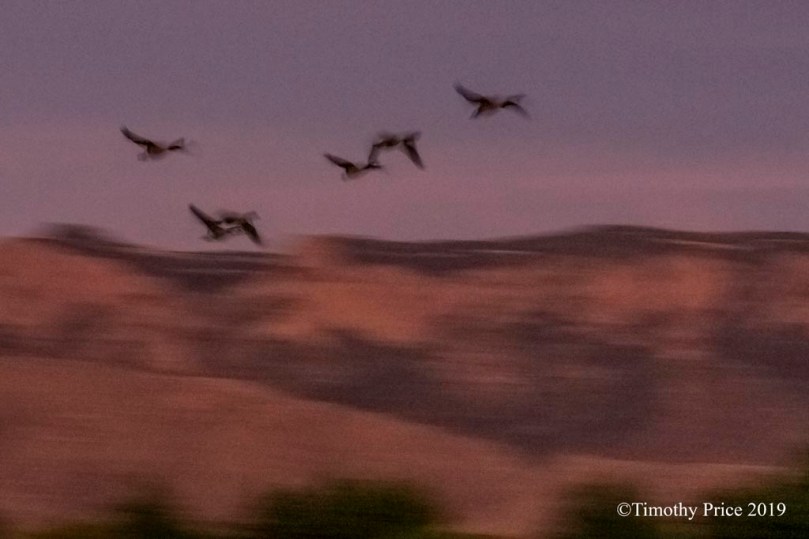
The stars of the show we experienced were the Harris Hawks. Four Harris Hawks performed for the finale of the free-flight show. Harris Hawks have made a regional adaptation to the harsh conditions in the Sonoran Desert by hunting in groups. The Sonoran Desert is the only place that Harris Hawks have been observed hunting and working together in groups. Their distribution in the US is limited to southern Arizona, southeastern New Mexico, and southwest Texas. Their larger distribution is throughout most of Mexico, the west coast of Central America, and the lower elevations of South America. Free flight shows are great for photographing these raptors because they are close enough to get a lot of detail and action shots.


Travel Photo Challenge Day 4 Christmas And The Continental Divide

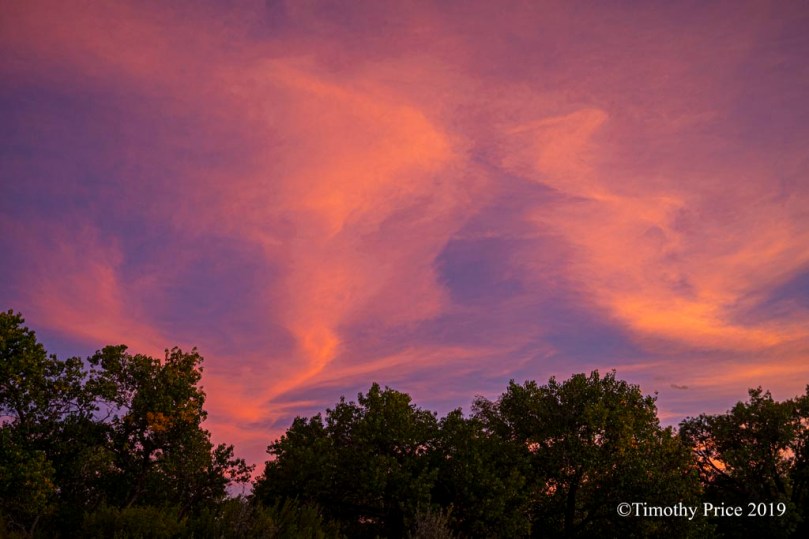
Christmas 2020 sunset

One reason I don’t generally do photo challenges is that life in real-time is so much more interesting than the challenges. For Day 4 of the Travel Photo Challenge, I am starting off with four photos that are less than four hours old from when I took them to when I’m posting them. To help maintain proper social distancing, and keep things nice and airy, we celebrated Christmas with family outside this afternoon. We had two fire pits and two space heaters spread out to keep us warm.

I’m not featuring another photography today, I will resume with a featured photographer tomorrow. My Day 4 Travel Photography is from December 2009 when Laurie and I hiked on a short portion of the Continental Divide Trail west of Cuba, New Mexico.

The landscape was not as exciting as the badlands, except we could see Cabazon looking to the southeast. Cabazon is the largest of 50 volcanic formations in the Rio Puerco valley between the Jemez Mountains to the northeast and Mount Taylor to the southwest. Mount Tayler is a large volcano that stands at 11,305 ft (3,446 m) above sea level. Jemez Mountains has Valle Grande, a large 13.7-mile (22.0 km) wide volcanic caldera with a high point at 11,253-foot (3,430 m) above sea level. Cabazon stands 1,100 feet above the valley floor. The top of Cabazon is 8,000 feet above Sea Level.

The Continental Divide Trail is a 3100 mi (4989 km) trail between Chihuahua and Alberta. The continental divide snakes its way up the western side of New Mexico, through Colorado, heads northwest across Wyoming, along the border between Idaho and Montana, and then up the western edge of Montana. Runoff and rivers on the western side of the continental divide flow into the Pacific Ocean. Runoff and rivers on the eastern side of the continental divide flow into the Atlantic Ocean.

We celebrated Christmas outside and kept warm with fire pits and space heaters.

A Christmas bunny dropped by to wish us seasons greetings.

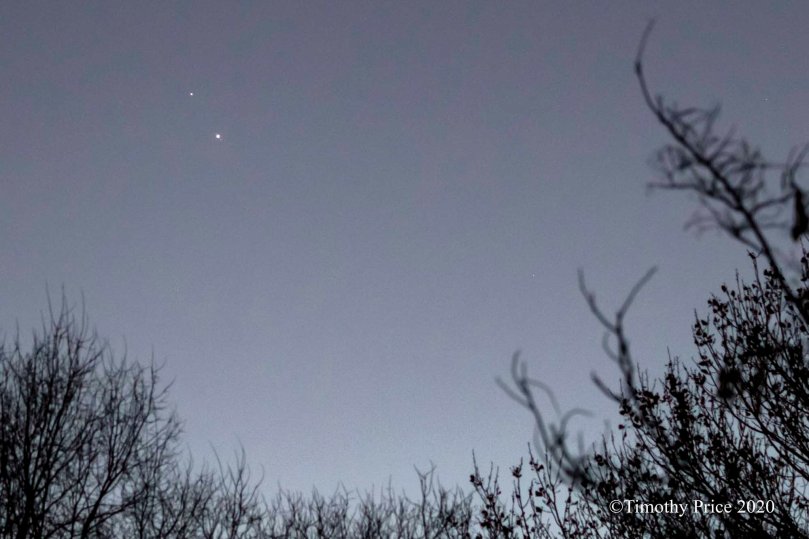
Jupiter & Saturn on December 25, 2020.

Looking SE from the Continental Divide Trail at Cabazon and another large volcanic plug in the distance. December 2009.

Travel Photo Challenge Day 3 Badlands

Merry Christmas! Resa’s Tree over the casita around Christmastime in 2004.trees

My photographer for Day 3 is Randall who has Global Sojourns Photography at https://dalocollis.com/. Randall is a fantastic photographer and an excellent writer who combines philosophy with his travel photography.

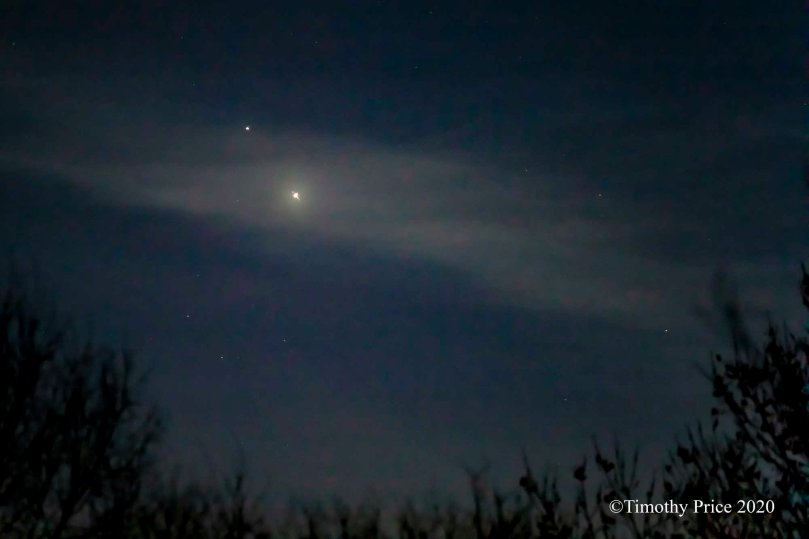
Jupiter and Saturn shining through a thin layer of clouds on Christmas Eve, 2020.

Day 3 is a series of photos from the De Na Zin Wilderness area south of Farmington, New Mexico. On our way back from the Native Plant Society conference in 2008, many of the participants stopped by the badlands. While most of the group was looking at plants, I and another photographer were occupied with the landscapes. We got separated from the group several times. In this area, which is part of the Bisti Badlands, there are whole petrified trees, hoodoos (formations that were platforms for trees), fossils, and well-sculpted barren landscapes.


Travel Photo Challenge Day 2 Mesa Verde

Saturn is slowly making a circle around Jupiter. December 23, 2020.

My favorite photographer for today is Julie at Frog Pond Farm, https://frogpondfarm.co.nz/, in Waimauku, West Auckland, Newzealand. I have followed Julie for many years. She is a lovely person, a successful farmer, and a wonderful photographer. Frog Pond Farm is about as close to paradise as one can get.

For day 2 of the travel photo challenge, I present you with a lot of photos of Mesa Verde National Park in southwestern Colorado near the New Mexican border. We went to a Native Plant Society convention in August 2008 in Farmington, New Mexico near the four corners where New Mexico, Colorado, Arizona, and Utah meet. The session we had signed up for was canceled at the last minute, so we drove up to Mesa Verde and spent a wet afternoon exploring the cliff dwellings. If you are afraid of heights, cliffs, steep climbs, and sheer drops, then Mesa Verde is not a place you want to visit.

The introduction on the Nationa Park Service website reads: “Mesa Verde National Park was established in 1906 to preserve and interpret the archeological heritage of the Ancestral Pueblo people who made it their home for over 700 years, from 600 to 1300 CE. Today, the park protects nearly 5,000 known archeological sites, including 600 cliff dwellings. These sites are some of the most notable and best preserved in the United States.” See https://www.nps.gov/meve/index.htm.


OLYMPUS DIGITAL CAMERA

Happy Solstice & Conjunction

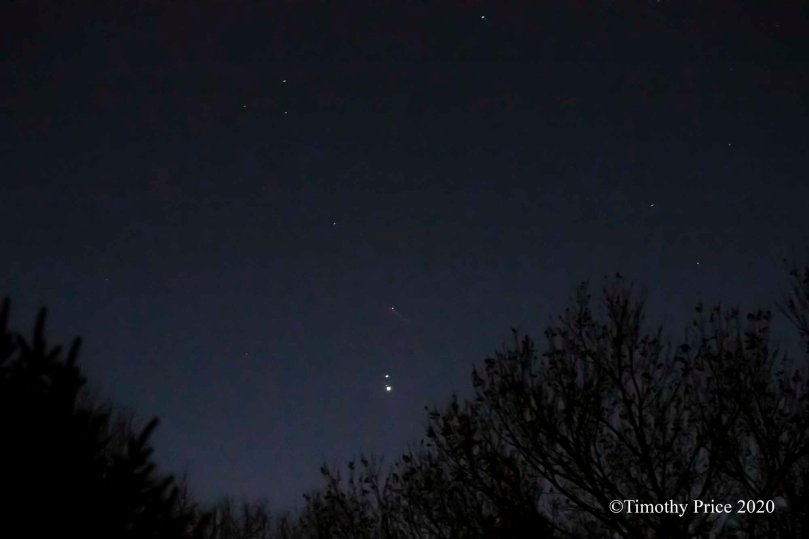
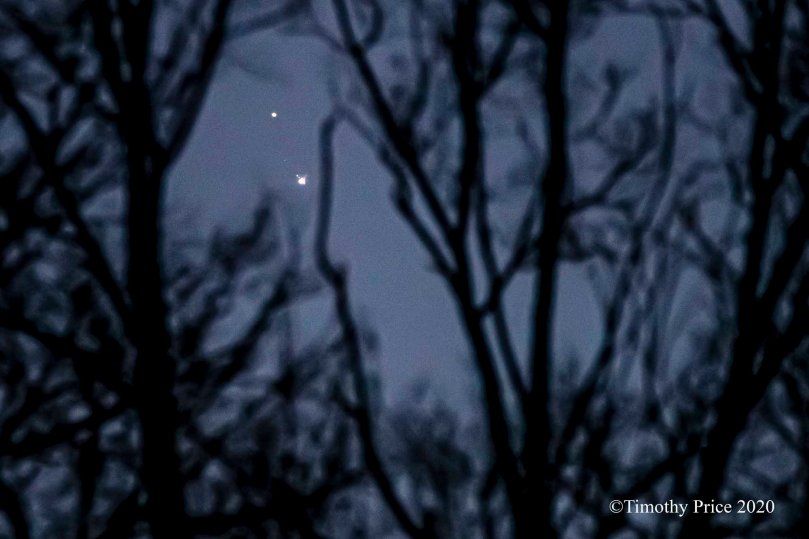
Jupiter & Saturn in the trees at 6:45 pm. That’s about as close to looking like one star from my view-point.

Sahsa was looking for the conjunction but said all she could see was the ceiling. Silly Kitty.

Jupiter & Saturn at 6:40 pm.

This is the best shot I got of Jupiter & Saturn with 4 of Jupiter’s moons. I believe the light on the lower right is a star.

Another shot a little closer.

Twelve Hours

6:00 am. Venus rising in the dark at dawn.

Glenda looking cool on top of an armario at noon.

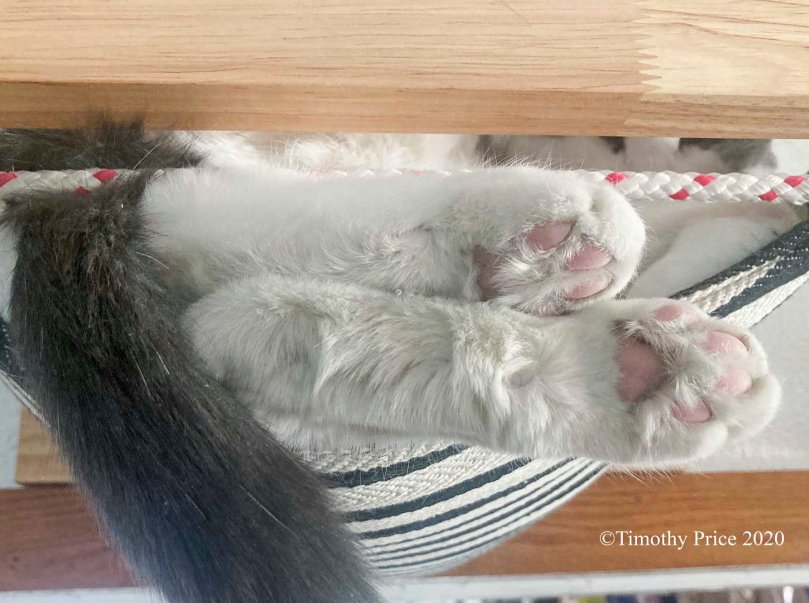
Sasha napping at noon in the new hammock that replaced one of the worn-out burlap hammocks.

6:00 pm Saturn and Jupiter closing in on each other.

A closer view of Saturn and Jupiter at 6:00 pm. The lights coming off at an angle from Jupiter might be a few of its 79 moons.

The Wilds

Wild moon

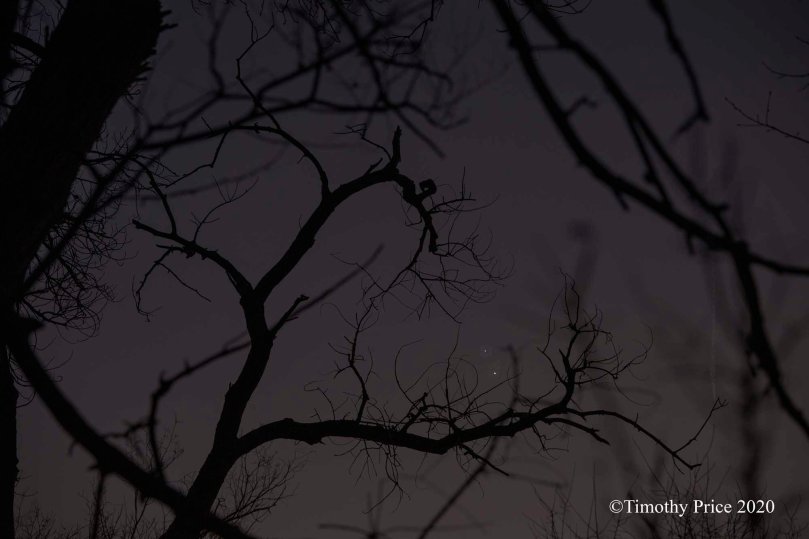
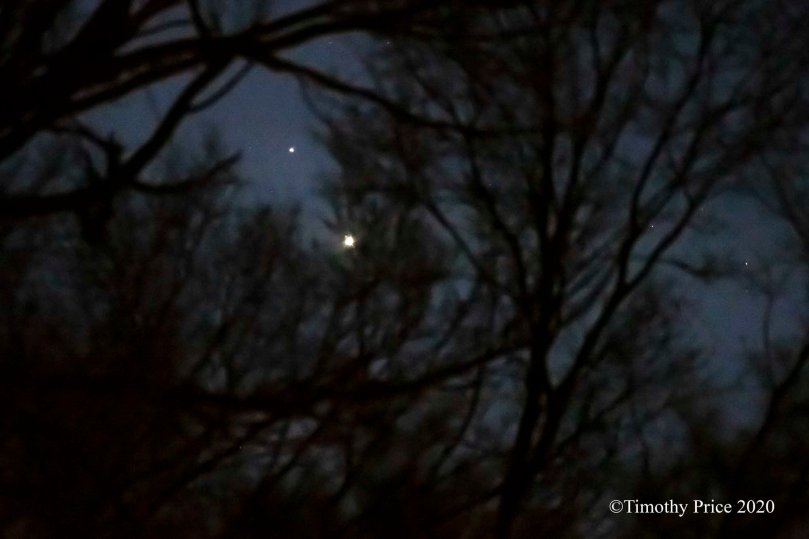
Saturn & Jupiter in the Tangle Heart Tree. I had to get way back into the wilds of the dark bosque with coyotes and chupacabras nipping at my heels to get the shot.

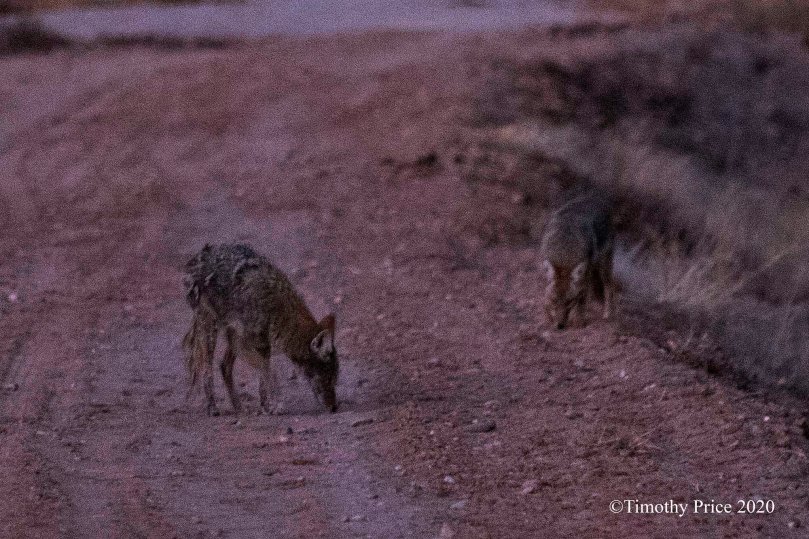
I made my way back onto the levy at the same time as the coyotes.

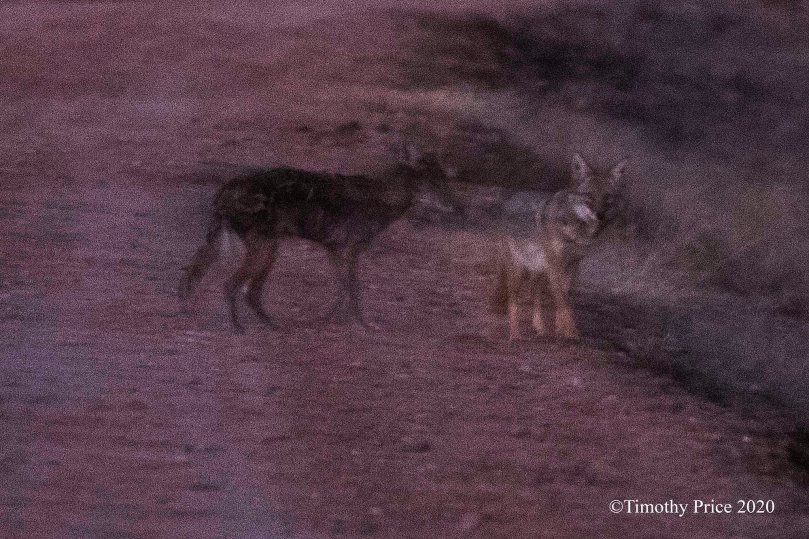
There were two of them and they paid little attention to me even though we were close to each other. After I lightened up the photo, I could see the coyote on the left had a bad case of mange.

I started walking towards the coyotes. They took one last look before they scurried into the bosque.

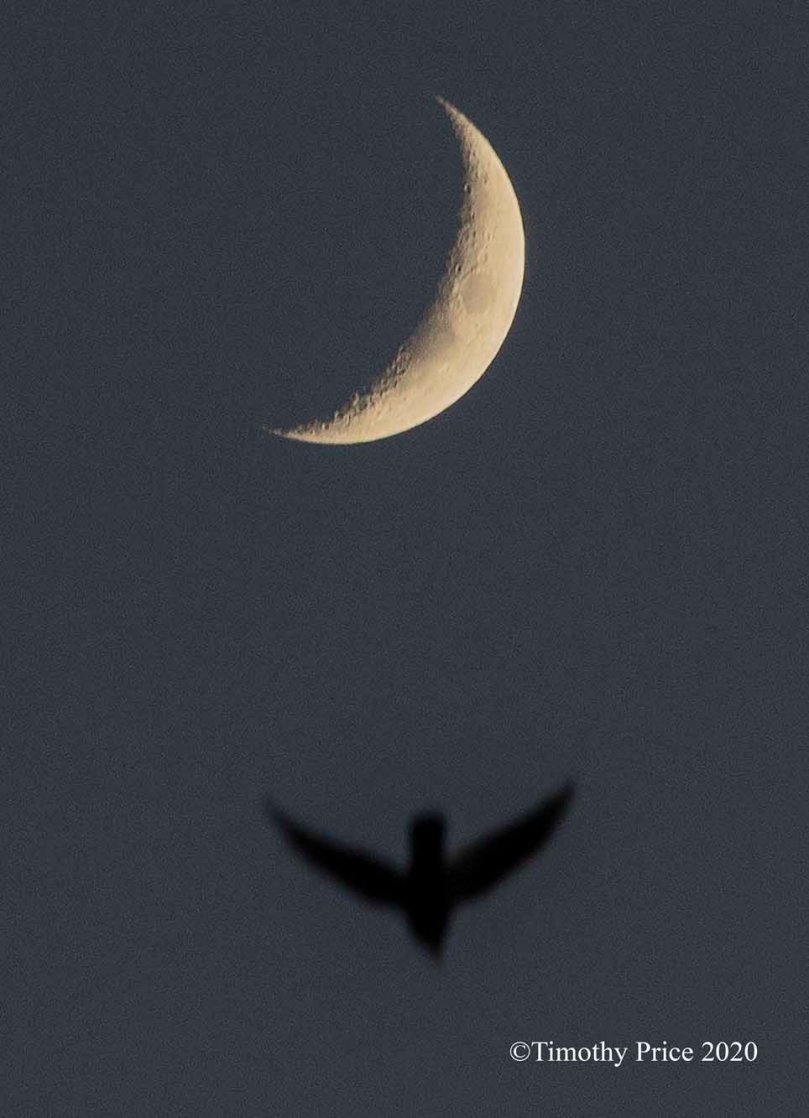
Crow flying under the quarter moon.

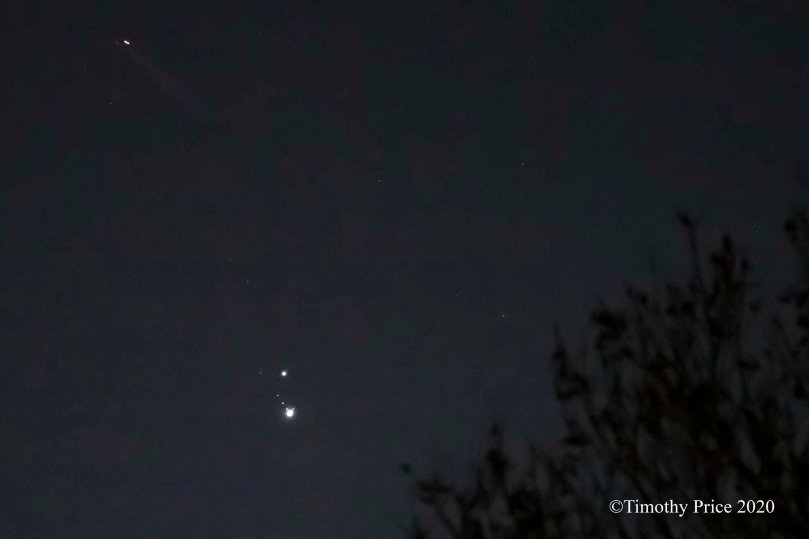
Saturn and Jupiter through the trees. They are supposed to conjoin in three days.


Closer and Closer

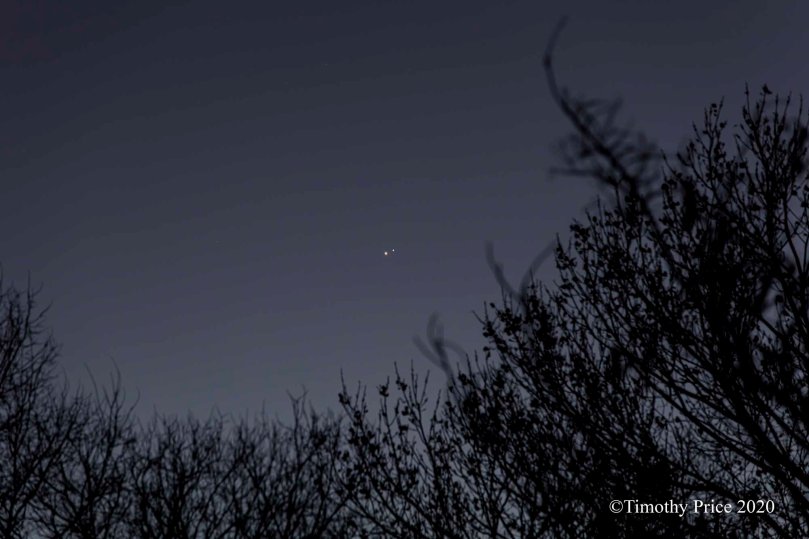
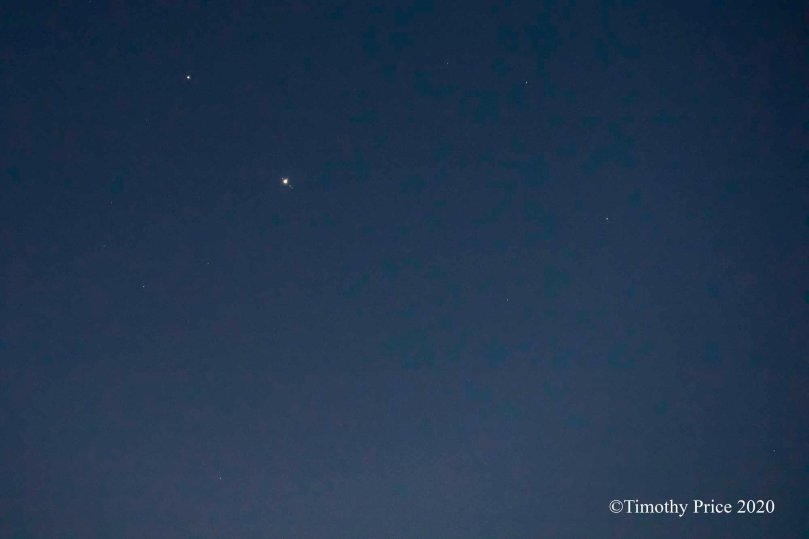
Saturn and Jupiter on December 7th.

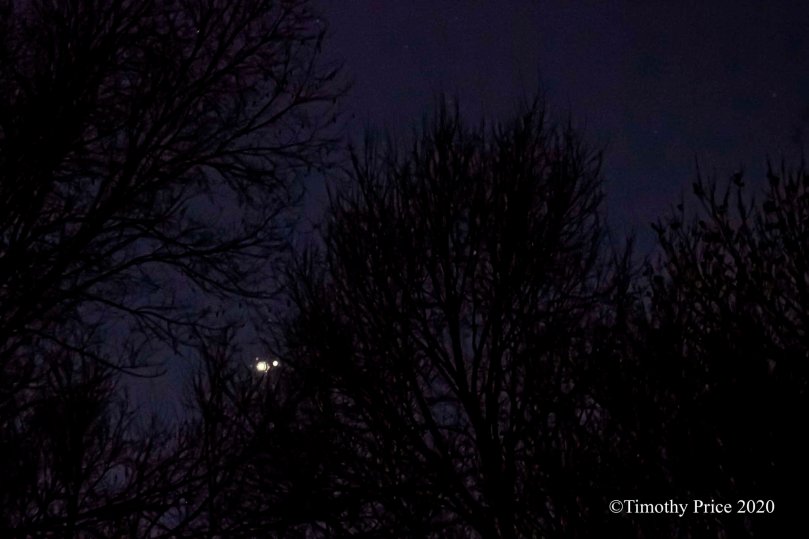
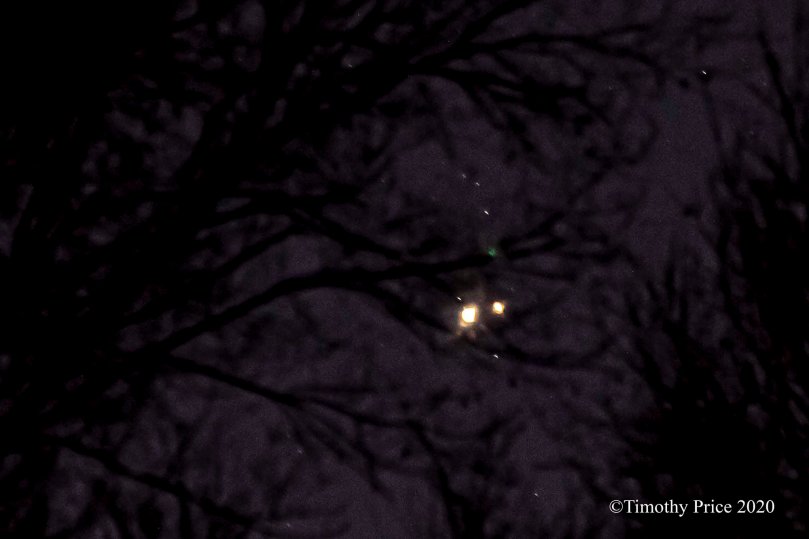
I wanted to photograph Saturn and Jupiter every night in December, but so far between cloudy skies and getting out too late because I was doing other things and missed the narrow window between when it’s dark enough to see them and when they disappear behind the trees, I photographed them on the 7th, 8th, 12th, 13th, and 15th. Five out of 15 nights is not my best, not my best at all. They are converging, and currently, the forecast is for clear skies on Monday when Saturn and Jupiter conjoin. I’ll see if the forecast is correct, and I’m planning on photographing them every night for the next six nights.

Saturn and Jupiter on December 8th. Saturn and Jupiter in the trees on December 12th.Saturn and Jupiter on December 13th. Saturn and Jupiter on December 15th.