


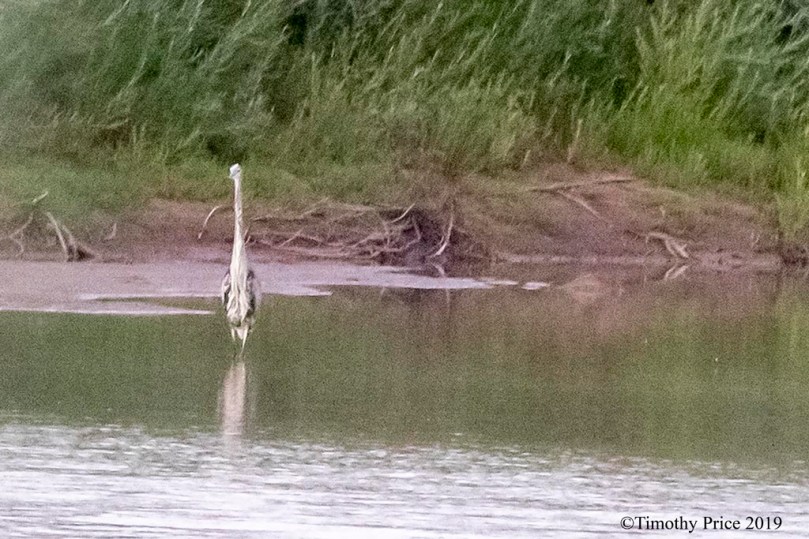
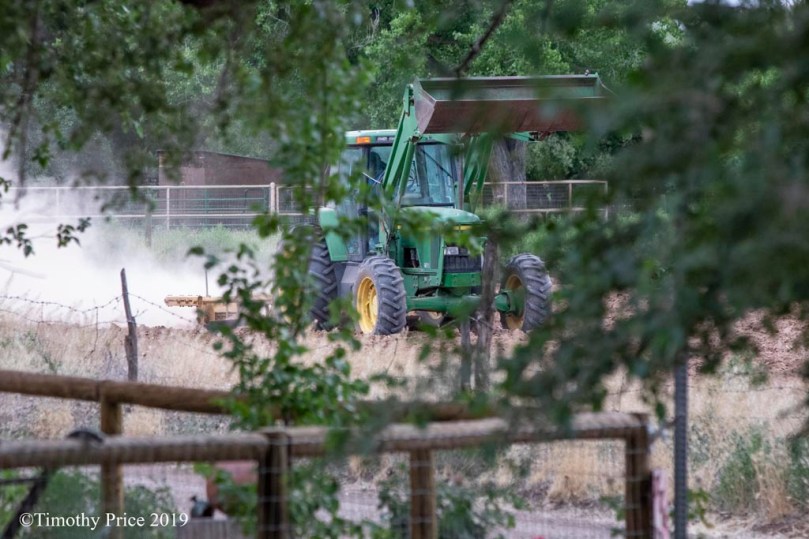
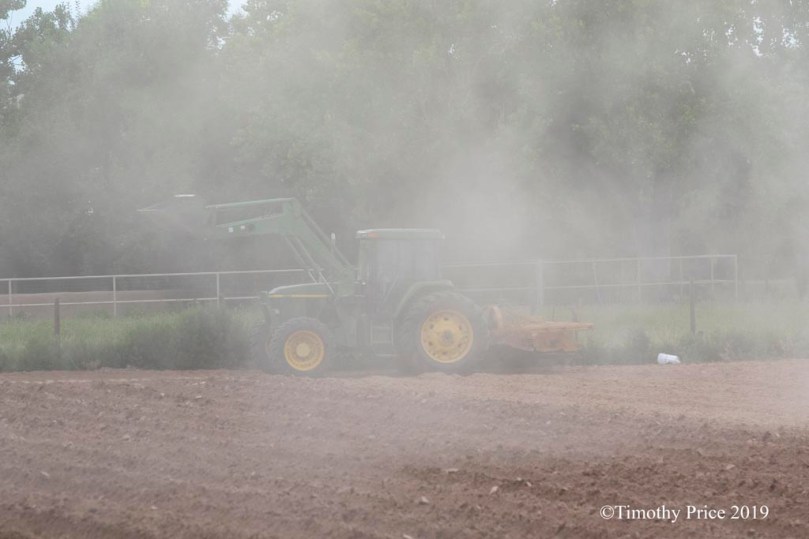
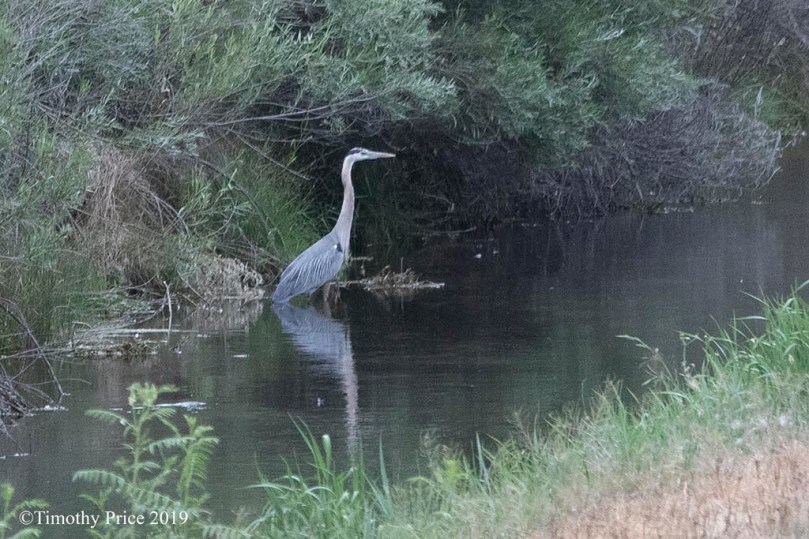
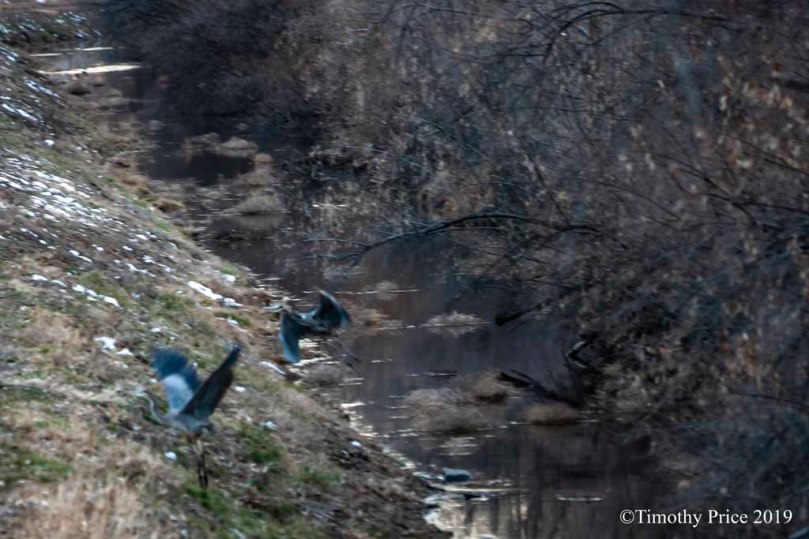
A tractor was out plowing a field and making lots of dust in the cool of the evening. The wind blew the dust over the clearwater ditch and into the bosque. Mr pT, a pterodactyl formerly known as a Great blue Heron, was wading in the clearwater ditch, took flight, and flew through the dust into the bosque.
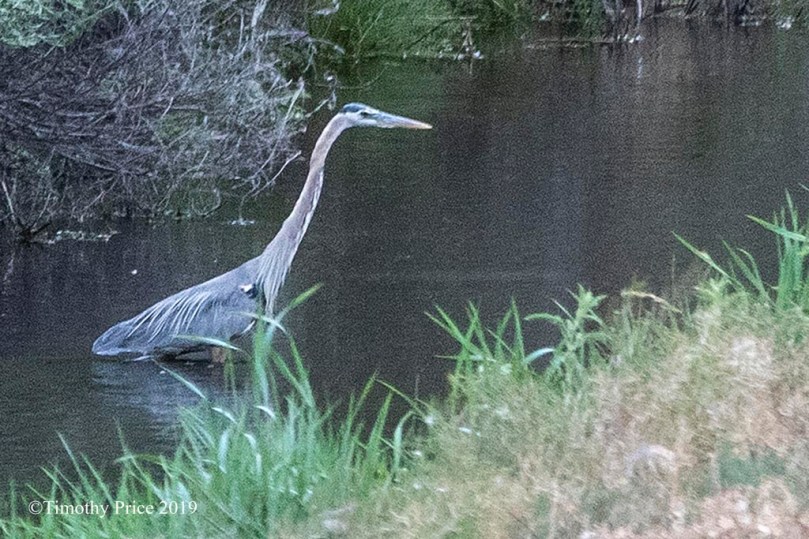
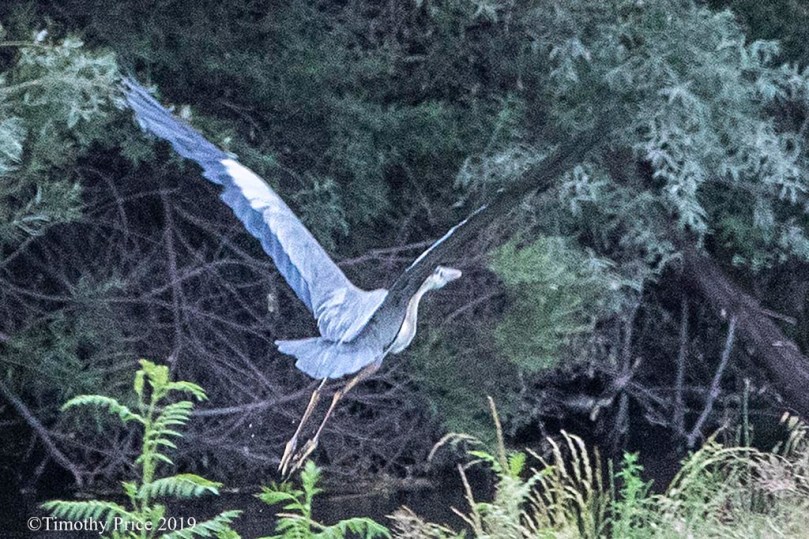
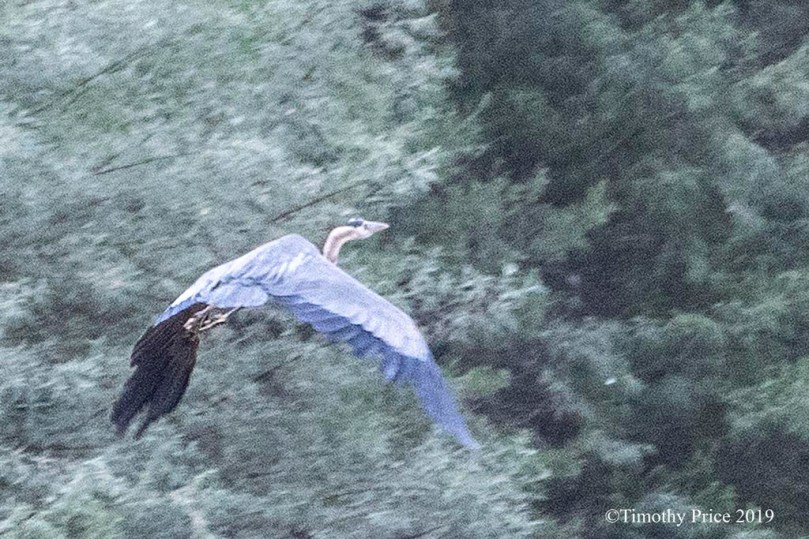
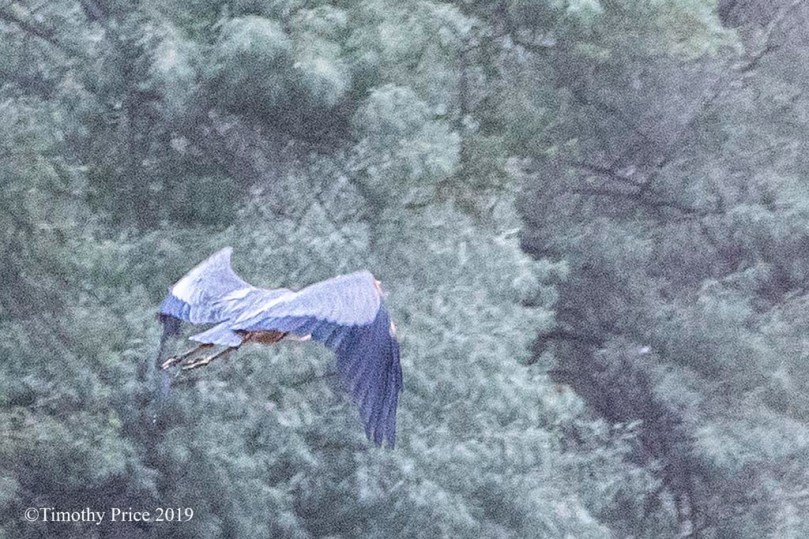
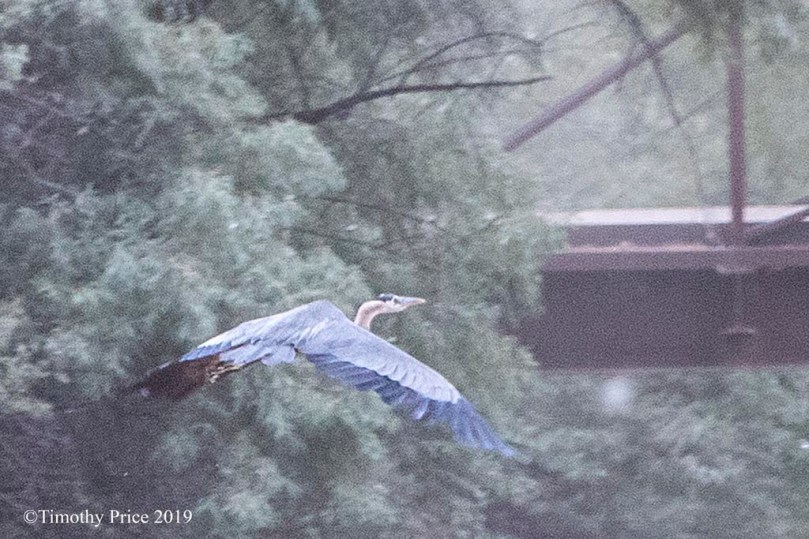
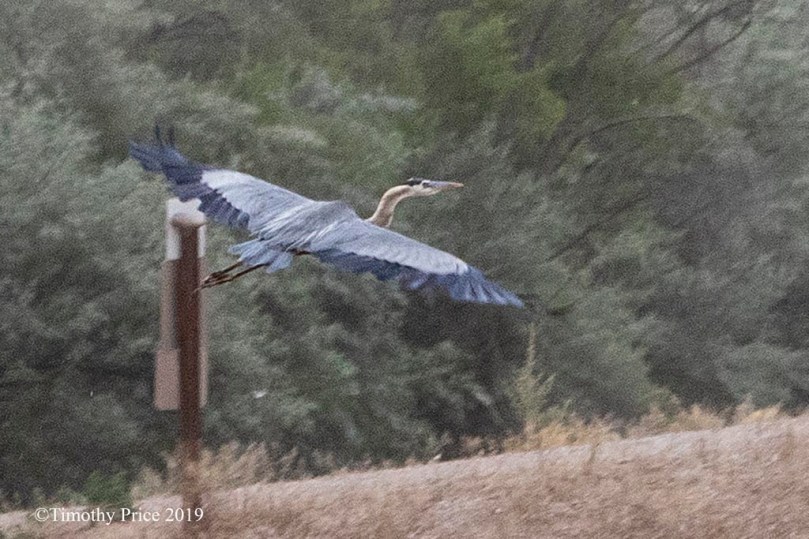
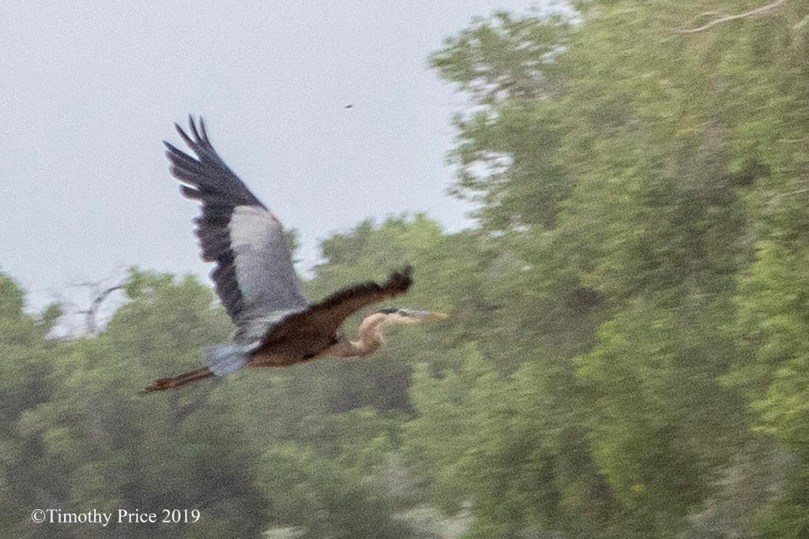
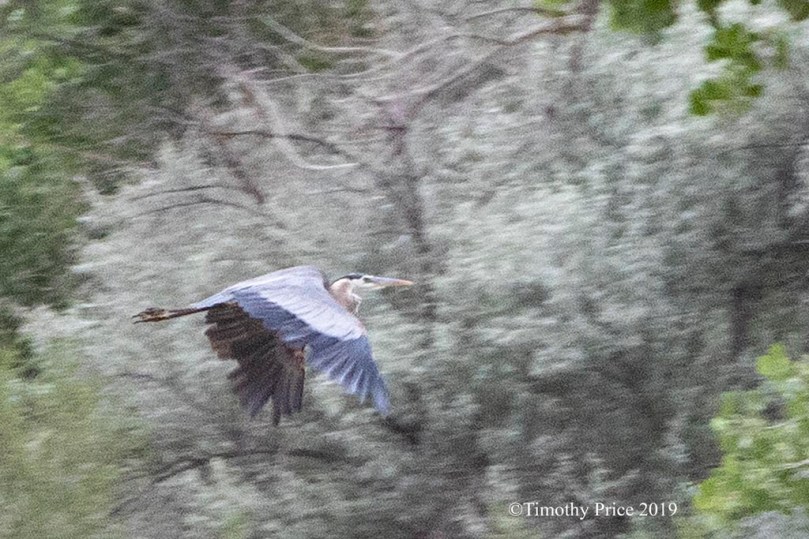

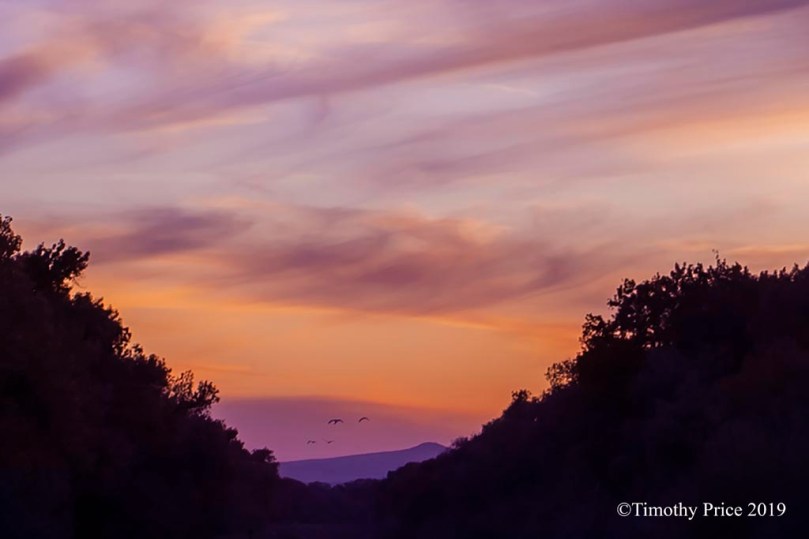
I wasn’t expecting Mr. pT. (Great Blue Heron Pterodactyl) at the beginning of our walk. I had my ISO set at 400, which is a little slow against dark trees at sunset. It’s one thing not to expect the Mr. pT., which I should know better, since I see him almost every night. But I really wasn’t expecting to see Ms pT., so imagine my surprise and excitement when Mr. pT. swooped down and flushed Ms pT. out of the clearwater ditch to do a pterodactyl tango on their way over the bosque to the rio Grande. Part of the challenge is to see if you can find Mr. pT. against the tangle of bare cottonwood branches in the first six photos; and then see if you can find Mr. pT. and Ms pT. in the 7th photo and the last photo.




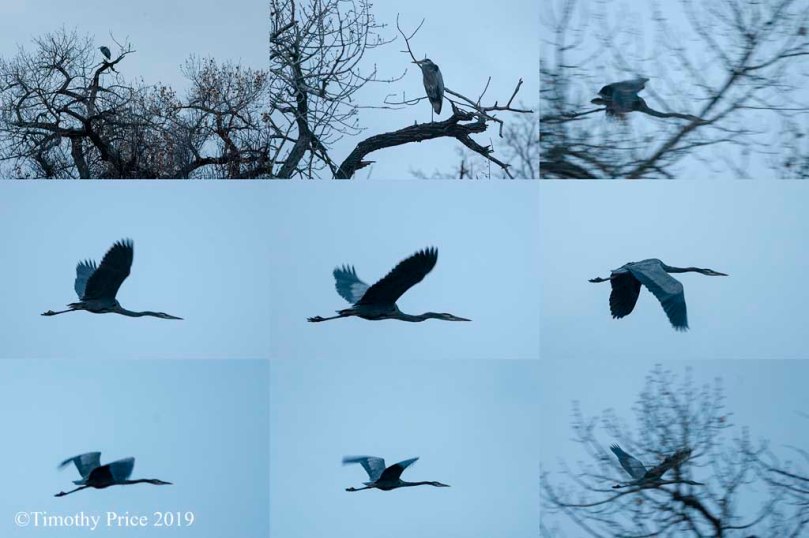 Great Blue Heron at dusk.
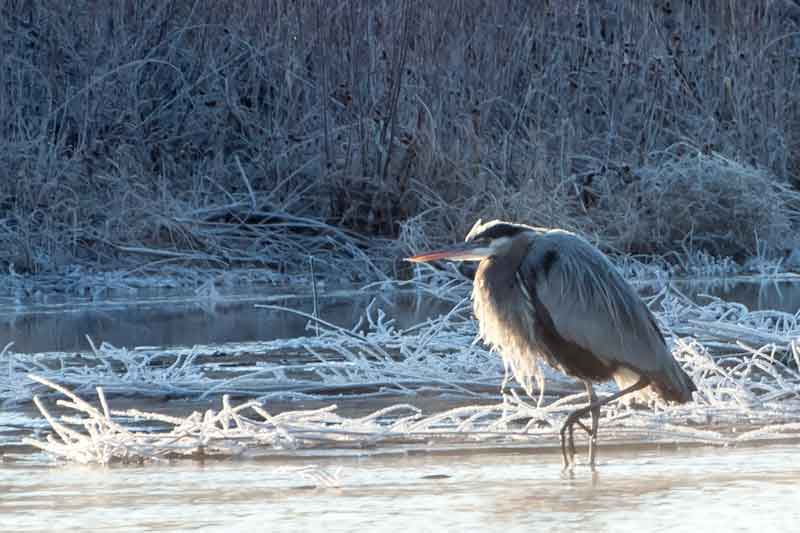
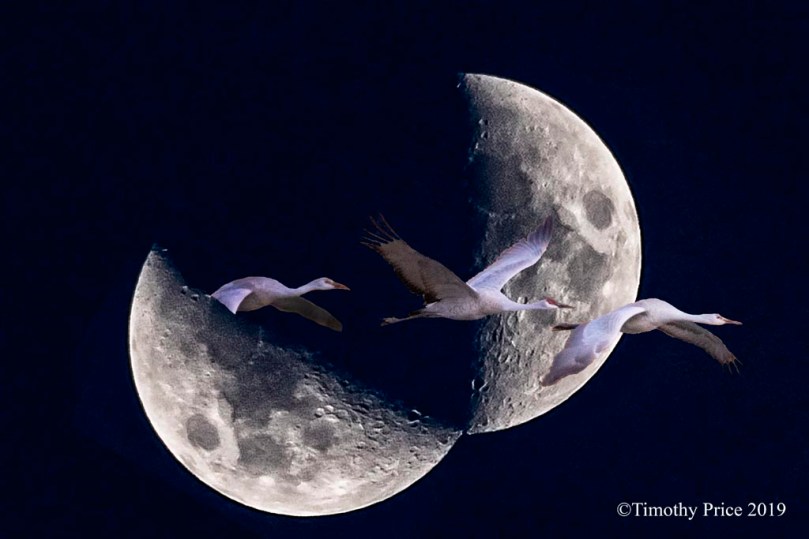
“What’s that?” Sandy asked Hilly as they walked in the frozen wasteland that had set upon the river at sunrise on all hallows’ eve… Read more at: http://photos.tandlphotos.com/blog/2016/10/the-undertaker-and-the-cranes
I bought some Cine Film re-engineered for 35mm to be developed by standard C41 process. This is a high speed tungsten film normally used for cinematography. I had put the roll of film in my Canon F1 intending to shoot film along with digital of the fashion show at Gears & Glamour. However, since the fashion show was in the dark, and I hadn’t worked with the film before, I didn’t want to push it beyond its recommended ISO 800 until I had used it. Since this film is best used indoors or at night under tungsten street lighting, I only took a few shots in the well lighted prep area at Gears & Glamour, a few more at the West Side Chorale’s winter concert, and then decided to use it outdoors with a 600 mm lens. I knew the color would be off in daylight, but I wanted to see how well I could hand hold a 600 mm lens with high speed film.
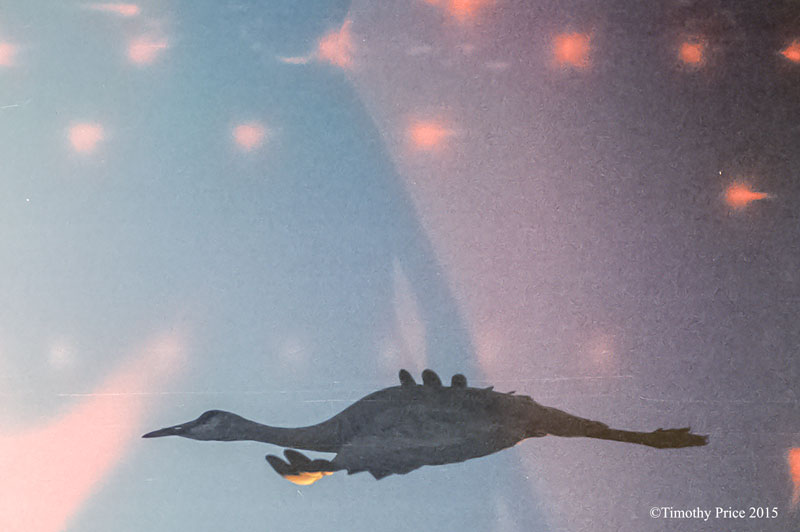
I got a surprise when I got to the end of the roll of film. I noticed the advance didn’t stop, and when I tried rewinding the film, the knob turned freely. I advanced the film a couple more times to see it would stop — it didn’t, so I took the camera into the darkroom, opened it in the dark and carefully felt by the take-up spool, and discovered the film had not been secured to the spool in the canister. I took out the canister, and as carefully as I could opened it up with a can opener. I carefully pulled the film out of the camera, but when the last of it popped off the take-up spool, the coiled mess of film slipped from my hands and fell to the floor. Remember, I’m in total darkness, so I bent down, felt around at my feet, found the pile of film, gently picked it up, found an end to the film, found the spool from the canister and rewound the film back onto the spool. I put the spool back in the canister and forced the end cap back onto the canister. When I got the negatives back, the canister didn’t seal back up tightly around the edges after opening it (I had suspected as much), so the last frames on the roll had light leaks. This was a mystery, because the last frames should be on the inside of the spool and the first frames on the outside where they would be affected by light leaks in the seal around the outer edge of the end cap. Then I remembered dropping the film, so I must have rolled it back on the spool reverse of how the photos were taken.
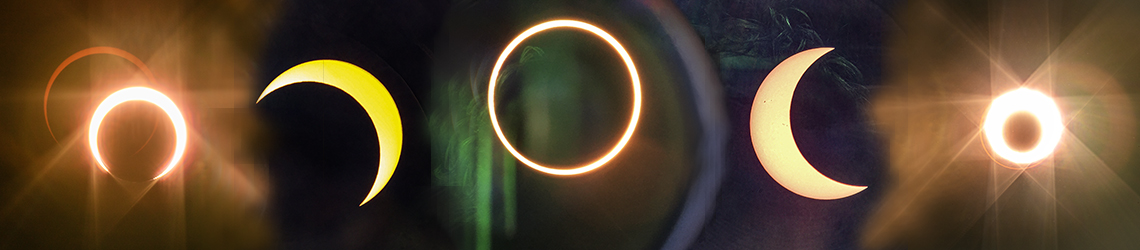
The lead photo is frame 24, the last image taken, and the effect of the light leaks from being on the outer edge in the canister are pretty interesting. The rest of the images, shown in order taken, were not affected by the leaks on the edge of the canister.



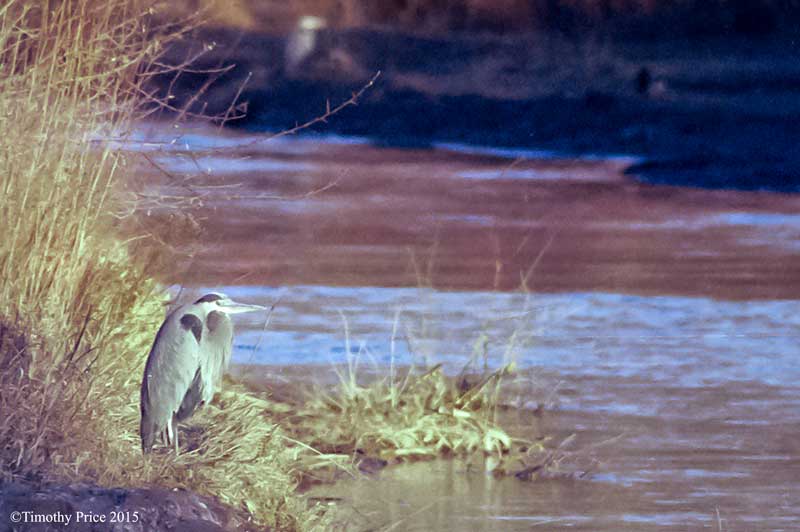

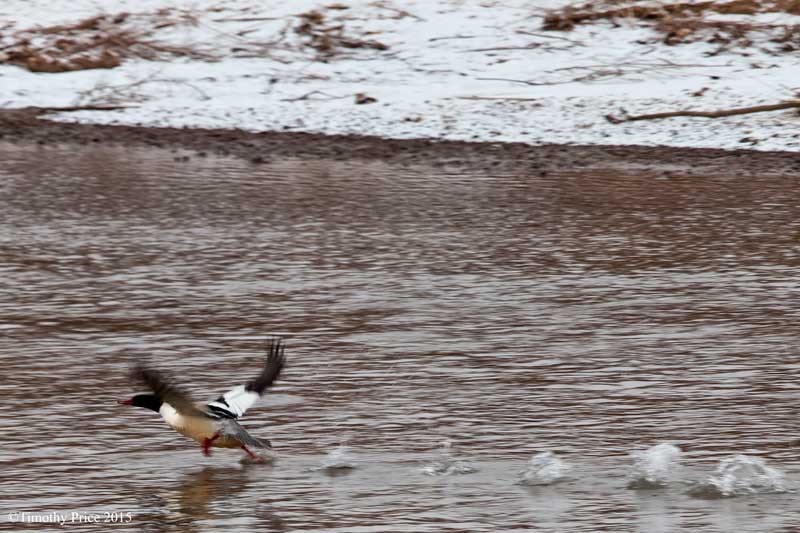
Cattails, ducks and blue herons on the Rio Grande.



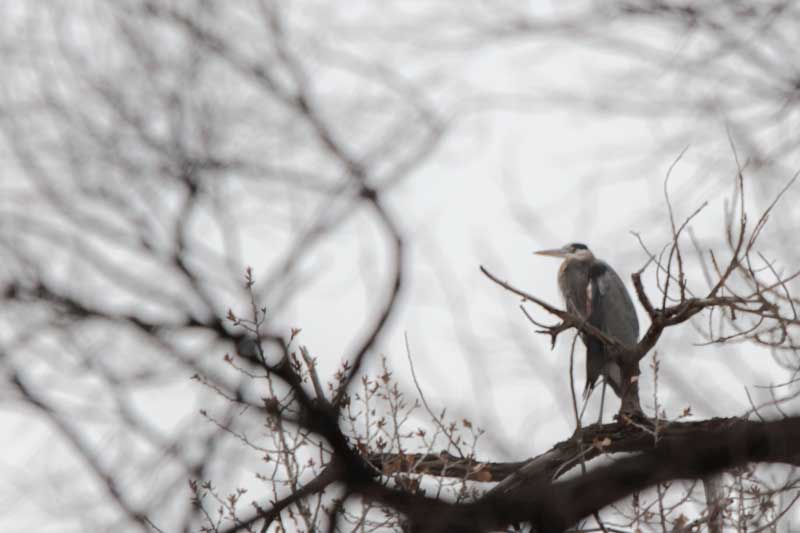
 Off Center & Not Even