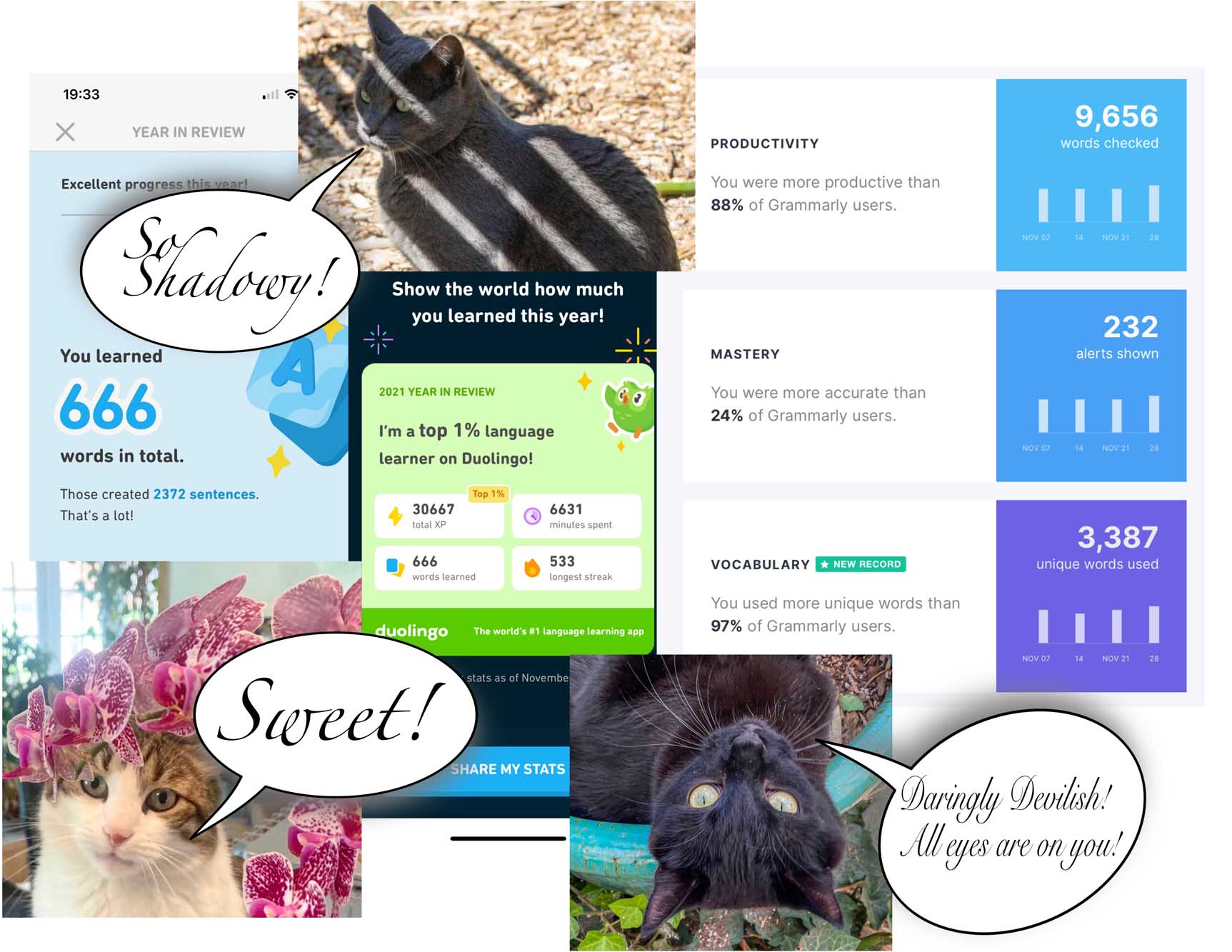
…Lingo, that is. I got my annual stats from Duolingo. I was very happy to see that I learned a beastly 666 new words. While on words, I thought I would share my latest weekly stats from Grammarly, also. Besides, it bugs the heck out of me that they are tracking all my writing, besides correcting my manifold mistakes, but that’s what you have to do to be checked out, I do find the stats interesting.
I have given three papers at conferences about how natives of north-central New Mexico have a very unique vocabulary and word usage. I am a native of north-central New Mexico, and my weekly Grammarly stats always report that one-third or more of the words that Grammarly checks in my musings it consider them to be “unique words”. They must count many of the same words as unique each week because I know I can’t be coming up with 1,800 to 2,000 new and unique words each week. Last week, I seemed to have gone all out as Grammarly reported I used 3,387 unique words out of 9,656 of my words it checked. With my numb fingertips, I make a lot of mistakes, the reason I have Grammarly to watch over my words and probably another reason so many end up as unique.
Given my consistency in the number of unique words used each week, it supports my thesis that natives of north-central New Mexico have a unique vocabulary. However, I would need to have a large sample of word usage stats from many different north-central New Mexicans to really show that my thesis could hold any water from the Rio Grande.
A collage of my Duolingo and Grammarly stats with comments by Silver, Spunk and Gwendolyn.
While on words, there’s always the issue of Acronymphomania!
Eleanor over at You Lil Dickens nominated me for a Bubbly Blogger Award. It’s actually a Sunshine Blogger Award, but that is so bland. I don’t do awards. And I certainly don’t consider myself bubbly or sunshiny. Eleanor seems to have a bubbly personality, which is surprising given all the abuse she was subjected to growing up. Elenor is brilliant, and she came up with such intriguing questions that I couldn’t resist answering them. Some of my answers are long, drawn-out, and most likely controversial, but C’est la vie.
Elenor’s 11 Questions. My 11 answers:
1) Do you think free will exists? If yes, please explain why and the role it plays in the world.
Yes. I believe there is free will. Part of that comes from my upbringing as a Methodist. John Wesley was a staunch believer in free will, unlike Martin Luther and John Calvin before him. The two pompous theologians who believed everyone shared in their total depravity, and that no one had free will to choose or reject God and influence their salvation because God had already chosen the few for salvation and damned everyone else. It was quite convenient that they were smart enough to know they were among the elect. But their rejection of free will has to do with salvation and specifically Christian salvation.
The larger question of free will and determinism goes way back to early philosophy and moves forward to modern philosophy, psychology, ethics, and law. If we have free will, then we are responsible for our decisions and actions, and we can be rewarded and punished accordingly. On the other hand, if everything is determined, then we have no control over our decisions and actions. We should not be punished for our evil deeds because we are not free to choose otherwise, therefore, we are not responsible for committing evil.
The idea of Fate determining the outcomes of our lives is also very old. In Sophocles’s play, Oedipus Rex (c. 429 B.C.E.), Oedipus knows his fate, and he tries to change his fate, he ends up killing his father and marrying his mother anyway as fate had determined. But if all of life’s outcomes are predetermined by fate then what is the use of making sacrifices to the gods, praying to God, making plans, and having goals if whatever you do or don’t do will have the same outcome?
If we have free will, then we have moral responsibility for our actions, and we are ethically responsible for the consequences of exercising our free will. Two approaches to considering the ethics of morality are consequentialism and deontology. Consequentialism maintains the moral worth of an action is determined by the consequences of the action. Whereas, deontology looks at moral duties instead of consequences.
Immanuel Kant was the most prominent deontologist and developed several important features of deontological ethics including we have a duty not to hurt the innocent, and killing an innocent person is forbidden regardless of the consequences. Killing is morally wrong, even if the consequences of killing an innocent person benefit everyone.
In contrast, Utilitarianism, which falls under consequentialism, considers whether the action has the best outcome for everyone. Therefore, if killing an innocent person is seen as benefiting society as a whole, then it is morally right to kill an innocent person for the benefit of everyone.
Going back to theology, Fyodor Dostoyevsky has an excellent discussion of free will in “The Grand Inquisitor” found in “The Brothers Karamazov”. The Grand Inquisitor accuses Jesus, who he has jailed, of rejecting the temptations offered by Satin in order to preserve free will. And it’s that free will the Grand Inquisitor believes makes people so difficult to control. I remember having a discussion with a friend late one night and my friend said “If Jesus had come down from the cross, I would believe!” I told him that’s the point. If Jesus had come down from the cross, all of us would have no choice but to believe.
But Jesus didn’t come down off the cross. We have free will to believe or not. To choose or reject God. To choose to do good. To choose to do evil. To freely make all of the choices we make each day, good, bad or indifferent. We have free will to make choices that have consequences. We are held morally and legally responsible for our choices and the consequences of our actions because society, and the law, also believe we have free will.
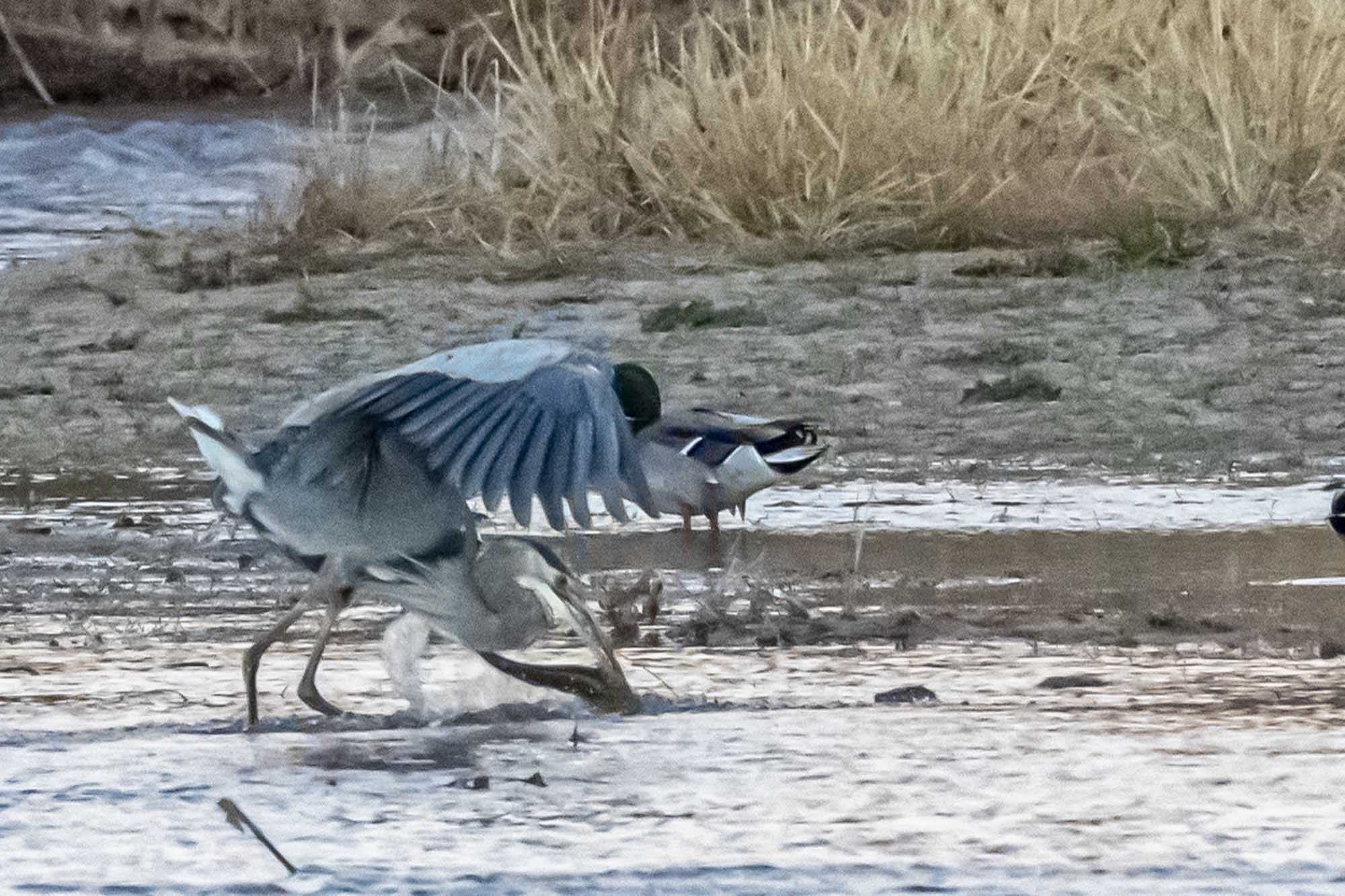
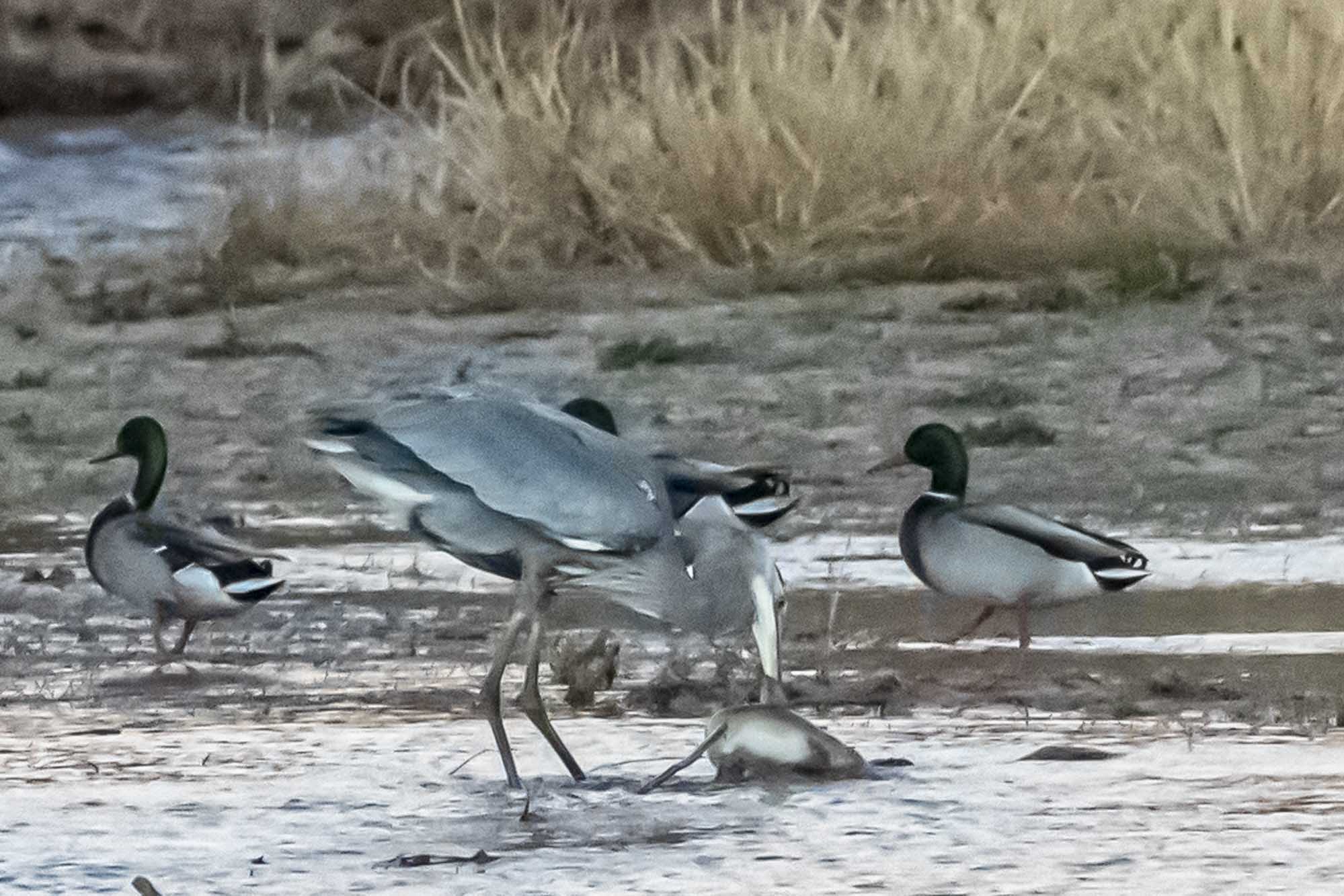
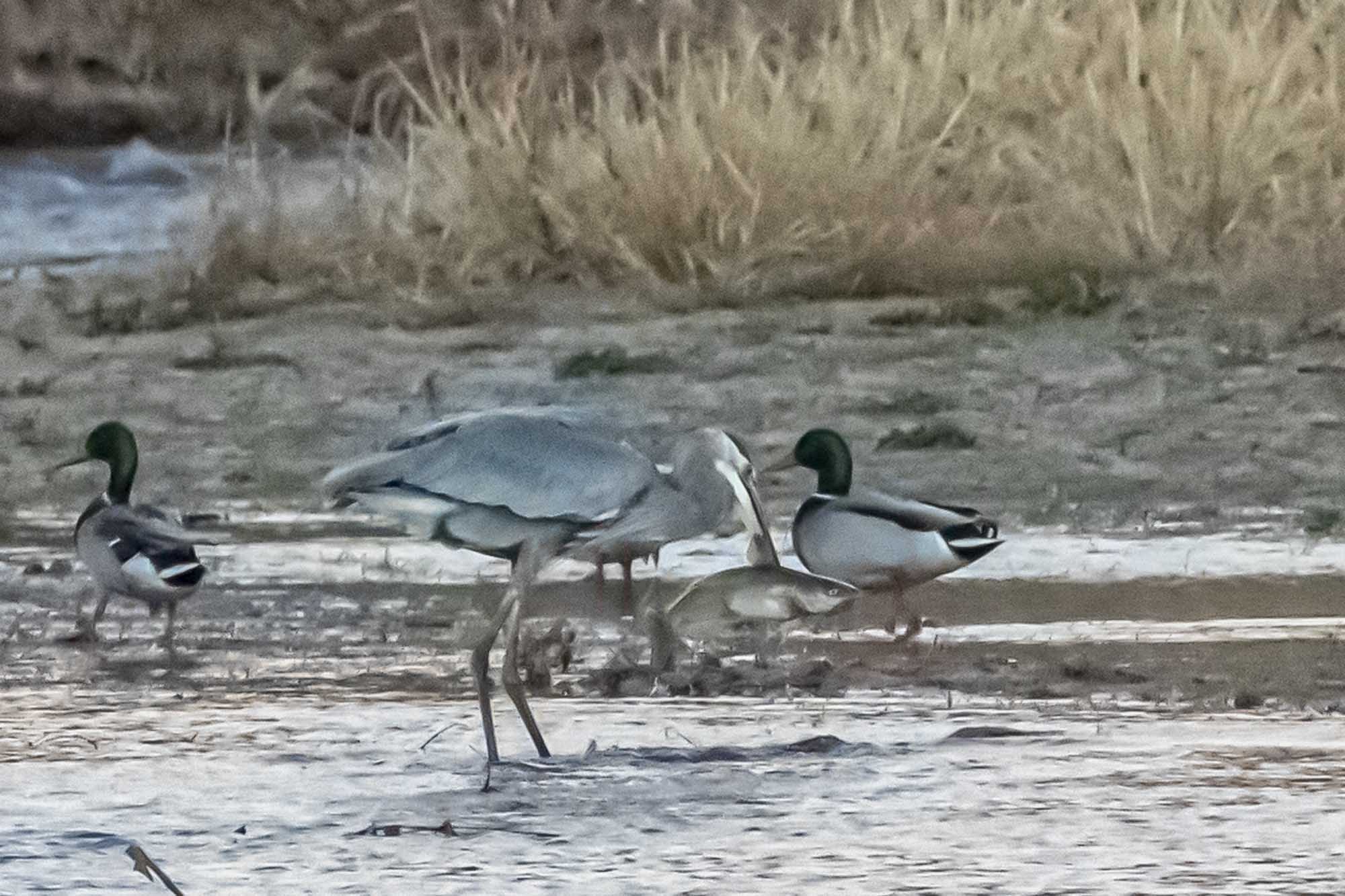
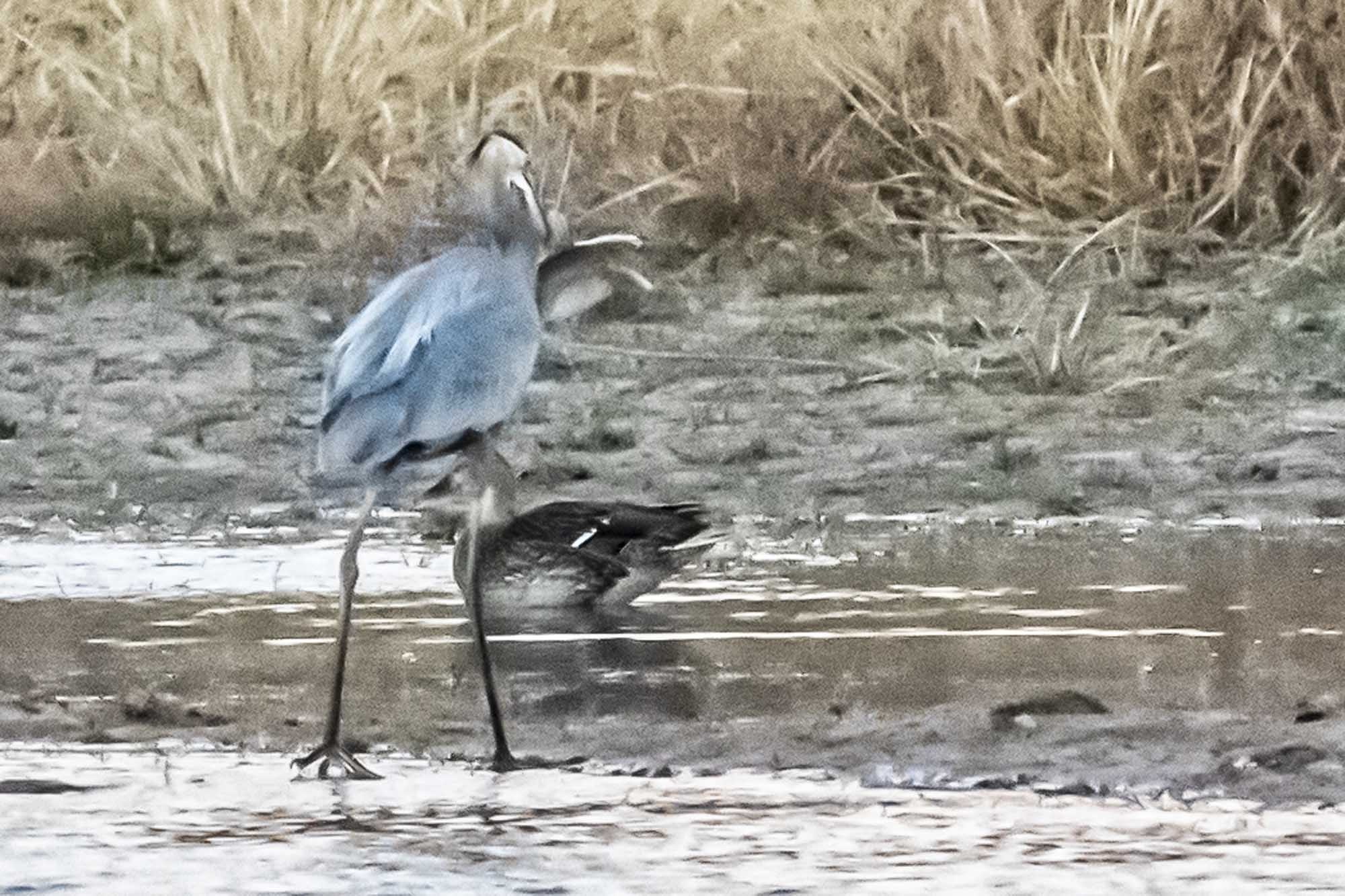
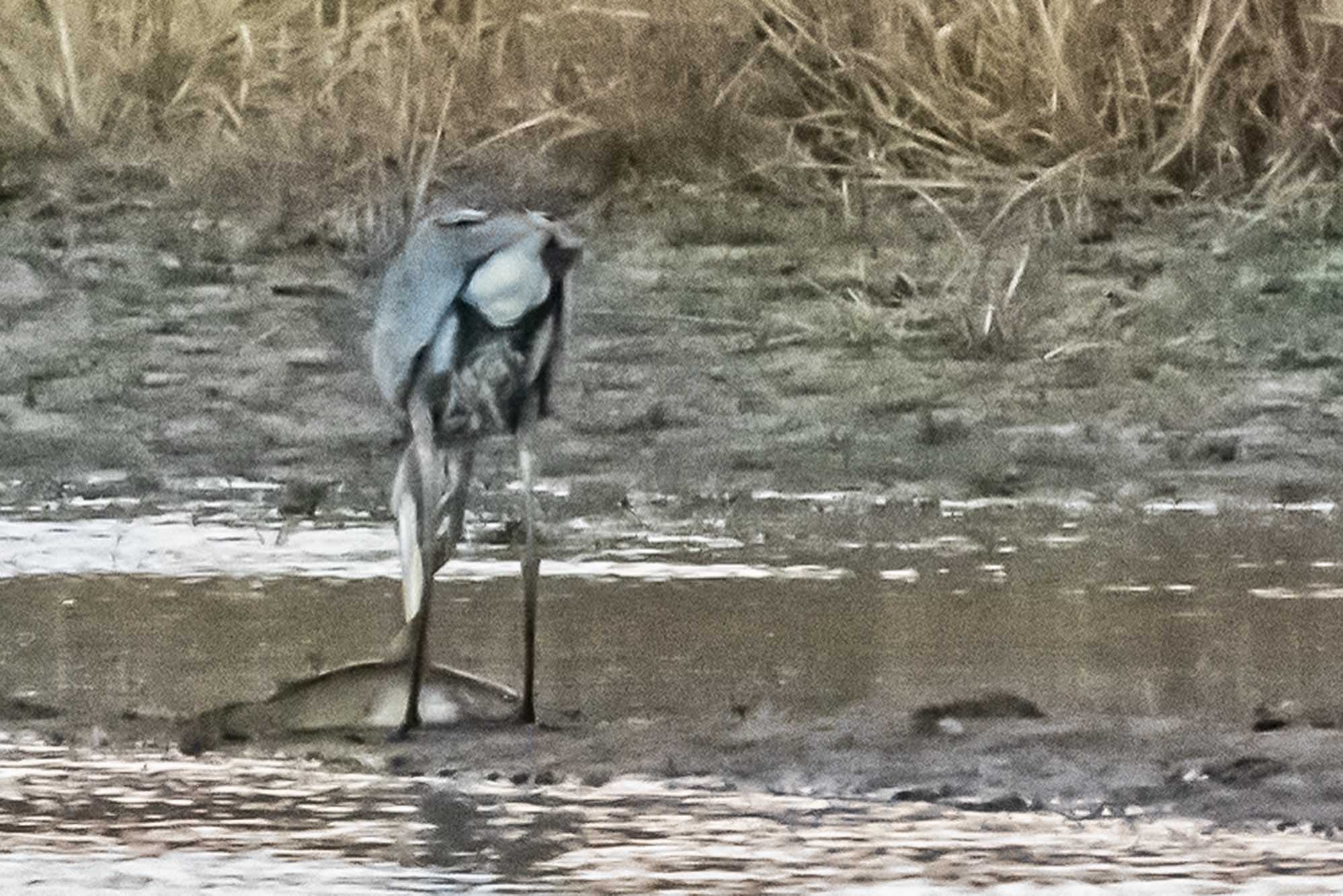
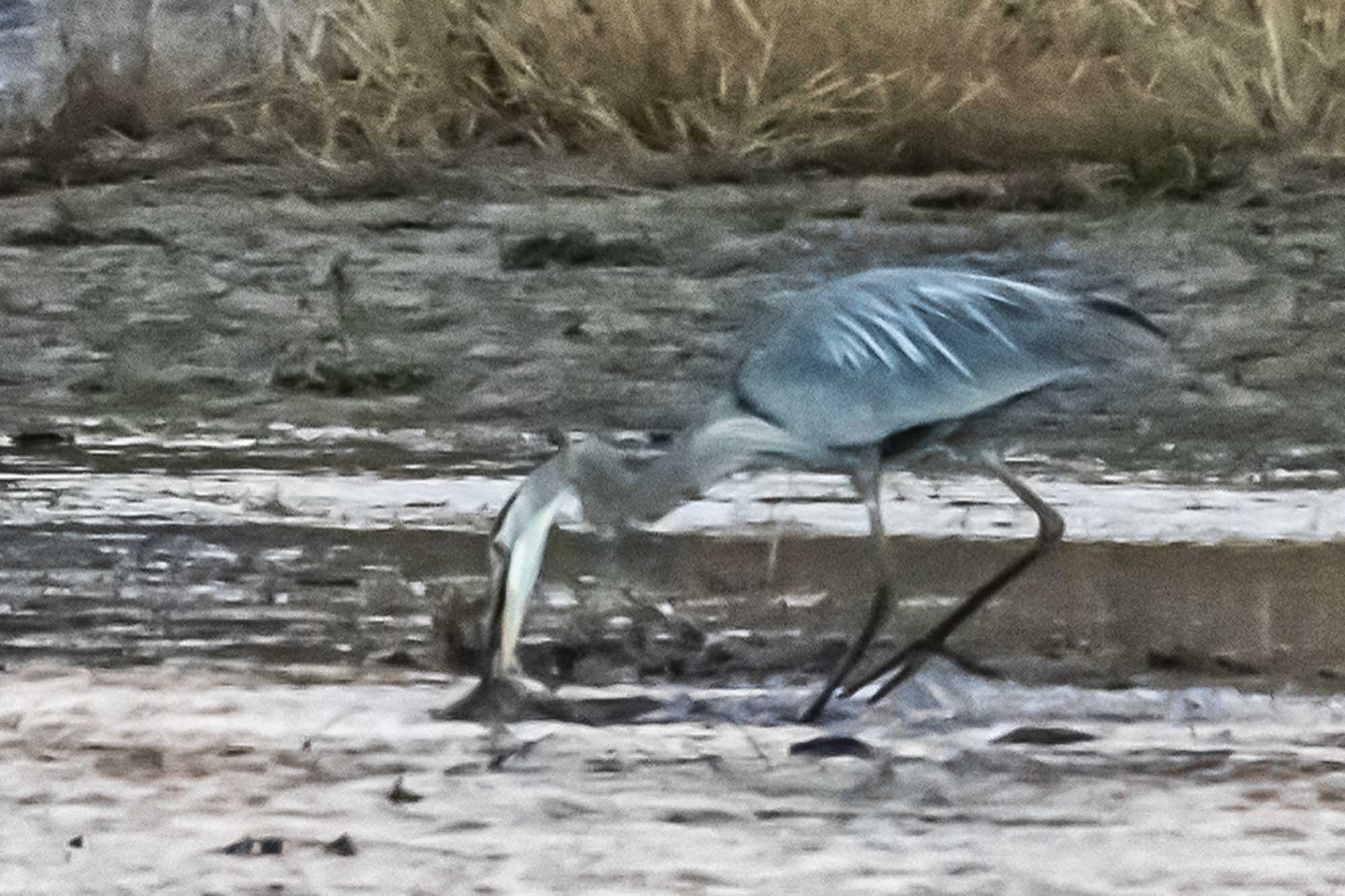
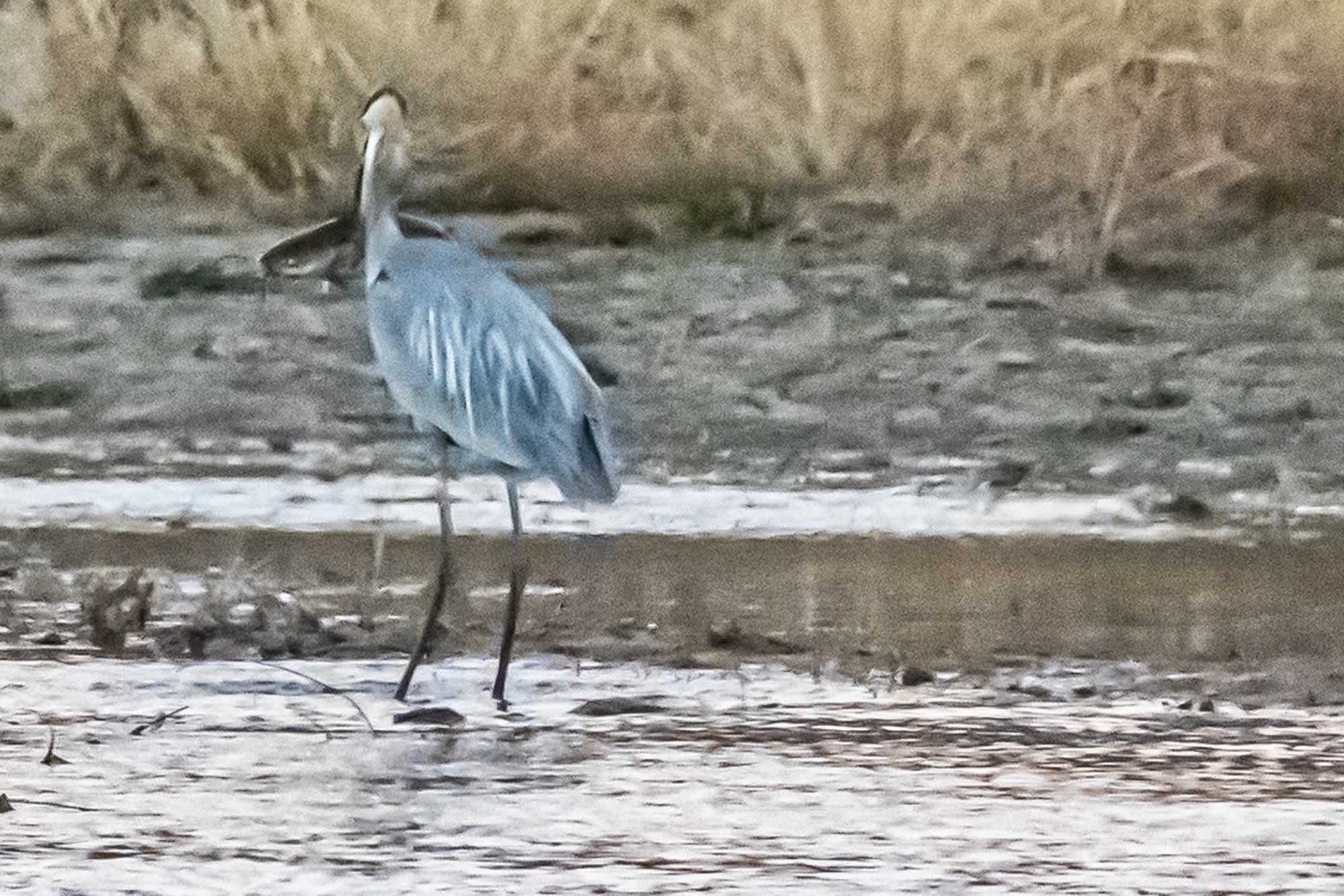
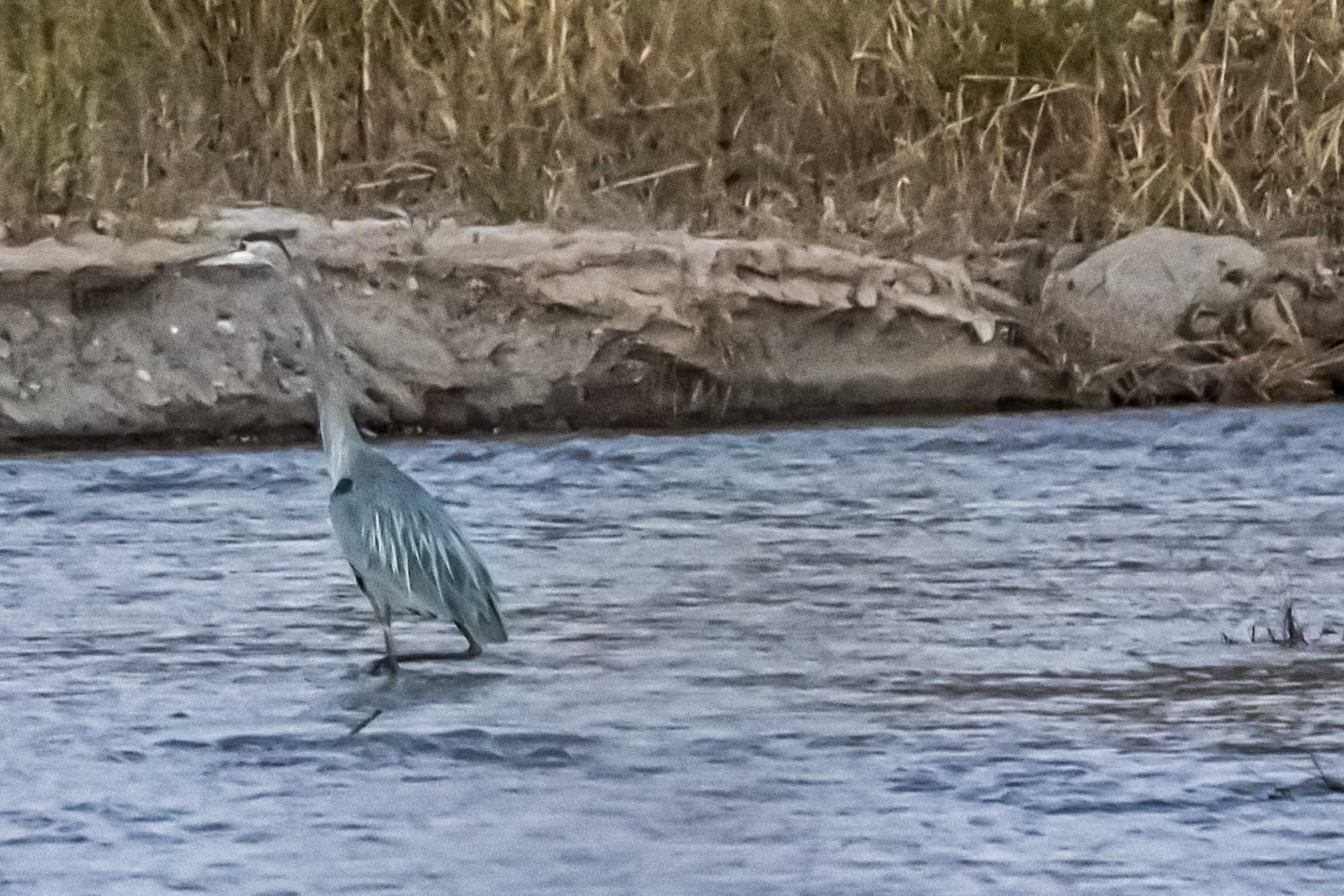
Speaking of free will, the pTerodactyl killed a large carp tonight when I was out and the river. He didn’t eat it. He just left it on the shore and walked out into deeper water. That is the second time I have witnessed the pTer killing a large fish and not eating it. Did the pTer commit pescadocide of his own free will? Was the carp’s fate to be stabbed to death by a pTerodactyl? Is the pTer determined to kill all large fish because he can’t help it? Or is he simply an evil bird?
2) In your opinion, does weed, overall, have more of a positive or negative impact? In other words, does it do more harm than good or the other way around?
I have never smoked weed because I grew up with people who did. Many of them became heavy users. These people were (many are dead now) smart, talented people who couldn’t finish their degrees, who went from one menial job to another, had multiple broken relationships, were depressed because their lives didn’t amount to much, so they smoked more weed. Was their depressive, compulsive behavior solely from smoking weed? Probably not. They were probably drawn to weed because of various personality disorders, but I never saw weed as a positive influence in their lives. Light weed smokers don’t have the same issues, but I don’t see that weed does much good either way.
3) If you could live in any era which would it be and why?
This is difficult. There is really not a lot of desirable eras unless one’s a hopeless romantic. I will go with the Belle Époque. It was a period between the Napoleonic wars and World War I that was known for technological, scientific, and cultural innovations, prosperity, peace, and optimism.
4) What is your favorite quote of all time and why that one?
“Someone set up us the bomb!” It’s such a good bad translation from Japanese to English. It’s so ungrammatical and nonsensical, yet it makes perfect sense. I feel like someone among the powers that be always sets us up the bomb.
5) Pick one of the worst events in history. If it were possible to change or prevent it, would you? Why?
There are so many bad events in history, it’s really difficult to choose. I have to go with World War II. One would think that after the horrors of World War I, world leaders would learn to get along. But not the case. D.C. al Coda, and voilà World War II. One change that might have helped prevent WW II would have been to have a different attitude and policies toward Germany,. More responsible fiscal policies could have helped prevent the great depression. But then again, when genocidal leaders want to dominate the world and start an aggressive effort towards that end, there may not be many alternatives.
6) Should euthanasia be a legal option for all if the law was written with great care and consideration?
No. I think there is too much room for abuse. People will try and twist the laws to euthanize people based on age, race, medical conditions, political orientation, sexual orientation, and religious beliefs. If euthanasia were legal, there are individuals who would euthanize people now for not being vaccinated for covid. Actually, lifesaving drugs, lifesaving procedures, and transplants are currently being withheld from people who aren’t vaccinated for covid.
A recent example is a woman in Colorado who needs a kidney transplant. She has a donor, but the hospital will not perform the transplant because she has not been vaccinated against covid. Her doctor advised against the covid vaccine because of her current condition. There is no medical reason whatsoever to require vaccinations prior to an organ transplant. The Colorado hospital is willing to let the woman die for purely political reasons. Fortunately, a hospital in Texas is offering to perform the transplant with no vaccination required.
The utilitarians would say she should die because her transplant does not benefit society as a whole. Legal euthanasia would make it easier for utilitarians to rid society of the old, the sick, the weak, and the politically incorrect who they see as burdens on society, and a threat to their power.
One can argue that utilitarians and politicians would never twist euthanasia laws to make them in their favor. However, Laws are becoming meaningless in this country as it is. Laws are intentionally misinterpreted, or simply ignored, so they can be used as weapons against political opponents and those who resist being ruled by arbitrary and capricious politicians and political appointees. Pretty much anyone who doesn’t agree with the current powers that be is labeled a “Domestic Terrorist.” Under pandemic rules, civil rights abuses are manifold, and it doesn’t matter to the people in power and their accomplices in the media that the civil rights abuses are illegal and unconstitutional. Legalizing euthanasia would be a Godsend to the powers that be.
7) Why does evil exist in the world?
The easy answer is to blame it on Adam and Eve, but it’s really so complex, and it goes back to the question of free will. The simplest answer is evil exists in the world because we have the free will to choose to do evil. People selectively choose to do both good or evil depending on the situation. While most people seem to choose to be mostly good based on social standards of morality, others choose to be mostly evil acting against moral standards and societal norms. But then there are all the complexities that go with the issue of free will, determinism, and genetic dispositions.
When you consider all the cruelty, pain, suffering, and injustice humans have subjected each other, animals, and nature to throughout history, the more pertinent question may be “How does goodness thrive in an evil world?” For everything non-human good and evil are simply survival (with a possible exception being the pTerodactyl). But humans are beyond simply surviving, therefore, they choose, with their own free will, to do evil.
8) What is your superpower (AKA Your Greatest Strength)?
Problem-solving through procrastination. I am very good at problem-solving, but the way I do most of my problem-solving is by turning things over in my mind and working out the details before I do anything to solve the problem. It’s the same for conceptual design, storyboards for video, scores for songs, photo projects. All of it is worked out in my head before I set myself into action to create a piece.
9) Who do you think is currently one of the most influential individuals in showbiz? Why?
I have no idea. I haven’t had a TV in 40 years and I rarely watch movies. Therefore, I really can’t say.
10) How do you like your eggs? Do you think your preference reflects your personality?
Overeasy. I’m generally pretty easygoing.
11) Are Myers-Briggs Personality Types all their cracked up to be?
It has been years since I even thought about Myers-Briggs Personality Types, let alone take the test. Therefore, I took a free Myers-Briggs Personality test to see what it had to say. The results are I’m an NTP. NTPs are philosophical innovators, fascinated by logical analysis, systems, and design. I think that is pretty accurate.
This is the second parody I made back in 2017. I hadn’t upgraded my darkroom to double as a recording studio at that time, so I recorded it in the dance room using the mics in my computer. The recording wasn’t too bad other than being very tinny. I imported the original sound file into Studio One and clean up the vocals. I think a lot of writers who follow my blog will appreciate this parody.
Saturday Night’s Alright for Writing Music by Elton John Lyrics by Timothy Price
It’s getting late I found my PaperMate I’m procrastinating sitting here Seventy lines that I gotta pine I have modifiers dangling near
My old Mac’s bonkers and it’s acting kind of funky And my old adage is to be clear My writing is cute like a guy in army Boots A cowboy hat in his hair Ohhhhhh
Don’t give us none of your imagination Write facts be on your discipline Cause Saturday night’s alright for writing Let’s get a little action verbiage in
Let’s get about as riled as an op-ed rage Let’s try to set this page alight Cause writing on a Saturday night I like Saturday night’s alright to write to write Ooooo oo-oo oh
A lot of words are getting packed in here tonight I’m looking for a phrase that will seem alright I might use an antecedent to get what I need I might bare an infinitive and shout out “conditionally”
Some of the words that I really like Are future perfect voicing that are out of sight I’m a high school dropout from the ergative class Who’s passive voices, dangled modified and got a pass Ohhhhhhh
Don’t give us none of your imagination Write facts be on your discipline Cause Saturday night’s alright for writing Let’s get a little action verbiage in
Let’s get about as riled as an op-ed rage Let’s try to set this page alight Cause writing on Saturday night I like A Saturday night’s alright to write to write Oooooo oo-oo ooh
I wrote this song for my buddy Inchcock at Inchcock Today: Old, sick, weary, but harmless. I need to make others smile!, the dynamic pensioner in Nottingham, England, who had a stroke a couple of months ago. Since he’s been writing about the involuntary moving, shaking and dancing of his arms, legs and fingers, and the electrical shocks that run through his limbs since the stroke, I promised to write him a song about the issues. I spent most of Father’s Day writing, assembling and recording Neutopathic Mambo, as I know all about the electrical shocks and vibrations from dying nerves, as I still get them from the nerve damage caused by chemo. As I’ve noted in the past, I also have numb toes and fingertips, as well. But Inchcock and I are not ones to complain, other than making fun of our conditions, because like my doctor told me — “The annoyance of some nerve damage is better than the alternative.” Since Inchcock made it out of the stroke ward alive, he was told others who were in the stroke ward at the same as him did not live, he’s made a great recovery. I believe his fantastic recovery has a lot to do with his drive to entertain his followers with his daily descriptions of woe and wonderment of his life in Nottingham, not to mention his updates on his unmentionables and daily constitutionals.
Neuropathic Mambo
Lyrics by Timothy Price
Digital percussion and music assembled and arranged by Timothy Price
When the legs go dancing on their own
Electric feelings shock my bones
Arms all flailing, fingers shake and role
Bumping and grinding out a neuropathic mambo
Shaking
Shocking
neuro pathic mambo
Shocking
Shaking
My knees get weak and start a shake
My arms go limp and then they quake
I stub my toe Ouch I’m still alive
Instead of Typing, my fingers do the hand jive
Shocking
Shaking
neuro pathic mambo
Shocking
Shaking
When the legs start dancing on their own
Electric feelings shock my bones
Arms all flailing, fingers shake and role
Bumping and grinding out a neuropathic mambo
Shaking, shocking, bumping out a mambo
Shaking, shocking, bumping out a neuropathic mambo
Shaking, shocking, bumping out a neuropathic mambo
Shaking, shocking, bumping out a neuropathic mambo














 Off Center & Not Even