The Week: March 30th — April 5th

Photo of the Day, Etc for the week of March 23rd — 29th includes:

March 30th: Spring flowers and wild boar macaroni — http://photos.tandlphotos.com/blog/2015/3/flowers-food

March 31st: Spunk in the window — http://photos.tandlphotos.com/blog/2015/3/screened

April 1st: Construction — http://photos.tandlphotos.com/blog/2015/4/construction-progress

April 2nd: Spunk gets  his kitty prints — http://photos.tandlphotos.com/blog/2015/4/kitty-prints

April 3rd: Moonrise and Lola — http://photos.tandlphotos.com/blog/2015/4/moonrise-lola-and-the-neon-tulip

April 4th: A snaky lick and wild turkey — http://photos.tandlphotos.com/blog/2015/4/snake-tulips-wild-turkey

April 5th: Flower girl — http://photos.tandlphotos.com/blog/2015/4/i-love-the-flower-girl

Snake in the Trail

hognose_snake

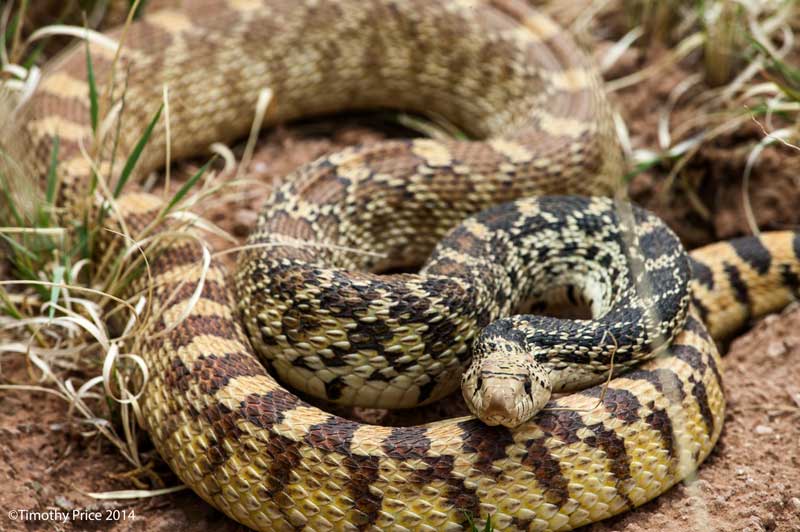
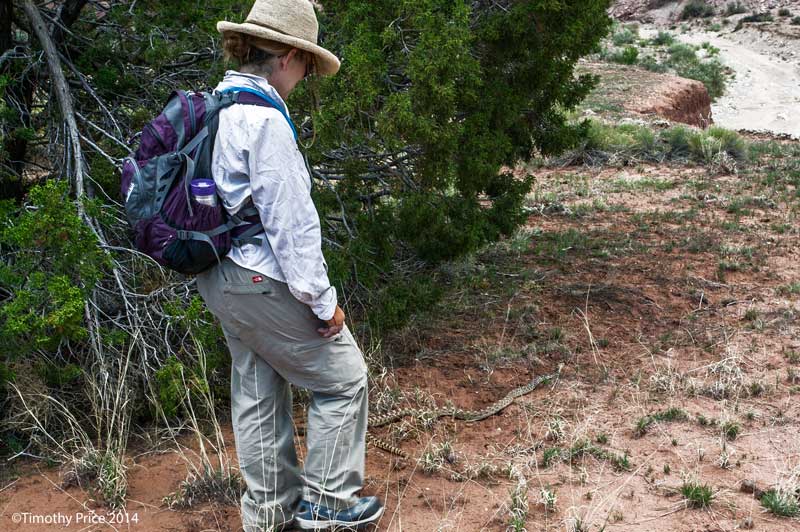
Laurie saw this little western hognose snake laying on the trail where someone might have stepped on or ran over it with a mountain bike. Laurie sent me the photo with the following description:

“Looks venomous to me. Since he was right in the trail at the high-traffic area, I found a longish stick and moved him as gently as I could. He reacted by writhing around with his mouth open and then acted like I killed him and laid there fairly still with his tongue still flicking. He was still only a foot or so away from the trail, so I put some leaves around to camouflage him, left him alone, and then went back to recheck after I lifted weights. I took the snake stick and very carefully brushed the leaves aside with great trepidation. Thankfully, he was gone, so I guess it was one of those reptile play dead acts that I’ve seen lizards do many times (but not so often with snakes). I was so glad that he had moved, since I had never seen a snake quite like him and I truly was afraid I had injured him very badly or even killed him.”

I saw the photo before reading her description, and recognized it was a western hognose snake, which I see very rarely anymore since our toad population has decreased (they especially like to eat toads). I asked why she didn’t photograph the death act, and Laurie said the snake was such a good actor that she felt like she had really killed it and wasn’t going to document what looked like her torturing and killing a poor little snake. She said it could have been in Hamlet for the act it put on writhing around before playing dead.

If you look up photos of hognose snakes, you will see that they have a large variety of colors and patterning depending on which part of the country they are in. The western hognose have the coloring and patterns that are much closer to rattlesnakes you see in the western part of the US than  bull snakes, for example. Hognose snakes in the southern and eastern part of the country have very similar coloring and markings to water moccasins, copperheads and timber rattlesnakes.


Bullsnake at Desert Harbor

45CU4425

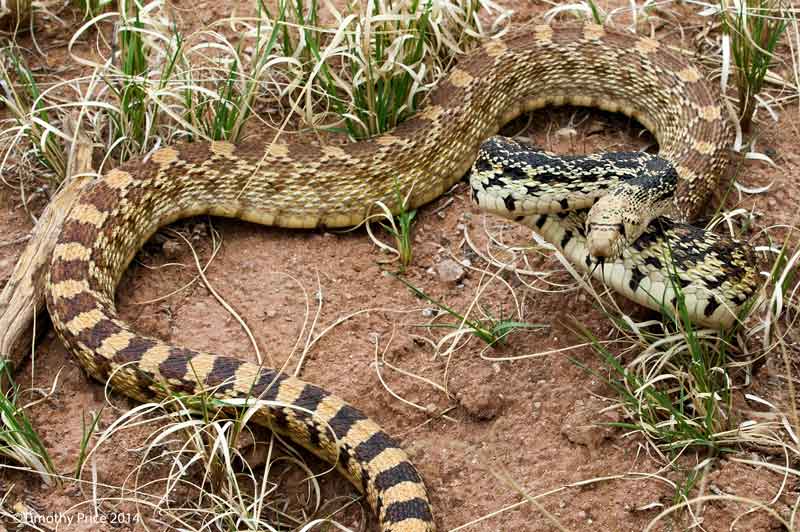
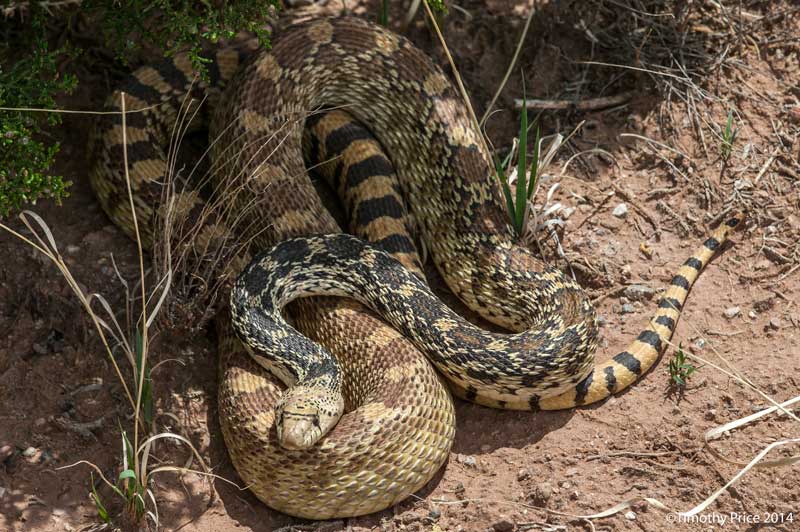
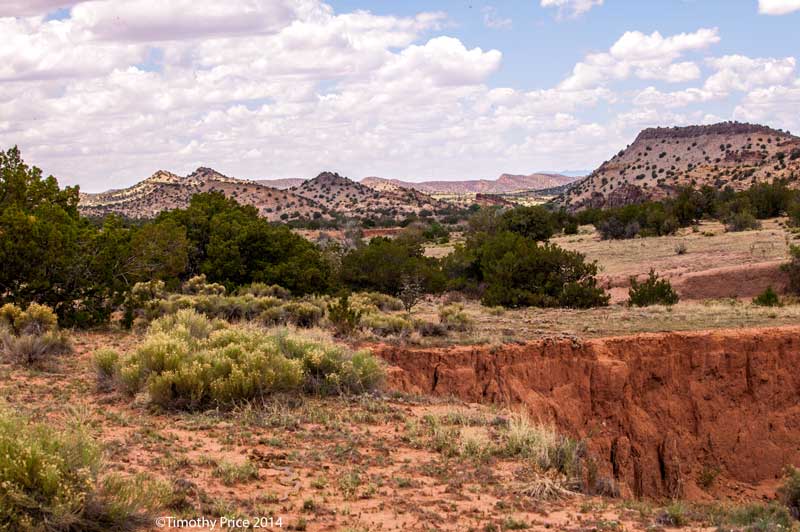
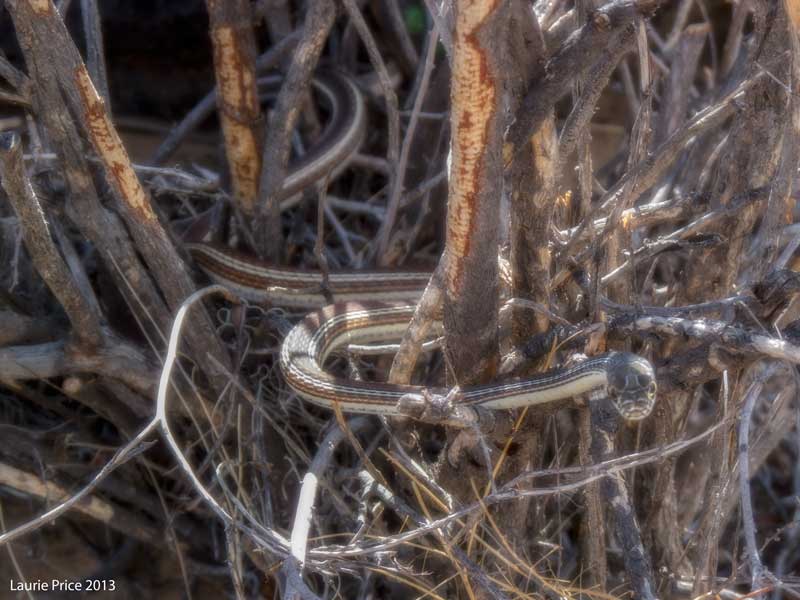
While I was sitting on a rock in the canyon at Desert Harbor Retreat looking at the landscape, watching the birds in the distance, and observing the various insects crawling around my feet, this large bull snake (about six feet long) crawled by just a few feet away. He got defensive when I got close with the camera, but then he settled down and let me get to within less than an inch of him with the camera’s lens.

If you don’t know your snakes, you might confuse this bullsnake with a rattlesnake. The markings are similar to a rattlesnake’s, and with his defensive postures, he mimics a rattlesnake by raising his body into a striking position; he flattens his head to make it more triangular, hisses, and vibrates his tail like a rattlesnake (if there are dried leaves to vibrate his tail against, he will sound somewhat like a rattlesnake). But that’s where the similarities end. A bullsnake is slender, and has a thin, round head compared to a rattlesnake. Bullsnakes are non-venomous constrictors, with round pupils. A Western Diamondback rattlesnake the same length as this bullsnake would have a girth at least four times larger, and its head would be three or four times larger than the bullsnake’s head. Rattlesnakes have raised plates over their cat-like eyes, triangular heads, and pits on the sides of their faces (you can see a Western Diamondback rattlesnake in my blog from July 2, 2013).

After a while, the bullsnake decided we were no longer a threat and continued his hunting. We followed him around, observing him for about 45 minutes as he seemed to be following a scent trail. We walked beside him, behind him, observed him closely, and he simply went about his business as if we were not even there. I was thinking that he might flush out a field mouse, grab it, constrict it, then eat it, and I could document the hunt, the kill and the meal, but he was still hunting when we parted ways.

45CU4416
Defensive position acting like a rattlesnake
45CU4422
Settling down
45CU4436
OK! The paparazzi isn’t so bad after all
A18W1703
I think I look rather dashing in the round mirror (taken with a 17mm lens almost touching the snake)
45CU4441
He goes back to hunting
45CU4454
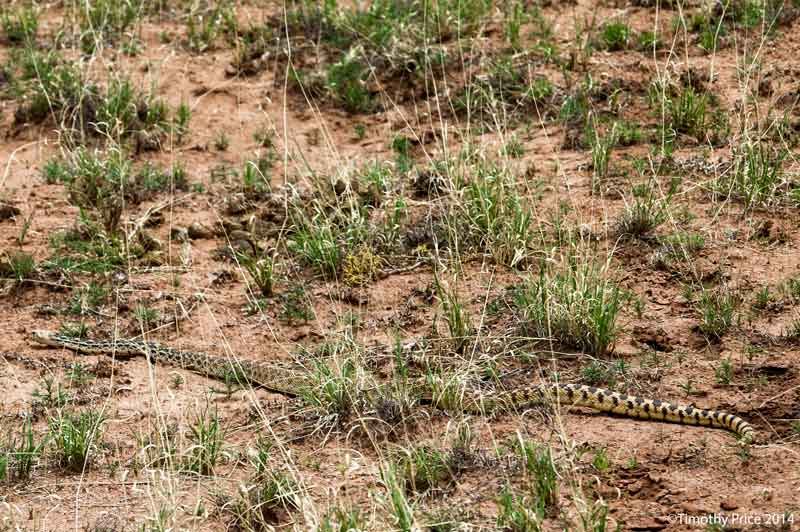
His happy hunting ground. You can see the snake in the foreground just above the “2014” if you look carefully
45CU4459
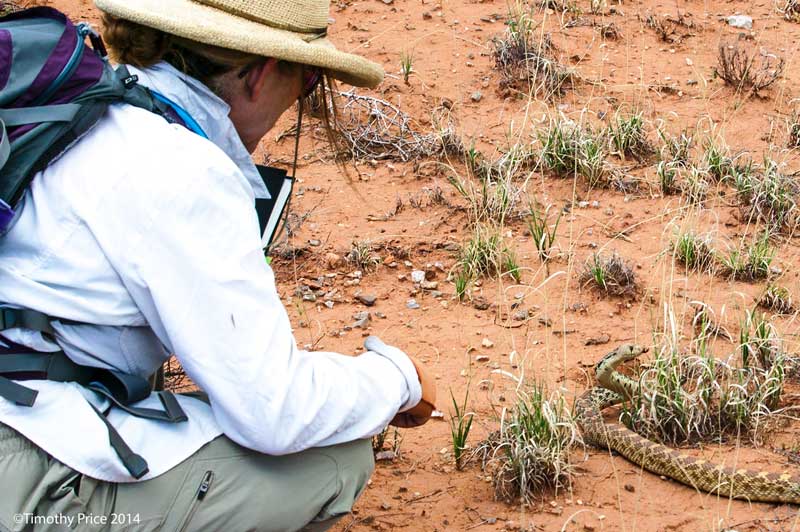
The snake is sniffing the grass while Laurie checks him out
45CU4462
Smells something interesting on the grass
A18W1709
Laurie walking with the snake

A18W1710

45CU4466
Sniffing a patch of piñon needles
IMG_2023
Happy snake face


Snakes Alive

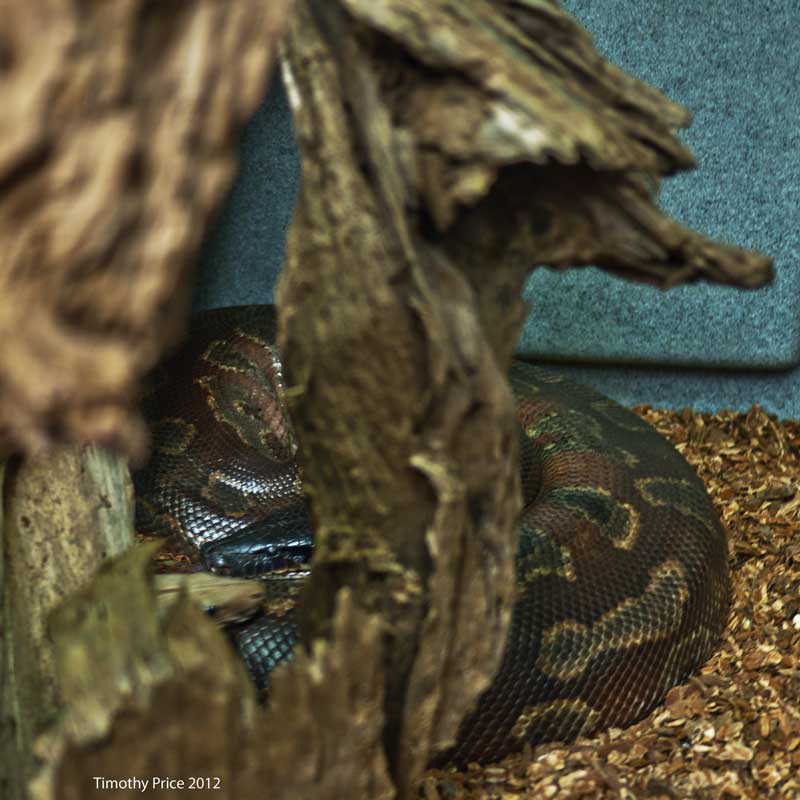
Before I started chemo in July 2010, I had to give up my boa constrictor and blood python, because my immune system would be destroyed by the treatments and since snakes carry salmonella, there was the chance of catching it from them.  Tristan and David took both snakes for me. They had been eyeing the boa for awhile, so this was their chance to get her, but the python had to be part of the deal.  Both snakes were quite large when they took them, but the boa has grown a lot over the past year and a half, so I ordered them a new, large cage. The cage came in last week, but I hadn’t seen the snakes in it until tonight.

I got the python, whom we named Red, in 2003, and the boa, whom we named Blue, a few months later. The python was 22″ long and very sick when I got her. We ended up force feeding her and I had to rent a nebulizer to administer antibiotics for a respiratory infection she had, because neither the injections or oral antibiotics were working (giving a snake shots and oral medications is quite difficult, besides).  I had to get a prescription for the nebulizer, and the medical supply place we rented it from didn’t quite know how to handle renting a nebulizer that wasn’t paid for by insurance. The people I dealt with ended up having a great laugh and a nice change to their normal routine to fill a prescription for a snake. They gave us great service and even delivered the nebulizer and picked up when we were done with it. The nebulizer was much easier to use than giving Red shots and oral meds. I cut a hole in the top of a plastic sweater box, put Red in the box, and inserted the nebulizer’s tube into the hole in the box. Red had no choice but to inhale the vaporized antibiotics for 30 minutes every day. The tube feeding and nebulizing worked and Red is now over 7 feet long and weights about 50 pounds.

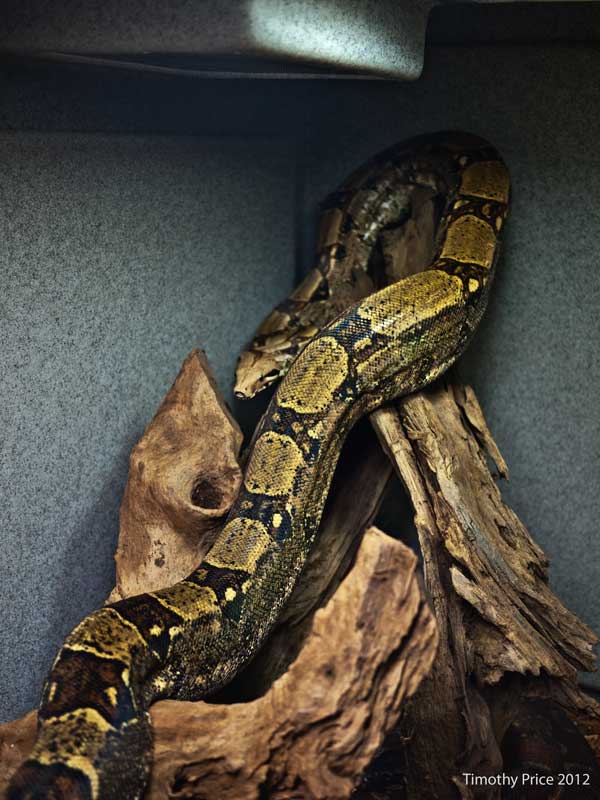
Blue was a newborn about 10″ long when we got her. She’s now 9 feet long and weighs 15 to 20 pounds, I would guess. She still isn’t really sure about the new cage. I had to put her on the wood for the photo. She didn’t stay on it long as she wanted to get back in her hide box.

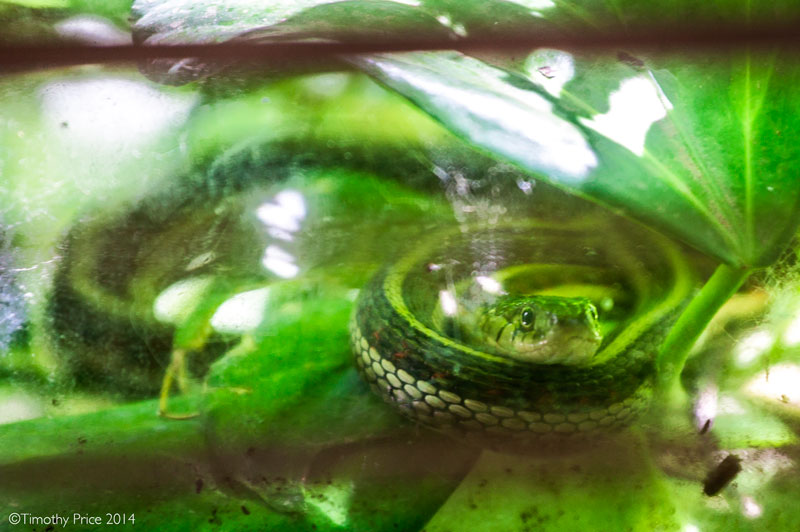
The lead photo is of Ghost, one of Tristan’s two ball pythons. Both ball pythons are beautiful, but Ghost chose to pose for me, while the other one crawled into a hiding spot.