The Cine Experiment

0219pri-R1-E024
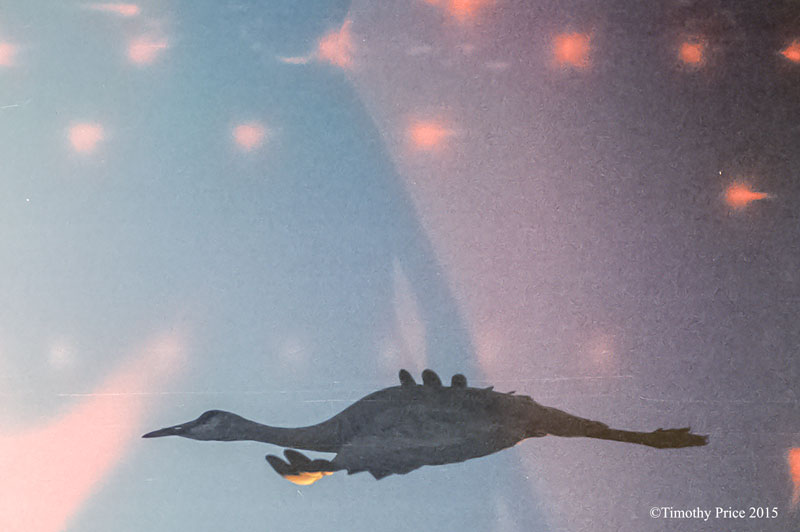
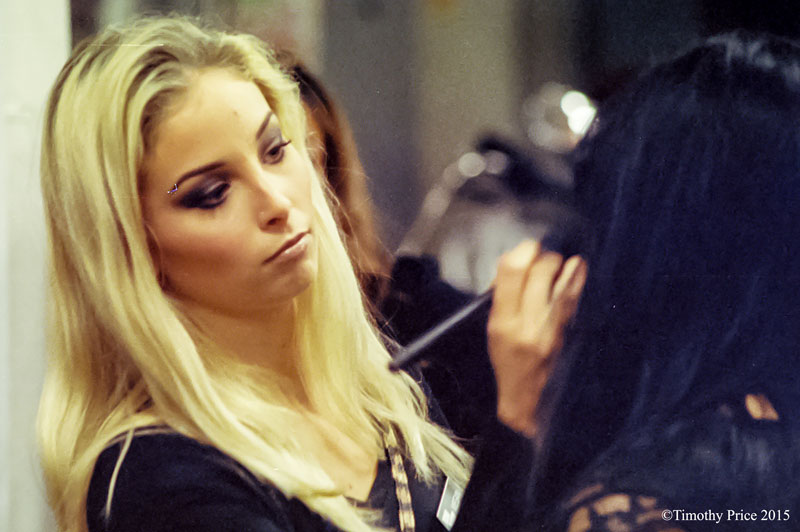
The last frame #24 on the roll of film affected by light leaks in the film canister.


I bought some Cine Film re-engineered for 35mm to be developed by standard C41 process. This is a high speed tungsten film normally used for cinematography. I had put the roll of film in my Canon F1 intending to shoot film along with digital of the fashion show at Gears & Glamour. However, since the fashion show was in the dark, and I hadn’t worked with the film before, I didn’t want to push it beyond its recommended ISO 800 until I had used it. Since this film is best used indoors or at night under tungsten street lighting, I only took a few shots in the well lighted prep area at Gears & Glamour, a few more at the West Side Chorale’s winter concert, and then decided to use it outdoors with a 600 mm lens. I knew the color would be off in daylight, but I wanted to see how well I could hand hold a 600 mm lens with high speed film.

I got a surprise when I got to the end of the roll of film. I noticed the advance didn’t stop, and when I tried rewinding the film, the knob turned freely. I advanced the film a couple more times to see it would stop — it didn’t, so I took the camera into the darkroom, opened it in the dark and carefully felt by the take-up spool, and discovered the film had not been secured to the spool in the canister. I took out the canister, and as carefully as I could opened it up with a can opener. I carefully pulled the film out of the camera, but when the last of it popped off the take-up spool, the coiled mess of film slipped from my hands and fell to the floor. Remember, I’m in total darkness, so I bent down, felt around at my feet, found the pile of film, gently picked it up, found an end to the film, found the spool from the canister and rewound the film back onto the spool. I put the spool back in the canister and forced the end cap back onto the canister. When I got the negatives back, the canister didn’t seal back up tightly around the edges after opening it (I had suspected as much), so the last frames on the roll had light leaks. This was a mystery, because the last frames should be on the inside of the spool and the first frames on the outside where they would be affected by light leaks in the seal around the outer edge of the end cap. Then I remembered dropping the film, so I must have rolled it back on the spool reverse of how the photos were taken.

The lead photo is frame 24, the last image taken, and the effect of the light leaks from being on the outer edge in the canister are pretty interesting. The rest of the images, shown in order taken, were not affected by the leaks on the edge of the canister.

0219pri-R1-E001
Frame 1 at Gears & Glamour with no effect from the light leak in the canister


0219pri-R1-E008
Frame 8 at the Winter Concert


0219pri-R1-E012
Frame 12 of coyotes on the other side of the river.
 

0219pri-R1-E018
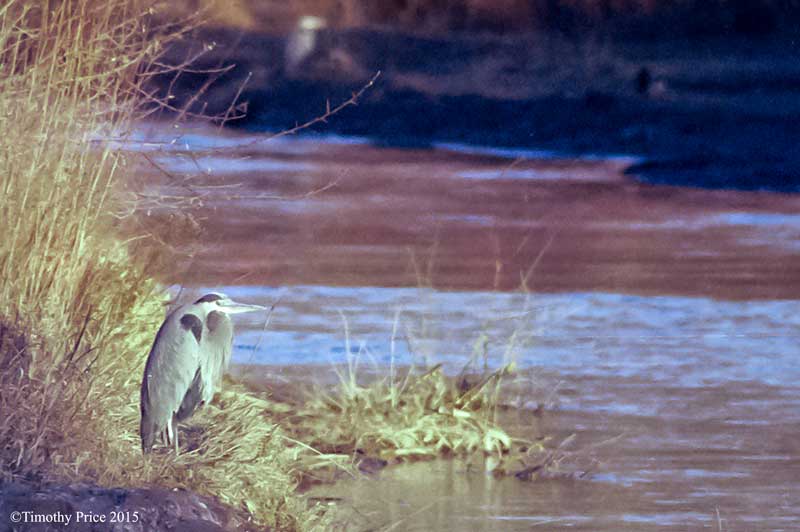
Frame 18 of a Blue Heron on a sandbar in the river.


Seagulls on the Rio Grande

IMG_2933

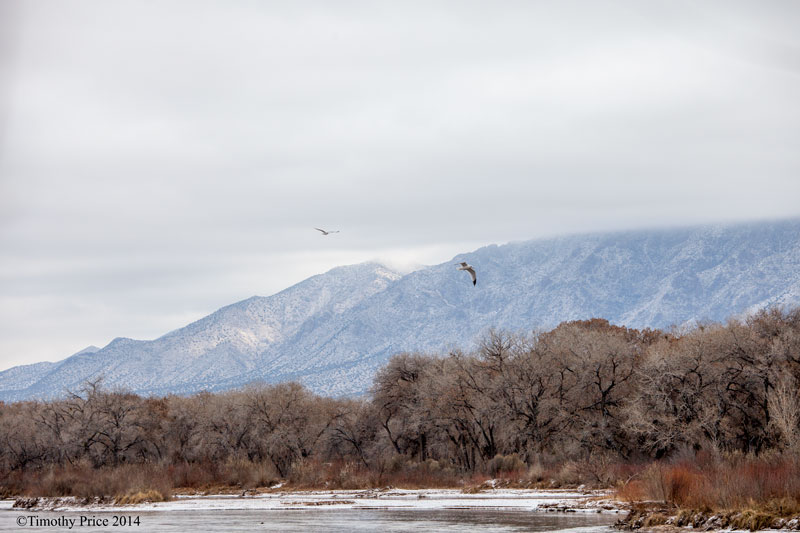
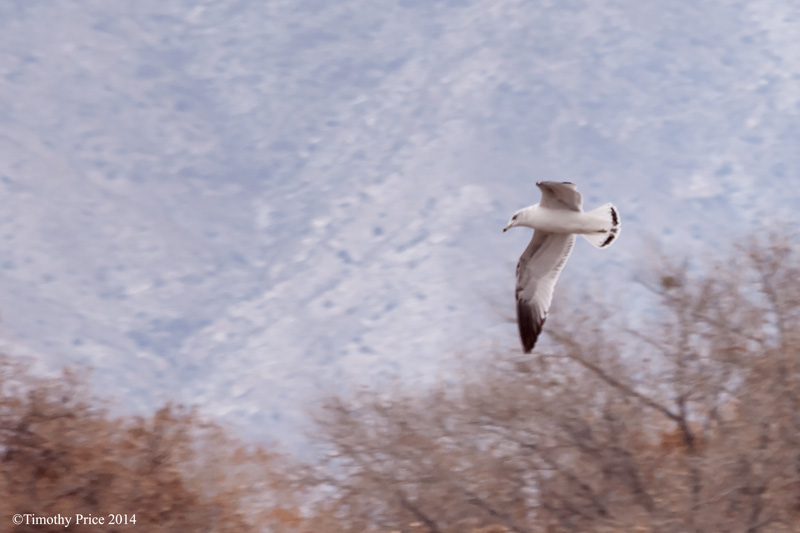
I went out on a walk in the bosque New Year’s morning. There was a light dusting of snow, and the sky was overcast. Several seagulls flew up and down the Rio Grande, often flying close enough for me to get clear shots with a 200 mm lens. Seagulls flying around in the high desert is a strange sight.
IMG_2950

IMG_2948

IMG_2922

IMG_3019
There are no seagulls in this photo. It’s a shot from one of the large, overgrown sandbars in the middle of the Rio Grande.


¡Adiós 2014! ¡Más Film en 2015!

SandiaDouble4X5024
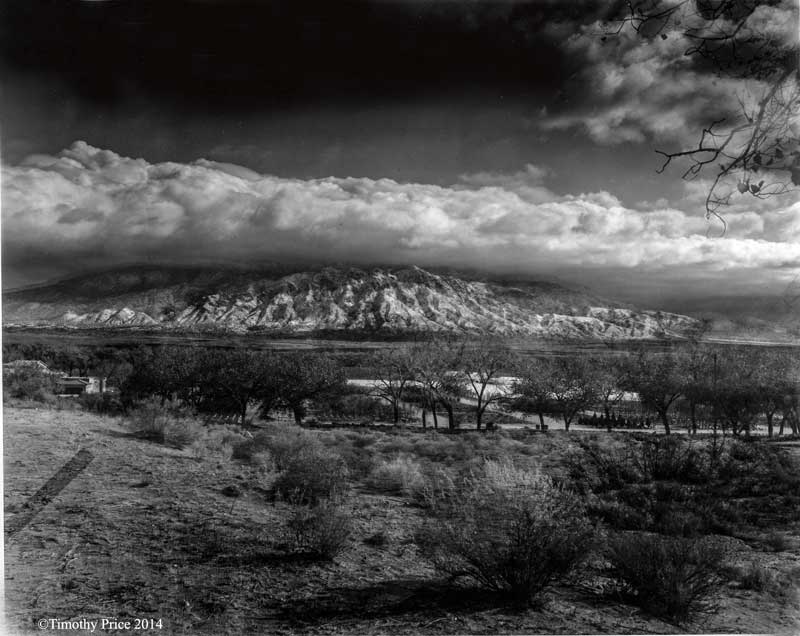
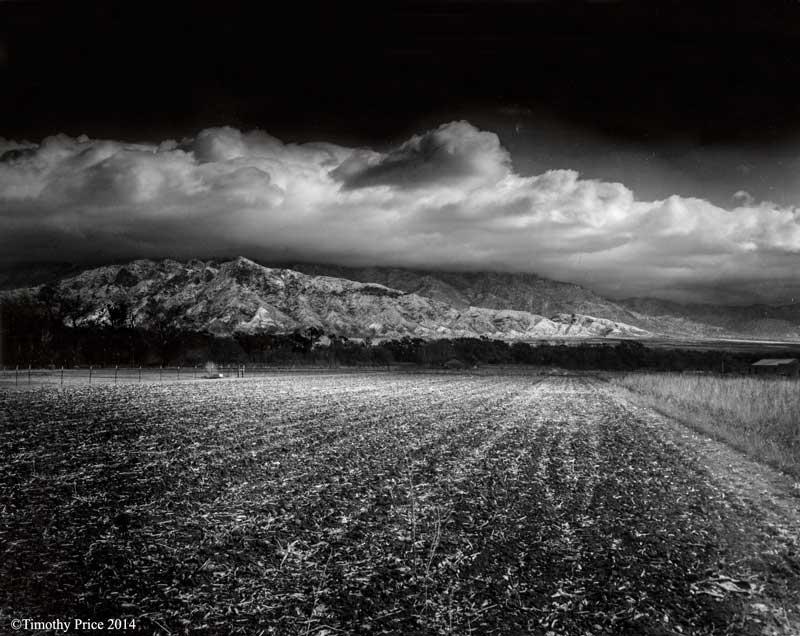
This print  is from a 4X5 negative I accidentally exposed twice from two different locations 1/2 mile apart from each other. The two images registered quite well (image is a photo of the action print).


A lot happened in 2014, but the most significant for my photography was finishing my darkroom, and going back to developing film and printing the negatives. While doing a photo a day for this blog still demands a lot of time with digital cameras and processing, I’m rediscovering the challenges and excitement of film again: loading sheet film holders in the darkroom,  taking a bunch of equipment out into the field, setting up the camera, taking multiple readings off a handheld light meter and then deciding on a good f/stop / shutter speed combination for the situation, composing the scene upside-down and turned left to right, setting the f/stop and shutter speed as per the light meter readings, cocking the shutter, inserting the sheet film holder into the camera, pulling the dark slide, tripping the shutter, turning the dark slide so the black label shows, inserting the dark slide back into the sheet film holder and removing the sheet film holder from the camera — one negative exposed.

Back in the darkroom there’s mixing chemistry and developing the negatives by hand in trays (about 30 minutes total). There can be a fair amount of manipulation when developing negatives depending on the developer used, temperature of the developer and time in the solution. No matter the process I choose for developing the negatives, once I’ve finished running the negatives through the fixer solution and turn on the light, it’s a magical moment to hold up a negative to the light and see an image on it.

Once the negatives dry, they can be printed. For photographers who have never worked in a darkroom and think that what is on the negative gets printed full-frame, without manipulation, think again. There is almost always  some cropping of the image, and then there is often a lot of manipulation in the printing process starting with the exposure and f/stop combo, dodging, burning and somethings using contrast filters on the enlarger; then there is the type of developer used, time in the solution and use of toners in the final processing to get the print to come out the way I want it to.

In many ways film is more exacting that digital, but at the same time film can be quite forgiving. The lead photograph is a good example. It was bitter cold and windy when I took the photo. I forgot to turn the dark slide to the black label indicating the negative had been exposed, because I moved a 1/2 mile to the north and by chance grabbed the same film holder and took a second exposure on the same negative. I noticed I seemed to be missing a photograph from the series of photos I had taken that morning after I developed the negatives, and finally realized what had happen from the ghost of the jetty on the lower left side of the print and the tree limbs in the upper right. Even though I was a 1/2 mile north for the second exposure, the Sandias and clouds registered close enough that they don’t look there were two exposures from two different locations. However, if you know the two areas, you can see some dark bushes that don’t belong in the foreground, the Rio Grande mixes in with the green houses and bosque in the middle ground, there are some double images of the Sandias on the left and right side of the print, and the white haze above the clouds are ghosts of the clouds from he second exposure.. Otherwise, the scene looks normal — another magical moment and mystery with film.

SandiaField4X5025
Plowed corn field in Corrales with the Sandias in the back ground. Photo of a print from a 4X5 negative.


Sunbeam6X7026
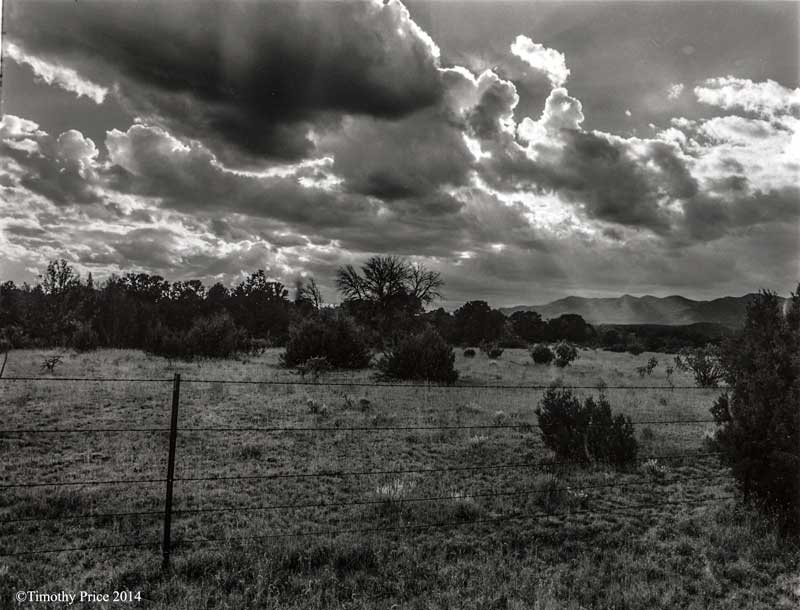
Light beams on the east side of the Sandias. Photo of a print from a 6X7 cm negative.


Eagle on the Rio Grande

Bald_Eagle_12_29_14

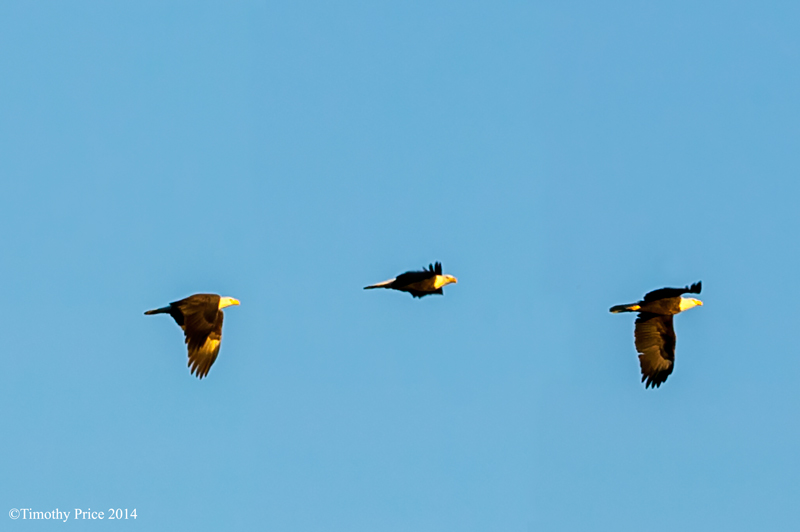
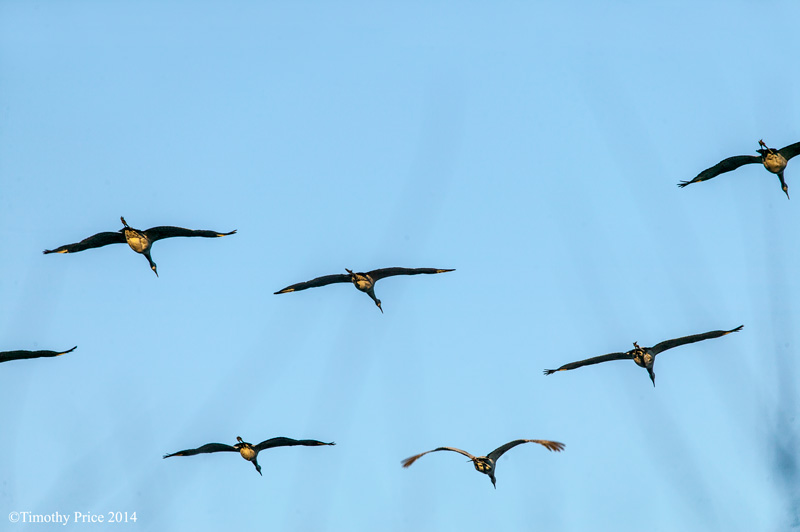
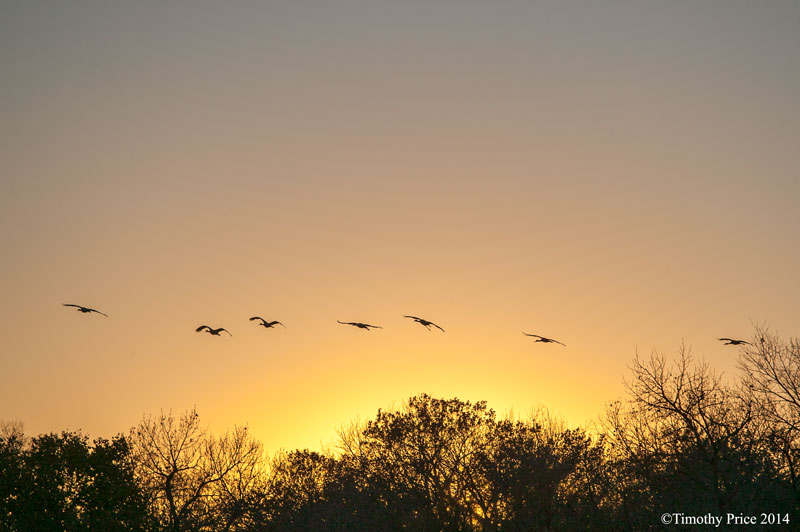
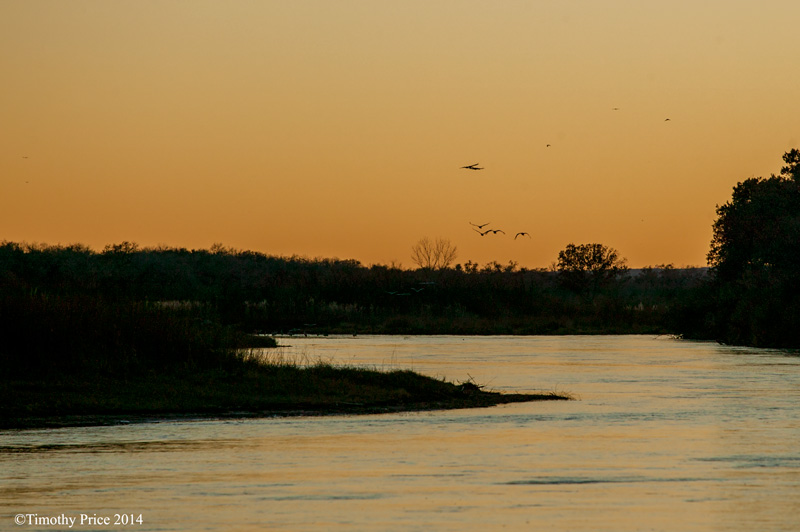
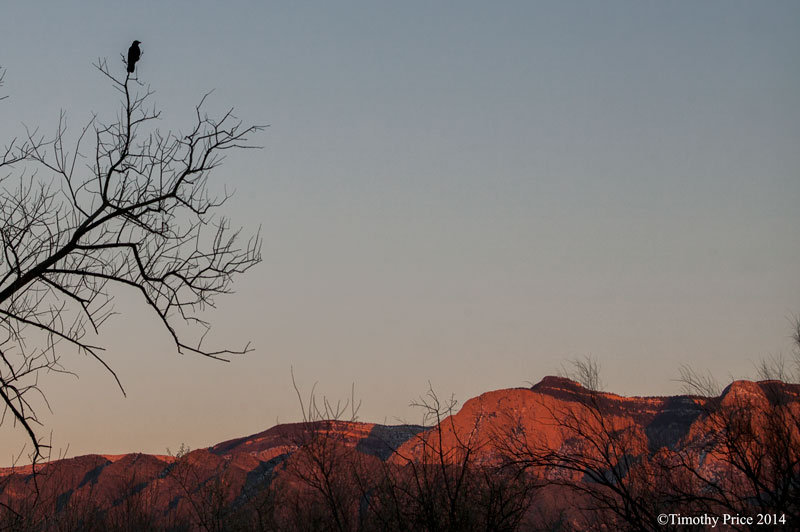
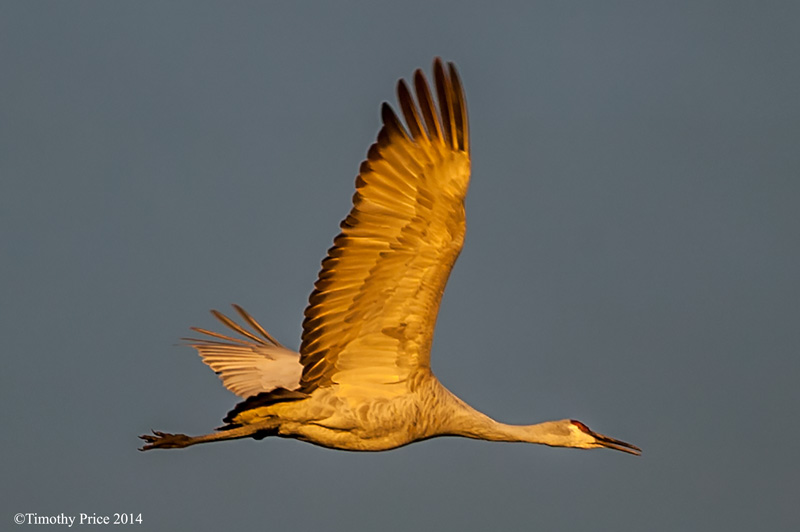
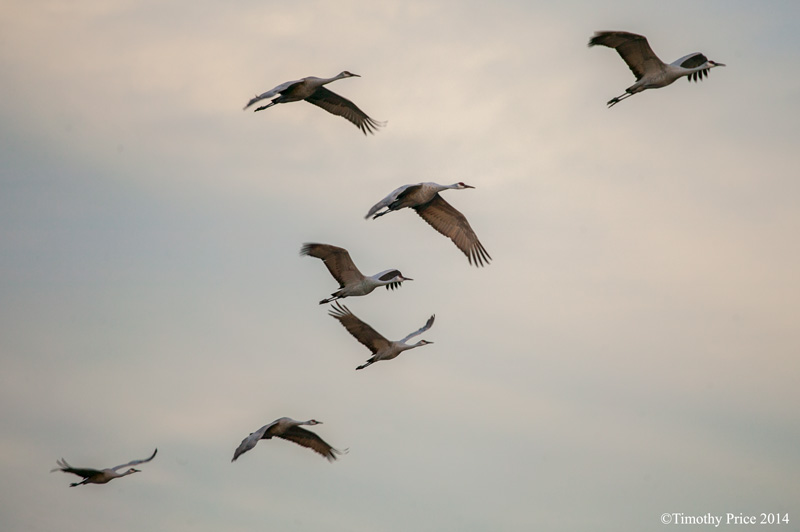
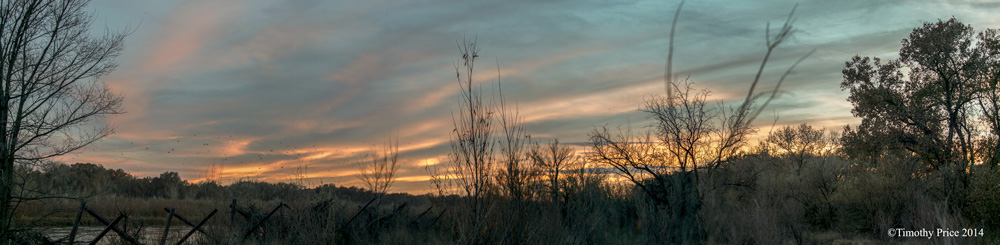
I went out for a walk along the Rio Grande just before sundown. A Bald Eagle was flying home along the far bank of the river, almost out of reach of my 70-200 mm zoom lens at 200 mm. The Sandhill Cranes were flying in for the night looking like bombers in formation as they flew overhead. As I made my way back home through the bosque, a lone crow sat on top of a branch watching the last bit of pink before it faded into the gray dusk.

45CU9383

45CU9405

45CU9428

45CU9432


Snow on Sandias

45CU9361

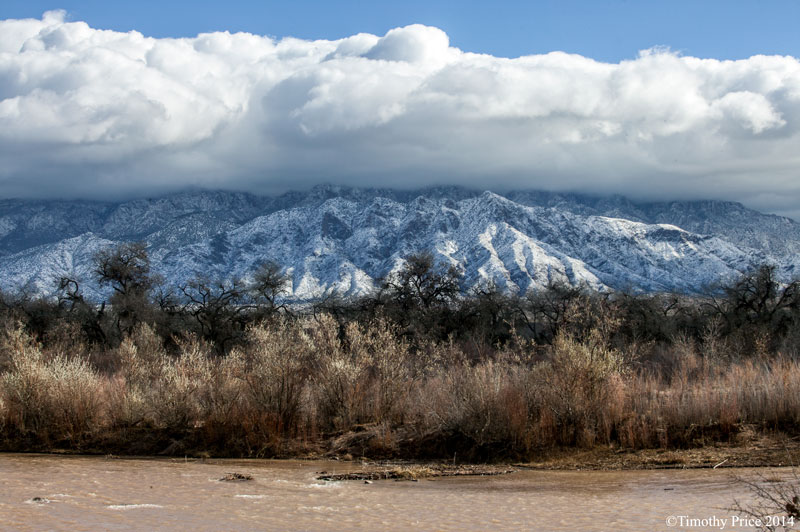
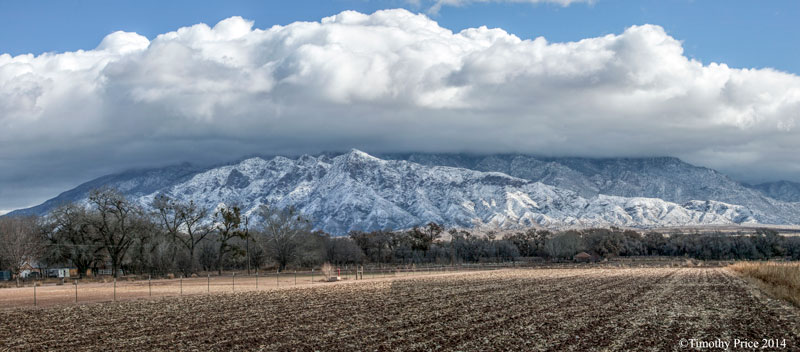
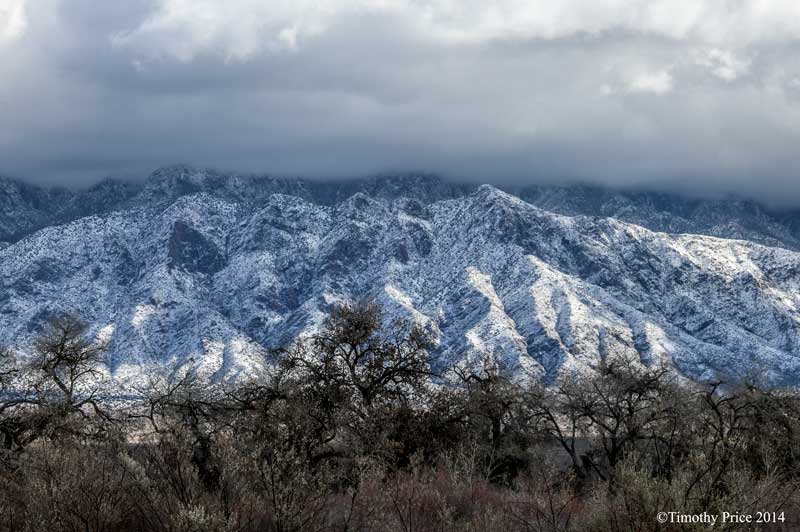
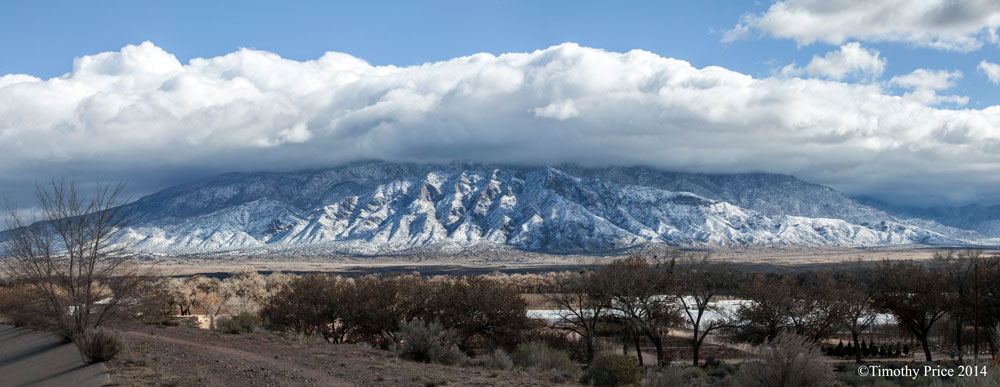
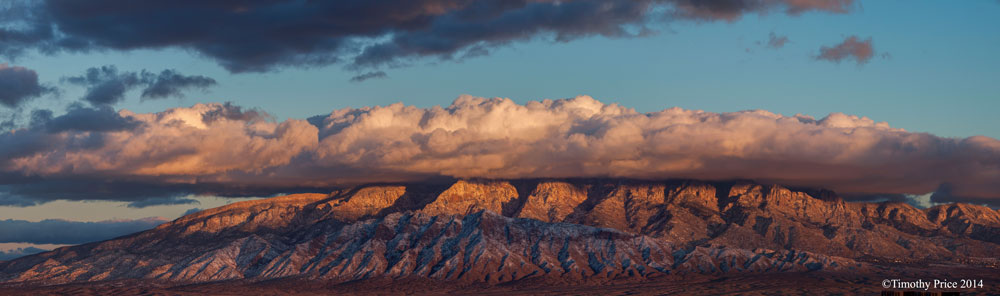
We got a little over 1/4 inch of rain last night, while the Sandias got snow. I went out into the freezing wind around 11:30 AM to get photos of the snow covered, cloud capped Sandias from different locations in Corrales. However, the last panorama was taken at sunset from Rio Rancho.

SandiasSnow12-14-14


45CU9360


SandiaSnowFromRR12-14-14

Sandias12-14-14


Prince Charming

45CU8643

I went out to see if there was water in the irrigation ditch. There was no water in it, but while I was out, I walked over to the clearwater ditch that runs between the irrigation ditch and the river. While I was checking out the dragonflies and other critters hanging out by the water, a bullfrog popped up to see what I was doing. He was very charming.

45CU8652
Irrigation ditch


45CU8632
Clearwater ditch

45CU8642