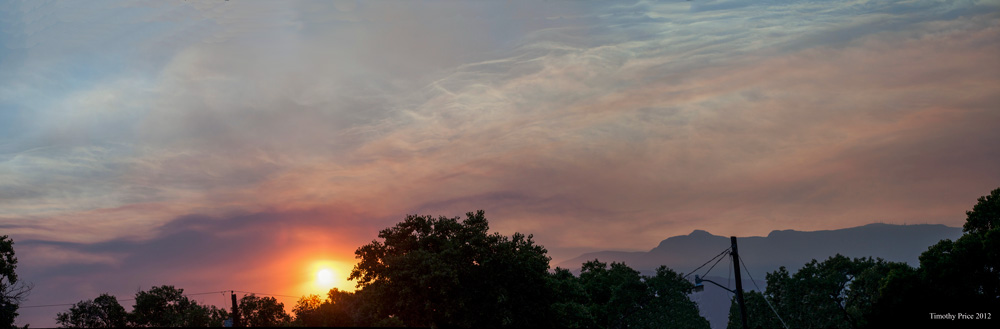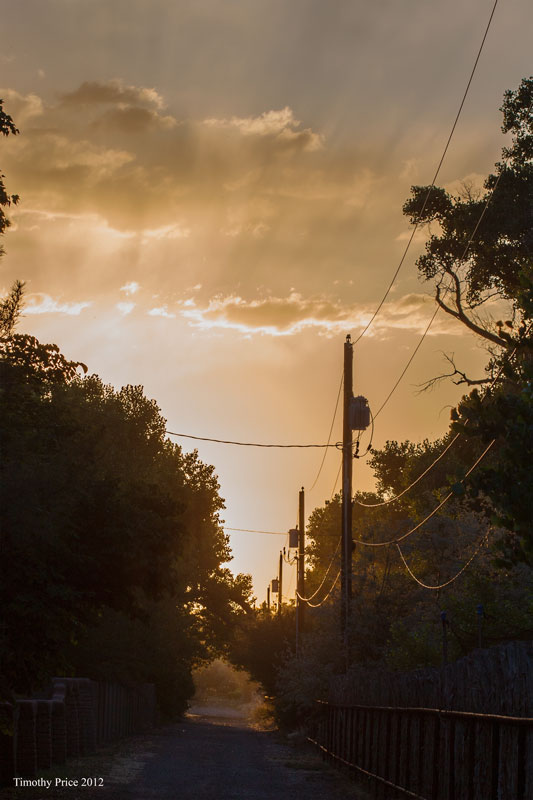
The one positive aspect of smoke from wild fires is that it makes for nice photo opportunities with the sun in the background. But that’s about all the good I have to say for the smoke. My sinuses are messed up, my eyes are irritated and I have a headache. The smoke makes it hard to work outside, plus we have to run the refrigerated air units inside, because the swamp cooler pulls smoke into the house. Actually, there is one more positive feature that I can think of about the smoke — it often makes flying insect sluggish so they are easier to photograph.
Category: Uncategorized
And There Was Light
When I first studied cartography back in the technological stone age — 1979 — I drew maps by hand. All research and data collected for maps was either done in the library or out in the field, and the results were compiled and tabulated by hand for manual analysis that was eventually drawn on the maps. I even had to calculate the projection I wanted to use and then project the map based on a globe. Cartography was a very time consuming process. By 1980, we were allowed to use the mainframe at the university to analyze some of our data. I wrote programs using Statistical Analysis System (SAS); each line was a punchcard (a typical program had hundreds of punchcards), and the punchcards were fed into a card reader. Then I sat in the computer center drinking coffee and doing homework for great lengths of time until the output of the program came back. If there were errors, I would fix the lines, produce new cards, replace them in the stack of cards, feed the card reader, and wait for the next output with errors or results of the program. Even though I got to use the computer to run the stats, I still had to map the results by hand. By the time I graduated in 1983, GIS was just coming into use at the university.
I was thinking back to those days today as I struggled with getting map servers working on my workstation for testing and development, before I deploy them on our production servers. As I hacked installers of the various components to force them to find dependent programs that had different paths to the applications than the installers expected and beat my head against the desk hacking postgres so I could force-install postgis needed to deal with spatial data, I started to wonder if the world of GIS and web mapping were really advancements over old fashioned cartography. Once the hacking was done, and I had my workstation serving maps on the web, I thought better about doubting GIS’s ability to process and map large data sets in seconds that would take weeks or months to process and map by hand. In reality, the frustration and time spent hacking installers, and fighting programs to get them to work the way I want them to is well worth the trouble for the resulting efficiencies in mapping services we can offer. Although all this efficient technology ends up taking a lot of the art out of mapping.
Arrangements
Working four ten hour days is difficult to adjust to after two years of working a more traditional schedule. Up until May of 2010, I worked 10, 12, 14 hours a day, four days a week, and always took Fridays off. Part of the problem is that it’s difficult to get to bed early as spring moves toward summer. We often work outside until dark, then sit out on the deck, eat, read, listen to the concerts drifting over from the casino, watch the critters play in the darkness, and lay out on the lounge chairs and look at the stars — early evening quickly passes into late night, then the sun gets us up earlier each morning.
Fill ‘er Up with Coca Cola
Blooms Under The Eclipse
Between shots of the solar eclipse yesterday afternoon, I photographed the cactus and wild flowers that were blooming around where I set up to photograph the eclipse. All the cactus were low, and pear shaped, so I’ve labelled the photos as “prickly pear” and the color of their flowers, but I can’t swear they are all truly prickly pear. We are planning on going back out to this area this weekend, because there were a lot more varieties of cacti and wild flowers preparing to bloom. The landscape was surprisingly green considering how dry it’s been.
Ring of Fire
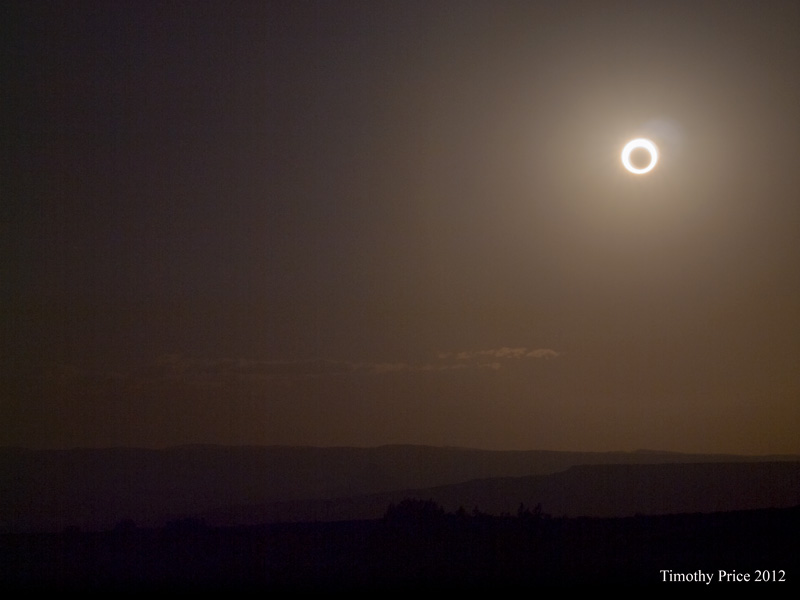
The experts recommended viewing the solar eclipse from a location where one could see Mount Taylor. Mount Taylor is in the distance on the left-hand side of the panorama above. The haze is smoke from fires in Arizona. This location is about 25 miles west of our house, and fairly remote; however, there was a group of people camped on a hill about a quarter mile south of where I set up my camera who were celebrating the eclipse. They all cheered when it first started and then started playing drums and flutes, and were having a great time. So even though we were out in the middle of nowhere, we had decent background music, interrupted with cheers at the various points, as we watched the sun slip behind the moon.
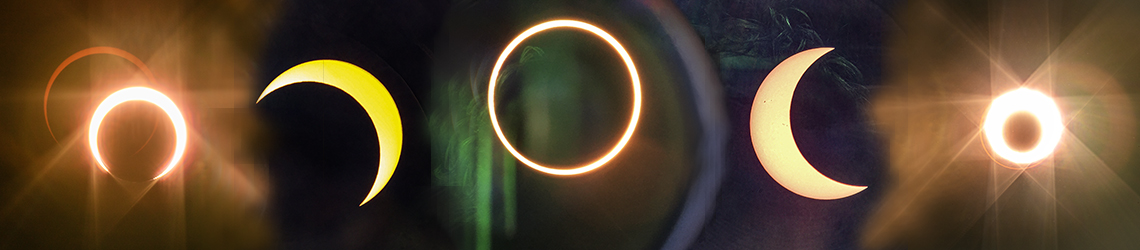
Most of the photos I took from the first cheer to after the “ring of fire” are very sharp, properly exposed, and very boring; however, I softened the focus and over exposed a couple of the the photos during the eclipse, which added a little color and some interest, in my opinion. I pulled the zoom back from 600 mm to 140 mm at one point during the 4 minutes the full eclipse lasted, and over exposed the image enough to get a little bit of the landscape under the “ring of fire”. One aspect that was truly spectacular with this type of eclipse was to see the two perfect circles of the moon and sun together.
Sunset Road
We worked in the yard most of the afternoon today. About 30 minutes before sunset we starting hauling the weeds we’d pulled, dug and hoed over to the driveway and putting them in the low spots. Every time I dumped a load of weeds I noticed the hazy light at the top of the road was becoming more and more interesting. I finally left the empty wheelbarrow and pitchfork by a pile of weeds and photographed the sunset on the road.
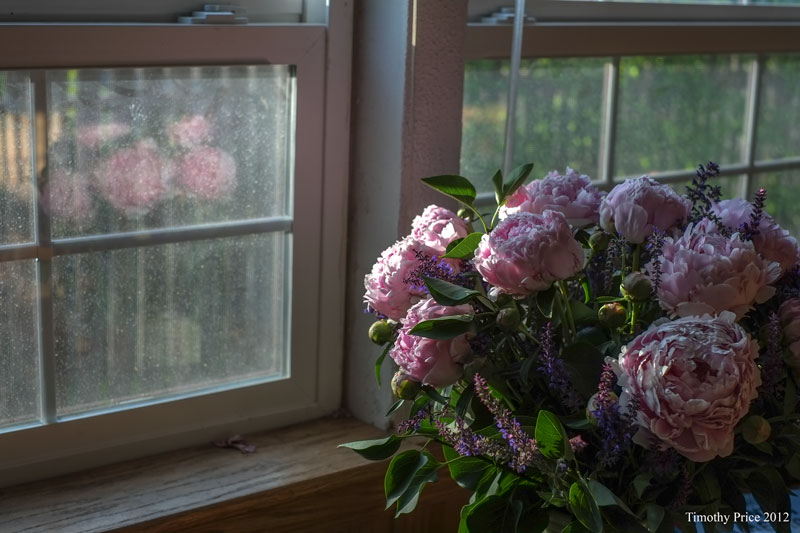
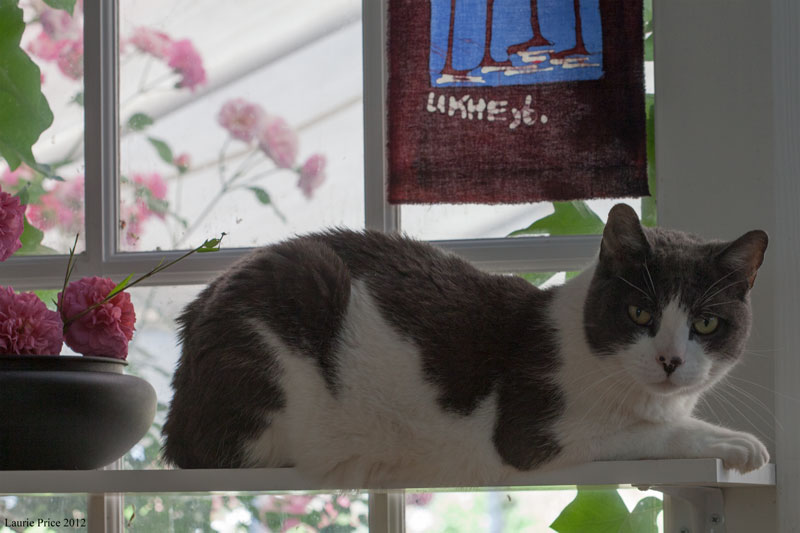
At one point when Laurie went inside to get something, Stretch was being a bonsai and struck a wonderful pose for her. When I brought the camera back in from photographing the road, I noticed the little bit of sunshine still making it through the window was shining on a couple of the pink Peony in the new arrangement Laurie made and that it left a nice reflection it the window. I finally made it back outside to finish hauling the remaining piles of weeds, but with so many photo ops constantly presenting themselves to us, it’s amazing how much yard work we got done today.
I checked the irrigation ditch after the sun went down to see if by chance there was water. I figured I’d irrigate tonight and save myself getting up a 2:00 or 3:00 in the morning to irrigate. Alas, someone already had the gate down, and the ditch was only 1/4 full. I hope whoever is using it up north finishes and releases the water by the wee hours of the morning.
We’ve put 10 new roses in what we call the “Circle Garden”, replacing roses that had died. I’m starting to overhaul the drip system, I cut all the dead canes out of the rose bushes, and we have all the weeds out of the area outside the circle garden ready for new cardboard and mulch. We recycle cardboard by laying it on the ground and then spreading about 2 to 3 inches of mulch on top of the cardboard. The cardboard eventually composts, but until in does it helps keep the weeds from growing in the mulch.
Here Comes The Sun
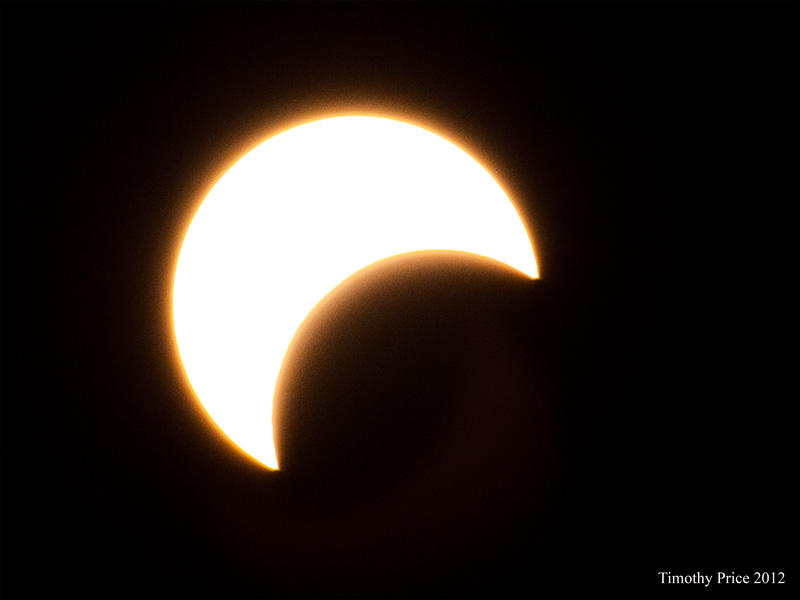
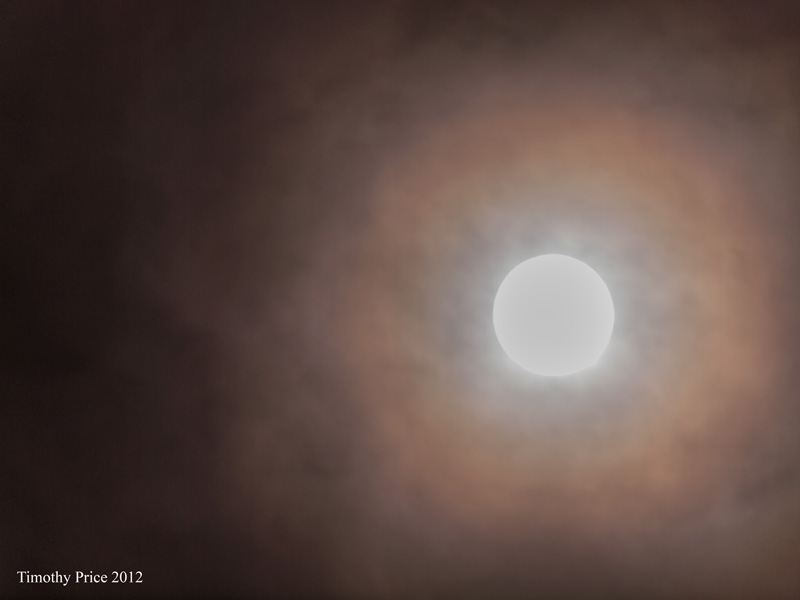
I tried out my new solar filters on the noon day sun, and the sun at 7:30 pm this afternoon (the time of the full eclipse on Sunday) to see how they work. The filters reduce the light by 9 stops, and I’m underexposing the photos by another five stops from what the light meter would like the exposure to be. The noon day sun is through cloud cover, and shot at 600 mm. The 7:30 sun, shot at 400 mm, is shining through a hazy sky. Both photos are full-frame, how they came out of the camera.
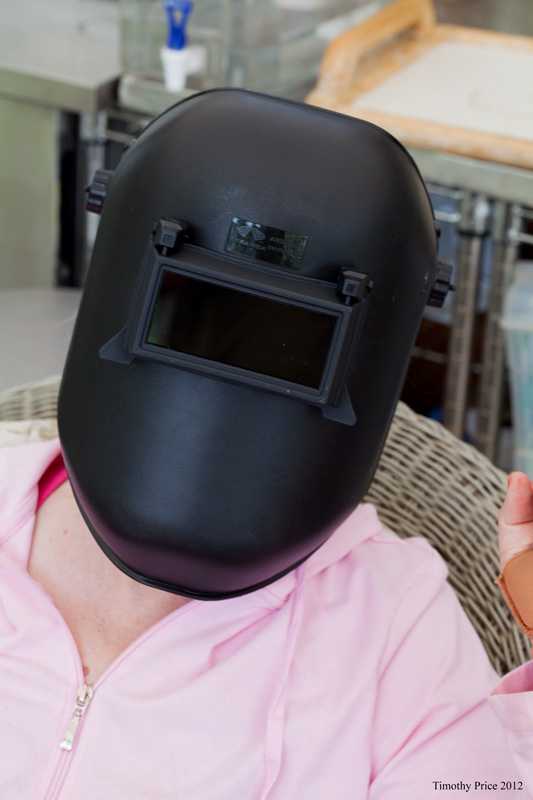
We got new welding helmets to view the eclipse with. They say cheap 3-D type glasses can be used to view the eclipse, but the welding helmets with #10 glass are equivalent to about 11 stops on the camera, so the sun looks very much like today’s photos viewing it through the welding helmets. We laid out on the chaise lounges at lunch and watched the clouds pass under the sun through the welding helmets. It was very entertaining.
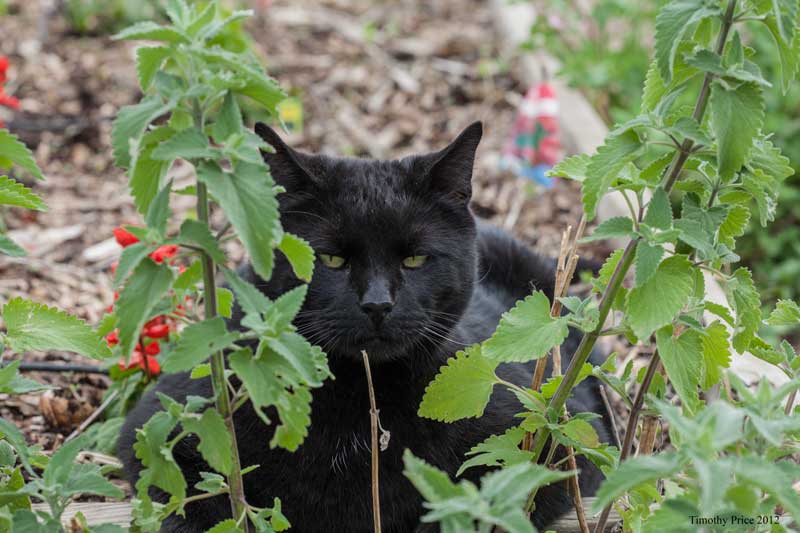
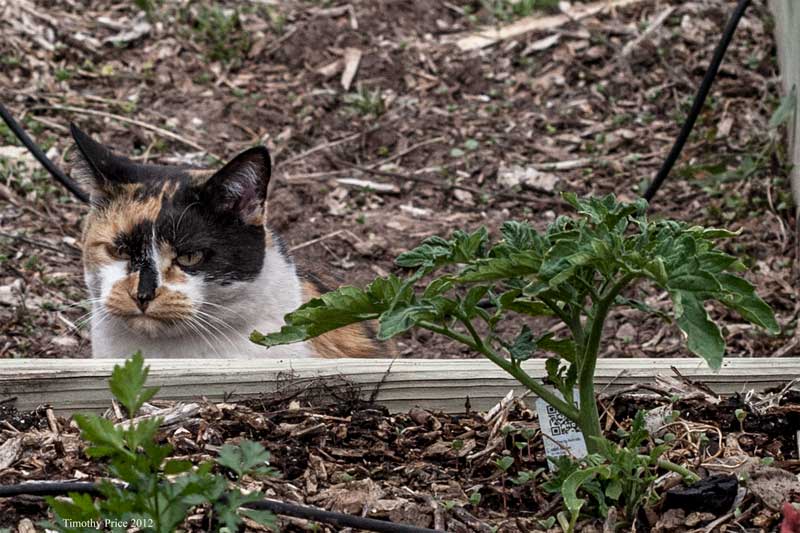
The kitties were really happy to have me home working in the garden this morning. Guildenstern smashed flowers and chewed on catnip, and Diné guarded one of the tomatoes while I worked on drippers for the vegetable garden.