France Day 23 Hittin’ you with my best shot!

MonaLisa

We got into the Louvre when it opened, rushed to the Mona Lisa and there were only about 50 or so people crowded in front of her, making it easy to get up to the rope to get the closest view possible. The Mona Lisa is the perfect portrait of the perfect model in the perfect pose. She is like a self portrait of how everyone would like to see themselves, and the reflections in the multiple layers of glass protecting the Mona Lisa adds to the sense of the portrait as a reflection of our own portraits.

After three hours in the Louvre we had browsed the entire Italian and Spanish painters wing and then went through the exhibit on Egyptian art and culture. In the Spanish sections, there was a small exhibit of plates by Goya, where I got the photo of the woman looking out the window that almost matched Goya’s woman on a horse.

One thing really nice about our apartment being so close to the Louvre is that we go back to the apartment and fix lunch before we go out again. Laurie made crepes for lunch that were wonderful, and then we strolled through the Tuileries on our way to the Musée l’Orangerie where they have expressionist paintings by Cézanne, Renior, Monet, Picaso, Rousseau, etc. Along the way we saw goats mowing a moat, a teenage bird bigger than its mother still asking her to feed it, duckings napping, flowers starting to bloom, iris and a few roses.

WomanReflection

45CU6675

MamaTeenBird

Goats

Ducklings

CezanneRenoir

France Day 22 Virtuosity on Parade

A18W8804

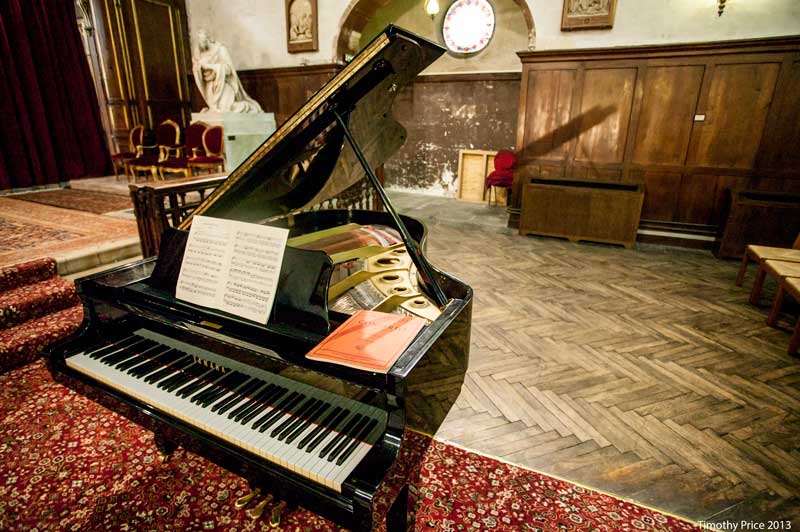
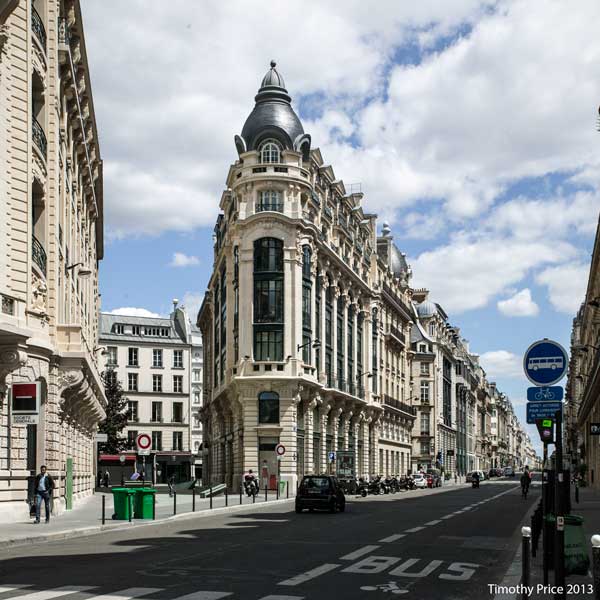
In the afternoon we walked to the Cathédrale Sainte Croix des Aemeniens about 3 km east of our apartment to attend three recitals. Along the way we saw a lot of interesting triangular buildings, some women on a building holding up a balcony, and we walked through a large flea market before we got to the church. The church was old and not in the best repair, but the acoustics were phenomenal. The first recital was Youn Soon Lee on piano. She played Beethoven so well her playing was like listening to an orchestra. The pieces she played were light and showy with lots of flashy runs and arpeggios that she would build up, pull down, build up, pull down and build up again until she brought the pieces to their explosive climaxes. Ms Lee’s performance was magnificent.
After the first recital we walked down to a restaurant/bar and got coffee before the next recital. The area we were in had a lot of art studios and private art galleries, the bars were filled with people, and the streets bustled with people walking, riding bikes and navigating cars through the crowds making their way to and from the flea market.

I didn’t think we could hear much better than Ms. Lee’s performance, but Miran Dévétak’s interpretation of List and Fauré was nothing short of phenomenal. List was heavy, complex and melodic, punctuated with fits of quick runs and dynamic, loud sets of chords. Fauré was a little lighter with a modern (1900sh) rhythm, and very quick, complex fingerings that Mr. Dévétak executed flawlessly.

The third recital was a violin/piano duet by Eun Bi Gang on violin and Jean Dube on piano. They were also fantastic performers. Ms Gang started by doing a solo of Martinon Sonatine No 5 op 32. The piece had some amazing secondary rhythms that she played under the melody, which was really remarkable. Mr. Dube accompanied her on the piano on Bach’s Sonate 2 Andante, Mozart Concerto No 5 1st Movement and Tchaikovsky’s Concerto op 35 1st movement.

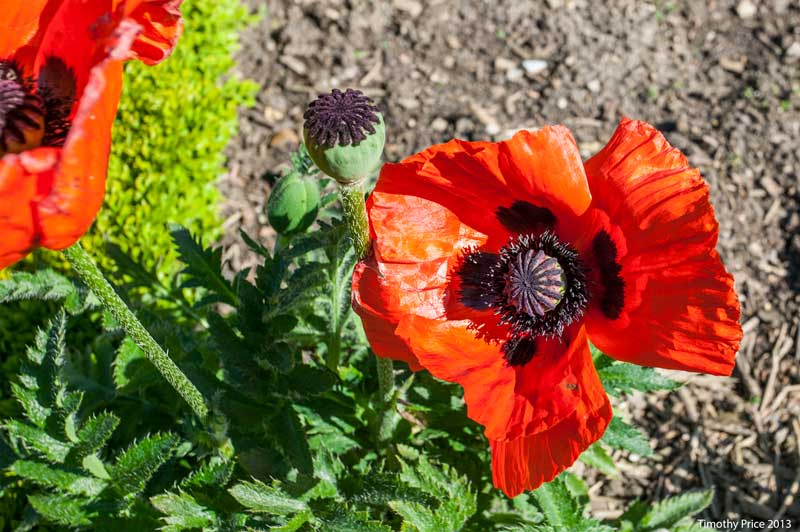
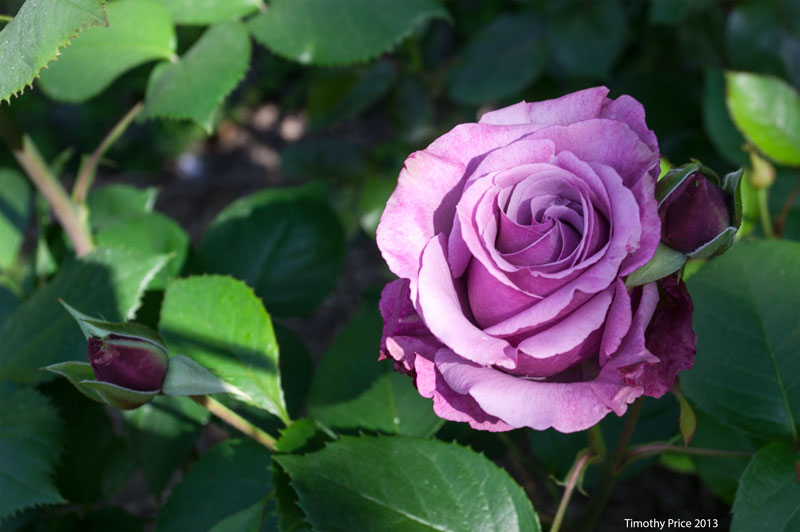
On our way to Notre Dame in the morning, we came across a bird market that had cages and cages of small parrots, parakeets and finches. While I was photographing flowers (the poppies were huge) and roses in the garden behind Notre Dame, I came across an early bird getting worms.

A18W8783

TriangleBuilding

A18W8810

WomenHoldingTerrace

Paraketes

Poppy

EarlyBird

PurpleRose

France Day 21 Where’s Henco?

WheresHenco

We went to an organ recital at Notre Dame by Henco De Berg last night. Notre Dame’s organ is the most famous pipe organ in the world, according to the handout. Mr. De Berg played pieces by Charles -Marie Widor (1844-1937), François Couperin (1668-1733), Olivier Messiaen (1908-1992) and then he played an improvisation on 2 gregorian themes. Several people in the audience couldn’t take the heavy, modern pieces and improvisation, but I found them interesting a quite fun to listen to. There were a lot of sustained, very low and dissonant chords, but when I closed my eyes, I could hear the other notes played under the sustained cords and there was a slight stereo effect as the higher notes swept back and from one side of the pipes to the other. Since the organ sits about 30 feet about the floor, the organist is quite anonymous. Even when he stood to acknowledge the applause, you could hardly see him in the low light against the background of the organ.

Before we went into the recital,  I got a photo of one of the roses blooming behind Notre Dame.

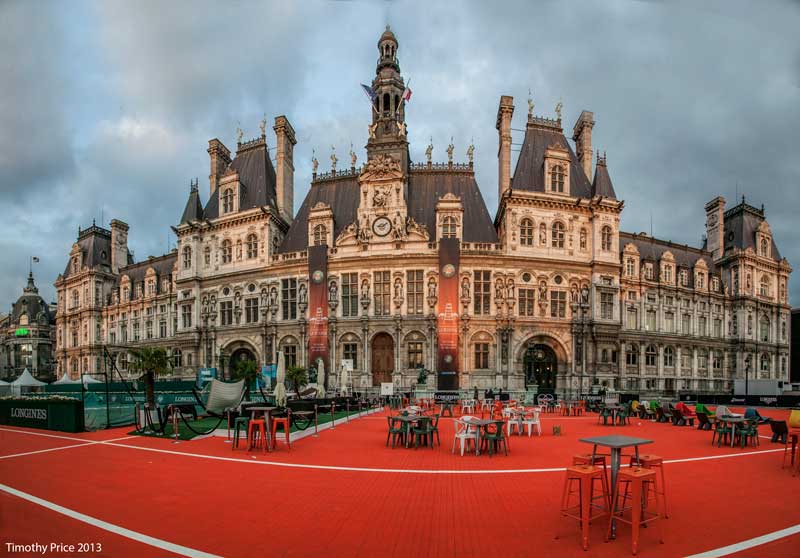
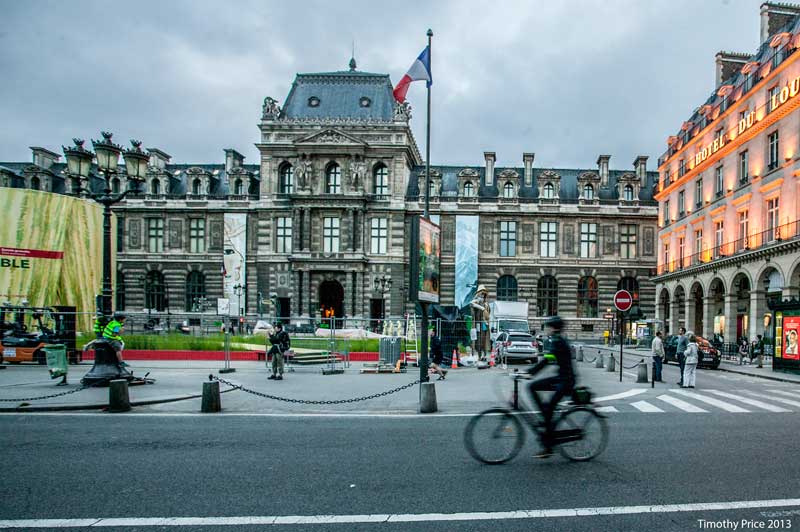
On our way back to the apartment,the sun was low and very orange over the Seine, and it cast a soft orange light on the town hall that complemented the orange turf they had in front of the building. The bicycles in the fifth photo are all over Paris in what they call “Stations Velib'”. The city is promoting use of these bikes to help reduce pollution. There is a central pay station that allows you to get a bike. The first 1/2 hour is free, then it costs 1 Euro per 1/2 hour with a max of 4 Euros for 4 hours or more. There are 24 Stations Velib’ in our arrondissement.

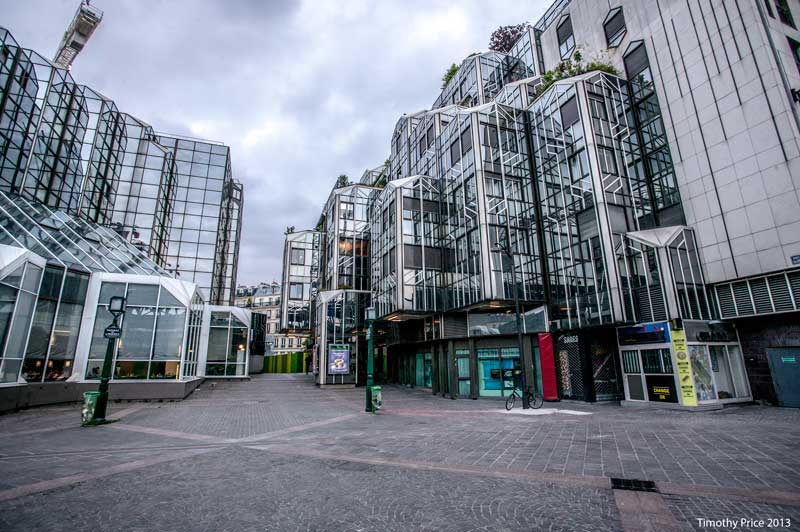
Laurie wanted to take a different route home, so we walked up to the Pompidou center and headed west towards Opera. We walked by some modern buildings and a site where a giant shopping center is under construction. There were a lot of young people getting ready to party, others were just hanging around, while others were skateboarding at a fountain. Among the many activities along the way police argued with a group of young men, people who looked down and out walked around collecting stuff off the street, other groups of people off in doorways argued and yelled at each other — activities that made it seem like it wasn’t the safest area to be in at 10:00 pm — so we dropped down to a main street that took us back by the Louvre and connected with Opera.

We got out first thing this morning and walked back to Notre Dame to attend the 8:30 service. On the way back the apartment we popped into a couple of churches and listened to the music for a few minutes. We dropped into Eglise Saint Germain l’Auxerrois during the offertory, and the organist played a fantastic piece that sounded heavenly. Then we stopped in L’Oratoire du Louvre, which turned out to be a Protestant church that goes back to 1611. They were finishing a baptism and then a guy sang a solo accompanied by the organ.

RoseNotreDame

A18W8719

CityHall

A18W8708

A18W8736

LouvreHotel

France Day 20 The Louvre

A18W8608

If you want to see a nice, close-up view of the Mona Lisa, look her up on-line or in an art book, because you can’t get a good look at her at the Louvre.

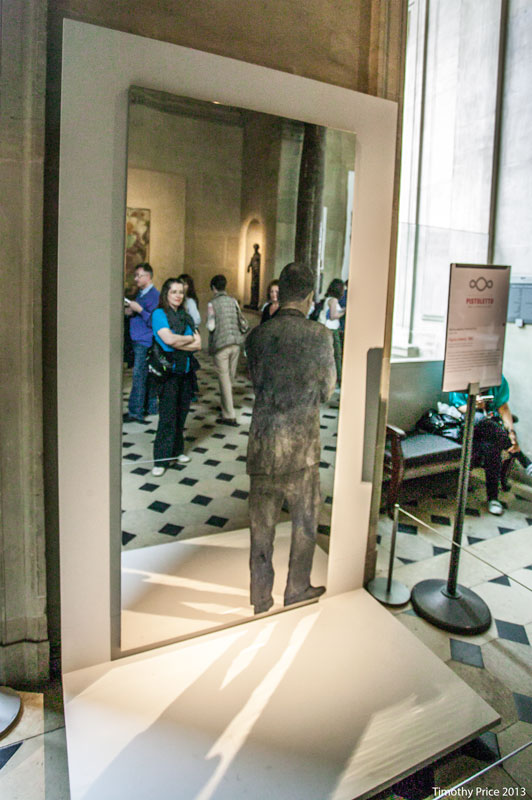
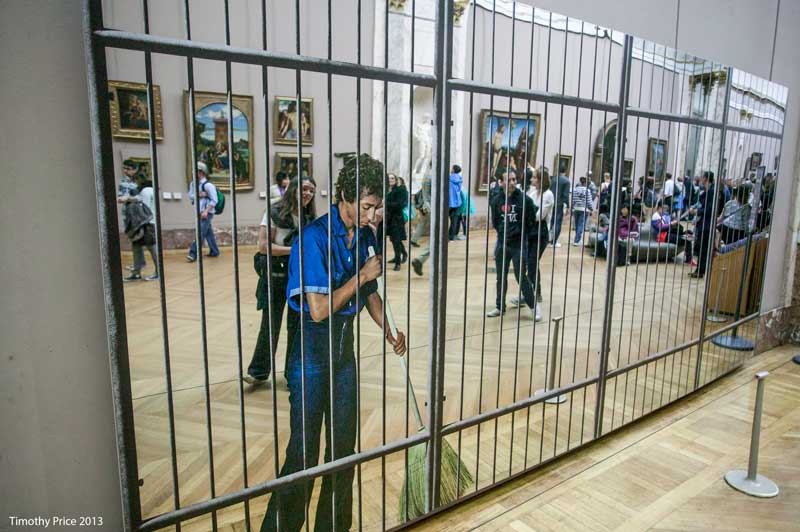
The Louvre has a current exhibit of a large-scale series of installations, encounters, theater performances and public activities by Italian artist Michelangelo Pistoletto (1933, Biella). The exhibit is titled Year 1: Earthly Paradise, and it marks “the transition into the new era of human, social, and cultural metamorphosis that was celebrated all over the world… The exhibition embodies three different time frames: the past, in the context of a retrospective; the present seen in the mirror works reflecting the visitors; and the future in a great obelisk topped with a triple loop, a symbol of this ongoing revolution. Thus the sign of the “third paradise” adorns the pyramid… Spirituality, figuration, the breaking down of boundaries between the arts, social solidarity, and the merging of life and art: these are the themes permeating the thinking of Michelangelo Pistoletto…”

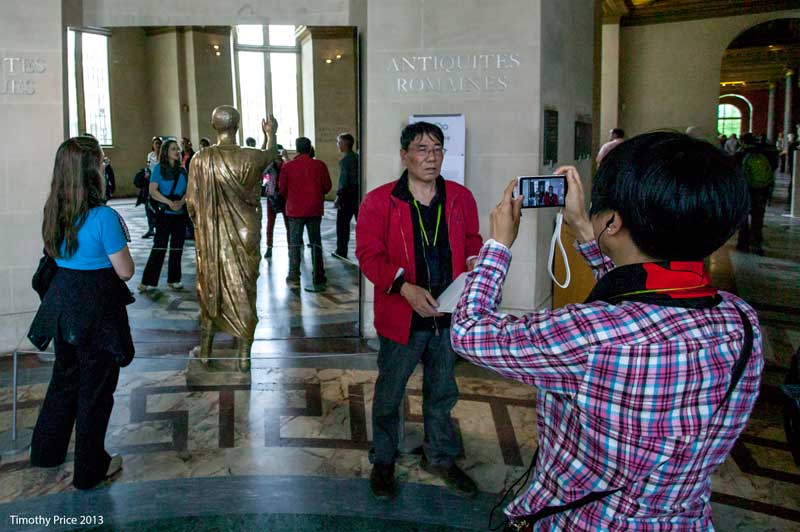
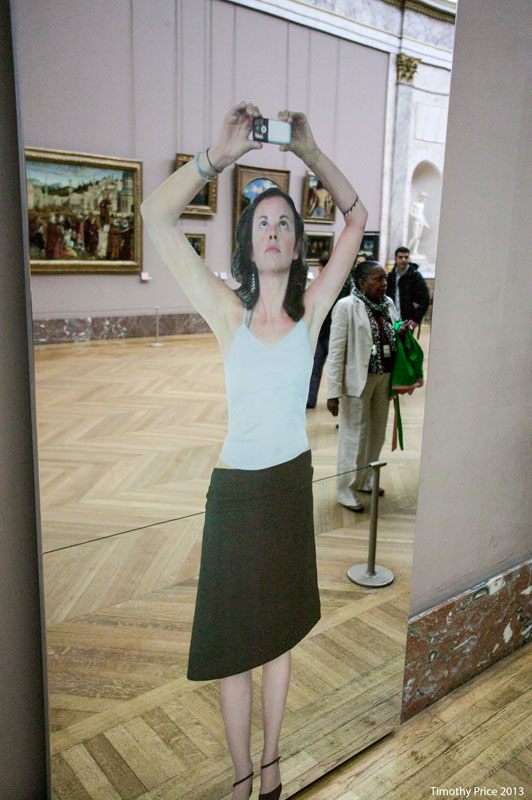
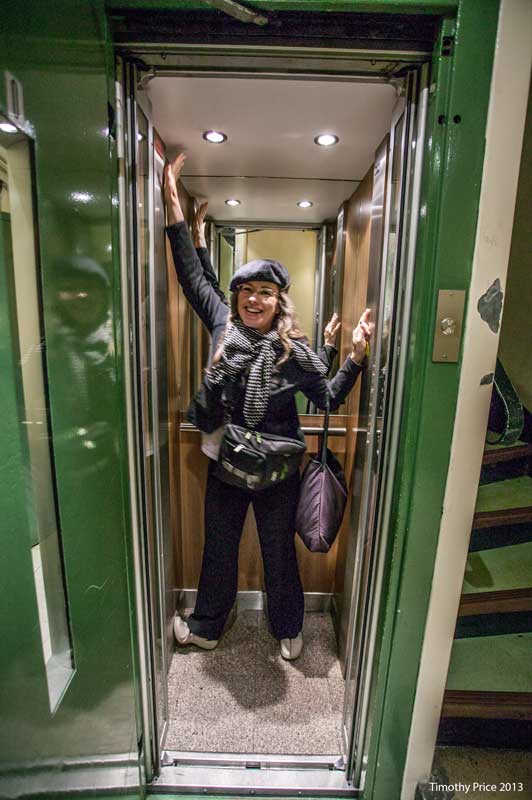
Every other photo in this set of photos is a photo of a Pistoletto installation. Most of these are from the mirror installations, but there were video installations where we were live in the video along with all the recorded video. One installation was neon in different languages in the medieval part of the Louvre and the last installation we saw was a room of mirrors. I also included a shot of Laurie in the tiny elevator in our building as it fit well with Pistoletto’s idea of past and present.

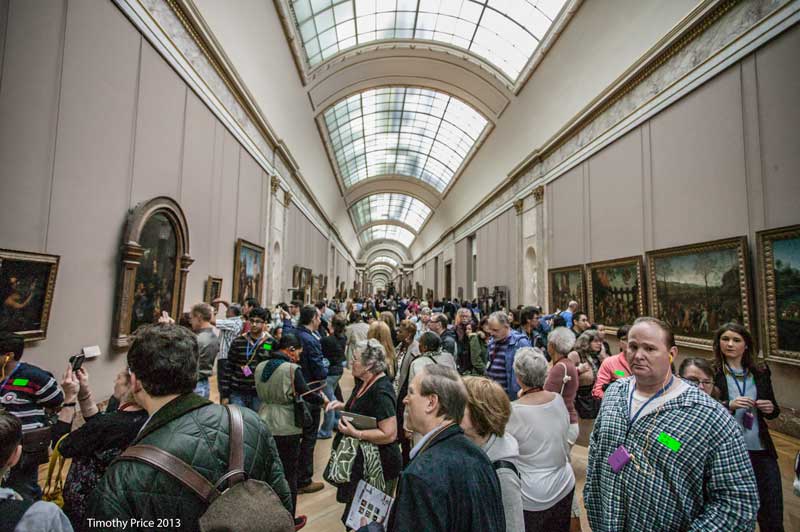
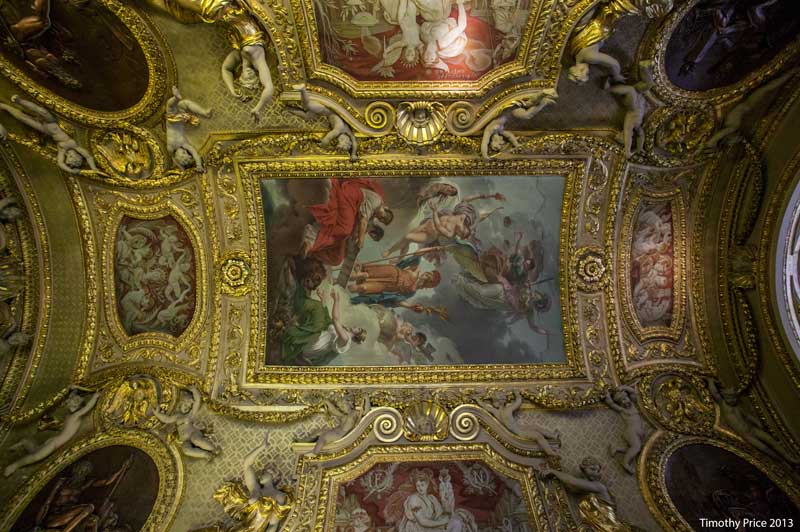
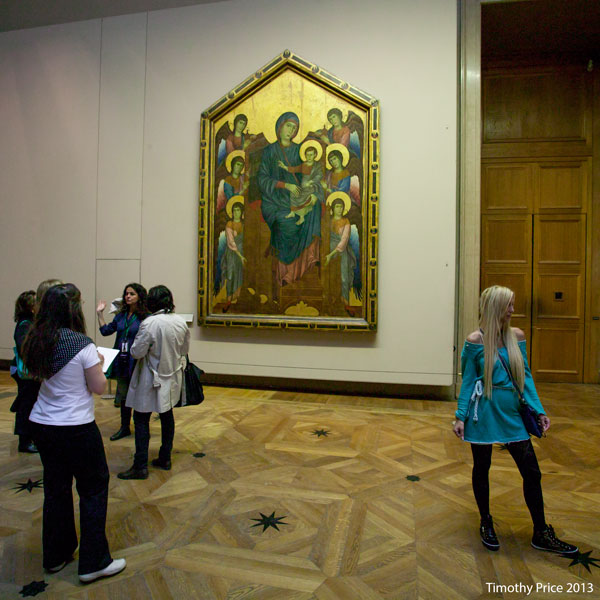
If you haven’t figured out that the Louvre is crowded, it is. It’s very difficult to get a photo of a painting without visitors in it, except for occasional breaks in the crowd and photographing ceilings. So I just view the crowd as part of the art experience.

We went to Handel’s opera Guilio Caesare last night. The orchestra used instruments from the period, which blended particularly well with the voices; the sets were monumental; the performers were fantastic. We were in a box seat slightly to the right of center stage on the first mezzanine level with 5 other people. The theater was packed. We arrived 40 minutes early, which allowed me to get some photos of the interior of the theater with my iPhone (last photo).

A18W8576

A18W8598

A18W8656

A18W8664

Pistoletto

Modanna

A18W8599

A18W8661

Pistoletto1

A18W8668

PhotoOfPhoto

Painting

A18W8623

A18W8638

A18W8625

A18W8631

A18W8601

Police

A18W8629

OperaHouse

France Day 19 Rain in Paris

A18W8250


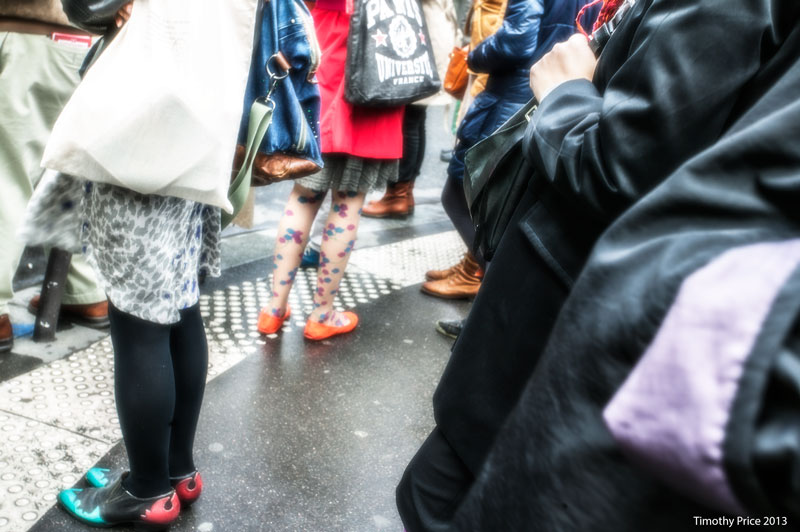
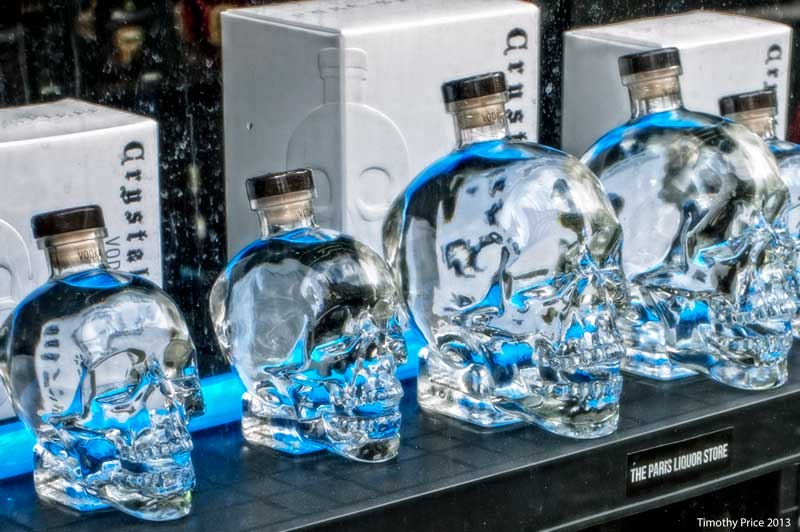
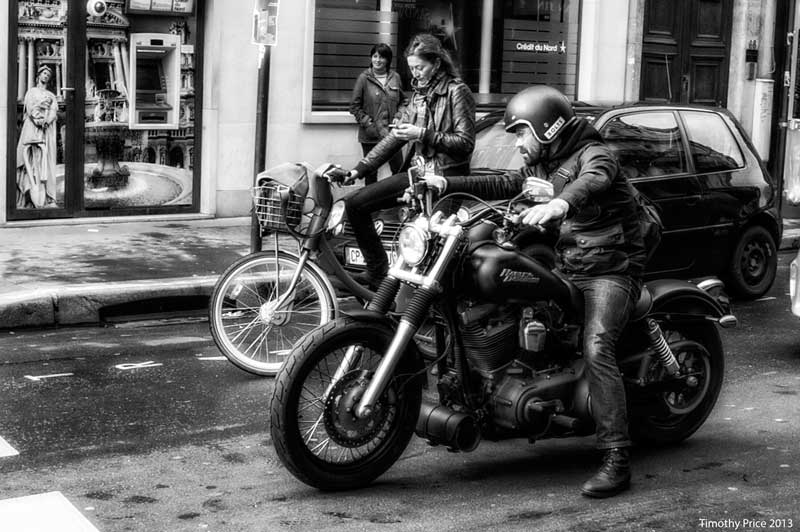
While Laurie was planning our “assault” on the Louvre, she read that it began as a fort in 1190 to watch for Vikings coming up the Seine. They somehow heard we were coming, because police were everywhere dressed in full riot gear, blocking all entrances to the Louvre when we got there. Lots and lots of people were walking around trying to find a way in, to no avail. We wondered if there had be a threat or other incident, then Laurie asked one of the policemen who told us it was closed because the president of Holland was visiting. So we went back up to our neighborhood, a ten minute walk on crowded streets in the rain, and explored the neighborhood. Today’s photos are shots of fashion on the streets and store windows in the area around the Opera. The area is pretty upscale, with fine clothing and jewelry shops and a variety of ethnic restaurants. There are a lot of tourists from all over, but there seems to be a large concentration of Japanese and Chinese in the area, and there are several Japanese restaurants and an oriental food store on the three streets that border the building we are in.


A18W8480


MonkDior


A18W8489


Red


Vodka


A18W8493


HarleyBike


France Day 18 A walk on Champs Élysées

A18W8284

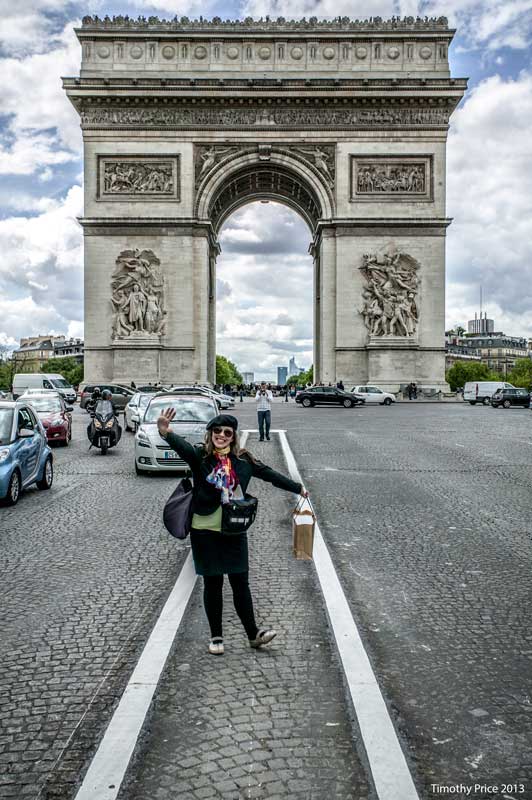
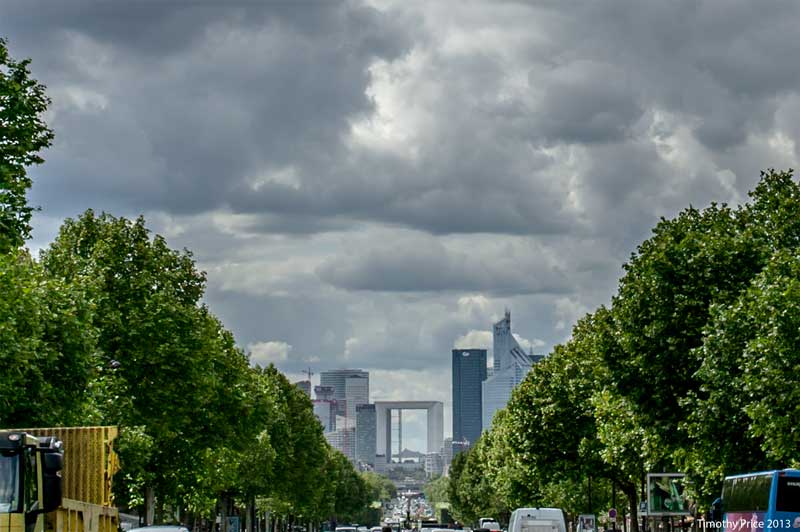
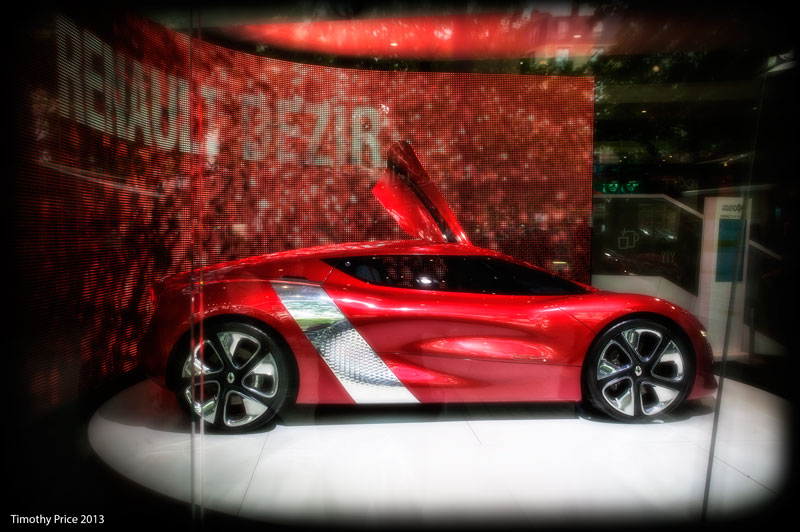
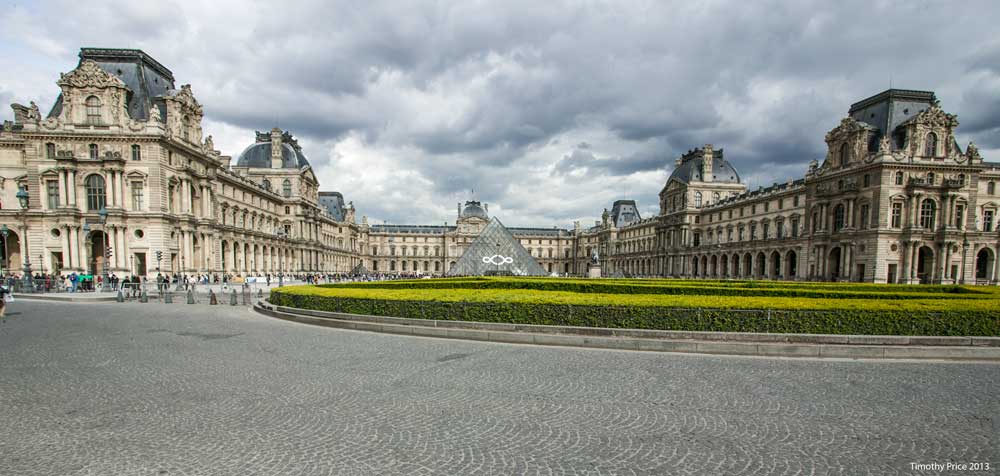
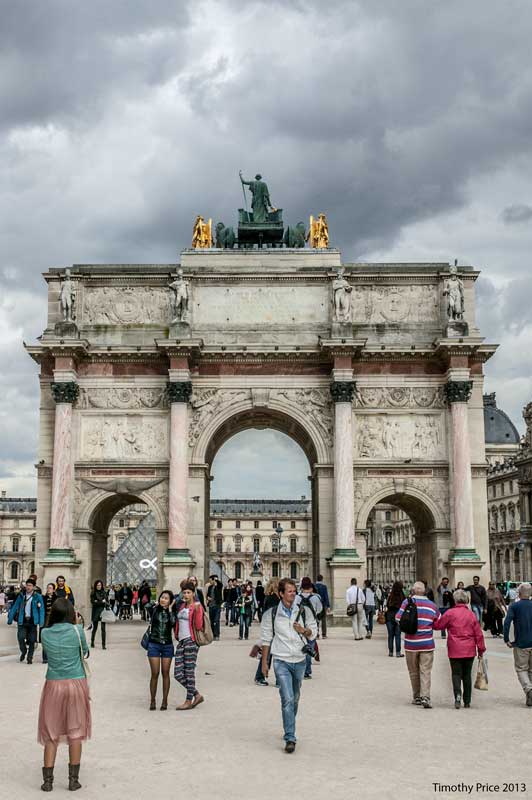
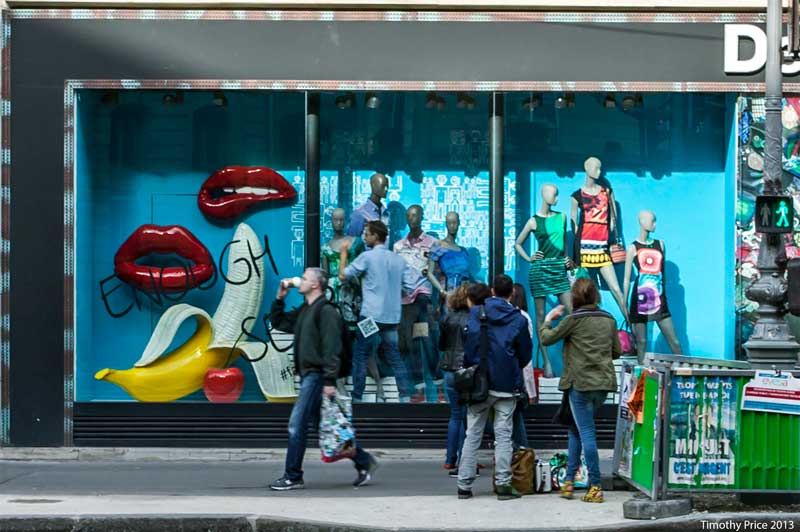
Laurie and I stood in line and got tickets for Handel’s opera Guilio Caesare, and then walked the Champs Élysées for our 31st wedding anniversary. Our walk was from the Opera down one side of Champs Élysées to the Arc de Triomphe, a loop around the Arc, a shot of the CBD, the a walk up the other side of the Champs Élysées through the Jardin des Tuileries and the Louvre and back home. Along the way we saw the latest Renault Dezir on a showroom floor, and an old Citroën 2CV driving by. On the way to the Arc de Triomphe the sidewalk was covered with people as far was you could see, and the Champs Élysées had a constant flow of bumper to bumper traffic. The many cafes and restaurants lining the sidewalks were full of people and there was a mix of tourists gawking, street venders hawking, and well dressed business men and women making their way through the hustle and bustle.

Bathroom stops are quite interesting — you have to pay to pee in Paris, and you certainly can’t pee in peace, because there is always a woman in the men’s side cleaning. We stopped at the restroom at the entrance to the Jardin des Tuileries, and there was quite a line. There were several attendants keeping order on letting people in and out of the bathrooms. I got waved through, payed my 50 cents, and was standing at the urinal when I heard “Pardon!” in a female voice and felt a nudge against my shoulder. The cleaning woman was mopping making me and the guy next to me step over and around the mop while we were trying to pee. When there is a constant stream of people, she just cleans around them.

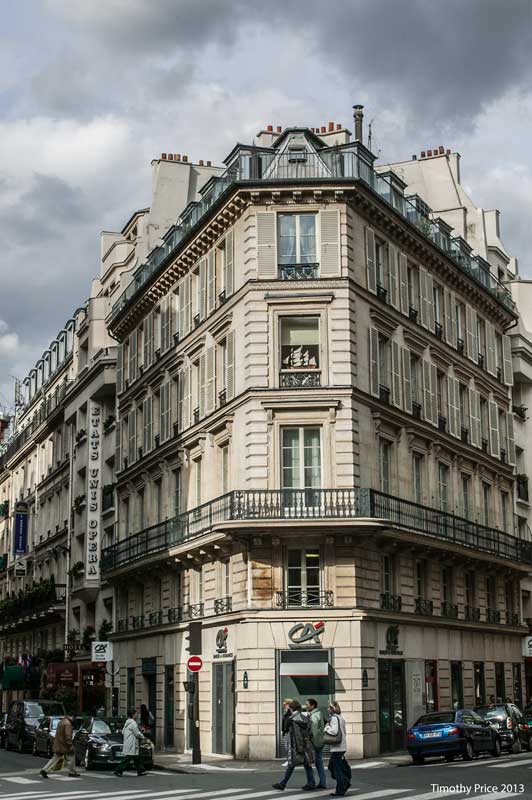
We got back to the apartment from our walk around 7:00 pm, then we went out to the Monoprix (a French Corte Inglés) and got food. Laurie made a pizza with bread, lardon (a cross between bacon, ham and salt pork), creme fraiche, eggplant and a medium aged Cantal cheese for dinner that was really good. You can see the outside of our apartment on the building in the last photo. The tiny window in the roof  is the kitchen and the main room looks out the gabled windows on either side.

ParisBusiness

A18W8336

OldCar

Louvre

LouvreArch

A18W8408

Pyramid

ShopWindow

TheBuilding

France Day 17 Aix to Paris

AixEnProvence

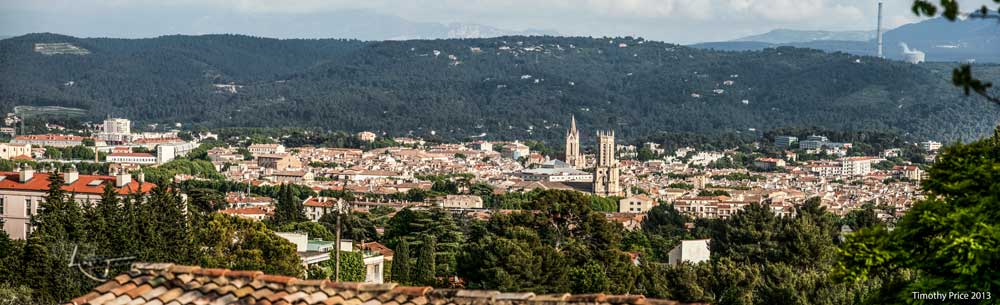
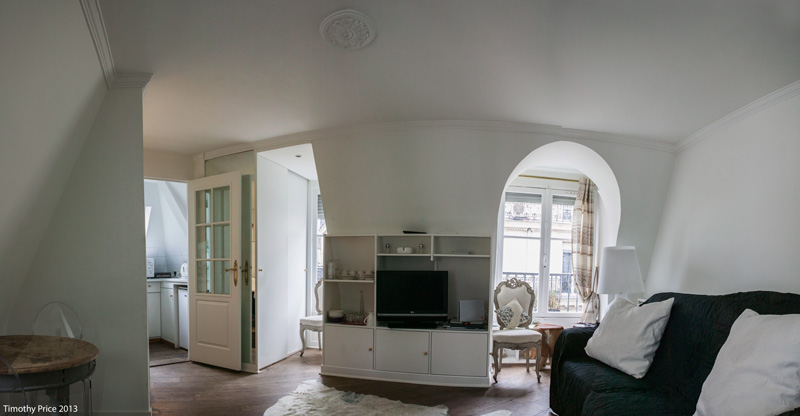
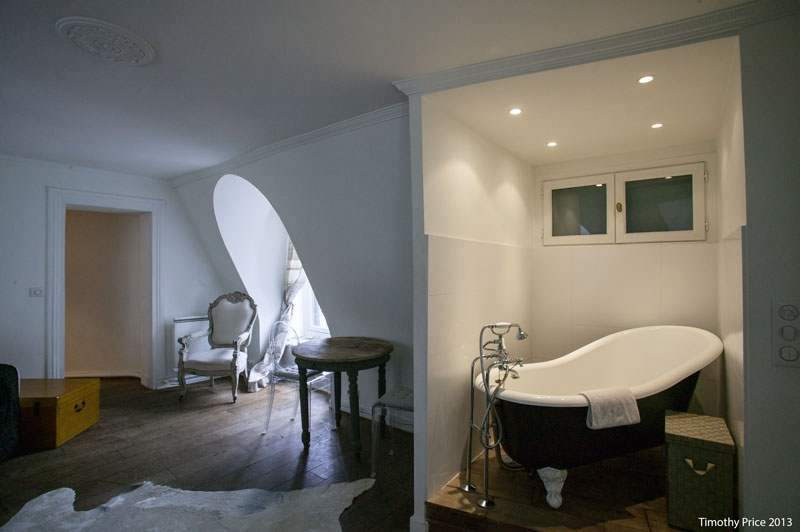
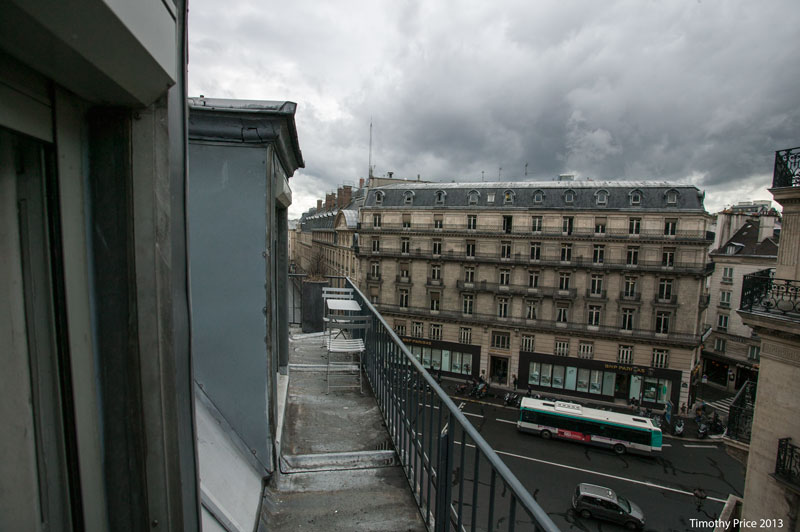
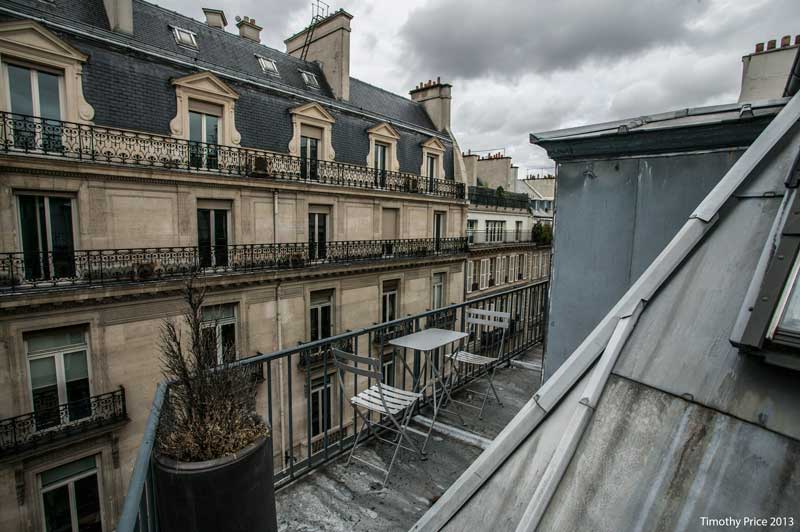
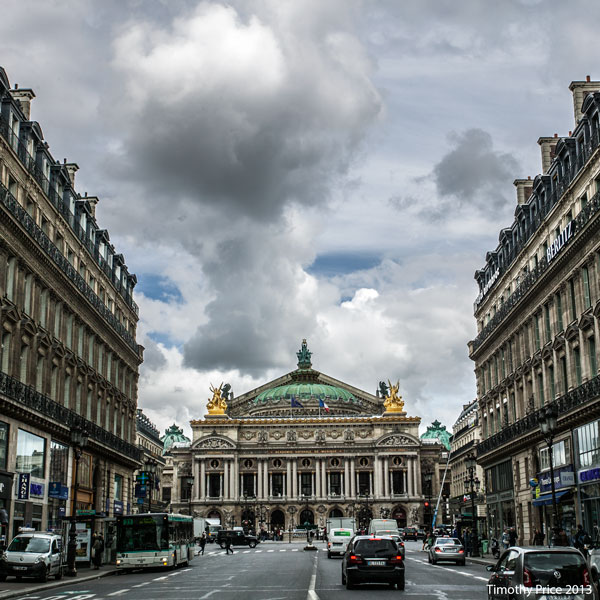
When we left Aix en Provence it was raining; it rained all the way to Paris, and when we came up out of the metro at Opera to go to the apartment we are renting, in was pouring rain. The first photo is a panorama of Aix viewed from up the hill from where we stayed. The second photo is a farm from the TGV traveling at 200 mph.  The rest of the photos are of the apartment we are renting for the rest of our stay in Paris. It’s on the fifth floor (sixth, American) of a building at the corner of Ave de l’Opera and Rue d’Antin in Bourse, in the 2nd arrondissement, a block from the Palais Garnier – Opéra national de Paris (last photo).

DSCF7305

Apartment2

A18W8213

A18W8219


A18W8220

A18W8214

A18W8217

Opera

France Day 16 Chateau d’If

A18W8172

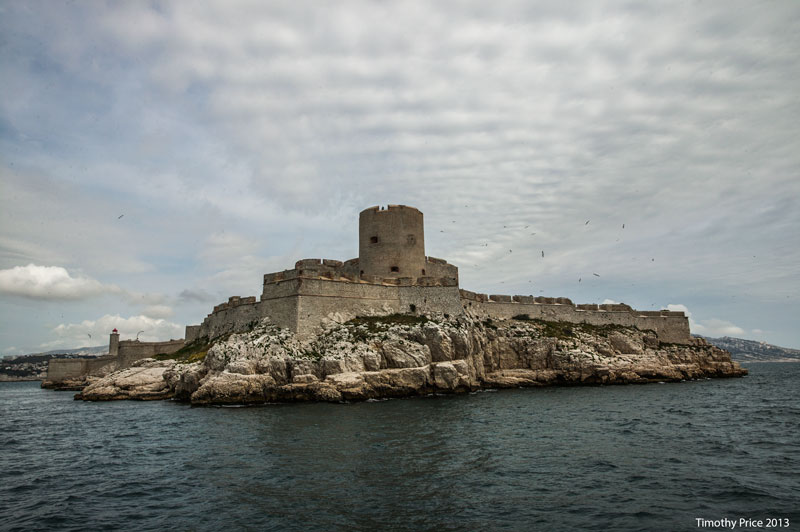
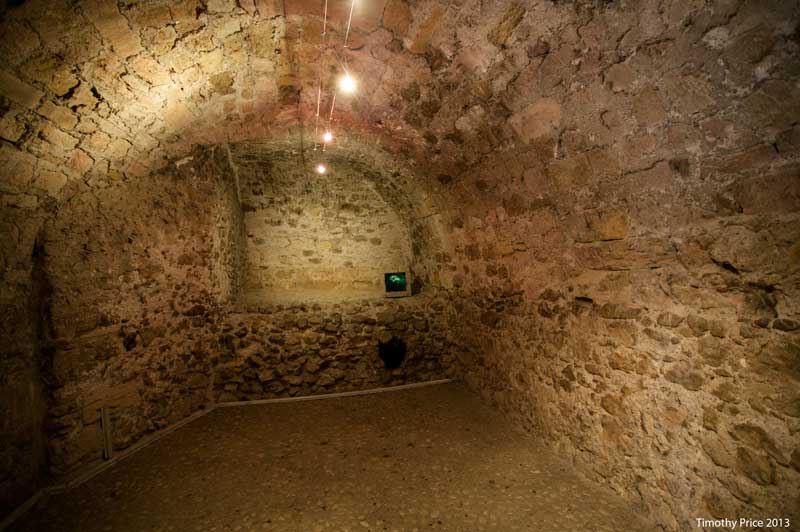
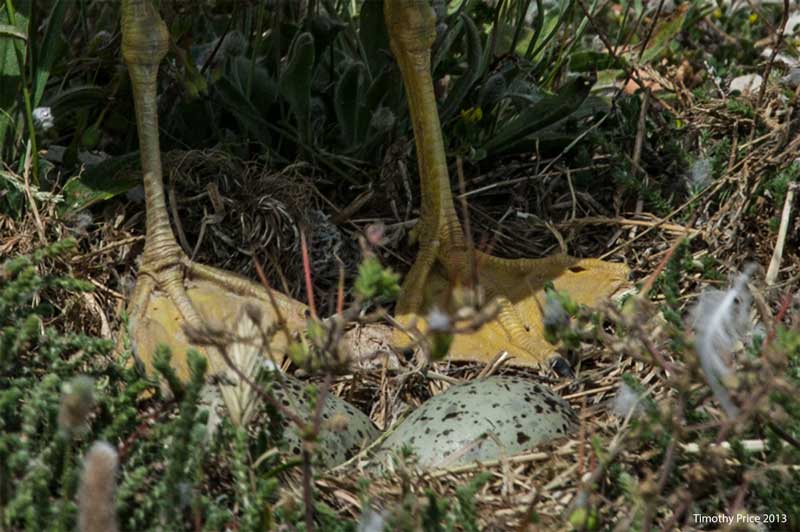
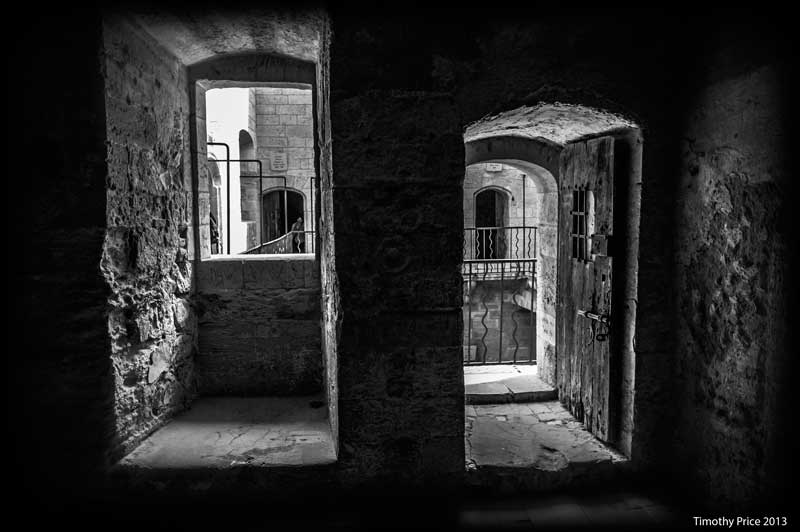
Our last day in Provence, and the sea was calm enough for us to get a boat out to Chateau d’If, the island castle turned prison that was made famous by Alexandre Dumas in his novel The Count of Monte Cristo. The most famous prisoner on Chateau d’If was Edmond Dantes, Dumas’ fictional character who was wrongly imprisoned on d’If for 14 years, and who meets the Abbe Faria after Faria digs a tunnel into Dantes’ chamber. Faria educates Dantes, Dantes escapes posing as the dead Faria, and becomes the Count of Monte Cristo. Even though Dantes and the Abbe never existed, there is a tunnel adjoining two chambers that are labeled Abbe Faria and Edmond Dantes. The castle is in great condition with access to almost every room. In some of the rooms they have sound effects to give added ambience. There are lots of seagulls nesting on the island, and ignoring the signs saying that seagulls are dangerous, I got very close to one that sitting on her eggs. She was very vocal about my close proximity, but simply held her ground.

A18W8057

A18W8068

A18W8076

A18W8072

SeagullEggs

45CU6439

A18W8135

45CU6399

45CU6511

France Day 15 Grand Canyon Du Verdon

45CU6313

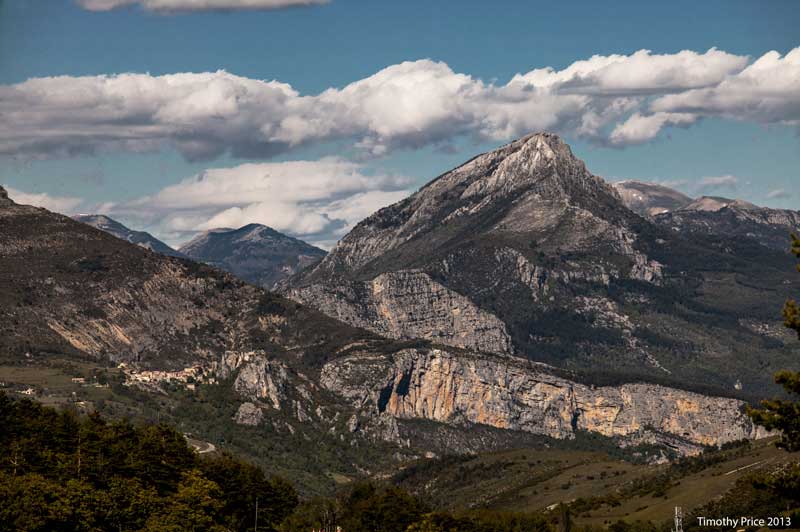
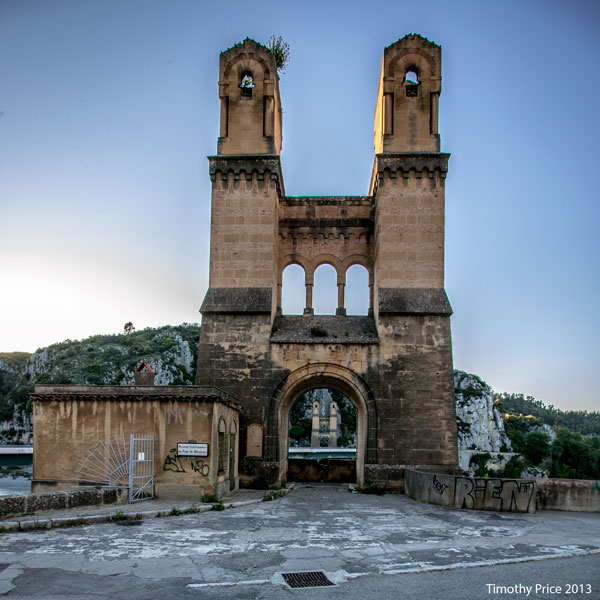
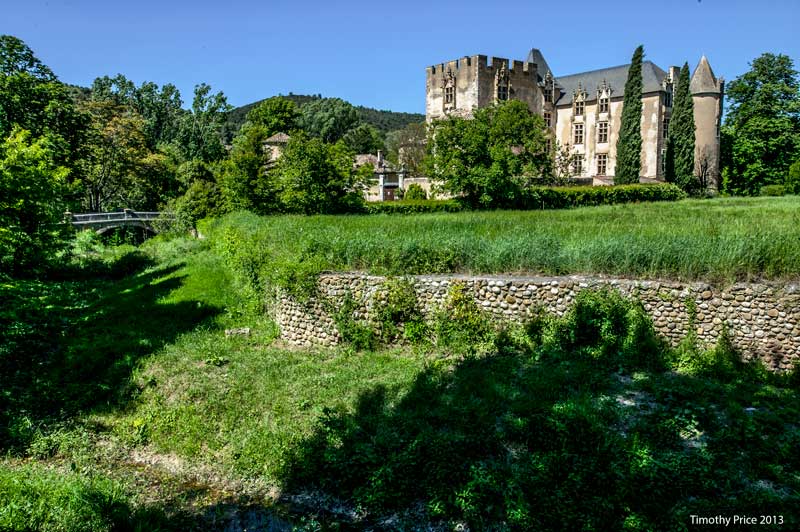
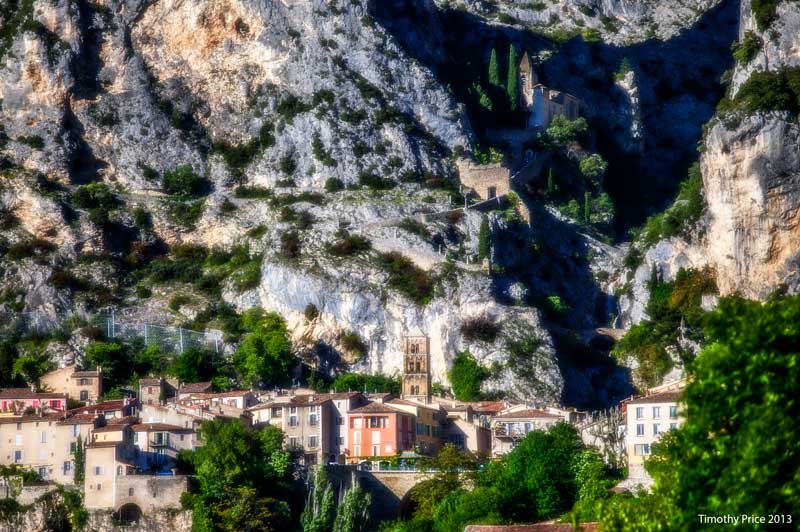
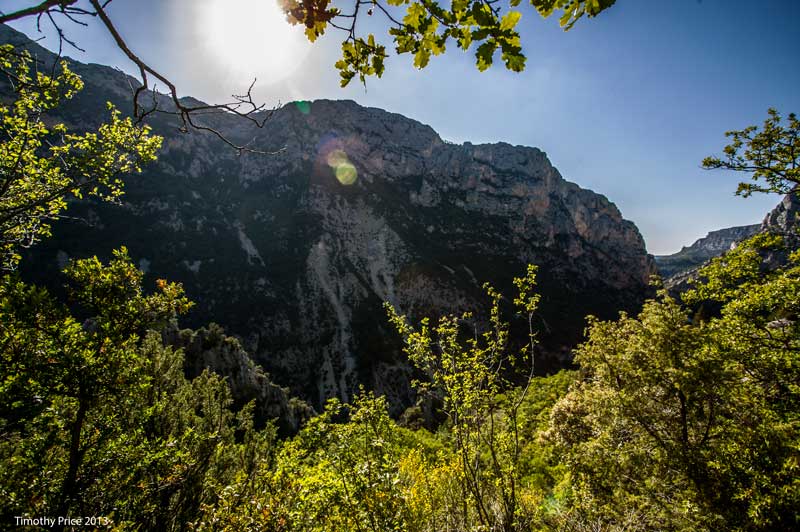
We drove northeast of Aix to the Grand Canyon du Verdon. We turned around at the first photo, which was the Clue de Chasteuille Réglès at 1447 meters above sea level. This is the lower end of the Alps, and at that point we were about 200 kilometers from the Italian border. At one point we had a really good view of the snowcapped Alps, but the road was too narrow to stop and get a photo, and by the time I could pull over, the snowcaps were out of view. Along the way we passed the remaining supports of an old suspension bridge at the confluence of the Durance and Verdon rivers, a castle at Allemagne en Provence where a group of men were playing pétanque. At the mouth of the canyon is Moustiliers St. Marie with churches built up in the steep walls of a small canyon above the village. Moustiliers St. Marie is well known for the fine pottery produced there.  We drove through the canyon on very narrow roads hugging the cliff, which made Laurie very nervous, up to the top where we encountered the view of Clue de Chasteuille Réglès. On the way back down, we stopped and hiked about a third of the way down into the canyon. To hike all the way down to the river and back would have taken three or four hours, which we didn’t have time to do.

VerdonBridge

A18W7941

A18W7938

45CU6339

45CU6316

A18W7994

45CU6351

France Day 14 Montagne St. Victoire

45CU6149


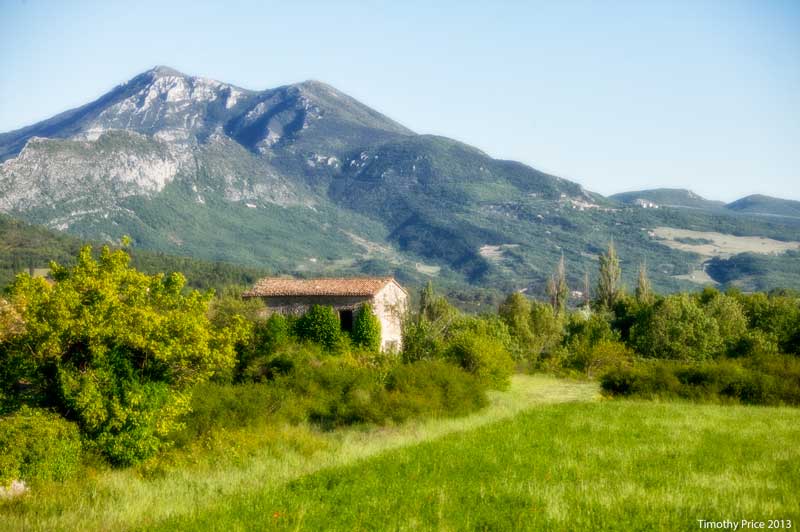
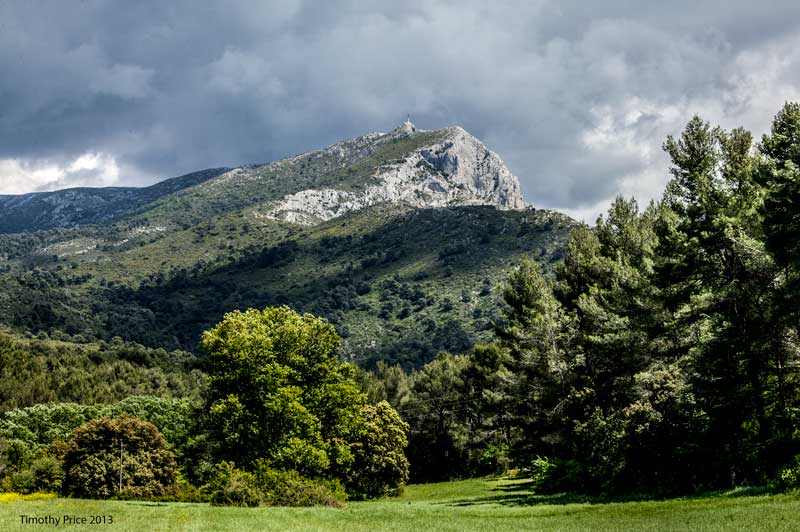
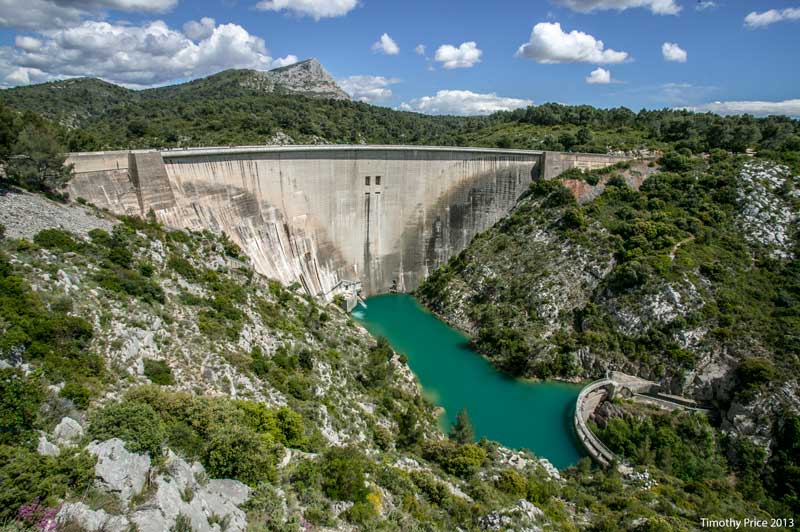
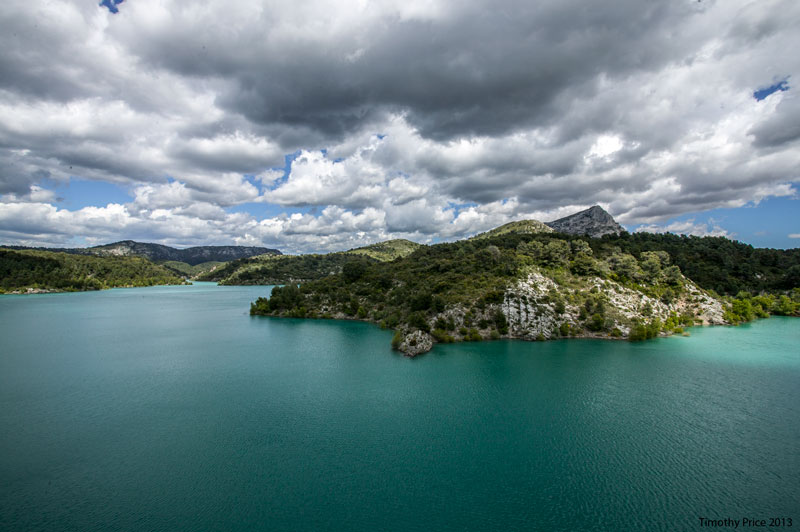
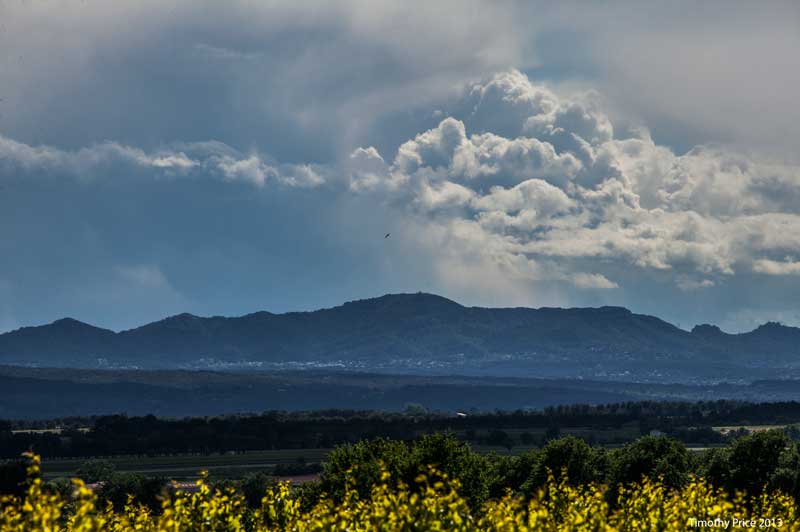
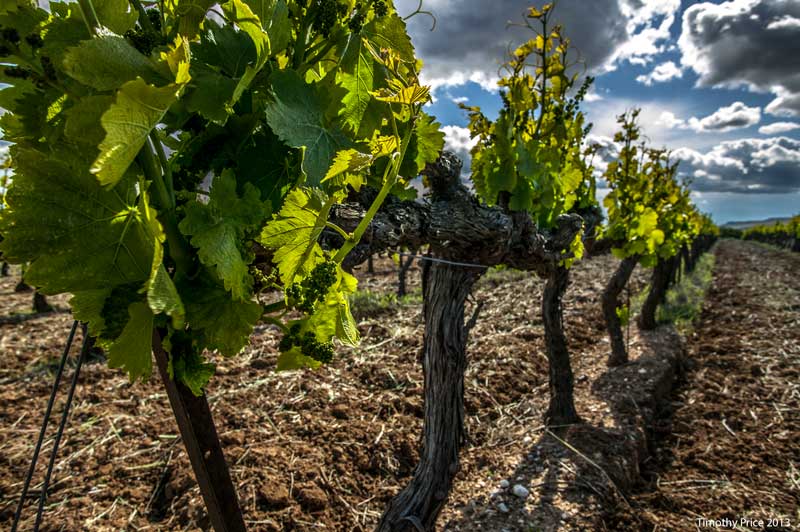
We took a drive around Montagne St Victoire, visited the Barrage de Bimont, a lake with a dam that was built between 1946 and 1951 and went into service in 1952 to supply water to Aix en Provence and other villages in the area. We drove on mostly very narrow and winding roads through forest with scenic views on the north side of the mountains, and through villages and vineyards on the east side of St Victoire. The weather was still cool and windy, but it was a beautiful day. 


A18W7828


A18W7854


A18W7847


45CU6252


A18W7892


A18W7902