¡Adiós 2014! ¡Más Film en 2015!

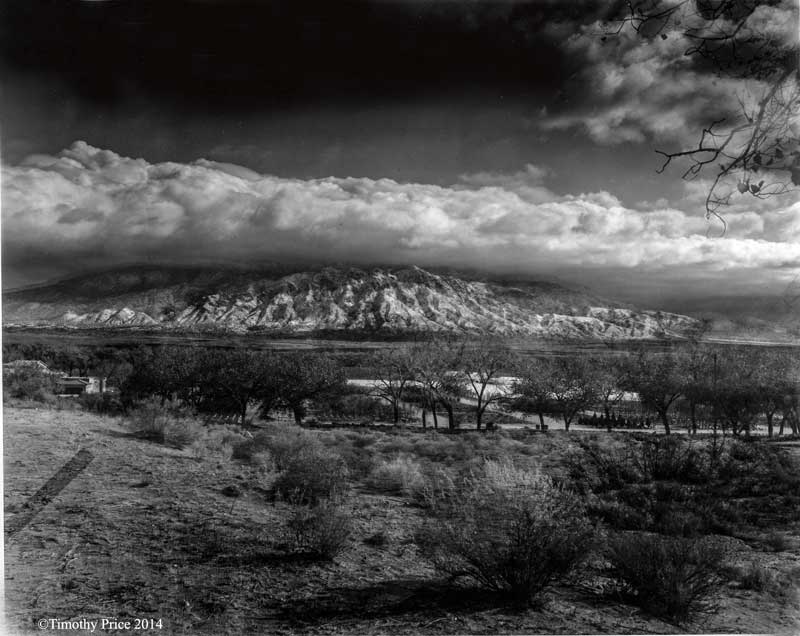
SandiaDouble4X5024
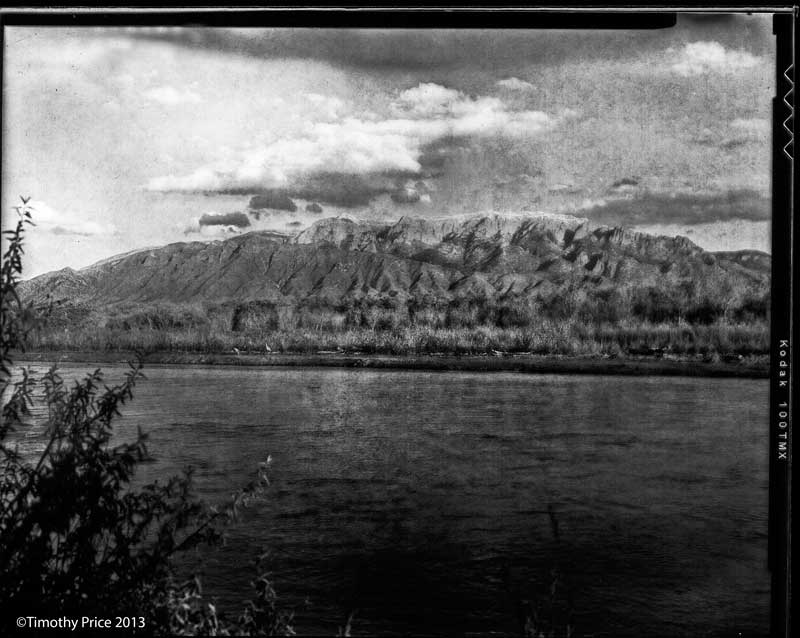
This print  is from a 4X5 negative I accidentally exposed twice from two different locations 1/2 mile apart from each other. The two images registered quite well (image is a photo of the action print).


A lot happened in 2014, but the most significant for my photography was finishing my darkroom, and going back to developing film and printing the negatives. While doing a photo a day for this blog still demands a lot of time with digital cameras and processing, I’m rediscovering the challenges and excitement of film again: loading sheet film holders in the darkroom,  taking a bunch of equipment out into the field, setting up the camera, taking multiple readings off a handheld light meter and then deciding on a good f/stop / shutter speed combination for the situation, composing the scene upside-down and turned left to right, setting the f/stop and shutter speed as per the light meter readings, cocking the shutter, inserting the sheet film holder into the camera, pulling the dark slide, tripping the shutter, turning the dark slide so the black label shows, inserting the dark slide back into the sheet film holder and removing the sheet film holder from the camera — one negative exposed.

Back in the darkroom there’s mixing chemistry and developing the negatives by hand in trays (about 30 minutes total). There can be a fair amount of manipulation when developing negatives depending on the developer used, temperature of the developer and time in the solution. No matter the process I choose for developing the negatives, once I’ve finished running the negatives through the fixer solution and turn on the light, it’s a magical moment to hold up a negative to the light and see an image on it.

Once the negatives dry, they can be printed. For photographers who have never worked in a darkroom and think that what is on the negative gets printed full-frame, without manipulation, think again. There is almost always  some cropping of the image, and then there is often a lot of manipulation in the printing process starting with the exposure and f/stop combo, dodging, burning and somethings using contrast filters on the enlarger; then there is the type of developer used, time in the solution and use of toners in the final processing to get the print to come out the way I want it to.

In many ways film is more exacting that digital, but at the same time film can be quite forgiving. The lead photograph is a good example. It was bitter cold and windy when I took the photo. I forgot to turn the dark slide to the black label indicating the negative had been exposed, because I moved a 1/2 mile to the north and by chance grabbed the same film holder and took a second exposure on the same negative. I noticed I seemed to be missing a photograph from the series of photos I had taken that morning after I developed the negatives, and finally realized what had happen from the ghost of the jetty on the lower left side of the print and the tree limbs in the upper right. Even though I was a 1/2 mile north for the second exposure, the Sandias and clouds registered close enough that they don’t look there were two exposures from two different locations. However, if you know the two areas, you can see some dark bushes that don’t belong in the foreground, the Rio Grande mixes in with the green houses and bosque in the middle ground, there are some double images of the Sandias on the left and right side of the print, and the white haze above the clouds are ghosts of the clouds from he second exposure.. Otherwise, the scene looks normal — another magical moment and mystery with film.
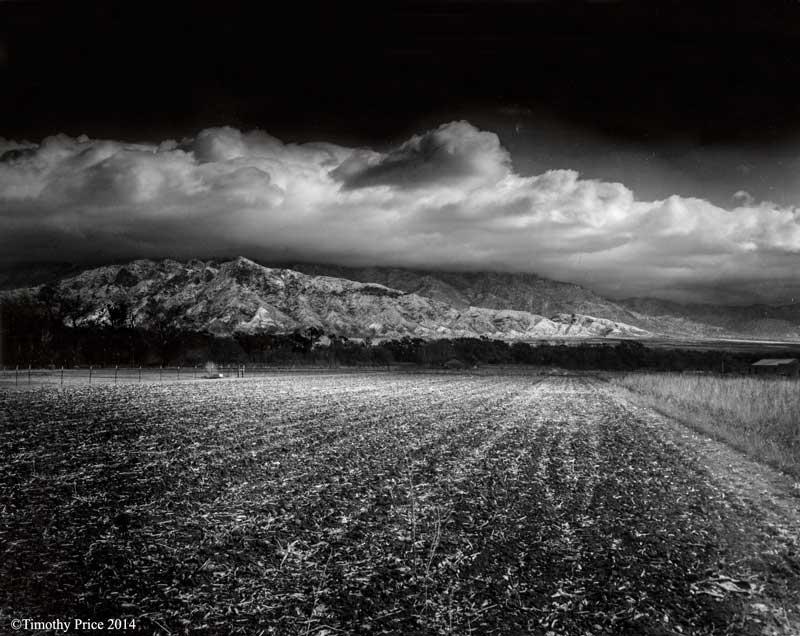
SandiaField4X5025
Plowed corn field in Corrales with the Sandias in the back ground. Photo of a print from a 4X5 negative.


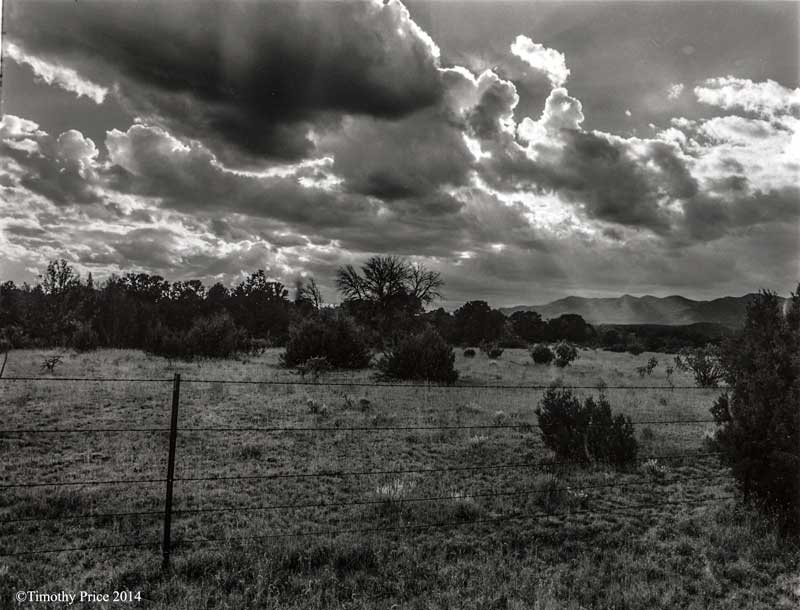
Sunbeam6X7026
Light beams on the east side of the Sandias. Photo of a print from a 6X7 cm negative.


Ghetto Scanning

IMG_0357

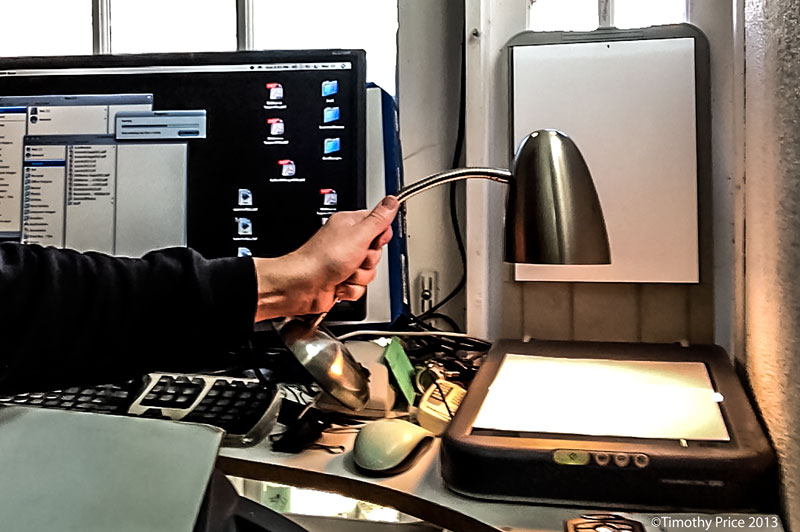
I processed a batch of 4X5 negatives I took of the Sandias and a railroad bridge with my 4X5 view camera over the past few weeks. Since I don’t have a scanner that is made to scan 4X5 negatives, I did “ghetto scanning” of the negatives by making a film holder out of a sheet of card stock, placing the holder and a negative on my old Epson 1260 scanner, placing a sheet of paper over the holder and negative, and holding a lamp with a 25 watt light bulb over the paper the negative is under as a back light while scanning the negative. The scanner is set for reflective scanning, so it doesn’t quite focus on the negative with a backlight, but the process sort of works, giving the resulting images a vintage look.

Since I’m still learning how to process 4X5 film using a daylight processing tank, when I first pulled the negatives out of the tank after the final rinse, they were purple in the middle. Oops! I hadn’t fixed them quite long enough, and I needed to agitate the tank more during the fixing process. So the negatives went back into the tank for another round of fix with more aggressive agitation. After  another round of hypo-clearing agent and another rinse, all the purple was gone, but the double round of fixing left the negatives a bit uneven.

Then there’s the issue that the lamp I’m using for the “ghetto scanning” doesn’t fully cover the negatives, so I get bright edges on the images in the resulting scans. I did a little “burning” around the edges in Photoshop to even things out, which worked a pretty well on some images, and didn’t make much difference on others.

RailroadBridge

RailroadBridge1

Sandias004

SandiasCorrales

Fiddling with Film

45CU0553

I got a 4X5 view camera and lens on ebay, and I had ordered an adapter that was supposed to allow me to use my Canon bodies on the 4X5, moving the adapter around to six different positions to cover most of the view area on the 4X5. Then I would have stitched the six images together to make the final photo. The adapter didn’t fit right so it couldn’t move through any of the positions, which was useless, so I returned the adapter. I was going to return the 4X5, but then I thought, “what the heck” and decided to keep it and do some film again (I used a 4X5 view camera exclusively when I was a photo student in the early 1980’s).

I mixed up chemicals this morning, and using a daylight changing bag, I loaded negatives I had taken a couple of weeks ago into a daylight processing tank. I processed my first test negatives in the kitchen sink this afternoon, and hung them over the sink to dry.  It was fun and nostalgic being a photo-chemist again — measuring and mixing the developer, fixer and hypo-clearing agent, getting the developer to the right temperature, agitating the tank at minute intervals while the developer did its magic, followed by the stop bath, fixer, hypo-clearing agent and final rinse. All the time there was much anticipation with some anxiety about the results, as it was the first time I had processed 4X5 sheet film in almost 30 years.

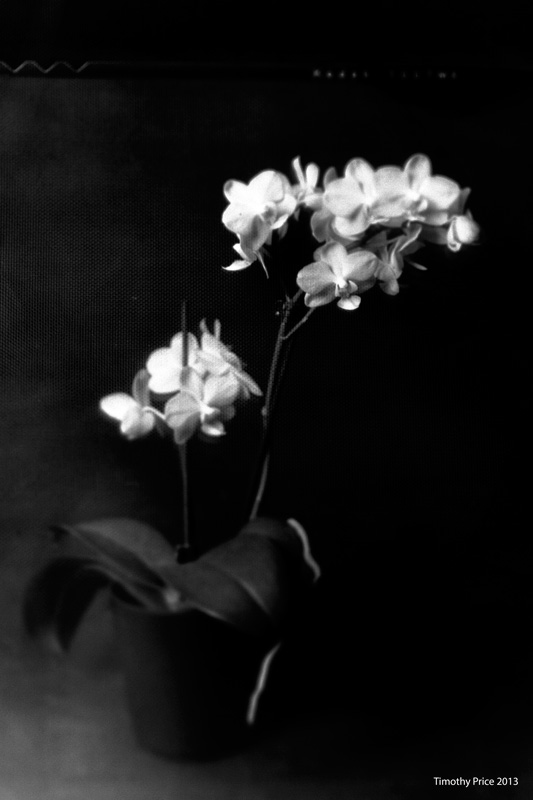
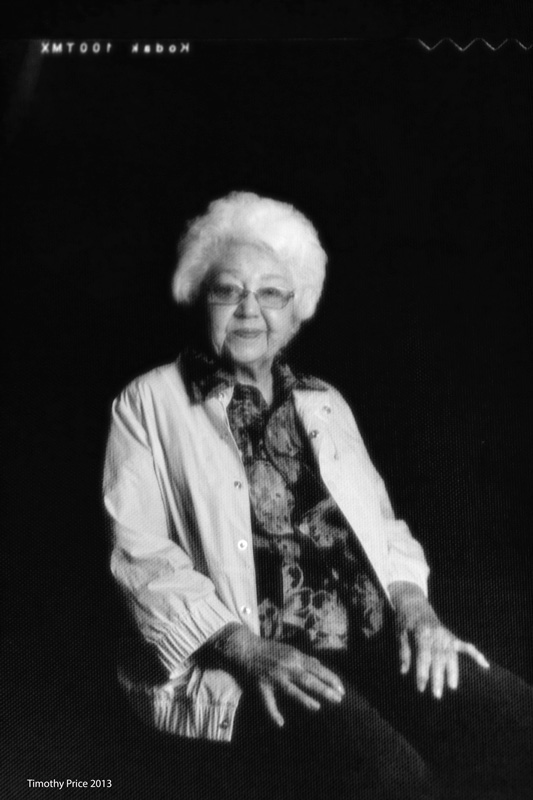
The negatives are not too bad, but negatives look like negatives, and since I currently do not have a scanner that can scan 4X5 negatives, I photographed them on a soft box, then reversed  two of the images into positives that are displayed below. The first photo of each pair is a shot of the emulsion side of the negative, which is not as reflective, but the images are reversed. The second photo of each pair is a shot of the negatives turned over so I’m shooting the shiny side of the negative. In all the photos below, my macro lens picked up the texture of the fabric cover on the soft box, so you can see texture in parts of the photos. The emulsion side of the negatives was easier to photograph because there was less glare, allowing the black background to be black. I had to hold the camera at a different angle to reduce the glare on the shiny side of the negatives as much as possible, which also created a much shorter depth of field on the second photo in each pair.

IMG_1496


IMG_1502


IMG_1493


IMG_1498