Resa’s Tree at Sunrise with greens, golds, and browns.
We encountered Sir Smokey Kitty in the Castle of Gwendolyn the Faire. Her castle is truly over the hills and far away from where we live.
In the 14th century, Gwendolyn the Faire would have invited up to 10,000 people to her banquets. The Erbolate (Herbed Eggs) required around 11,000 eggs to prepare. In these time-warped days where medieval traditions fall out of the wrinkles, Gwendolyn the Faire only had to feed 30 medievalists. It was still quite a feat, and the preparation of the courses was masterful.
Bottles from medieval wine, ale, and mead. The menu. The cookbook used for the medieval courses.
Goblets waiting and whining for wine. The food was excellent and consumed with pleasure. A mix of modern and medieval.
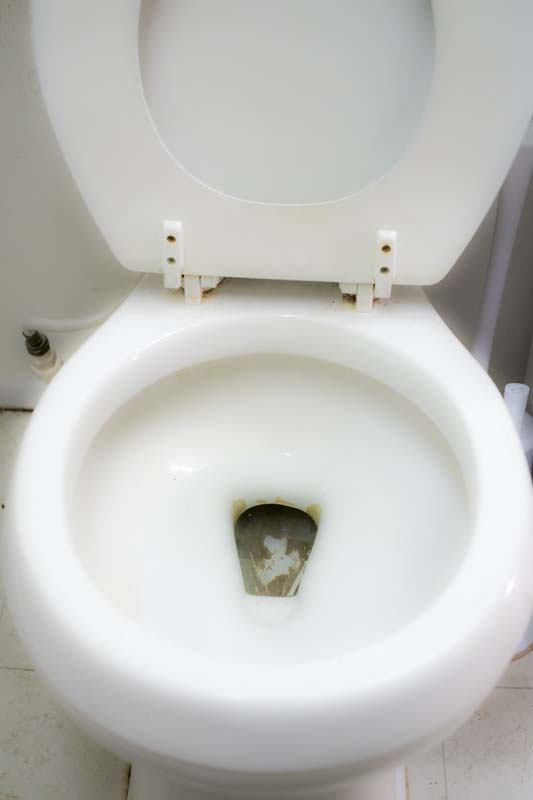
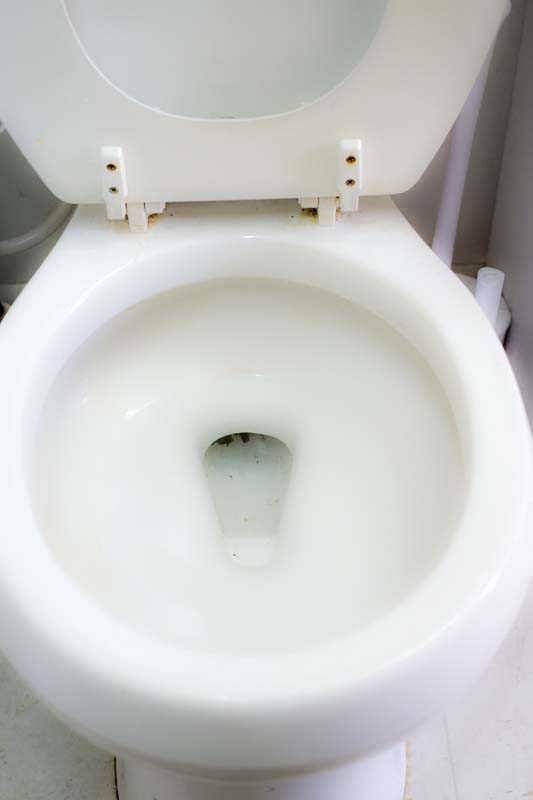
We have very hard well water, and calcium carbonate builds up on wet surfaces like the inside of the toilet bowl (see photos at the end of the narrative). For years I used a product called “The Works” toilet bowl cleaner that removed tough calcium deposits, rust and other hard water stains from the toilet bowl really well. Then all of a sudden the stores stopped carrying it. For some months “The Works” was not on the shelves. The company’s website showed they still made the kind that worked on calcium deposits, but all the calcium fighting bottles of “The Works” I found on-line were very expensive. Then “The Works” appeared in the stores again, but only as a regular toilet bowl cleaner with no claim to removing calcium deposits, or other hard water stains. I tried a few other products than claimed to work on calcium deposits, but they did nothing, not even removing the ring around the waterline that almost all cleaners removed. The calcium in our water sticks really well and is almost impossible to scrape off, so chemicals are needed to dissolve it or at least soften it enough to scrub off.
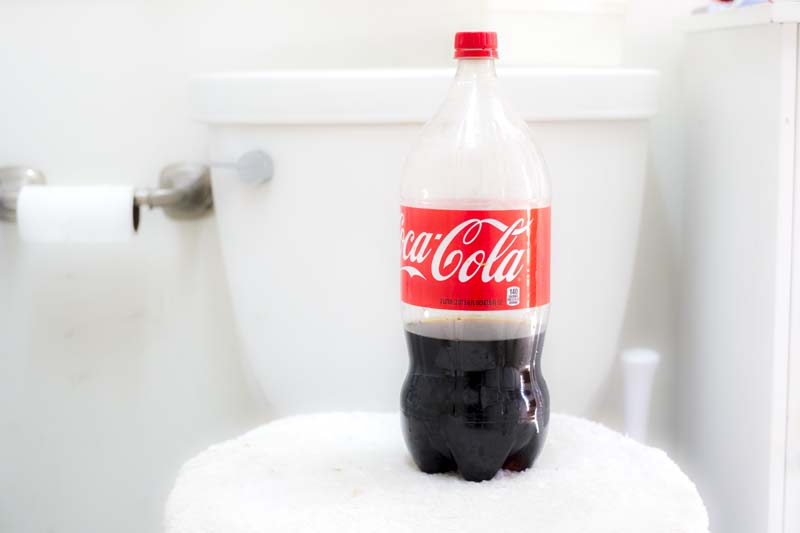
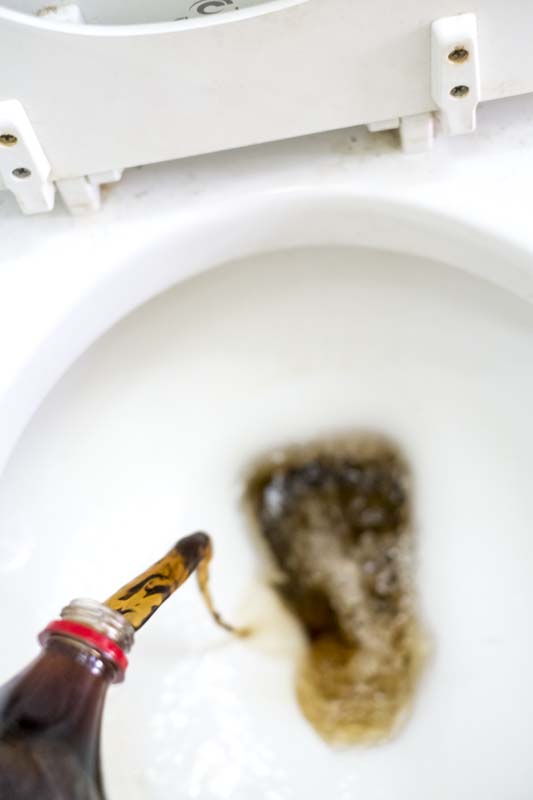
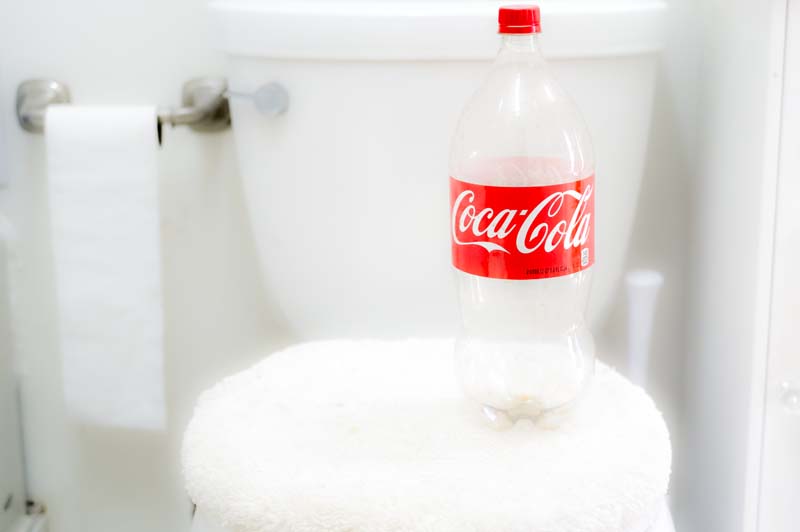
While doing research on products that would actually remove calcium deposits, I came across a forum where someone said that Coca-Cola Classic did a good job on calcium deposits. Laurie was skeptical about the claim, but I figured it was worth a try. Neither of us drink Coke or other sodas, so we didn’t have any Coke around the house to try out in the toilet, so I dropped by the store Friday on my way home from work and picked up a 2 liter bottle of Coke Classic — paid a whole $1.50 for it. It took two rounds of pouring Coke in the toilet, letting it set for about 45 minutes, then scrubbing the calcium deposits with a stiff scrub brush, but the Coke actually worked to soften the calcium deposits enough that I could scrub them off the inside of the toilet bowl.
Why it worked, I can’t tell you for sure, but it’s probably the citric acid and bubbly. If you drink coke, I wouldn’t be too concerned, because stomach acid is very strong. If I was bulimic, barfing in the toilet and letting it sit for 45 minutes would probably be more effective than Coke, but since I hate throwing up, the next time the calcium starts building up, I’ll try lemon juice with fizzy water and see how that works.
A third of a bottle of Coke for round 2 of the Coke Head Challenge
Calcium deposits that were still hanging on after the first round of Coke. I forgot to do a photo of the calcium deposits before the first round.
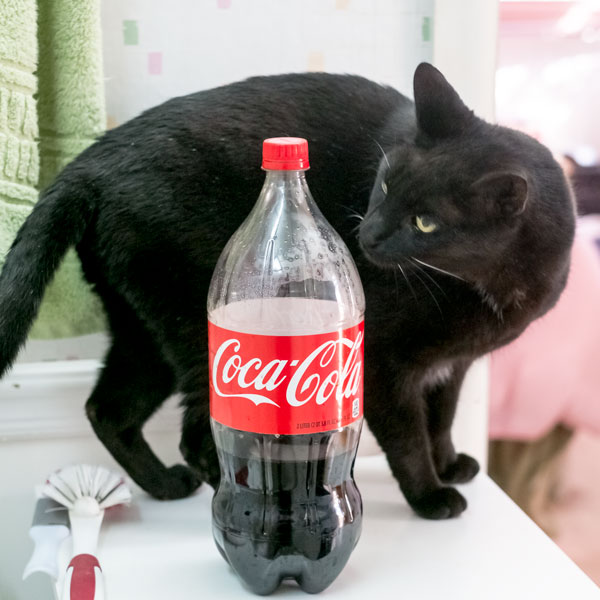
Rosencrantz checking out the Coke before the 2nd round.
The start of round 2 of the Coke Head Challenge.
The empty coke bottle reminder that round 2 was underway.
After a 45 minute soak in Coke, and a bit of really hard scrubbing most of the calcium is gone.






 Off Center & Not Even