Anasazi Building

AnasaziBuilding


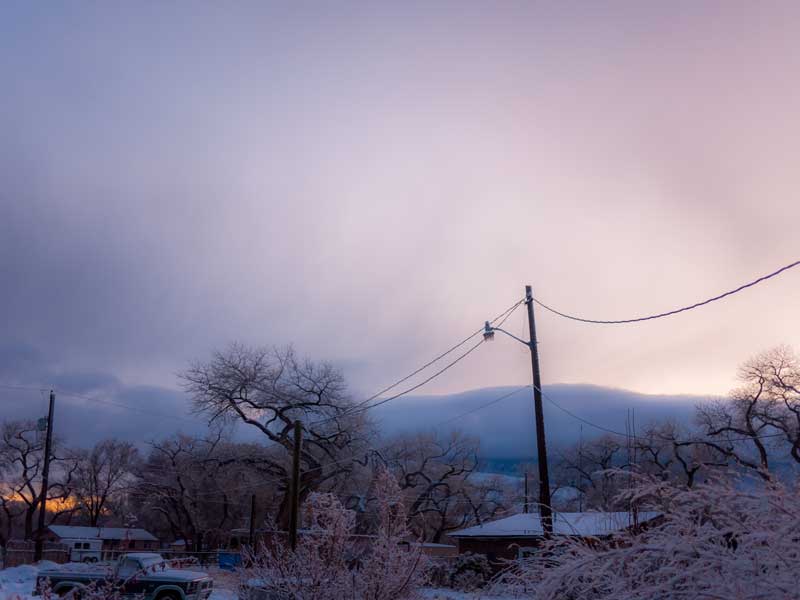
I dropped my car off the get the tires replaced at the Downtown Goodyear garage, and passed by the Anasazi Building on my walk back to the office. They are making progress on it as you can see from the first photo taken yesterday and the second photo taken in May of last year.  The Sandias had waves of clouds crashing over them this morning. I took the panorama across from the Balloon Museum and Laurie took the last photo from our property about the same time.


Building6thCentral


Sandias7-15-13


P1030758

Let Your Light Shine

SunOverBuilding

I’m listening to a course on the history of Christian theology, and the last lecture I listened to was on how Christians came to the idea of the soul separating from the body and going to Heaven or Hell when they die. Believe it or not, the idea of the soul going to heaven when one dies is not in the least bit Christian in origin, or even Jewish for that matter, but purely from Plato. If you stick by the Christian tradition, Christ returns to establish God’s Kingdom on earth and resurrects those Christians who are saved to be part of the Kingdom of God on earth. So why is the idea that our souls go to Heaven or Hell when we die so prevalent in the Western Christian tradition? Mostly because Augustine was well versed in Plato and liked the idea of a separate body and soul, but he still believed there had to be the resurrection of the body before the soul could achieve complete happiness. One problem is that Paul and the other New Testament writers believed Jesus would return in their life-time, so there was no problem about what happened when a Christian died, but as time wore on, later Christians became anxious about what happens when they die. In a simplistic way of looking at a very complex and drawn out issue, Plato had the easy answer — good souls go to Heaven and bad souls go to Hell — but then there are the questionable souls, that, again because of Augustine, are believed to end up in purgatory, at least in the Catholic tradition!

Ducks in a Row

DucksInARow


After I dropped Laurie off to sing in the choir at the early service, I went over to UNM and photographed the ducks and the architecture. The clouds were building up over the Sandias on my way home, so I stopped at the jetti sculpture on Coors and got the shots of the Sandias, clouds and sculpture.


DucklingsPreening


TreeUNM


A18W9596


A18W9607


SandiasFromCoors


JettiSculpture


Paws

DinePaws


Diné laid under the chaise lounge with her paws crossed, while beautiful thunderheads built up over the Sandias and floated by earlier in the afternoon. A vulture appeared to fly above the clouds as it circled over the river. The picturesque clouds turned into a dust storm in the late afternoon, but, alas, no rain.


45CU8027


Vulture


Rain Smuggler

45CU7362

Don’t tell anyone, but I did sneak a little bit of rain past customs. It’s a piddling amount, just enough to turn the dust on the cars into muddy drops, but it’s rain all the same. When I went out to photograph the clouds, a hummingbird hovered at what it thought was a safe distance from my lens, but even in the low light of overcast skies at dusk, I got a clear shot of it hovering in front of clouds. A crow flew through my photo of the backlit clouds, and as it flew over me I could see it had something in its beak, but it was so strongly silhouetted against the clouds, I couldn’t see what it had.

JuneClouds

OldCrow

France Day 18 A walk on Champs Élysées

A18W8284

Laurie and I stood in line and got tickets for Handel’s opera Guilio Caesare, and then walked the Champs Élysées for our 31st wedding anniversary. Our walk was from the Opera down one side of Champs Élysées to the Arc de Triomphe, a loop around the Arc, a shot of the CBD, the a walk up the other side of the Champs Élysées through the Jardin des Tuileries and the Louvre and back home. Along the way we saw the latest Renault Dezir on a showroom floor, and an old Citroën 2CV driving by. On the way to the Arc de Triomphe the sidewalk was covered with people as far was you could see, and the Champs Élysées had a constant flow of bumper to bumper traffic. The many cafes and restaurants lining the sidewalks were full of people and there was a mix of tourists gawking, street venders hawking, and well dressed business men and women making their way through the hustle and bustle.

Bathroom stops are quite interesting — you have to pay to pee in Paris, and you certainly can’t pee in peace, because there is always a woman in the men’s side cleaning. We stopped at the restroom at the entrance to the Jardin des Tuileries, and there was quite a line. There were several attendants keeping order on letting people in and out of the bathrooms. I got waved through, payed my 50 cents, and was standing at the urinal when I heard “Pardon!” in a female voice and felt a nudge against my shoulder. The cleaning woman was mopping making me and the guy next to me step over and around the mop while we were trying to pee. When there is a constant stream of people, she just cleans around them.

We got back to the apartment from our walk around 7:00 pm, then we went out to the Monoprix (a French Corte Inglés) and got food. Laurie made a pizza with bread, lardon (a cross between bacon, ham and salt pork), creme fraiche, eggplant and a medium aged Cantal cheese for dinner that was really good. You can see the outside of our apartment on the building in the last photo. The tiny window in the roof  is the kitchen and the main room looks out the gabled windows on either side.

ParisBusiness

A18W8336

OldCar

Louvre

LouvreArch

A18W8408

Pyramid

ShopWindow

TheBuilding

France Day 13 The road to Avignon

A18W7463
Lourmarin

We took the long road to Avignon and visited the market at Lourmarin where we got cheese, meat and bread to eat along the way. The large, half round of cheese in the first photo is Cantal. We have a recipe that calls for cantal, but I couldn’t find it in Albuquerque. There is a castle in Lourmarin as well. Then we drove to Bonnieux, a picturesque 12th century village built on a hill. The photo with the church in the foreground shows Mont Ventoux in the background.  We passed by an old bridge that was probably either Visigoth or Roman on our way to Roussillon. There is a similar bridge in northern Spain that is Visigoth. Roussillon is painted with the red and yellow pigments they make from the soil in the area. We ate lunch on a bench in an area protected from the wind and watched the light change on Mont Ventoux in the distance. You can tour the valley and the operation for making the pigments, but it was cold and windy so we didn’t do the tour. Gordes is an amazingly beautiful village built on and in the rocks on the side of a hill. After Gordes we visited Fontaine du Vaucluse, which is a headwater, but instead of a trickle of water from a melting snow pack that eventually turns into a river, Fontaine du Vaucluse produces volumes of water gushing from a spring. Parking was expensive, so we didn’t stop and get photos. After almost seven hours visiting , we made it to Avignon. Avignon is a large city, so it takes a bit of driving to get to the old city still surrounded by a wall. The Papal Palace is quite an imposing structure, a very well fortified building.

45CU5912
Lourmarin
45CU5937
Bonnieux
45CU5959
Bonnieux
45CU5963
Bonnieux
A18W7625
Between Bonnieux and Roussillon
A18W7685
Roussillon
A18W7667
Roussillon
Gordes
Gordes
A18W7792
Avignon
PapalPalaceFront
Avignon
OrnateBuilding
Avignon
PapalPalacesv
Avignon
A18W7784
Avignon

France Day 2 — Paris

A18W5209

Today we went to Notre Dame, Paris City Hall, the Pompidou Center, and a tower commemorating a king as part of class, then Laurie and I went to the Medieval Museum in the afternoon. We were going to go to the Deportation Museum, but it was closed, but then we walked by the bridge over the Seine where lovers put locks on the bridge to seal their love (or something like that). One of the students said his parents had placed a lock on the bridge many years ago — we decided it would be impossible to find it.

I used a super wide-angle lens for the exterior and interior shots today, so the buildings are distorted. But then, you can Google the building and see photos of the buildings closer to the right perspective.

Notre Dame is 850 years old now, and the exterior has been cleaned and the cathedral is free of scaffolding on the exterior. The interior is dark so the stained glass is very luminous. There are a lot of nice gargoyles on Notre Dame, but most are very high and difficult to see well with the naked eye. I have some details of gargoyles on Notre Dame, but the gargoyles I posted today are on the commemorative tower — I had better light at the tower, so the definition is better in those photos.

City hall (not pictured) is a big, recently cleaned building, with a lot of statutes of famous statesmen, artists and people who were involved with the arts and sciences. There had bee some kind of celebration or fiesta over the weekend, as there were work crews taking down tents and amusement  rides.

The Pompidou Center is a large, modern building that was very controversial because of it’s raw, skinless, functional structure. The multicolored pipes on the one side of the building are color coded by function — hot water, cold water, HVAC, etc. — and are exposed and color coded throughout the building.

The tower was built by a king for himself and serves no other purpose but as a monument to the king. It has great gargoyles, so I included a statue of St. George flanked by gargoyles and then a detail of St George and one of the gargoyles. The second detail shows how expressive the gargoyles are. Professor Janetta Rebold Benton, in her talk on gargoyles in April, said the gargles were made for God, because they are so high and hard to see. Fortunately we have telephoto lenses today that let’s us see want my have very well been for God’s eyes only.

The Medieval Museum was fantastic, but we didn’t have time to really look at everything. We will go back to it when we return to Paris in June. There a lot of groups of school children in the museum listening to lectures on the art, running around and finding pieces on their worksheet, and drawing some of the artifacts on display. The last photo shows a class in the room with swords, shields and other accouterments of chivalry.

Laurie has a little magnifying glass on the compass, so we were looking at some of the illuminated manuscripts with the magnifying glass. Tiny details about the size of a  pin head have amazing detail of faces with expression and realistic looking flowers, and lines no thicker than fine hair are perfectly drawn. I can only imagine that the artists used some type of magnifying glass to do the work, or they had amazingly good vision.

NotreDame

A18W5127

A18W5130

A18W5137

centrepompidou

A18W5351

A18W5398

A18W5429

StGeorgeGargoyle

Gargoyle

A18W5462