

Our first blooms!


Our first blooms!

Are you finding yourself well rested, and full of energy after waking up to a clock showing the time an hour later than normal? I’m not. The photos in the series today were taken at 9:31 am, a little before noon (11:48 am) and at 7:09 pm.
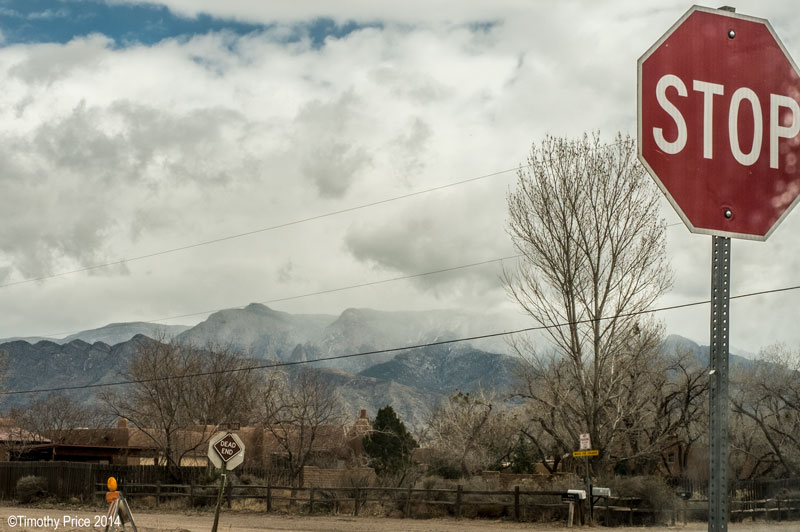
When I noticed the contrails casting shadows on the clouds above them, I had to do a drive-by photo. The effect was so weird because I was heading east, the sun is still pretty far south, yet the shadows were cast on both sides of the contrails as if there were two light sources: the sun from the south and another light source from the northwest. Furthermore, for the contrails to cast shadows at all, it’s as if the sun were below the clouds. This is when things STOP making sense, you reach a DEAD END, the sun goes down, and you’re still confused.

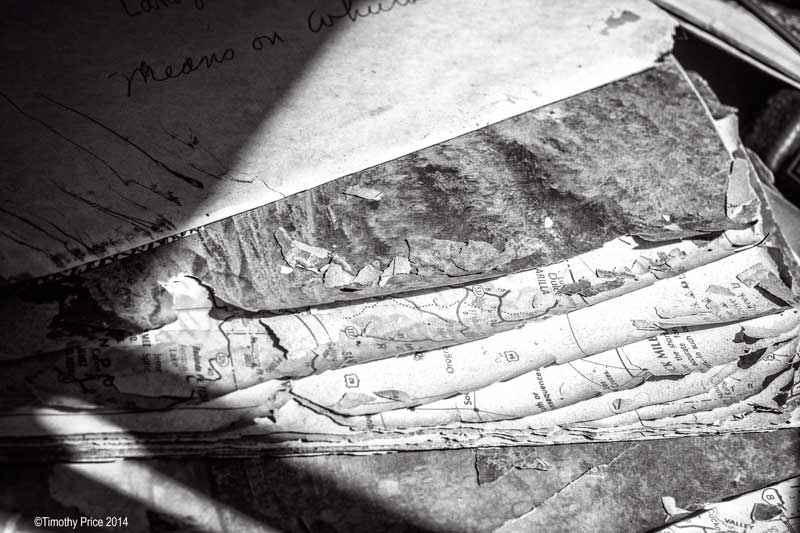
A few of the young people in our lives are as tattered and torn as old maps cracked and crumbling on the edges. Fortunately, Gigi was able to throw off a few of those ragged edges yesterday, as we helped he move out of her own, giving her much-needed freedom.
Since we got our 1982 Ford F100 back in service, it’s been quite useful the last couple weekends hauling off junk and moving Gigi. Does anyone recognize the useful feature on our truck in the last photo? They have have not been available on cars and trucks for many years.


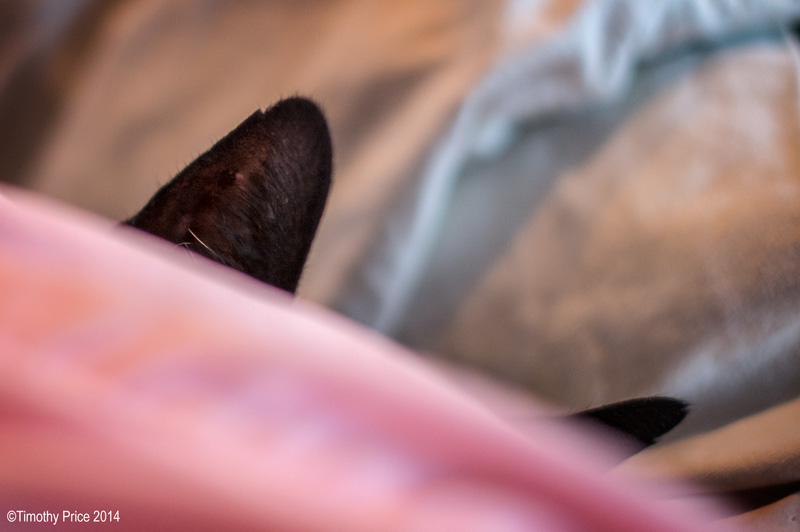
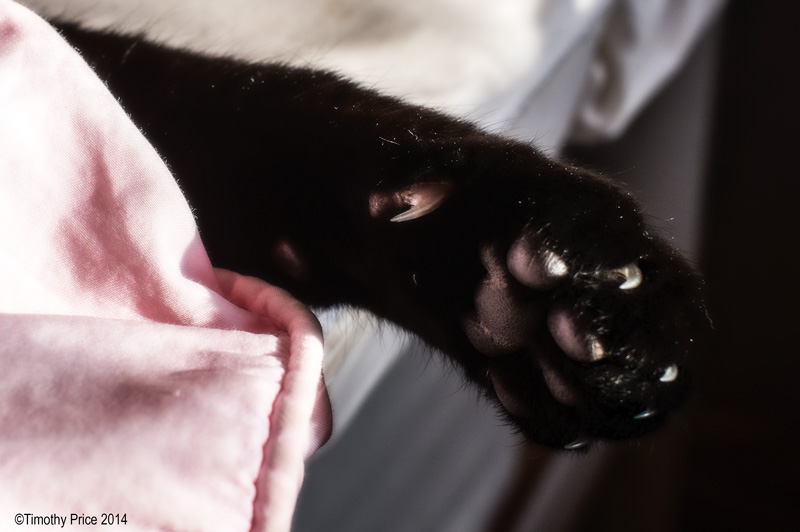
When Rosencrantz is serious about sleeping in, he only shows his perked ears to warn him of imminent danger, and a few claws to let you know his snoozing should not be interrupted.

The city has finally begun cleaning up the burned out buildings on the end of the block. This poor, unfortunate family of breaker boxes that have made their home of the building for many years will be soon be broken up.


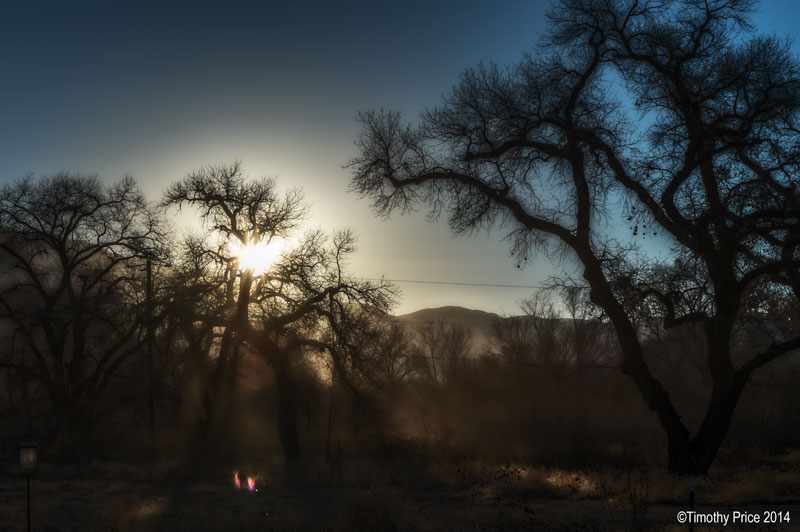
After photographing the sunrise filtering through the dust and mist the other morning, I was inspired to accidentally create a work of coffee art on edge of the counter.

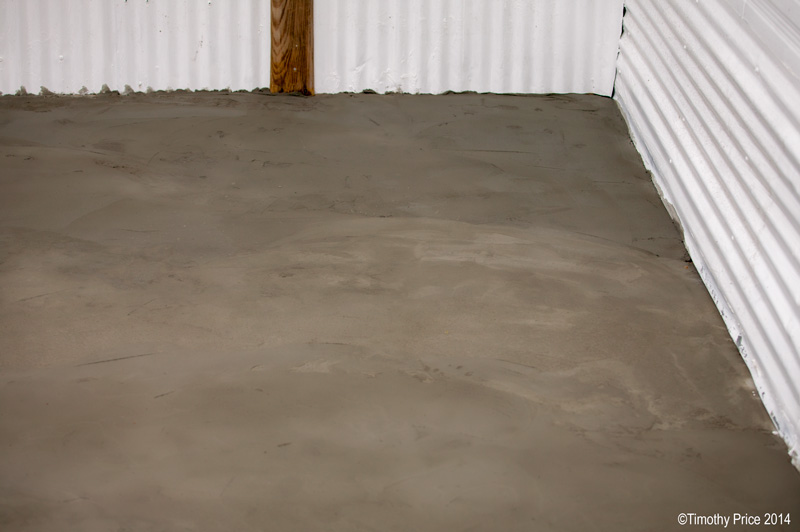
It’s not really concrete, but a cement top coat used for refinishing concrete surfaces. The refinishing cement is really intended for fairly smooth slabs, but the slab in the catio is very rough concrete, so getting a really smooth top coat didn’t happen.
A lone leaf decided it needed to break in the new cement floor, since I have the cats locked out of the catio while the cement cures. In the second photo, there are three dominant shades of gray. I mixed the first batch of cement following the instructions exactly, and the mixture ended up being too thick, so while it poured out of the bucket, it started setting up almost immediately, making it difficult to spread, and almost impossible to smooth as per the instructions (it’s the darkest shade of gray along the back wall).
I made the second batch soupier than the first, but I got it a little too soupy, so it spread thinner than I wanted it to (lighter shade of gray in the middle). On the third batch I got the mixture figured out so it spread well at the thickness I needed, and I was able to get it a little smoother (middle shade of gray in the foreground). I used the same mixture for the the next 8 batches needed to cover the entire slab. I also ended up spreading and smoothing the cement on my hands and knees with a hand trowel. Our air is so dry here, that even the wetter mixtures started setting up as soon as I poured them out of the bucket, making it difficult to spread with the 18 inch-wide cement spreader the instructions suggested I use.
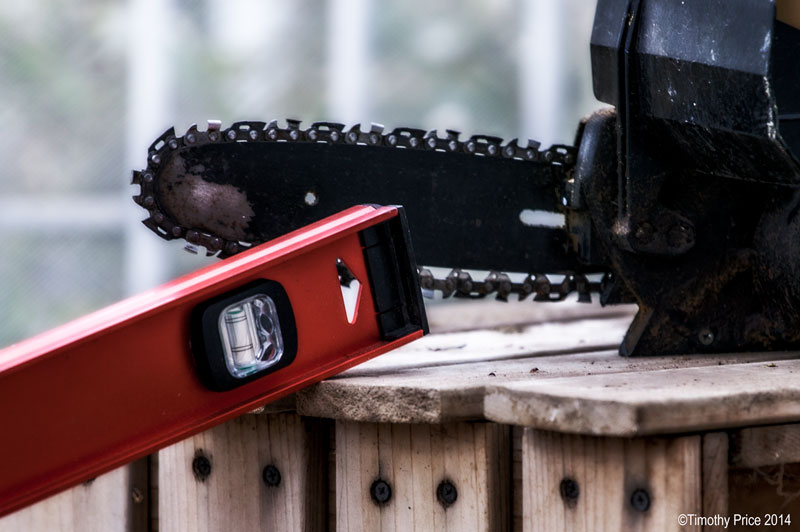
While I was photographing the new floor, I noticed my little chainsaw and level on a bonsai shelf made a nice composition. The last two photos are the candles we have behind the couch in the sunroom unlit and lit.


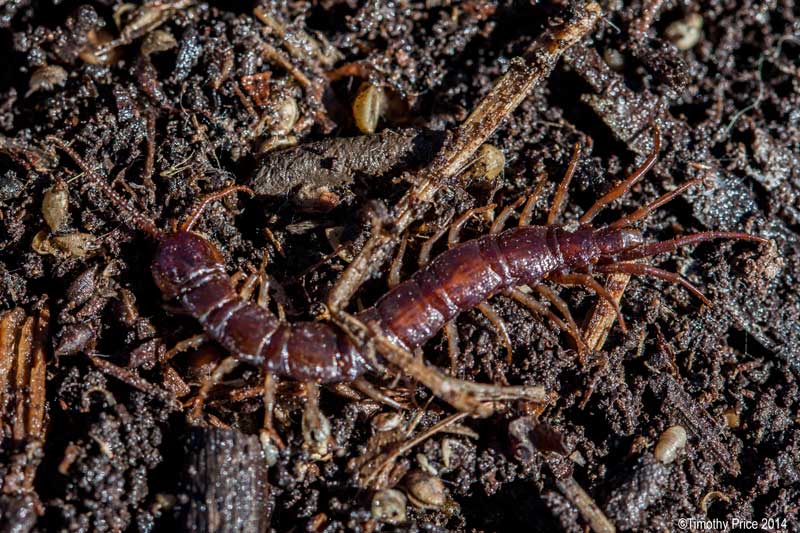
It’s the time of year the sugar ants start prowling the kitchen for anything we have left unsealed. With the reemergence of sugar ants comes a lot of other insects, arthropods, myriapods and arachnids — what most people refer to as creepy crawlers — and with this reawakening of the “creepy crawlers” out comes my macro lens.
Today’s photo is of a Lithobius forficatus, commonly known as the stone centipede. We have lots of these 30 legged centipedes in the garden where they stir around in the soil mostly under rocks and wood eating lots of pests. One pest that centipedes eat are roly-polys or pill bugs, which are actually crustaceans. I don’t know of other predators in the garden that eat roly-polys. For those of you who are herpetophobic or ophidiophobic, larger centipedes will kill and eat small snakes and lizards. Centipedes also eat spiders and insects.


“And here, my prize, the Black Widow. Isn’t she lovely?…And so deadly. Her kiss is fifteen times as poisonous as that of the rattlesnake. You see her venom is highly neurotoxic, which is to say that it attacks the central nervous system causing intense pain, profuse sweating, difficulty in breathing, loss of consciousness, violent convulsions and, finally…Death. You know what I think I love the most about her is her inborn need to dominate, possess. In fact, immediately after the consummation of her marriage to the smaller and weaker male of the species she kills and eats him…(laugh) oh, she is delicious…And I hope he was!”
Those words are part of Vincent Price’s introduction to “The Black Widow” on Alice Cooper’s 1975 album “Welcome to My Nightmare”.
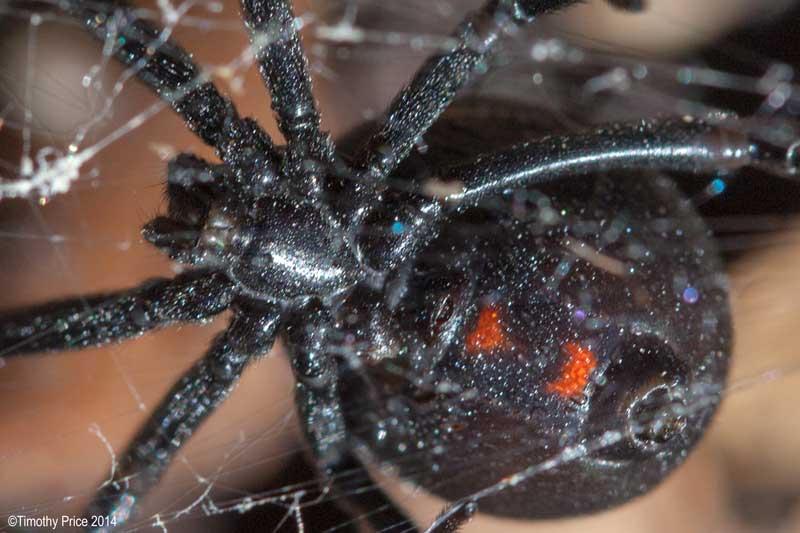
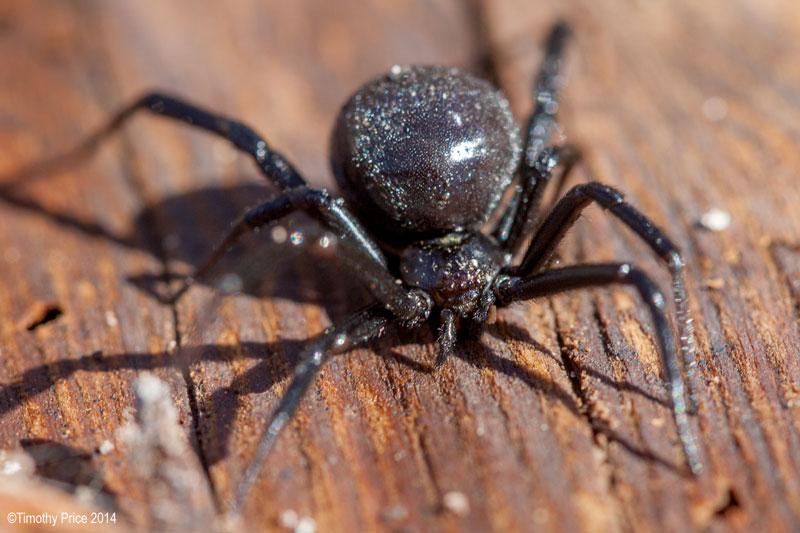
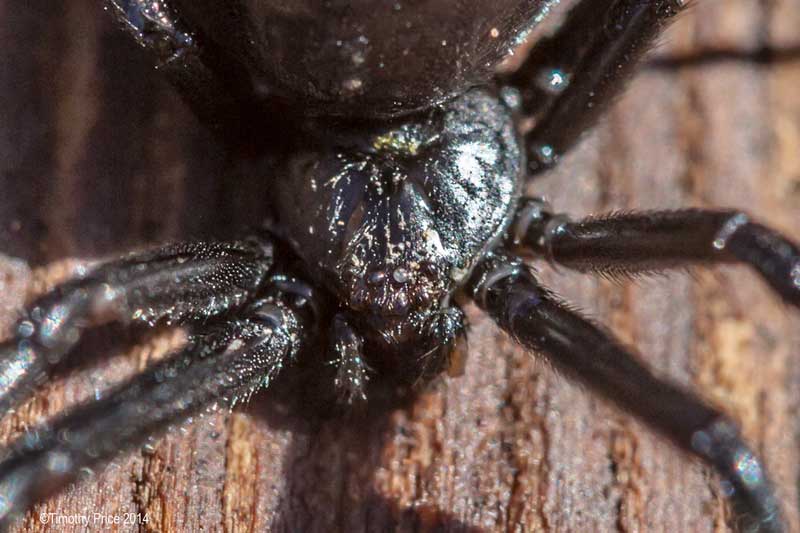
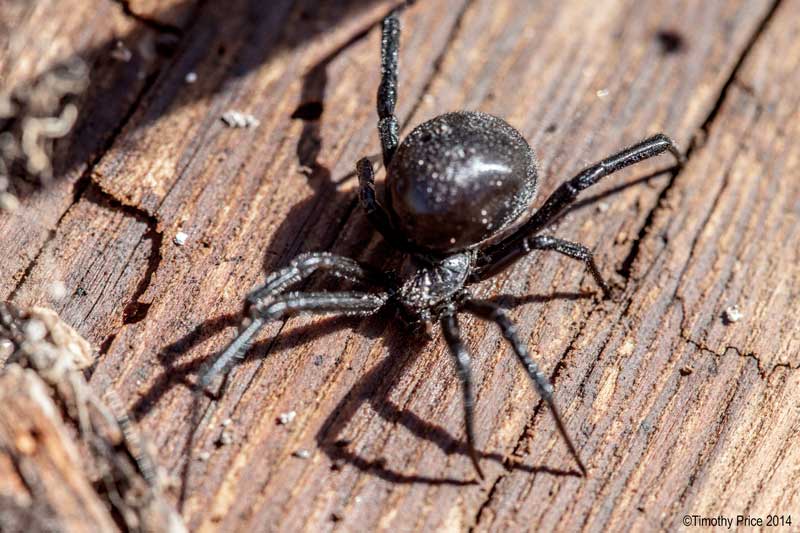
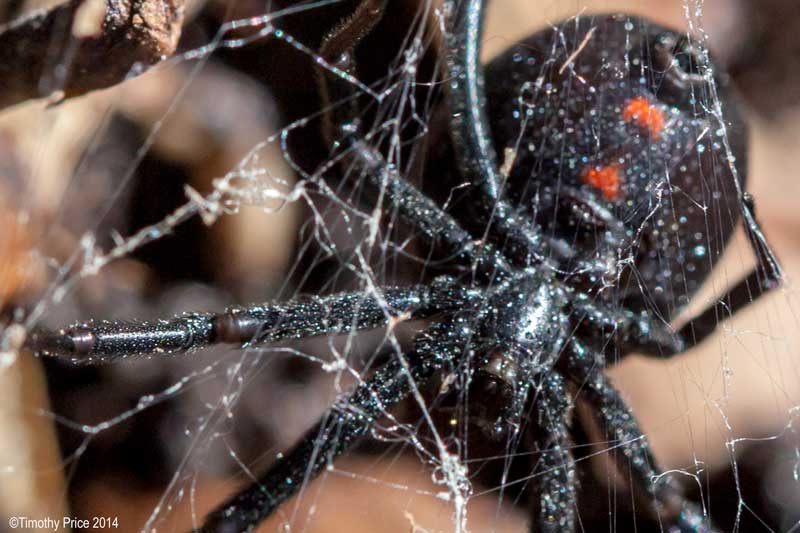
While I was working on the gray water system this afternoon, I found a black widow where they like to be — in wet, humid areas — like the underside of the cover for the distribution hub for the gray water system. She seemed a little stunned by her sudden exposure to the sunlight, and allowed me to do several photos of her underside from different angles; but then I got too close and she scampered under some of the mulch. While I was cleaning out the pipes, she ran out on the cover to dry herself after I apparently got her wet. She allowed me to do several macro shots from a top view while she was drying out; therefore, the series gives you a detailed look at Vincent’s prize “The Black Widow”.

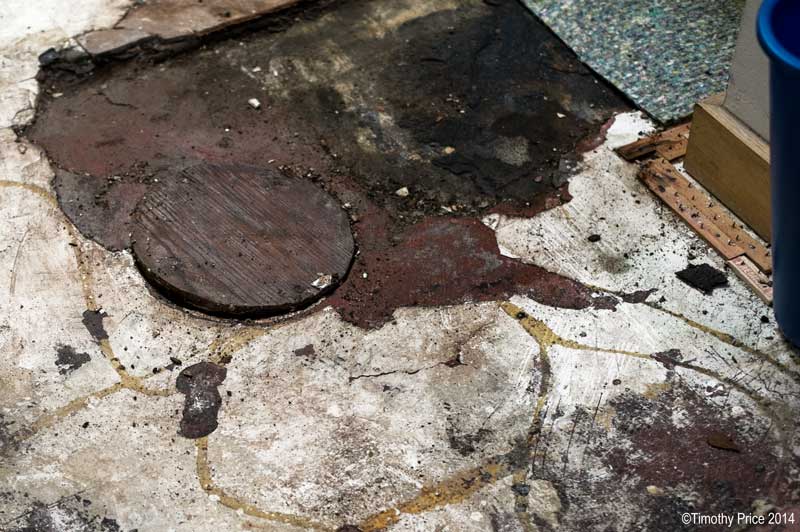
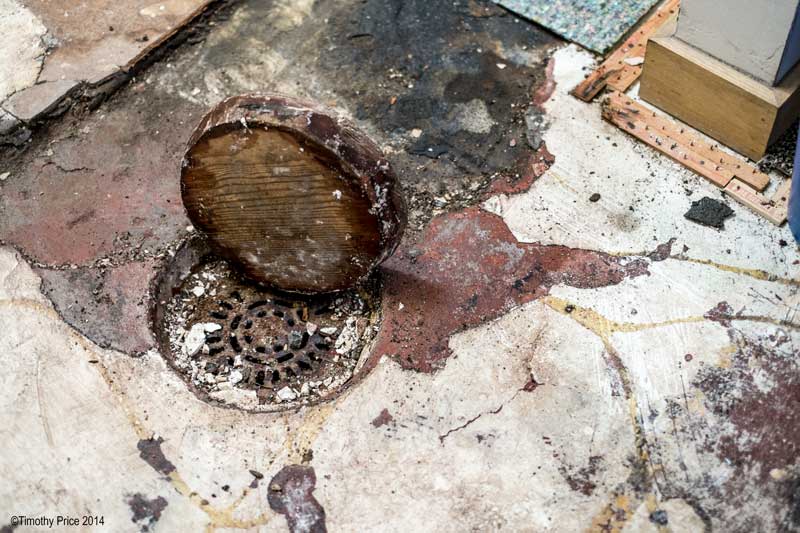
There was a wet spot on the carpet in the office this morning, but no signs of a leak in the ceiling. As the wet spot spread, we finally pulled up the carpet to find a combination of plaster, spackling, and 1/4 in masonite on the slab. I started pulling up the wet masonite and chipping up the moist spackling and discovered a 2 inch piece of pine that had been cut into a circle to cover a drain in the floor. We were speculating a sewer line froze and water backed up through the old drain, but then we noticed that while the top of the pine was soaking wet, the underside of the pine was dry, which suggested that the water did not come up through the old drain. I continued to chip back the plaster and spackling until I found dry edges all around the wet spot. The source of the water remains a mystery among puzzling evidence, but we’ll see if we have standing water on the chipped up floor in the morning.

 Off Center & Not Even