Map Wars


A good lesson in how the free market works is the current map wars being waged largely between Google and Apple that has forced another heavy hitter to enter the free mapping API market — ESRI, who produces ARC GIS.  What I find particularly interesting in this case is that ESRI has a monopoly on geographic information systems (GIS) mapping programs with all levels of government, and a huge part of the private sector market, as well.  We have used ESRI GIS products since the early 1990’s. In 2004 when I began exploring GIS and mapping services on the Internet, the fledgling ESRI web mapping applications required purchasing the applications that we would run on our servers at a cost of $50,000 to $100,000. We developed our own web-based GIS instead using open source map servers, but map servers turned out to be very high maintenance and were always behind the server OS updates.

With more important work that needed to be done, our web-based GIS was out of service by 2006.  We were still relying heavily on standard GIS mapping and employed ARC GIS techs in order to provide GIS and mapping services. In the meantime, Google had gotten into the mapping business in a big way  — first with Google Maps and then Google Earth. As we began using those tools for more of our mapping needs, we quit relying as much on traditional GIS, especially ESRIs products. By the end of 2010 our last GIS tech left and we didn’t replace her, because there wasn’t enough demand for a GIS tech’s services anymore. We had other GIS programs, but most of our staff would simply use Google Maps and Google Earth for their base maps, and I started using Google’s application programming interface (API) to build custom maps on the Internet using our databases.

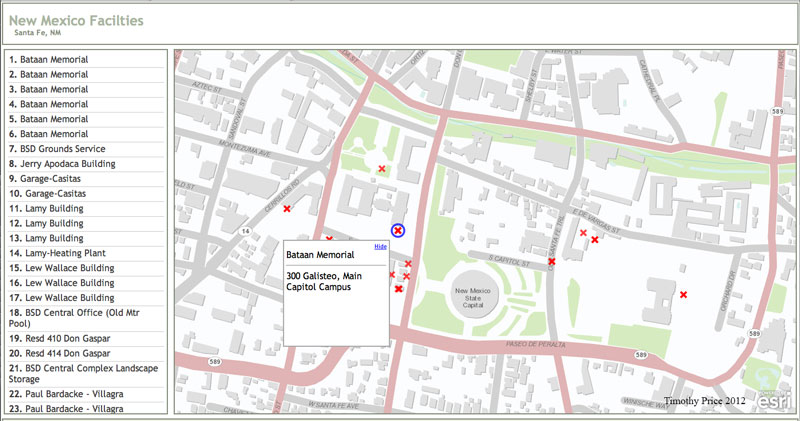
Here’s where it gets really interesting. When it came time to renew our annual service contract for our ARC GIS licenses last year, I opted not to renew them since we didn’t have a GIS tech anymore. ESRI really worked on me not to drop the service contracts, and wanted to know why I was not renewing them. I explained to the service rep that 1) we no longer employed GIS techs, and 2) we were moving our mapping to the web and using the free mapping API offered by Google.  In a meeting yesterday, I was told that ESRI is offering mapping services similar to Google and Yahoo. When I had a free moment this afternoon, I went to ESRI’s website, and sure enough, they are now offering their web mapping API for free. I studied the API, got some of their sample code, and soon had a couple of applications on our server, and customized one to display some of the data from one of our databases — the New Mexico Facilities map below.

Eight years ago, ESRI wanted $50,000+ for me  to create web maps using ARC GIS for the web. Back then those expensive apps could not produce maps   as sophisticated as the one I created in a couple of hours this afternoon for free. What’s more surprising is that I had to set up a developer’s account with Google and OpenStreetMap in order to get access to their APIs and maps. So far I’ve adapted two web-apps using ESRI’s API and and maps, and haven’t had to set up an account or register the apps.

The free market has a powerful effect on prices and services, and while ESRI has a monopoly on traditional GIS, I believe they saw they were getting left behind in the web-mapping market and was forced to offer their API for free like Google, Yahoo and OpenStreetMap. Do you suppose other companies are not renewing their service contracts with ESRI?


Hollyhocks


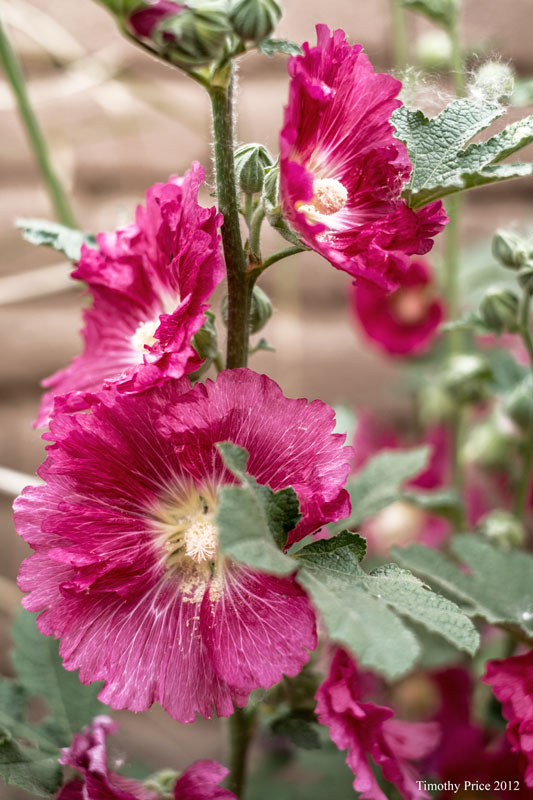
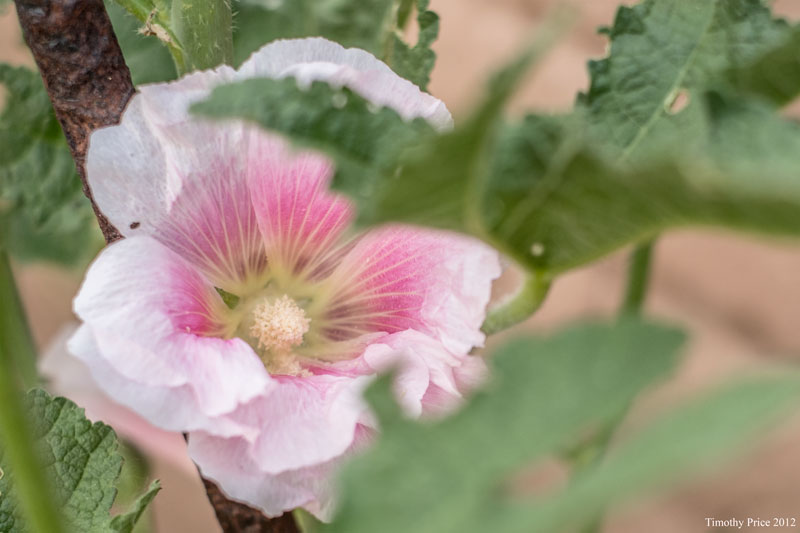
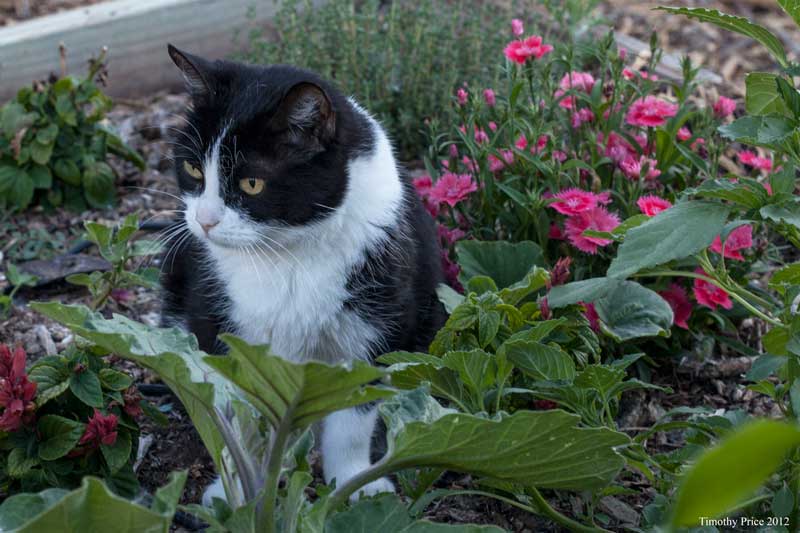
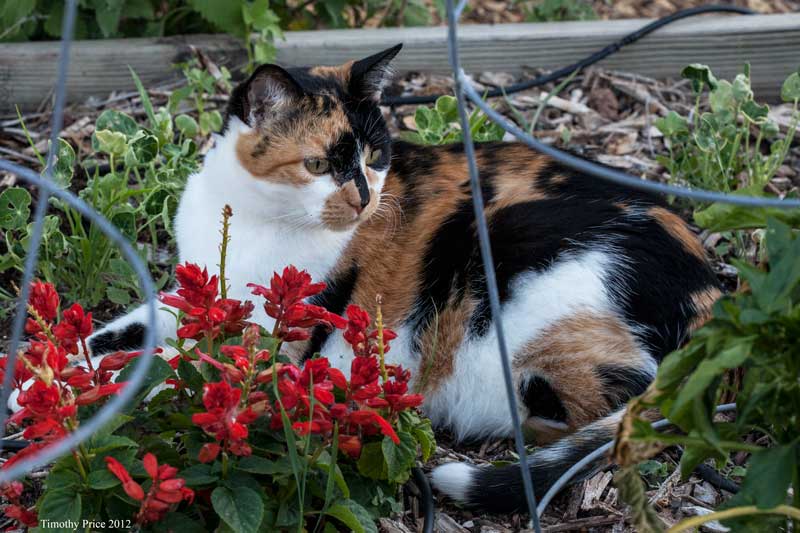
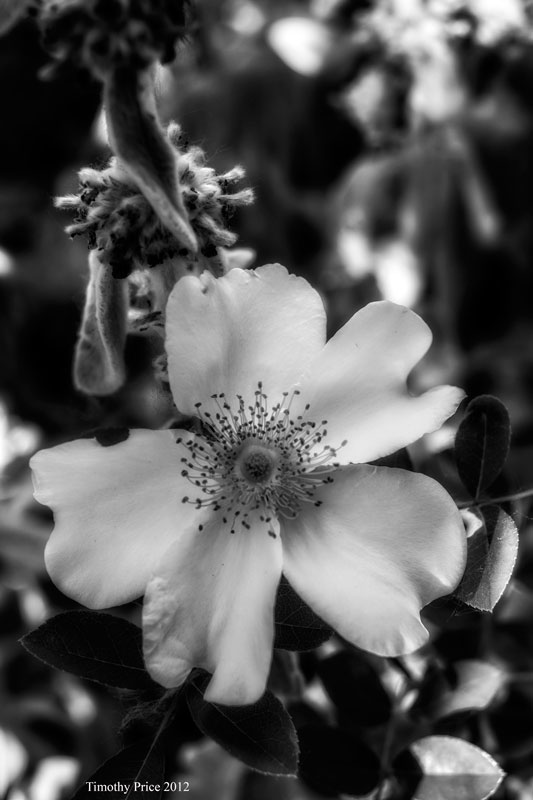
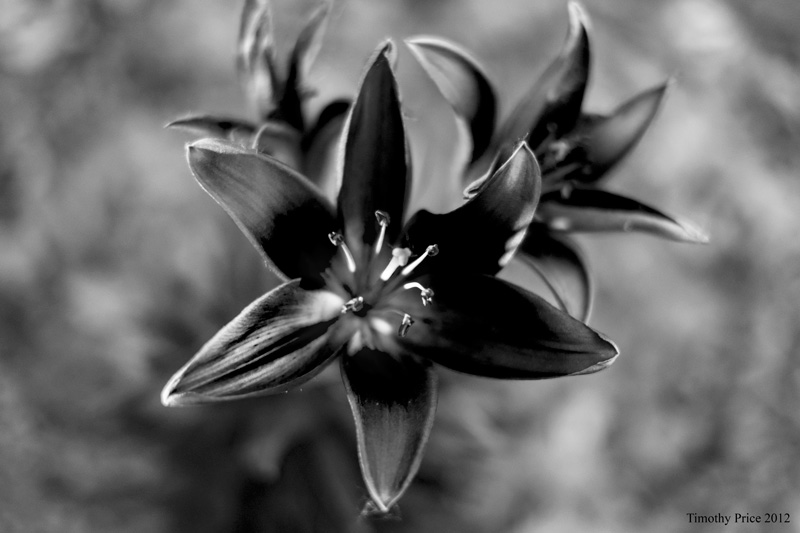
We have some volunteer hollyhocks coming up against the adobe wall this year. We had hollyhocks in the area, but they hadn’t sprouted in the past 6 or 7 years. These must have come up from seeds that lay dormant for all those years. The kitties were hanging around in the garden with us tonight. Diné and Mama Manx really enjoy hanging around among the plants. Mermaid was full of blooms on Saturday, but when I checked on her this afternoon, she only had one bloom.


Pink Sunglasses


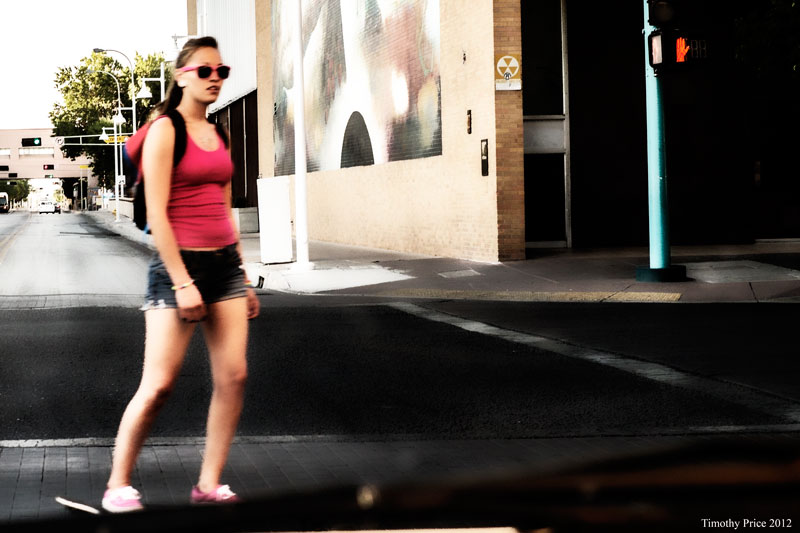
“What really knocked me out was her pink sunglasses…” or maybe it’s “…her cheap sunglasses!” — either way, I think ZZ Top would appreciate this fashionably coordinated young lady, surfing around downtown on her skateboard.

Splash of Colors

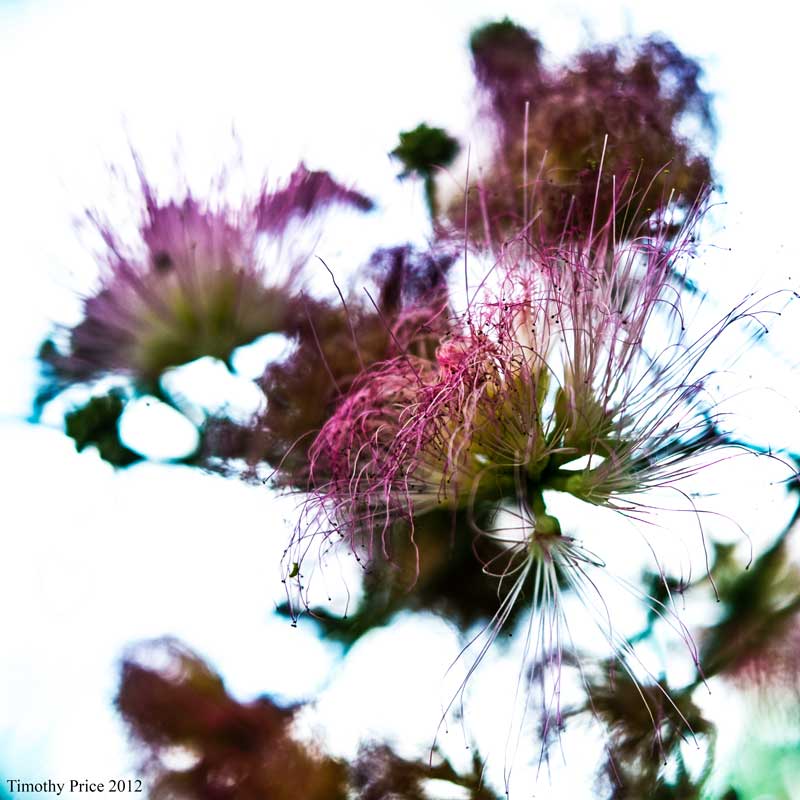
As I passed under our neighbor’s mimosa that hangs over the path to the front door, I looked up at this clump of blooms, and for an instant they offered the most interesting shapes and colors against the bright background before my eyes adjusted to the back lit sky. I had to overexpose the photo by almost three stops to get close to what flashed before my eyes when I initially walked under the clump of blooms.

The Big Dipper

After I posted my blog last night, Laurie and I laid out on our lawn chairs and looked at the stars. The big dipper was very clear.  I got up a 3:00 am to turn in the irrigation water, and discovered the Conservancy had buried our gate in the process of dumping dirt and grading it to build up the ditch bank. I put down the main gate, went back up to the house, grabbed a pair of gloves and a shovel, went back out to the ditch and spent the next 30 minutes in the dark, digging out our gate while standing on a 60 degree bank of loose dirt with the water rising quickly. I simply wanted to turn in the water and go back to bed like I normally do, but I feel like I got the “Spanish Inquisition” instead.

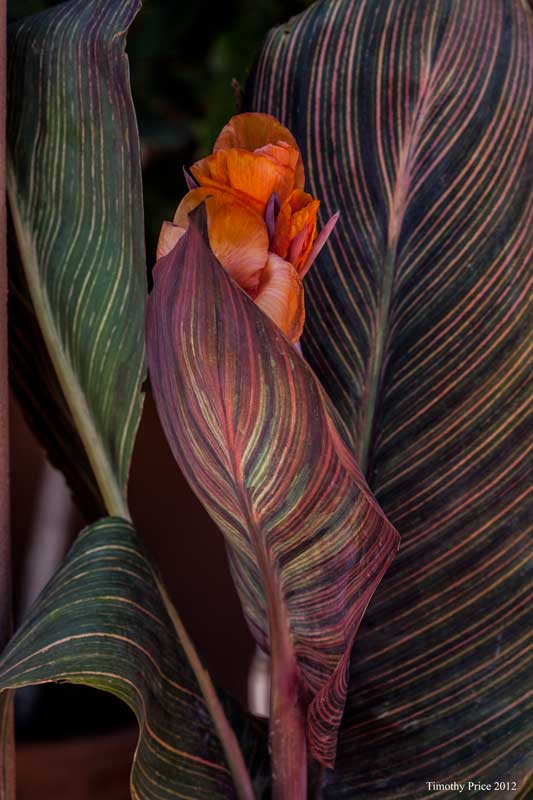
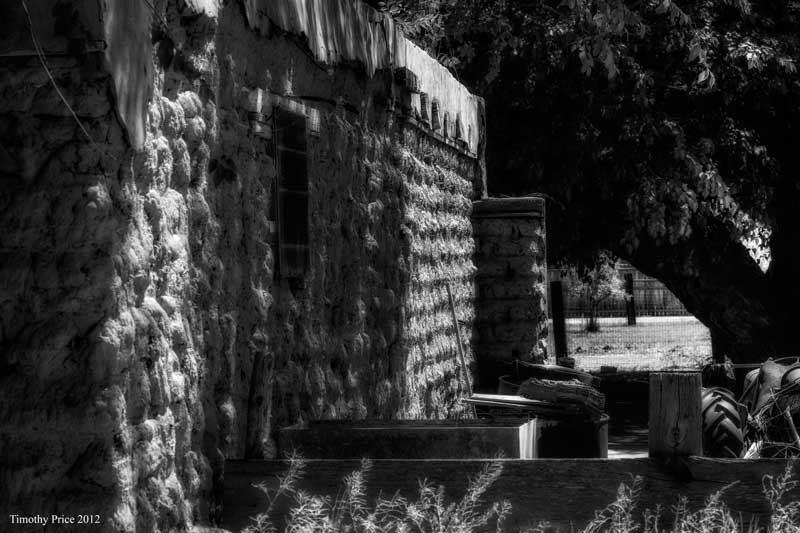
We went on the Corrales garden tour today. I’m still working my way through the photos, but some of the critters, a more exotic stripey plant and old adobe building were the most interesting photos that I’ve worked on so far.

Sangria Ingredients

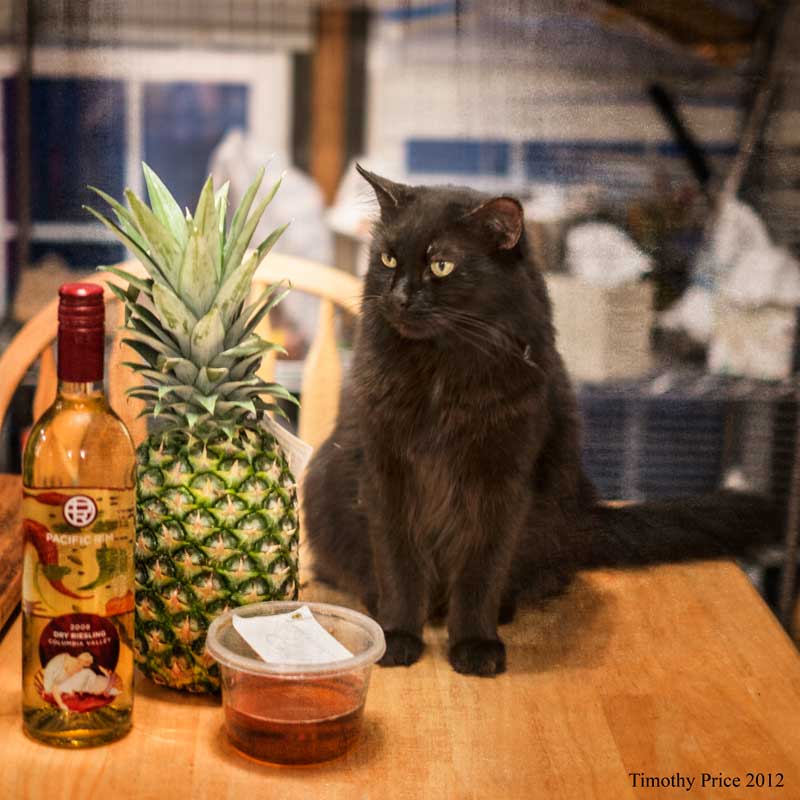
There are many ways to make sangria, which is basically fruit soaked in wine. One recipe from Fine Cooking included dry riesling, pineapple, oranges and guava juice. For good measure a fluffy black cat blessed the ingredients, adding a touch of brujaria to the sangria.

The air was much warmer tonight, and it’s just now starting to cool off after 11:00 pm. The moon hasn’t come up, so it’s very dark outside the canopy. I  can see a few stars twinkling in the eastern sky, and the blinking lights of jets as they pass by on their way to the airport. It’s surprisingly quite for a Saturday night, which has made sitting outside really nice.

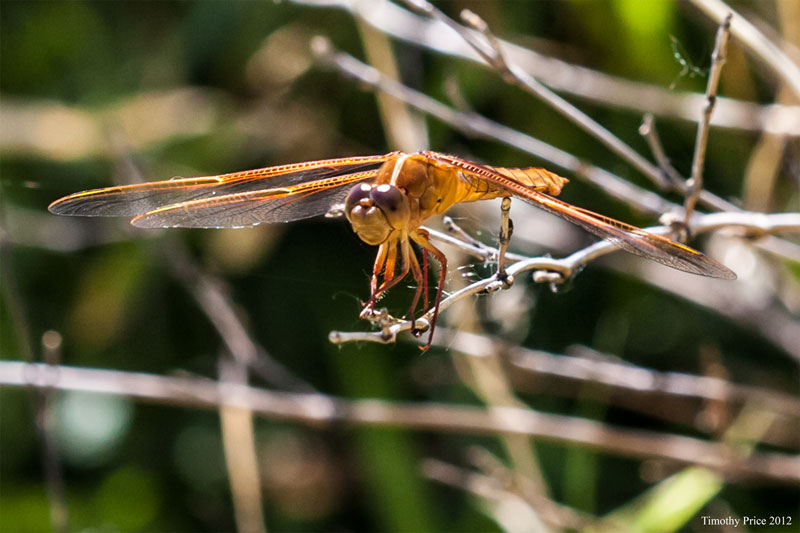
I got a photo of a golden dragonfly this morning, and added it to the series of dragonfly photos. This one let me get fairly close to it. The other photos include a backlit weed, a window in B&W, and a B&W panorama of the big tree on Coronado Road between Corrales Road and La Entrada.

Bee Assassin Bug’s Creed

“I be a bee assassin bug. A true bug. I kill bees and suck their vital life fluids. I be a bee assassin bug. A true bug. I kill and suck the vital life fluids out of anything I can catch. I be a bee assassin bug. A true bug. A beneficial bug. A bee assassin bug I be.”

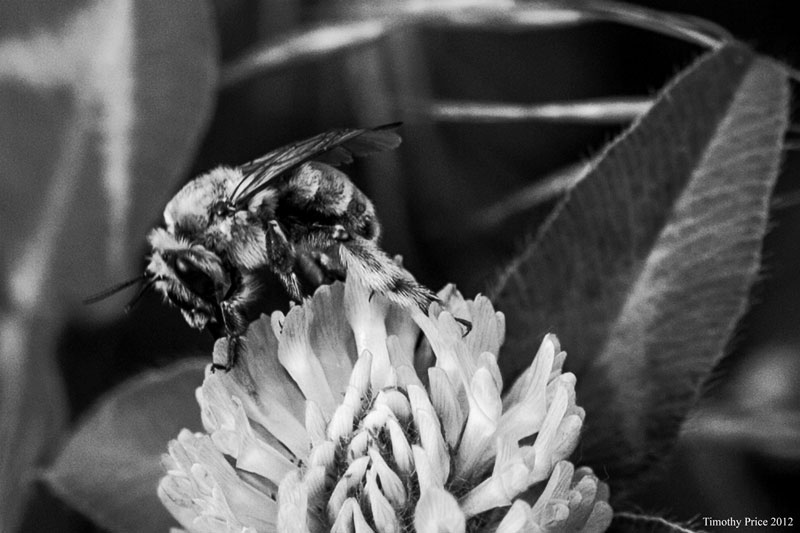
I had seen bee assassin bugs around, but I didn’t know what they were or pay much attention to them until this afternoon when I found this one sucking the vital life fluids out of a honey bee. When I looked it up on the Internet, I discovered the obvious. Its full name is Reduviidae Bee Assassin Bug.

Damselflies are nice subjects because they don’t seem to mind the camera. Actually, I think they might be able to see their reflections in the lens because they posture and flutter their wings when I put the lens in their faces.  Most of the dragonflies are a different story — the black and blue winged dragonfly in the last photo kept buzzing me, but it would not land anywhere near me. The photo was taken with a 100 mm macro lens from 15 to 20 feet away, so I had to really crop the image to make the dragonfly fill the frame.

Red Green in B&W


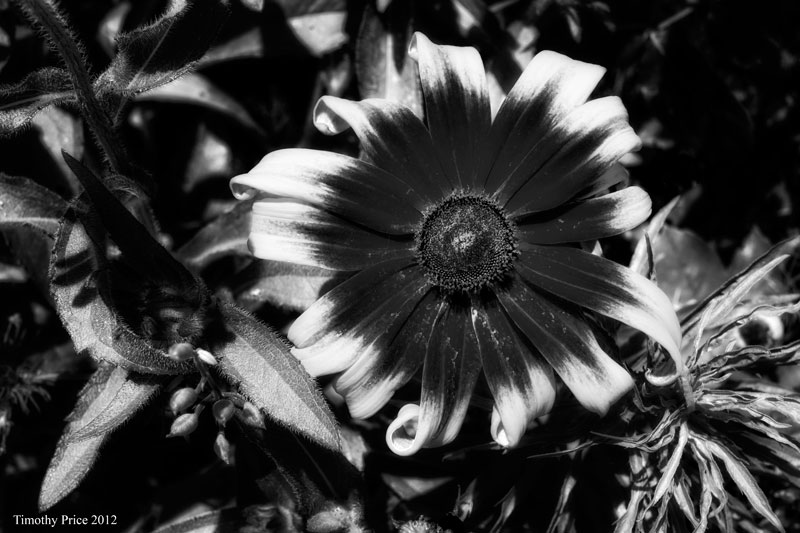
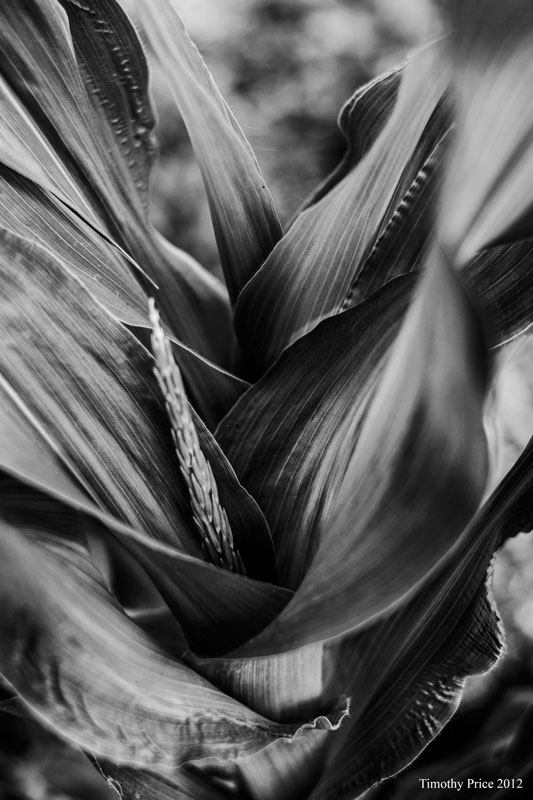
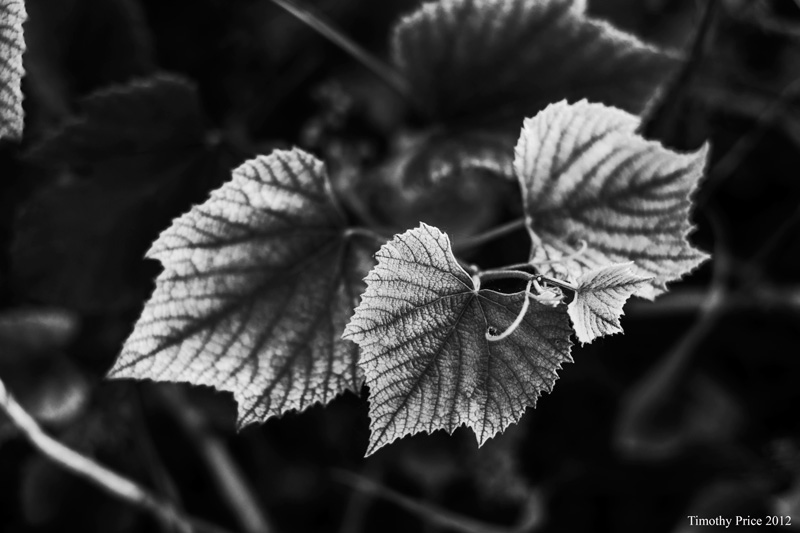
If you were expecting chiles, the frost on May 28th zapped them. The corn and grapes sustained damage, which makes interesting tones and textures in B&W, and they are recovering. We were feeling frosty last night as the air that settled in felt really cold. While we were sitting out on the deck, I had a sweatshirt on, and Laurie had a light jacket plus a cat magnet blanket wrapped around her. The temperature felt like 40 degrees, but when I checked the thermometers they all read 60 degrees. A few weeks ago 60 degrees was comfortable when the highs were not much over 70, but now that the highs are up around 90 degrees, 60 feels cold.


Transit of Venus


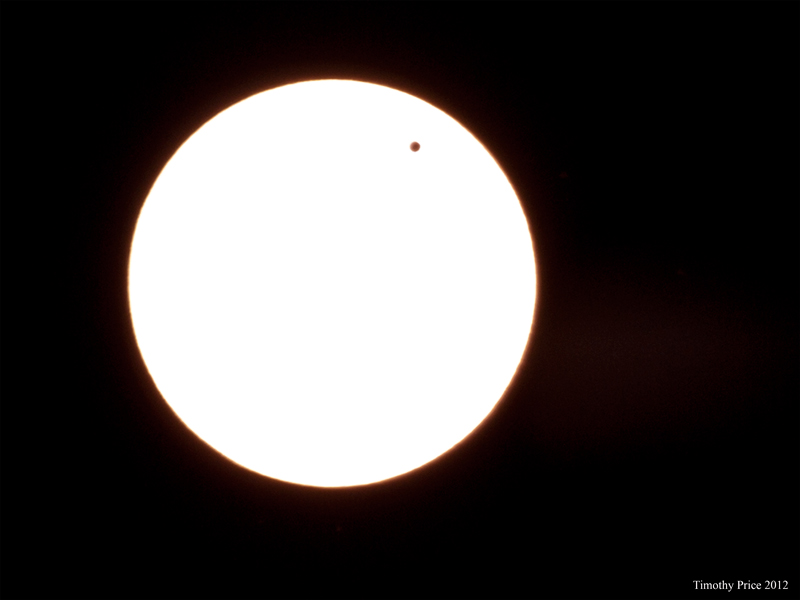
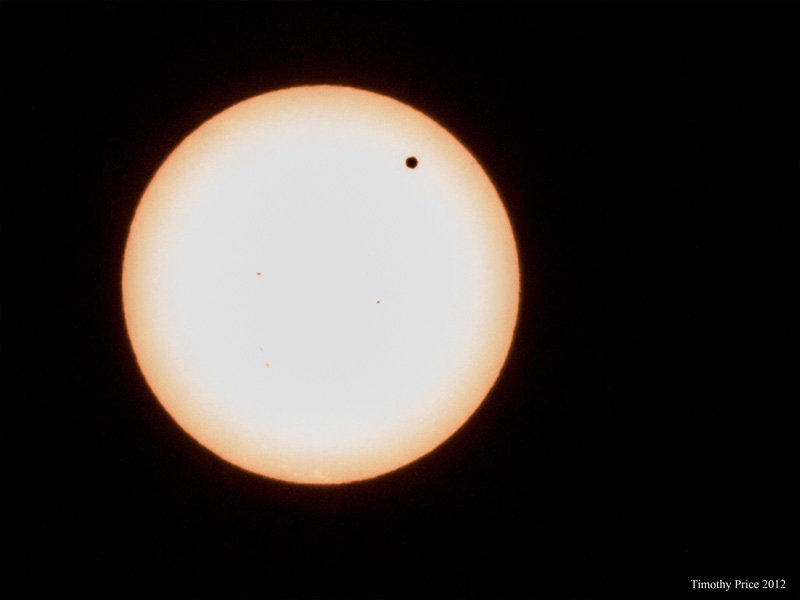
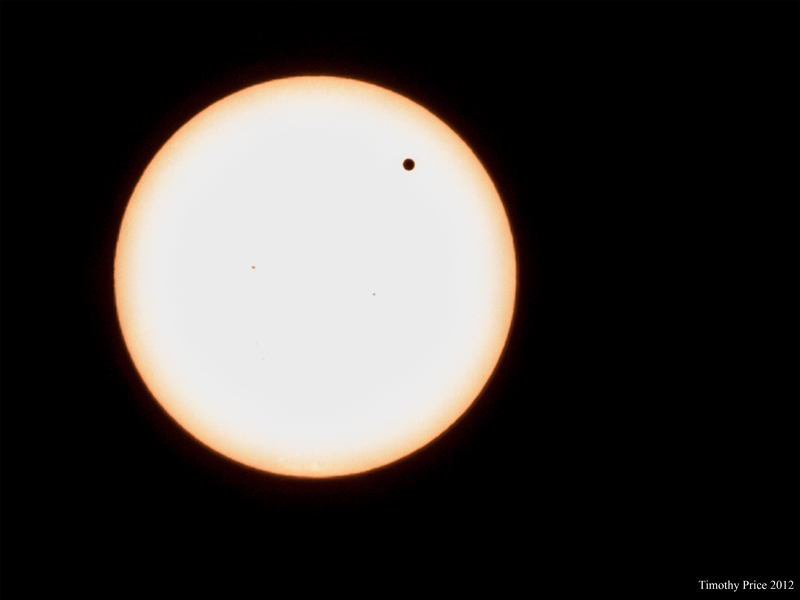
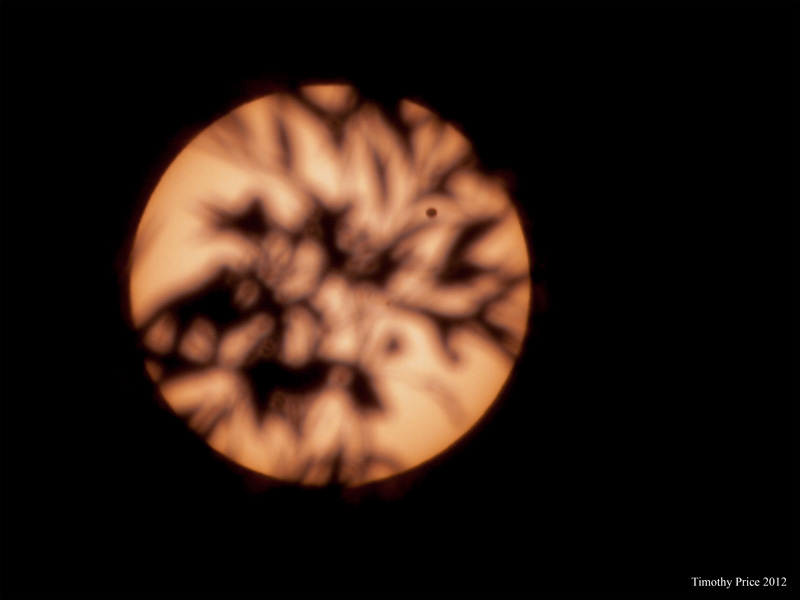
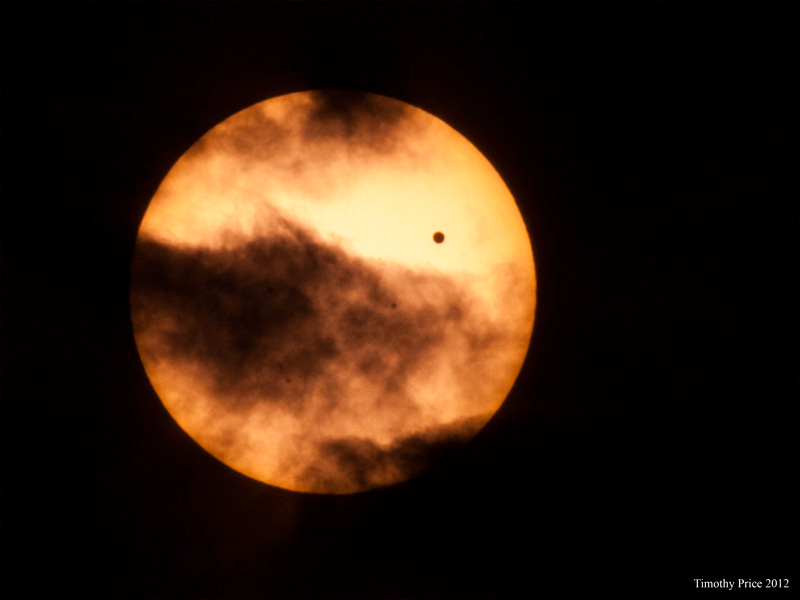
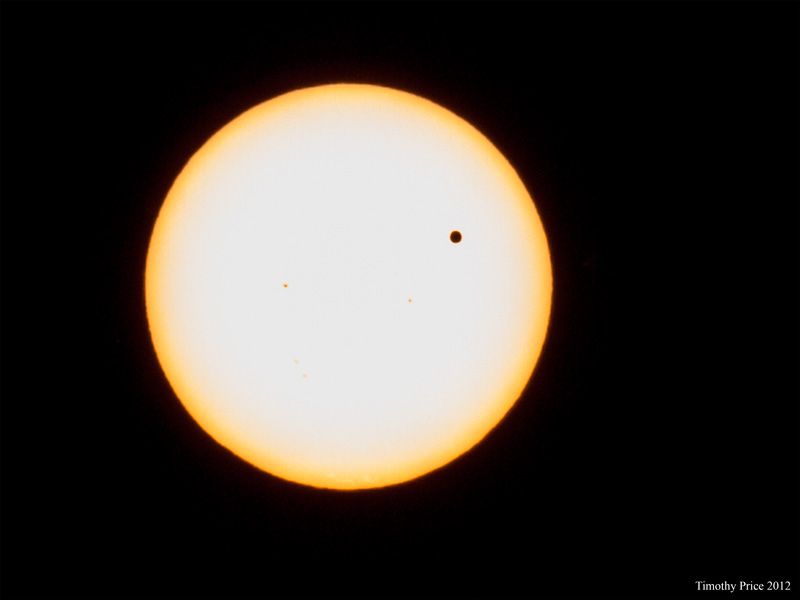
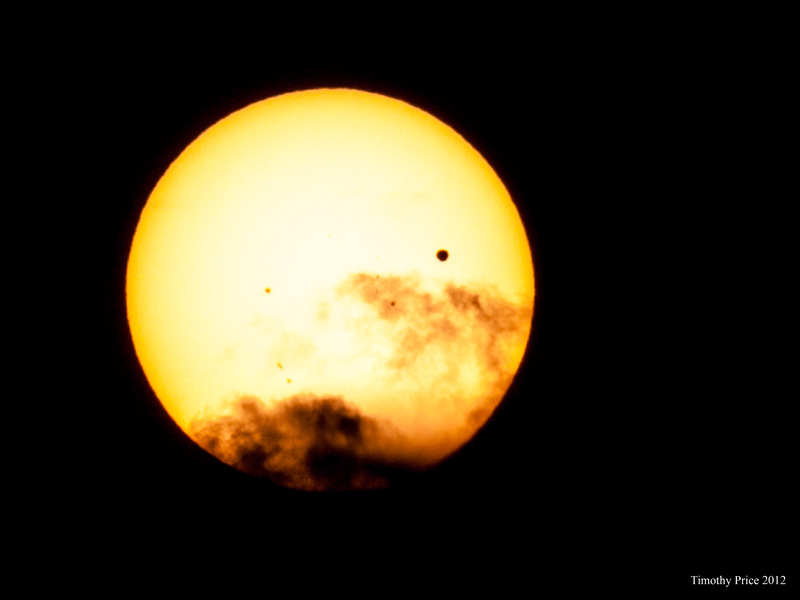
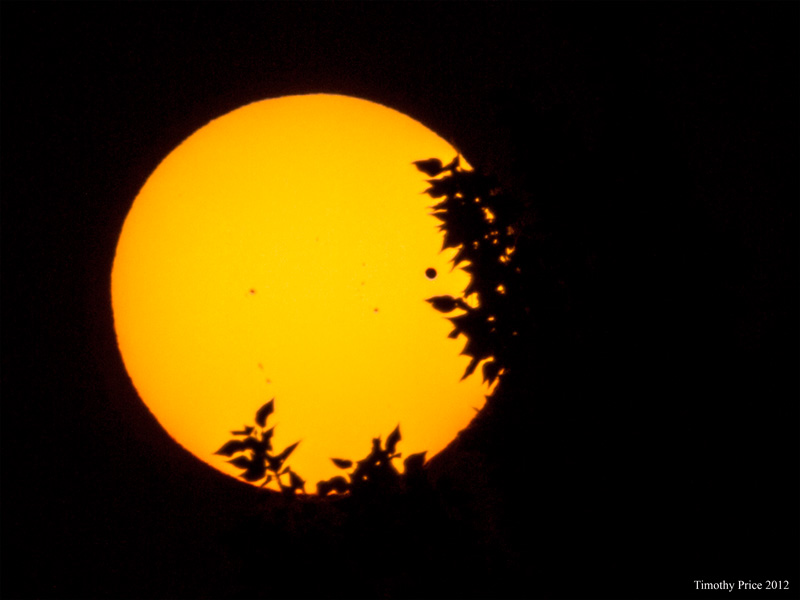
The eleven photos tonight cover the Transit of Venus from when I got my camera setup on our front porch at 5:23 PM to 7:45 PM when the sun fell behind trees and the fence on the west side of the property. I had to move a couple of times, and as the sun got lower in the sky and filtered through trees and clouds it became more yellow/orange. You can see how Venus was slowly moving down the right side of the sun, and it got about half-way down before I lost the sun behind the trees and the fence. As the sun gets lower and more yellow/orange other spots become visible.  At first I thought the other spots might be dust on the lens or sensor, but since they seem consistently placed on the sun, but I placed almost every shot in a different location in the frame of the un-cropped photos to cover the reflection between the lens and filter, I believe they may actually be sun spots.