Truth or Consequences

We met the tour van in Truth or Consequences, NM to take us to the Space Port yesterday. Truth or consequences, or T or C for short, is 150 miles south of Albuquerque, NM just off of I-25. Today it is probably best known for Elephant Butte Lake and State Park, but it also is known for its odorless hot springs, and before 1950 it was named Hot Springs, NM.  In 1950, Ralph Edwards, the host of the popular radio show that eventually became the popular television show Truth or Consequences, announced that he would air the show from any town that would change its name to Truth or Consequences. Hot Springs won the honor, officially changed its name, and Edwards visited the town for a fiesta every May for many years after that. T or C voted to keep the name in 1967, but there is new talk of changing the name back to Hot Springs since many people today do not associate it with the game show that went off the air in the late 1980’s.
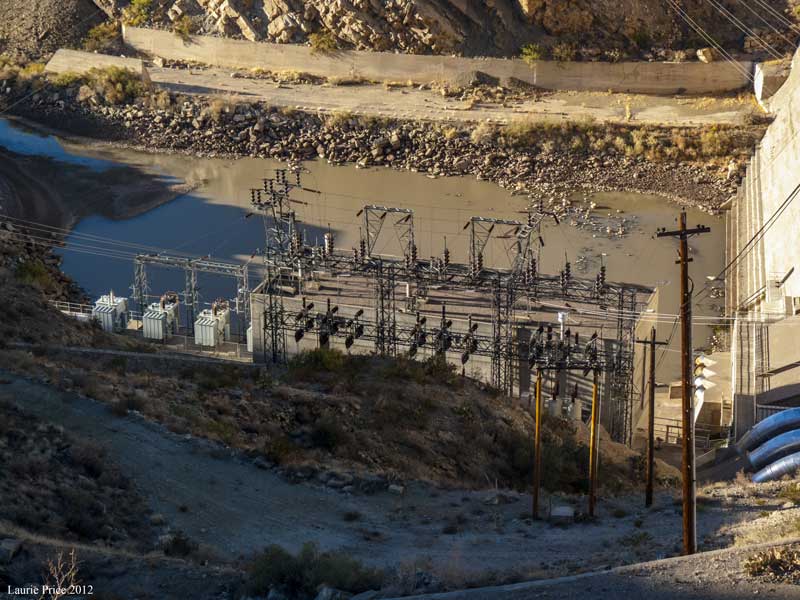
Another attraction in T or C is Elephant Butte Dam. Construction started in 1911 and the dam was completed in 1916 (20 years before Hoover Dam). The dam was a high tech engineering marvel of its day at 300 feet high, almost 1700 feet long and 228 feet wide at the base. The project made irrigation available to about 180,000 acres of farmland. There is also a 28,000 kilowatt  generating station at the base of the dam that was installed in the 1940’s; it currently generates enough power for about 20 homes.

Water has gone over the spillway twice in its 100 year history, and I got to pull a “you saw water going over the spillway when you were just 9 months old,” on my daughter yesterday. The 1980’s were a wet decade for NM, with 1986 was the high water mark for Elephant Butte. I raced the first Tour of the Gila bicycle race in Silver City, NM at the end of May 1987, and we stopped to see the water running over the spillway on the way home from the race. Of course Tristan didn’t remember, but I got a certain satisfaction out of telling her she saw it, because my parents did that to me all the time — “Oh yeah you were there with us when you were 2 years old!” they would tell me. Thanks! Like I remember places we visited when I was two. Fortunately for Tristan, we didn’t take her to very many places worth remembering until she was old enough to remember them, however, the historic water going over the spillway at Elephant Butte Dam happened to be an exception.

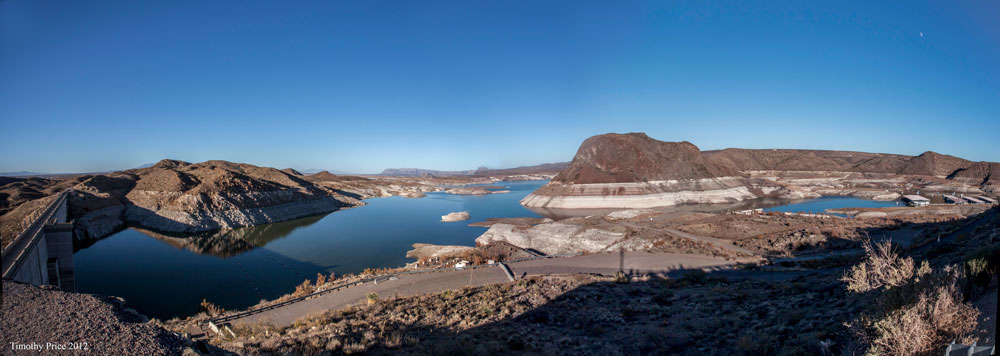
As you can see from the photos, the lake is very low right now. New Mexico is a high, arid desert and wet decades like the 1980’s are not normal. So what people have been calling a drought for the past 20 years or so, is really more normal for New Mexico; although the past few years have been very dry, so the cycle has probably swung to the opposite extreme from the wet period we had in the 1980s. The peaks between very wet periods and really dry periods for New Mexico seem to run in 50 to 60 year cycles based on the NOAA weather data we got when we had a NOAA weather station on the property.

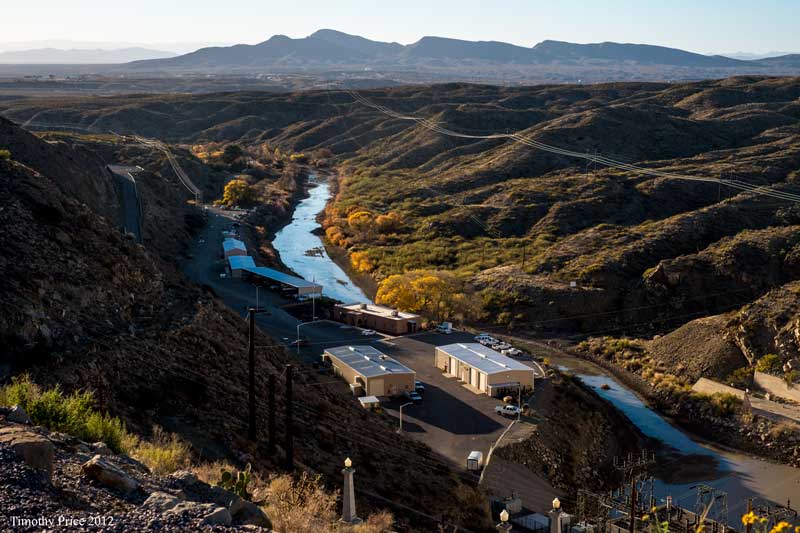
Looking southwest above the dam. The Rio Grande and distant mountains.
Project buildings along the Rio Grande below the dam
The power station at the base of the dam
Panoramic view of the dam and lake. The large island or “Butte” near the center of the photo is thought to look like an elephant

Spaceport America

Spaceport Entrance looking east. White Sands Missile Range is on the other side of the mountains in the background


Laurie, Tristan and I went on a tour of Spaceport America today. Spaceport America is currently the only spaceport in the world built for the purpose of accommodating commercial spaceflights. The Spaceport is built in south central New Mexico, literally in the middle of nowhere, on 18,000 acres of public trust land surrounded by 350,000 acres of an old Spanish land grant now owned by Ted Turner, and the White Sands Missile Range on the other side of the mountains to the east. This location is ideal for a spaceport because of 1) low population — the only inhabitants in pretty much 50 miles any direction are a few ranchers, cattle, buffalo, coyotes, roadrunners, jackrabbits, birds and rattlesnakes. 2) White Sands Missile Range, which has a large restricted air space that commercial aircraft cannot fly through, and has a large “shadow” to the east and west since commercial flights have to make trajectories around the White Sand’s air space. 3) high altitude — Spaceport America is over 4600 feet above sea level; therefore larger payloads can be launched using the same amount of fuel that it takes to launch from sea level.

The Spaceport is not officially open, but they do currently have vertical launches. We did go into the  Control Center building which is a concrete dome with ceramic tiles on the outside. To construct the Control Center, they poured concrete over a large balloon and then cut out the openings. The second floor is hung from the dome and has no vertical supports from the floor on the inside of the dome. The viewing area of the Control Center is in the “Eye” that pops up from the dome facing the runway.

The tour van drove us to one end of the runway, and I included a photo Laurie took of me photographing the number, 16, and the orange “X” that is held down by rocks on the end of the runway. The runway is currently 10,000 feet long, 200 feet wide and 43″ thick. The Spaceport Authority is extending the runway by another 2,000 feet so a spacecraft with a full rocket can land safely (if the rocket can’t fire it’s rockets and has to land, it has to land with the extra weight of full rockets).

The Terminal Building with the hangers is not open to tourists, so we only got to see and photograph the outside of the building. One of the design criteria of the buildings at Spaceport America is that they have to blend into the environment. The building is very organic without a straight line on the outside. When you are standing on the end of the taxiway, where it intersects the runway, the Terminal Building roof lines up with the mountains in the background, and continues an undulating roofline from one side to the other. The Spaceport buildings where designed by a team of US and British designers and architects URS/Foster + Partners to the world.


East side of Control Center front view of “The Eye”


Office space inside Control Center


The Control Room


Spaceport Terminal Building from “The Eye” of the Control Center


The Control Center with a profile of “The Eye”


Me photographing the 10,000 foot runway


View of how the spaceport Terminal Building was designed to match the mountains in the background


The Virgin Galactic Taxiway


Spaceport Terminal Building glass front viewing area


Spaceport Terminal Building glass front and south hanger doors


Spaceport Terminal Building south facing hanger doors


Spaceport Terminal Building Profile


Thanksgiving


We had a slow roasted prime rib with pea and parmigiano soup, roasted root vegetables with meyer lemon, yorkshire pudding and Irish whiskey cake for Thanksgiving dinner.  David and I went out to the river at sunset to get photos — I used my new ultra-wide angle lens, while he used one of my cameras with a super telephoto lens. While I was wandering around downtown last night I took a couple of ultra-wide angle shots of the Kimo Theater, and then stitched the photos together. The result is how I believe the Kimo might have looked if I.M. Pei had designed it.


The Messiah is Coming

Only seventeen days left until the Central United Methodist Chancel Choir with the New Mexico Philharmonic Orchestra present Handel’s Messiah. I am listening to the choir rehearse as I write, and they sound wonderful.   Besides singing, the choir director has the choir do choral calisthenics and stretches so they will be in ship shape to deliver outstanding performances.  The performances will be on Saturday, December 8th at 7:00 pm and Sunday, December 9th at 3:00 pm. If you live in the greater Albuquerque area, I highly recommend getting tickets to this concert. Tickets can be purchased on-line at http://holdmyticket.com/event/119812.

Handel composed the Messiah in 1741, a 100 years before the term photography was attributed to the process of recording images on a medium using a camera.  Since the daguerreotype was one of the earliest photographic processes that resulted in a direct positive, I used a hand-colored daguerreotype effect on the photos of the choir doing their calisthenics, stretches and singing to represent an early time. It doesn’t take us back to the time when Handel lived, but it does give a sense of rehearsing the Messiah in the earliest days of photography.

Today in B&W

These trees on the north side of Castetter Hall at UNM are nicely shaped and cast wonderful shadows under the night lights.  Rosencrantz and Mama Manx were snuggled together on the couch, but the minute I pointed the camera at them, they looked up at me.  The clouds were beautiful on the Sandias this morning. Laurie had an appointment at school, so we didn’t have time to make a short detour to the open space across from the Balloon Museum and get a better view of the Sandias without so many buildings and power poles.

Chocolate Birthday Cake


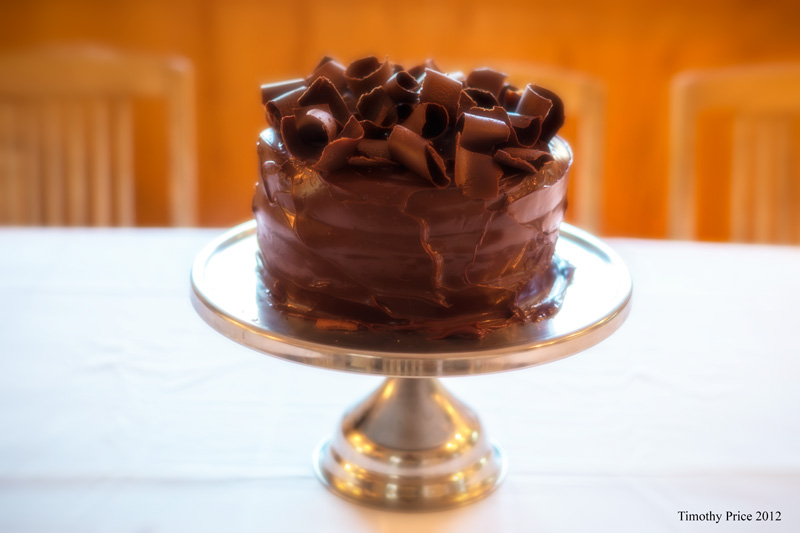
October is the birthday month for our family. Laurie made a chocolate honey ganache layer cake to celebrate Tristan’s and my birthday. It has mild honey, coffee and rum. She made the cake a couple of days ahead so the flavors can “develop,” as the recipe puts it. On Thursday evening when I got home the house smelled wonderful. After we eat bistro beef for dinner, we will get to try the cake.


Sandias at Dusk

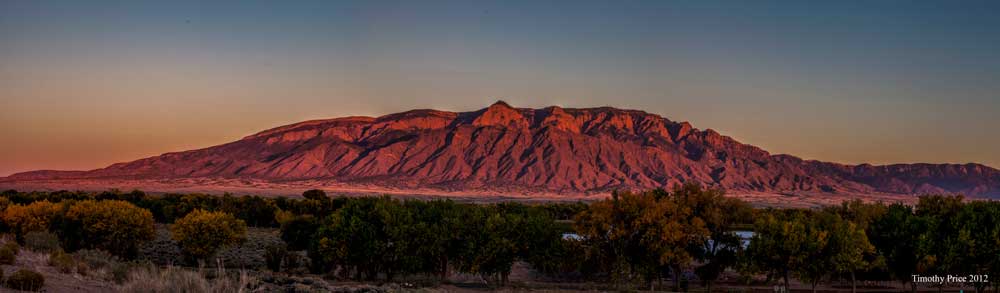
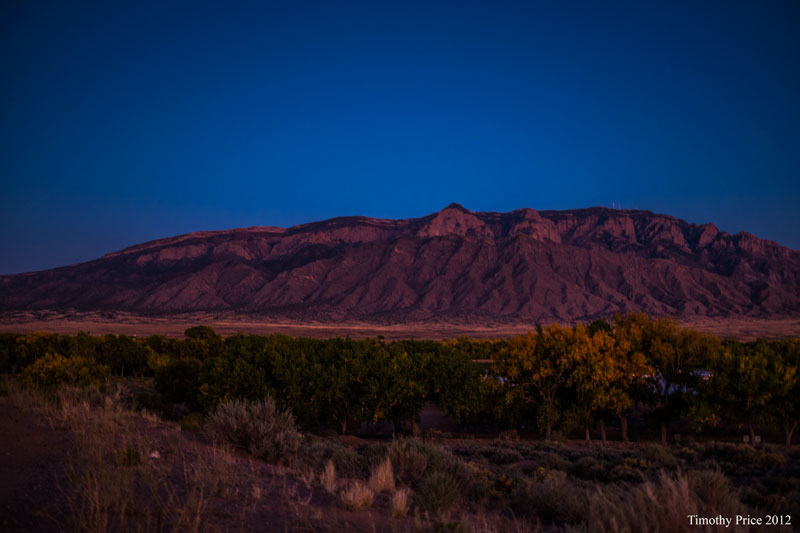
The first photo is of the Sandias 30 minutes after the sunset. I love how the highlights glow from the camera compensating for the low light.  The second photo is a hand-stitched panorama of the the rapids on the Rio Grande at the north end of Corrales. I hadn’t intended on making a panorama out of the two photos so the panorama program could deal with it. The two images were close enough for me to fudge the edges and splice them together.  The last photo is of Professor Pierre Cartier (IHES, France) lecturing on “Mathematics in the 21st Century” this afternoon at UNM. The write-up on him reads “Professor Cartier is one of the most influential mathematicians of the 20th century, a former member of the legendary mathematical group Bourbaki, and the originator of a number of ground breaking ideas in mathematics and theoretical physics.”  He was very entertaining and paced the floor as he spoke in general, stopping to face the audience to make his points, which made him even more interesting and endearing. I put several photos together to capture his wonderful lecture style.

Watermelon Mountain

The first photo shows why the Sandias are the Sandias. I had an interesting day. I accompanied a trio in two services and then played for the outdoor service at 1:00. I have just started playing again after not touching my guitar for over three years and I have not performed in public for almost 10 years.  Playing feels strange with numb finger tips, but I haven’t had to go through the pain on raw fingers until they build up calluses. My finger tips are a bit raw from practicing, I just don’t really feel them.

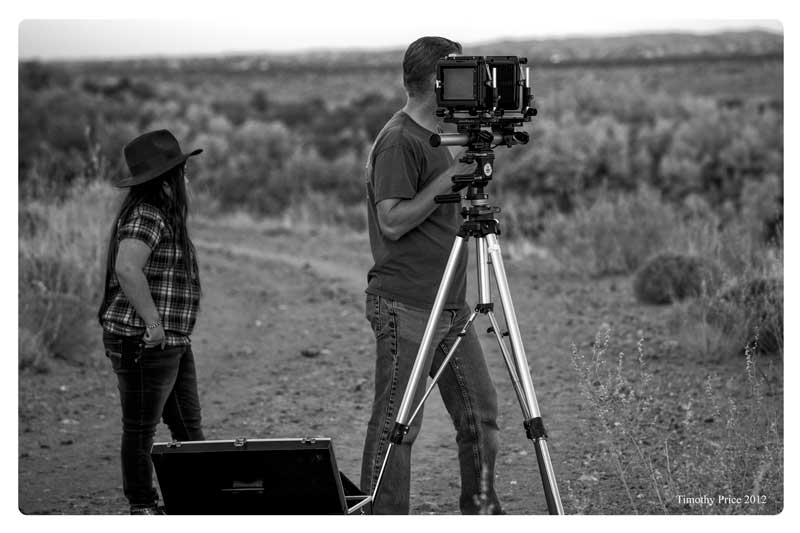
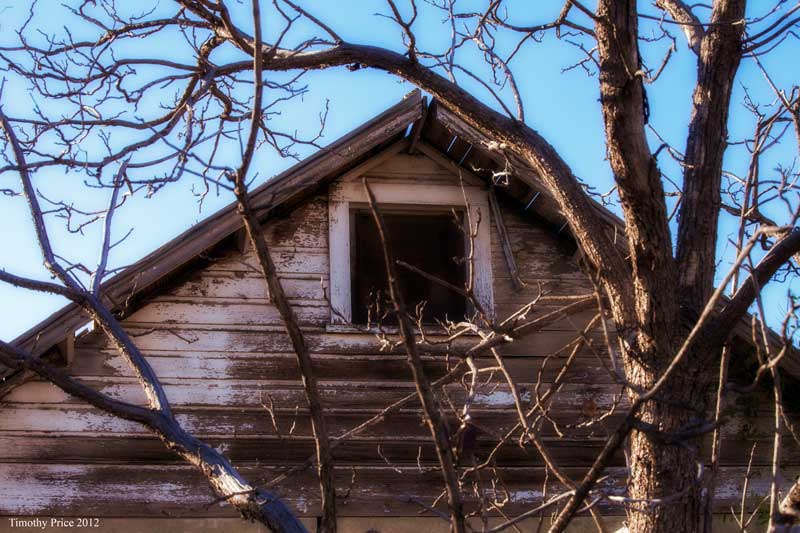
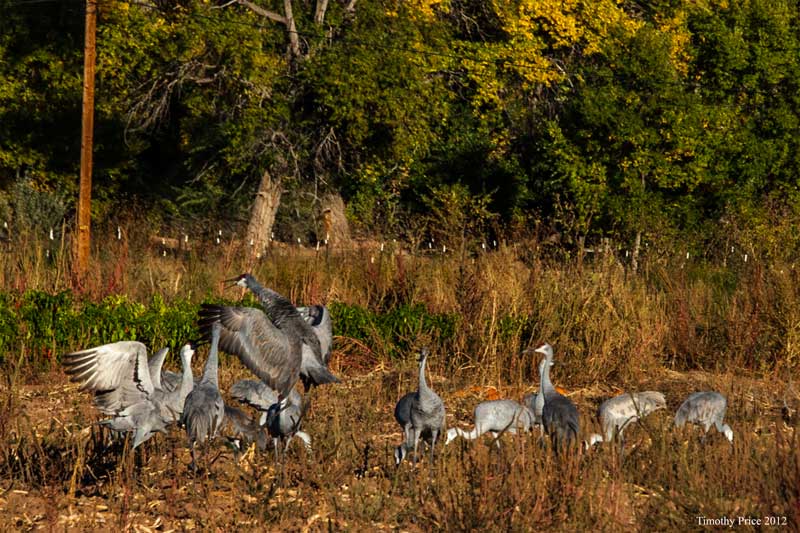
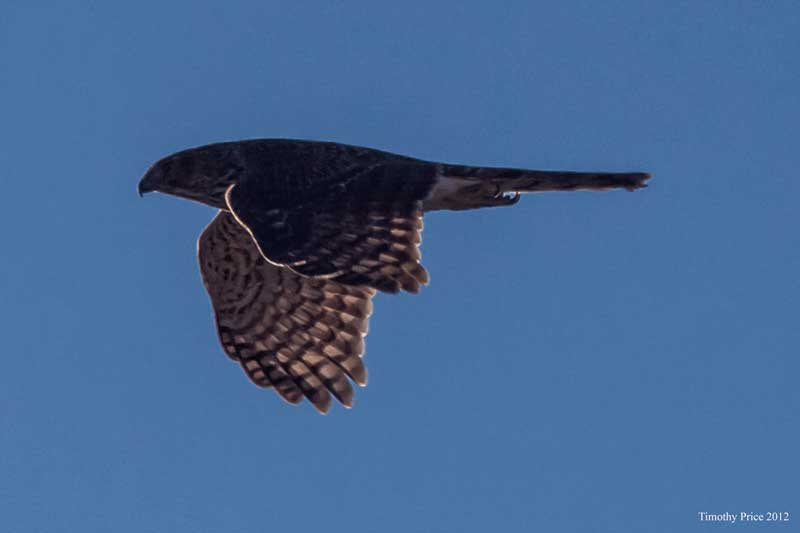
Susan came out for her annual “end of the San Ysidro Church Art Show” visit and trek to the bosque to photograph the Sandias. Although, this year we went out to photograph some of the abandoned adobe houses in Corrales, and then headed north to photograph the Sandias from a different point of view. We got photos of some cranes grazing, playing and fighting in a field along the way, and a hawk just happened to fly by. Just after the sun fell below the horizon, we drove up on the bank of the drainage ditch that runs along the southern edge of the River’s Edge subdivision in Rio Rancho and got the Sandias in their full pink. Another photographer set up his view camera next to us, and then Dennis Chamberlain, who Susan knows, came walking back to his car, tripod over his shoulder in the dusk. So we all talked photography until after dark. Dennis is a fantastic photographer. I recommend checking out his magnificent photos at http://www.dcphotoartistry.com/DC_Photo_Artistry/Welcome.html.

We The People

We got our first hard frost last night. I noticed a lot of water dripping off the roof over the catio this morning, so I climbed up on the roof to find it covered with thick, wet ice, and the hose to the swamp cooler split and spraying water. The split was close to where the hose connects to the swamp cooler, making it easy to cut the hose and reconnect it to the cooler to stop the leak. Otherwise, I would have had to change my clothes, crawl under the house to turn off the water to the cooler, clean up and change my clothes again (I turned off the water to the cooler after I got home this evening).  After I fixed the hose, I got my camera and took photos of the balloons before heading off to work.

Although it got cold enough to freeze a half inch sheet of ice on the roof, frost the top of my car, and the leaves on all the plants, most of the plants were not showing much cold damage tonight, and the zipper spider was actively repairing her web when I checked on her this evening.