
Dawn

Glenda kitty

Tumbling tumblers

Spunk & Gwendolyn

Old Ford

Marble

IPR Trucks

Mystery kitty in Jake’s bed
Dawn
Glenda kitty
Tumbling tumblers
Spunk & Gwendolyn
Old Ford
Marble
IPR Trucks
Mystery kitty in Jake’s bed
27 May 1996
Semana Santa — Processions
We went to a couple of processions during Semana Santa (Holy Week). A little after six on Thursday the 4th of April we walked to the centro to see a procession. We got just beyond Plaza Mayor and hit the crowds. Tristan had to stop and pet the horses of the nation guard. The guardsmen where dressed in fancy blue and white uniforms with epaulets and ropings, fancy buttons, and ornate silver helmets. The crowds were already very large and it looked difficult to get the procession that was starting at seven, so we waited where we were. Tristan was getting impatient, since it was 7:30 and the procession we were waiting on would not start until 8:00. I finally sent her to play on the scaffolding set against a building about 25 feet from were we were standing. This was entertaining enough to keep her occupied. From that vantage point she could see a glimpse of the procession we were on our way to see as it passed north of us. The procession we were now waiting on started and it was painfully slow. The crowd filled the streets and plazas as far as you could see. The police were in front trying to clear a path for the procession. As you gazed out across the sea of people standing in wait, mist rose from the crowd as the twilit waned, giving the impression of a cool misty evening in olden times. The mist, however, was the cigarette smoke rising above the crowd.
The lead cross bearer wearing a black hood like a Clansman’s hood would process 10 or 15 steps and stop. The procession of hooded fellows following would process up and stop behind, each had a large candle of at least 5 feet in length in his hands. The hooded men are called “nazarenos”. The line of nazarenos, two by two created a line two long blocks in length. At last four men bearing ornate silver scepters (about 8 or 10 feet high) with candles atop appeared at the top of the street followed by a group of 6 or 8 nazarenos. Then the paso appeared moving very slowly then being set down to rest. A mist rose in front of the Cristo, which was incense that was waved in front of the paso as it processed. This paso was an ornately decorated float with gold sides in shapes of fine ornate serving wear or tea sets. At the corners were fancy silver posts with lanterns containing four candles each. In the center stood a larger than life size statue of Jesus bearing a cross of timber with ornate gold capped ends. After a pause of maybe five minutes the paso would arise with a sudden jump as the men under it picked it up, followed by applause and encouragement that came from the crowd for their effort. It moved slowly forward, at most 200 feet, and then was again set to rest. The paso was at least 8 feet wide and twice that in length. The tip of the cross, marking the highest point, was about the same height as the length when the thing was picked up. I would guess there were 18 to 24 men carrying it, you could not see them under the float. It looked as if it could weigh up to 3000 pounds. There was some singing during the rest period.
After the Cristo had passed a space of a block was left and more hooded nazarenos in, some in dark blue and others in dark green hoods, rounded the corner at the top of the street. It had taken more than an hour for the Cristo to pass and the following procession was not any quicker. The nazarenos procession was of the same length as the pervious, but as the four silver scepters appeared at the top of the street we could hear the sound of marching drums and brass playing. At length another paso appeared lit up with as many as 50 to 100 large candles of 2 to 3 feet in length stair stepped on the front of the paso. The sides were an ornate silver in more finely worked impressions than that of the previous. There were five large bouquets of white flowers along each side and a fancy candelabra the curled and twisted its way down the back of the float (like something from Dr. Seuss), creating a balanced symmetry with the cascade of candles in the front. There were five or six twisted silver posts on each side of 8 to 10 feet in length that supported a canapy covering the paso. In the middle was the Virgin Mary with a pretty, tearful face, morning her Christ, who is bearing the cross, somewhere up ahead. She wore a nice gown with a cape that was spread to the back of the paso between the candelabras, terminating about 3 feet passed the end of the underlying structure, and lined up with the end of the candelabras. In contrast to Cristo’s paso, the Virgin’s was animated, always swaying to the cadence of the drummers when in motion. She seemed to dance. She would move slowly and then in a burst advance forward very quickly, then be set to rest. At rest there would often be a flamenco singer singing either from the crowd or under the paso. A crowd member would yell “Macarena” (the name given this virgin) and the crowd would yell “guapa” (pretty). After the fourth “Macarena” the crowd would chant “guapa, guapa, guapa y guapa”.
After she passed, Tristan wanted to follow, so we did. The crowds were large and you were pressed and pushed as the crowd moved forward. It was 10:00 p.m. when we started following. As the people moved over the uneven, cobbled streets in a shuffle, their heads and shoulders moved side to side. The movement, as heads seemed to crisscross up ahead, looked like the teeth of a shaver moving in slow motion. When you looked at the whole crowd moving as far as you could see, it looked liked the sea agitated by sideways currents and gentle winds. The temperature was pleasant, the night air clear, and dead still. The candles remained lit, even with the sudden jerk of rising the paso, which violently shook the canopy, and candleabras.
At each church we passed, which was three while we lasted, the Virgin would stop, turn to face the door and do a little dance, stop, rest, start again, turn and go on. Tristan started getting tired and whiney, but we wanted to see were the procession would lead. There was one stop were the musicians and the carriers went into a couple of bars and got sandwiches and drinks. We got Fantas and rejoined the march, which began without many of the musicians, who were still munching on their bocadillos. We were amazed how the tiny bars served all those people. The procession continued on and we met up with the Cristo in a Plaza, the Virgin turned and went into the plaza up to a church door and again paid her respects. As we continued on, the hour was 1:30 AM when another follower told us the processions don’t finish until 3:00 AM or after. Laurie and I wanted to stick it out, but we could see Tristan was not going to last another 2 hours or more plus a 30 minute walk home. We gave up and went home. Laurie and I saw a couple of other processions. They were similar and always packed with people. I get tired of the crowds and being in constant physical contact with total strangers. We left off at that.
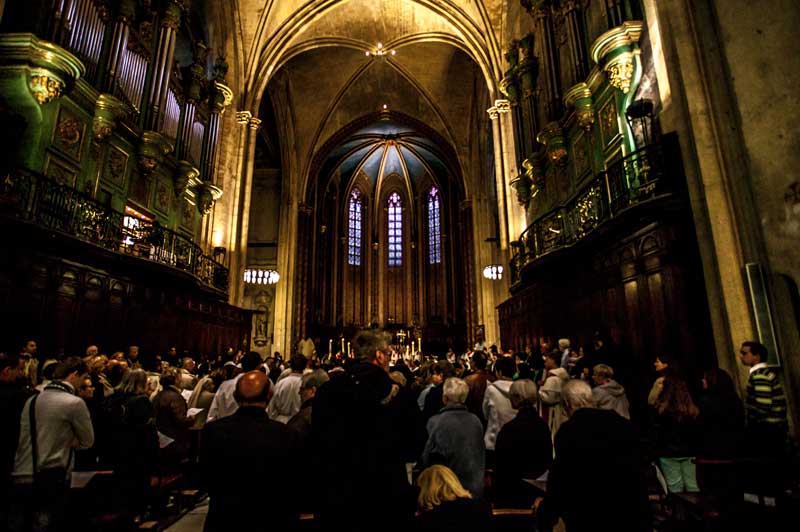
The celebration of Semana Santa (Easter Week) was much different in Madrid than it was growing up in New Mexico — there were many masses and processions during Easter week in Madrid, whereas, we never did more than go to services on Palm Sunday and Easter Sunday and attend a Holy Thursday or Good Friday service some years. There is a walk to El Santuario de Chimayo in northern New Mexico that many people take part in, some people walk 90 miles from Albuquerque to Chimayo, but I had never seen processions with the large paso (floats with statues of the Virgin Mary and Christ on them), and we had not been to musical masses in 16th century cathedrals until we lived in Madrid.
27 May 1996
Musical Misas
We have gone to three musical Misas. Two were Misa Solemnis held in a Gothic cathedral behind the Prado. These Misas where played by the chamber orchestra. The church was built in 1502, and looks like it on the outside. The inside is in good condition. The chamber orchestra was superb, and the acoustics in the old church were perfect for the music and voices, The Hallelujah Chorus was particularly moving, and the priest gave a special dispensation for the congregation to applaud, at which they did for some 5 minutes or longer, this was a bit moving also. The conductor was a woman, which is a little out of the ordinary, but obviously she is very good. Laurie noted that the music seemed to make the retablos, stained glass and sculptures come alive. I was to absorbed by the music and great acoustics to take notice of those subtleties, but between the music I did gaze upon the art, stained glass, and sculptures. The sound is very rich, full and spiritual sounding in the old cathedral. I realized that we were really hearing the music performed in its natural environment (since I would believe the music was written to be performed in a cathedral) and the natural reverb and echo from the massive open spaces gave the voices and instruments a really beautiful, mystical quality we never hear in an auditorium.
The third musical misa was a misa flamenca in a church originally built in the 1200s and then moved and rebuilt in the 1600s using some of the rock work and stained glass from the original building. The misa was very loose and spontaneous which made it very authentic. It was a special celebration for the church’s Virgin. The priest sang a good portion of the misa and was accompanied by an old guitarist who was very good. There were two singers besides the priest and three other guitarists. The priest sang a companilleros, granadinos, and fandango grandes. The first two were a real treat as you don’t hear them often. One singer did caña, soleares, seguiriyas, and fandangos grandes, while the other singer did fandangos por provencias and tangos. The misa flamenca was long at one hour and 30 minutes, but it was really great.
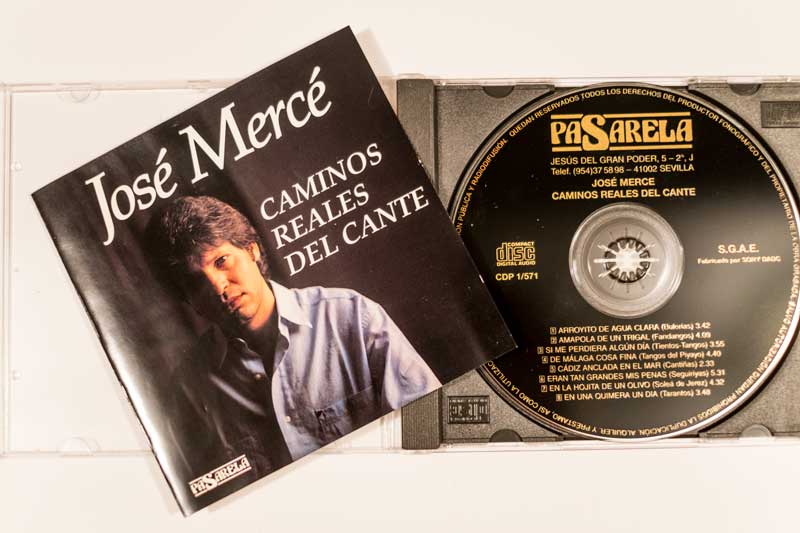
The last night of the San Ysidro Fiestas in Madrid, back in 1996, turned out to be magic, despite the rain and cold.
27 May 1996
San Ysidro Festival
There was a lot of rain during the week of San Ysidro Fiestas, so we missed a lot of the activities and concerts. We had to choose between one of fifteen events happening at any given time. The last night of the fiestas we first tried to go to the battle of the bands. They wanted 1000 ptas a person to get in. I did not have that much money on me, plus it was starting to rain. The rain began to come down hard as we made our way to Vistillas, a park in the old part of Madrid. As we climbed the hill to the plaza, we heard what sounded like a recording of Gloria Estefan. It turned out to be a local band “Orquestra Tabarca,” who were very good. There was a sparse crowd because of the rain. We danced salsa and swing on the plaza, in the rain, for over an hour. After Tabarca played, much to our surprise, José Mercé and Moraíto Chico, appeared on stage. It was 10 PM, cold and raining hard. The plaza was now packed with fans, cheering, singing along, and doing palmas. We were up at the front of the stage very close to José and Moraíto. The performance was outstanding, very intimate and magical. The very enthusiastic, die hard fans braving the cold, the wind, the rain to hear José’s expression of pain and sorrow, love and laughter, life and death, bearing his soul through his song, and Moraíto’s masterful accompaniment, added to the romance between the performers and their fans. They played, with much encouragement from the cold, wet crowd, for almost an hour, which was very considerate and well beyond the call of duty. I had only heard José Mercé on disc before that night, and was pretty much ambivalent; however, I became a fan that night. For a matter of fact, we can’t even listen to his disc at present because it sounds so processed and impersonal. After José Mercé played, Orquestra Tabarca played a set, there was a fantastic fire works display, and then Tabarca played again. The rain had ceased, so we danced along with several other people in the crowd until the band quit playing. As I mentioned, there were many, way too many, great looking events scheduled for the week of San Ysidro Fiesta. The problem was it rained so much we did not go out to see many of the events we were interested in. Most everything was outside, and our stamina for standing in the rain is limited. I guess San Ysidro can still bring water even hundreds of years after his death.
Video
Jose Merce y Moraito Chico Bularias 2010 https://www.youtube.com/watch?v=YJ-_nJ2_3c4

While I was baking a heart shaped chocolate cake for Laurie for Valentine’s Day, and she was making vanilla bean gelato, we listened to Loquillo y Trogloditas on the stereo. Curiously enough, today’s letter from Madrid moves to May 27, 1996 and I was writing about the activities and concerts during the San Ysidro Festival that was in the middle of May. We happened upon a concert by Loquillo y Trogloditas in Plaza Mayor during the festivities. We had never heard of Loquillo before then, and we became fans after the concert , bought all their CDs, and saw him in concert a couple more times after that. Loquillo y Trogloditas were very popular at that time, they had been around for at least 10 years or longer and had many albums out by 1996. Loquillo is still going strong 20 years later, as you will see if you click on the photo or follow the link to the YouTube video at the end of the letter.
27 May 1996
San Ysidro Festival
San Ysidro is the patron saint of Madrid (and Corrales, NM, USA, also). May 15th was the holiday, but the fiesta goes on all week. As part of the San Ysidro Festival, we attended a very nice concert in Parque de Retiro by the Municipal Orchestra, checked out the festivities at Parque San Ysidro on the south side of town, went to Casa de Campos, and discovered the pool there was free on the 15th for San Ysidro Fiesta (Tristan got to swim, she was beside herself). The concert in Retiro was very good. The orchestra played paso dobles and other traditional Spanish music. Parque San Ysidro was like the midway at the state fair with vendors, rides and a lot of noise. A lot of people were dressed in traditional Madrid feria costumes, that look similar to Laurie’s Sevillanas dress, if you have seen it. The men wore houndstooth (small check pattern) driving caps and a matching vest, sometimes. There were Gypsies playing music with an amplified keyboard and trumpet. The keyboard was on a large speaker set on a push cart. They were playing paso dobles, sevillanis and traditional Spanish music. A small group of people were dancing local folk dances to the music. Tristan and Laurie danced paso doble and sevillanas. I was much to interested in watching the locals to get up and dance.
We decided to go to Plaza Mayor one night to check out the San Ysidro Fiesta activities there. There was a large group of young people gathered around the band stand dressed in leather jackets, black jeans, and T-shirts, with their hair done up in 1950’s James Dean or Elvis styles, sporting manicured side burns. The young women were generally dressed in more punk fashion. They were waiting for a band to play. We made our way through the crowd to a point about 50 feet from the stage, centered between the two walls of speakers. The band came out before 9:00 PM and started paying. This was a major Spanish rock band with great sound, light show and lots of energy. After the band started playing I noticed the whole plaza was wall to wall people (Plaza Mayor is the old 16th century plaza of Madrid that is surrounded on all sides by four story buildings. The plaza is about the size of two football fields). We could hardly move we were so packed in. The crowd knew all the words to every song the band played and yelled them along with the band, so we basically had surround sound on the vocals. The band was “Loquillo y Trogloditas” as we learned later. They had a logo of Woody Woodpecker smoking a cigar, with a snarl on his face over cross bones with stars like a Confederate flag, imitating the pirates. The singer had a Confederate flag hanging on his mic stand. He was dressed in leathers and sported the same hairstyle as the young people. Various members of the audience had Confederate flags and Che Gueverra banners. One fan was wearing a Confederate infantry cap. We have not figured out what the biker-James Dean/Elvis-1950’s greaser look, Woody Woodpecker, Confederate flag, Che Gueverra and troglodytes have to do with each other; maybe Loquillo knows. The band played over three hours straight without a break. Most of the songs were less than 5 minutes, so they played a lot of songs, with a good variety of rock to slightly hyper punk. They even played material they had recorded in 1983, as announced by the singer. We told Tristan that we would have to pay a small fortune to see a major rock band, with a fantastic light show, play a concert like that in the States.
To be continued…
Video
Loquillo Feo, Furte y Formal 2014 https://www.youtube.com/watch?v=LVmzA48ojWk
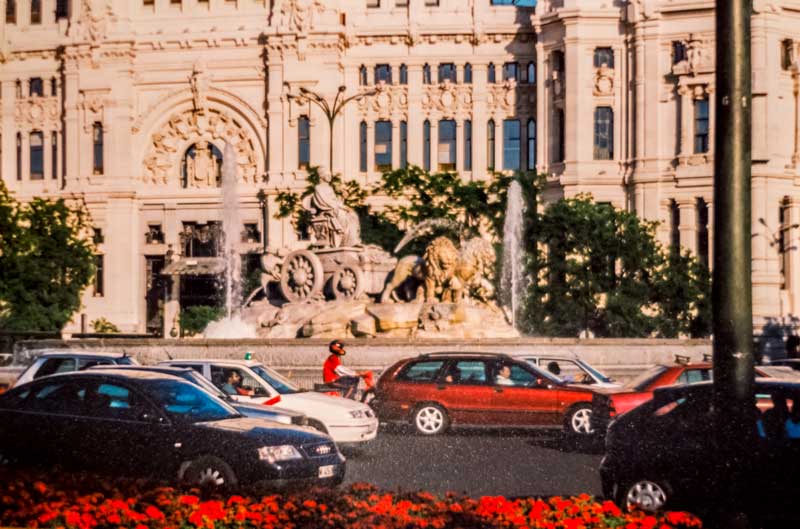
I was a surprised to read my initial reaction to the traffic and driving in Madrid during the first few months after we moved to Spain, because I don’t believe the traffic and driving would not surprise me at all now. While we never had a car during the almost 4 years we lived in Madrid, we rented cars to go out and explore castles, visit villages and cities, and when we drove to Italy and back one Semana Santa. While my initial reaction was that driving in Madrid was a right reserved for natives, I ended up driving in Madrid, all over Spain, all across Southern France, in Rome and all over central Italy before we moved back to the States.
April 18, 1996
Driving
Driving in Madrid is a right reserved for the natives. It looks awful to try and negotiate traffic. It is difficult to negotiate traffic as a pedestrian here. Everyone drives fast. Holes close up instantly, and the cars do not give pedestrians much right of way. Motorcycles and scooters dart in and out of traffic at high speed. People obey traffic lights better than Albuquerque, there are just a few going through a red light at the last minute. As I had mentioned earlier, the instant the cars get a green light, they are off like they were in a race. The cars have amazing acceleration for small cars. I guess they have a lot more power without all the pollution controls. The traffic actually moves quite well, basically fast and frantic, for the density. It does not matter the size of the street, people drive fast. You can be in the old part of Madrid trying to walk around all the cars parked on the narrow sidewalk, of a narrow street and a stream of cars are moving down the street at 30 to 40 mph or better (they drive up to 60 mph or better on the bigger streets). I really don’t know how the drivers keep from constantly running into each other at the speeds they drive in basically bumper to bumper traffic. During rush hours, police officers are in the streets waiving cars along. If the cars are not moving fast enough, they blow their whistles at the cars and gesture for them to move faster. Parking is a serious problem in Madrid. I often see cars double and triple parked and sometimes around the Prado you can see cars parked on both sides of the roads and in the middle of the street. There is underground parking under every plaza that I have seen so far, and parking garages where spaces can be rented in about every block; and yet there are cars parked everywhere they will fit on every street that is not blocked. Cars are parked along the streets bumper to bumper for blocks. I don’t know how they get them in or out, but they do. The public transportation is excellent and cheap. There is no need to have a car in Madrid.
Most of the cars are fairly new, about the size of my Mazda 323, but mostly French, Spanish, German and Fords. The cars all look similar, with a few strange ones now and then. The motorcycles and scooters vary greatly. There are a lot of scooters of all types, sizes, colors, ages and condition. The motorcycles vary greatly also from small enduro type bikes to large enduros, small run of the mill type bikes to large cafe style bikes. There are also a lot of old vintage type bikes that are rare in the States, such as 60’s and 70’s Montessas, Ossas, Benellis, Ducatis and several I don’t recognize.
To be continued…
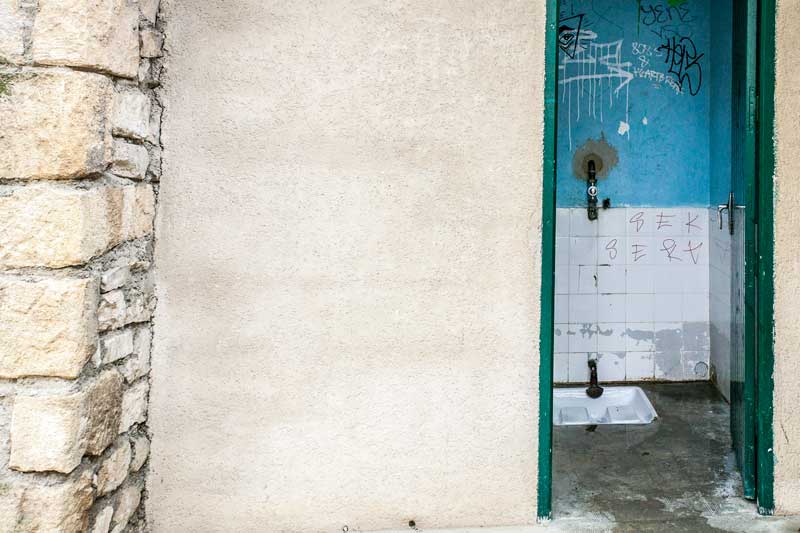
In the last letter we were visiting the parks and open space. While out on the streets in Madrid, public restrooms are not common, but you will find them. Many times we used the bathrooms in the bars and bought tapas or cup of coffee in appreciation of their services.
April 18, 1996
Public Restrooms
Restrooms in Spain are interesting. They are all modern, no holes in the floor you stand or squat over so far, just regular fixtures, largely manufactured by Roca. The light switches are invariably on the outside wall by the door as you go into the restroom. There are a few with interior light switches, but this seems to be the exception. In the bars and other semipublic restrooms the light switches, that are outside the door, are on timers. They switch on when you touch them and turn off automatically after a few minutes, often very few minutes. Furthermore, the floor plans to most restrooms in the bars are an entry with a sink and air blower hand dryer (paper towels are scarce in Madrid), and a room with a door and the toilet. Sometimes there is a urinal somewhere in between the sink and the toilet room. I have learned that when you walk into a restroom in a bar, you quickly familiarize yourself with the surroundings, location of fixtures, and which way the doors face and the type of handles on the doors and how they open. This is very important because for sure, the lights are going to go out before you are finished with what ever you a doing (even just washing your hands). Since all restrooms in bars are downstairs below street level, they are very dark when the lights go out. The first time the lights went out on me, I was quite surprised, since I had only been in the bathroom maybe 90 seconds. I had not paid much attention to the door handle or where things where, so there was much groping around trying to get through two doors so I could get the lights back on for another 90 seconds. I am much more aware of things in restrooms, but am still surprised when the lights go out. One interesting effect, however, is you never have to wait long for the bathroom even in the most crowded bar.
You find public restrooms spread very thin, and often closed. There will be a few on the busy round-a-bouts and in the parks, otherwise, Madrid is as bad as most cities in the US about public restrooms. Most public restrooms seem to be modernized versions of the old hole in the floor restrooms that Europe is so famous for. In the mens rooms, of these subterranean relief stations, there are urinals on the walls with a steel grate covering a drainage channel the runs the length of the wall. As you stand at the urinal and pee, you can watch it drain out of a hole in the wall into the drainage channel under the steel grate you are standing on. Every once in a while water is flushed through the urinals automatically, and then you get to watch a river running under your feet as you do your business. I guess the urinals keep you from peeing on the wall, your shoes and other peoples’ shoes, which I suppose could create a bit of tension among the men if someone where to spray someone else’s expensive, fashionable shoes.
At least the lights don’t go out on you in the public restrooms. There are always glass block lites in the ceiling letting daylight in, I assume they have other lights at night. There is always an attendant in these restrooms who keeps them clean an collects a paseta from you. Laurie and Tristan always have to pay. I have never been asked, and I have never seen any man pay. Laurie figures they are easier on the men because they know they will just go pee on the street otherwise (a lot of them do anyway. It is fairly common, especially after dark, to see guys stop and pee on the street).
Up next driving…
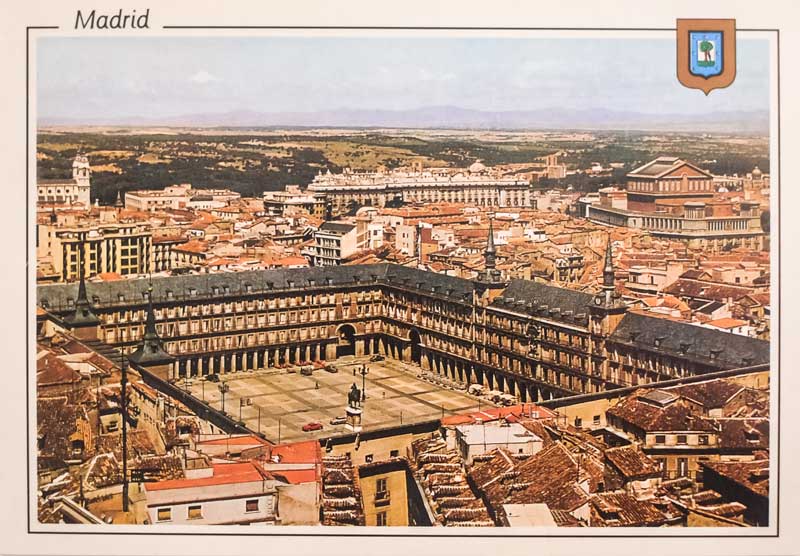
While I found the round abouts to be an interesting part of the urban design in the last post, I found the prostitutes in the open space to be even more curious as part of my first impressions of Madrid.
April 18, 1996
Parks and Open Space
Madrid is really great about parks, playgrounds and open space in among the dense urban environment. Almost every plaza has a park with benches and a playground. The Spanish haven’t decided that swings, slides and monkey bars are unimaginative, or too dangerous. They have play equipment that was outlawed in the States years ago. The kids love the play equipment and the playgrounds. The playgrounds are always full of kids playing, families hanging out and people walking dogs basically all day. You see more families starting about 6:00 pm on until 10:00 pm or later. During the day you see groups of kids on recess, adults swinging and walking their dogs, and moms with younger kids in the playgrounds. People tend to really use public areas. You do a lot of living and playing in the city streets, parks and cafe bars, as opposed to sitting at home and watching television (although, I think a lot of people sit at home and watch TV also).
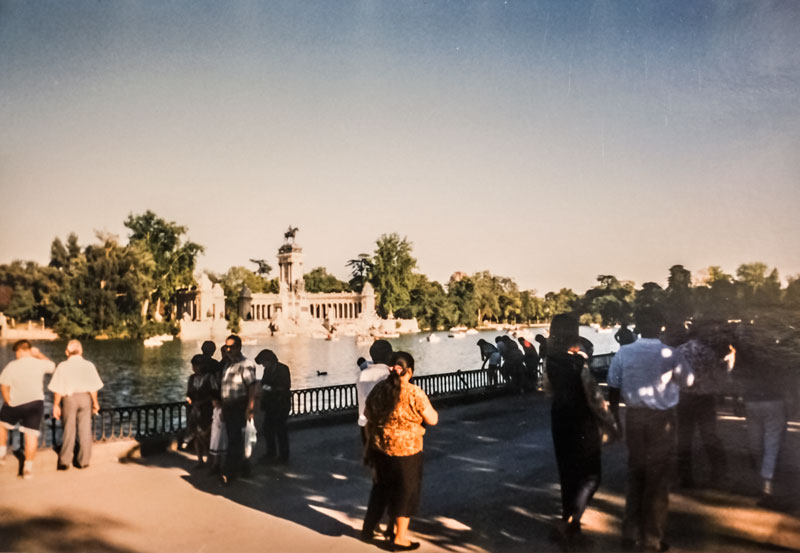
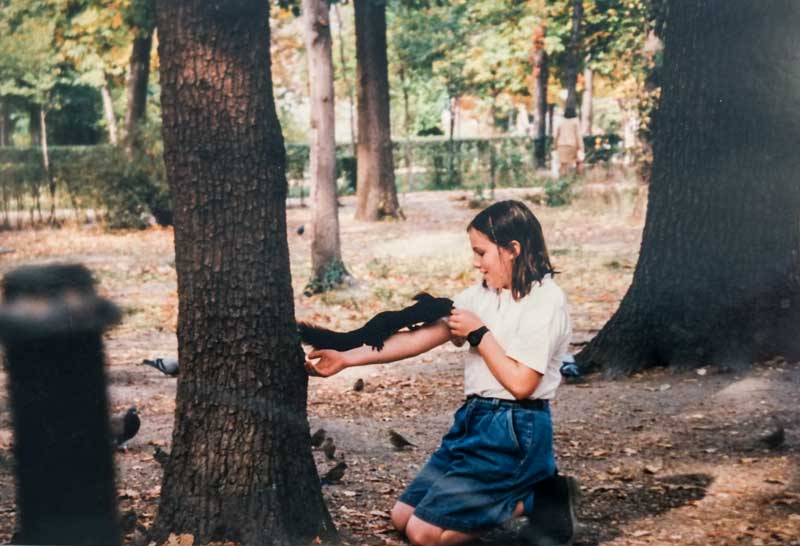
The Parque de Retiro is on the eastern side of the centro. This is a large park with all kinds of stuff: trees, well kept gardens, pathways for walking and running, streams, fountains, sculpture, lakes, a crystal palace, birds, ducks, swans, geese, extremely tame squirrels, cafe bars and sports facilities. You can rent boats to row on the larger lake and there are paved streets used for skating, cycling, and roller blading. We spend quite a bit of time in Retiro. It is a very nice park to hang out and relax in. I walk 10 kilometers every morning, and the majority of the walk is in Retiro.
Another beautiful park is Parque de Oeste. Oeste is 3 kms. west of us on the edge of the Rio Manzanares valley. Oeste is much more wild than Retiro, It has relatively steep slopes and many hills covered with grass, a large variety of trees and wild shrubs. There are pathways winding up, down and over the hills, and monuments dispersed among the foliage. You feel like you are in the mountains. There are information placards the describe many of the trees and bushes, their history, usage, and origins.
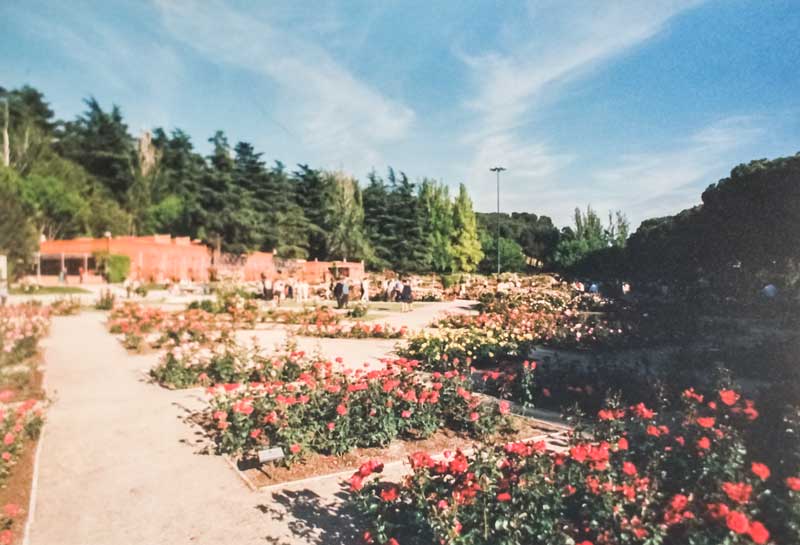
Just across the river, west of the centro, is a huge open space called Casa de Campo. This is were you train if you ride a road bike, plus it also has really good mountain bike trails. The area is very hilly and covered with pine trees. There is a long (2.5 kms) aerial tram (Teleferico) that runs from Parque de Osete on the east side of the river to about a third the way into Casa de Campo. The Teleferico is reasonably priced and really fun to ride. It gives you a great view of Madrid, the Guadarama mountains, and Casa de Campo. From the looks of the place, it is set up to handle a lot of people picnicking, camping, playing, hiking, biking and going to the zoo and the amusement park located along the south side of the park. We walked up to the zoo once, but it cost 1500 ptas per person to go in. We said no thanks; however, we have been assured by the natives that the zoo/aquarium are well worth the price. There are playgrounds, soccer fields, trails, picnic tables, campsites, and a lot of trash cans. I’ll bet the park will have a million or so people at any given time in the summer. We’ll have to see.
The one curious thing we noticed about Casa de Campo as we were walking from the eastern end of the park up to the zoo, were prostitutes on every intersection and along the roadways in that end of the park. I started referring to them as PnP (putas in the park). The first one I noticed was an attractive Spanish woman standing along the road under her umbrella (it was a rainy day). As we headed west, the number of prostitutes increased and they were primarily black women (African). We were in the park during siesta, so I’m guessing that men take their siesta time to go out to Casa de Campo to hire a hooker, go off in the bushes, or park in a remote area, have some whoopee, and then go back to work. It is really strange to see prostitutes advertising themselves in a wooded open space. The only other place we have seen prostitutes, on a regular basis in Madrid, is at Gran Via and Calle Hortaleza. We joke about Gran Via at Hortaleza not being a good spot for a rendezvous. I use to think that tourists who can’t or don’t read local papers were the main client’s of these horrid looking, unhealthy, obviously drugged out street creatures; however, I have seen several men who were older, not very good looking and often handicapped (with a lame arm or leg) making deals with these ladies. I have to pass by there quite often to get to may guitar lessons and into the centro, and you can’t help noticing what’s going on. Prostitution is apparently legal here. When I was looking for apartments in the classified section of the paper, the largest section in the classified’s was for prostitutes of all types: male, female, young, old, all nationalities. They even had classified’s advertising non-professional hookers.
Retiro and Casa de Campo are the two main parks we have been to. The map shows many other large parks, hundreds of small parks, and a large area to the northwest that looks like the equivalent to a national forest in the U.S. We are scouting out horse lessons for Tristan, and that will take us to mountains around Madrid.
Another interesting space in Madrid is the Atocha train station. There is an indoor rain forest at the train station where you can go and hang out. It is very pleasant, the air is clean, and the trees and plants are large, thick and healthy. There are benches all over the area were you can sit and read, think or just watch people. There is a lily pond with gold fish and turtles that keeps Tristan entertained. There is a cafe bar, a few shops, travel agencies, and a car dealer in the rain forest. The car dealer only has two cars on display at any time inside and there are usually two to four very attractive sales ladies wearing short yellow skirts with matching blazers, black tights, and white blouses showing off the cars and answering questions. When we are making calls from the phone place off Calle de Atocha, or doing other business along Calle de Atocha or Paseo del Prado, we will walk over and use the restrooms in the train station and sit in the rain forest and relax a bit.
Next public restrooms…
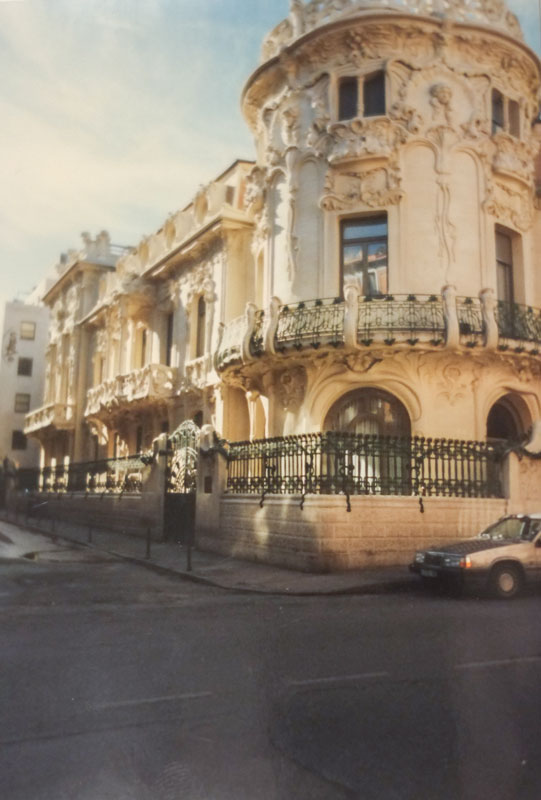
After my first impressions of the museums, I turned to my initial impressions of architecture and planning. As you will see, the large round abouts where one feature we never had to deal with in Albuquerque and made an impression on me the first three months we were in Madrid.
April 18, 1996
Architecture and Planning
Architecture and planning is quite interesting in Madrid. In the middle of the centro, where we were in a pension for two weeks, the buildings are old, streets generally narrow and winding, making a quasi radial pattern resembling a messy spider web starting or ending at the Plaza Mayor. As you head any direction from the centro, you start getting a mix of old and new buildings, wider streets, and somewhat less winding and twisting roads. Of course, they have those stupid round abouts everywhere, which to cross them makes you really go “round about”. You will be walking a long a beautifully landscaped median, in the middle of a large boulevard, that has pathways, sculptures, flowers, birds, cafe bars and playgrounds, and then you come upon the round about. These things are huge, with beautiful fountains, gardens, sculptures or memorials in the center and, perhaps, a half a dozen or more streets intersecting them from all different directions. To get across these things you have to either go around them or, in some cases, under them (Anyone would be an absolute fool to try and walk across even a small round about in Madrid. Traffic is fast and does not stop for pedestrians unless there is a red light). Timing the lights at these things must be a nightmare,. I don’t think they have quite figured it out yet either (judging from the number of police officers directing traffic at the rush hours). You have to cross a lot of streets to get around the round about and continue on your way. Traffic will have a red light at the street your are crossing, but the crosswalk will still have a red light for a long time, because of all the traffic turning off the circle. Across the median there will be a green walk sign, but you still have a red. Your walk finally turns green, the one across the median is flashing green, meaning its about to turn red. If the street is less than 3 lanes you might make a run for it, if it is any larger you don’t. Once traffic gets a green light in Madrid, they are off like Indy cars. All vehicles around here have amazing acceleration. Back to the layout. The suburbs have taller buildings, more of a grid street pattern, and the farther you go out from the centro the more rows and rows of high rise apartment buildings you see.

There is a lot of construction and renovation going on all over Madrid. In the centro buildings seem to have 3 obvious states of renovation before demolition and replacement. The first is the structural elements of the building are sound and the interior and general exterior are in reasonable condition, but the spires, cornices and other ornate features around the roof, doors and windows need work. You will see whole tops of buildings covered with nets to keep pieces of ornateness from falling to the street as the building is worked on. The second phase, which you see a lot of, is the exterior and facade are in reasonable condition, but the entire interior is gutted as they remodel it. The third level is stripping the interior and exterior down to the superstructure and rebuilding. And, of course, if the building is in bad enough shape they raze it and leave an empty space between the buildings on either side until they rebuild.
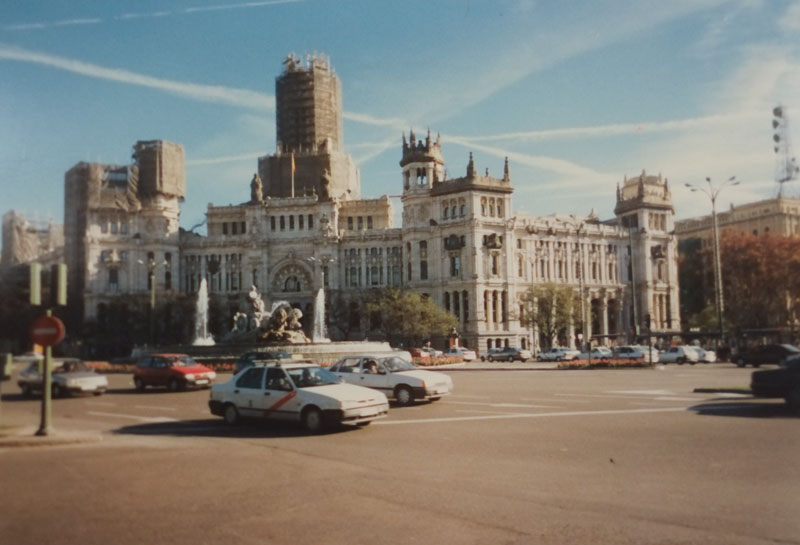
The resulting architecture varies greatly depending on the level of remodeling. It seems that in the centro they try to just do interior remodeling, and preserve the original facade as best they can. I don’t know if they have historic district ordinances or not, but the architecture that completely replaces buildings in the centro fit in pretty well. As you get away from the centro the newer buildings often stand in great contrast to the older buildings on either side. What would be a decent building on its own looks ugly and out of place amid the old ornate buildings in the block. Sometimes the modern mixed with the old is quite handsome and works well. For instance, on Gran Via, a major street in the centro that is lined with absolutely beautiful, ornate buildings, there is a modern all black glass building stuck between two really pretty buildings, obviously replacing a building that had to be torn down. As you walk towards the building you think how odd, but then once you are right in front of it you realize all that black glass is reflecting the image of a stunningly beautiful old building across the street. It is a very nice effect to have the image of the building on the side of the street you are on reflected between the other two beautiful buildings across the street from you. I assumed this was planned, if not it’s a great coincident.
Next parks and open space…
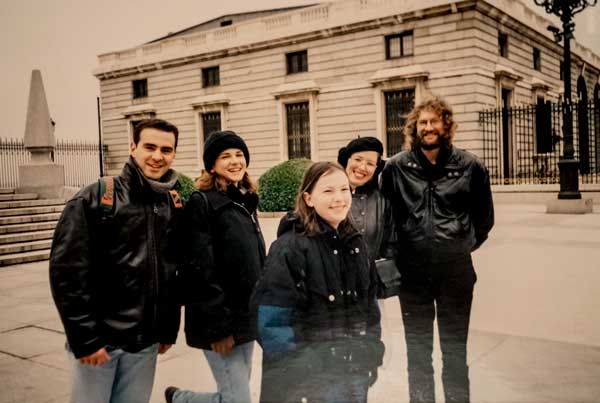
As I move from flamenco shows and the music scene to cover other areas of Madrid, I’m starting with my initial reactions to, and brief descriptions of, the Natural History Museum, Archaeology Museum and the Prado. We visited the Prado almost weekly and other art museums often. Most museums had free days, and we would go to those museums over and over on free days, so in future letters I will have more detailed descriptions of museums and exhibits.
April 18, 1996
Museums
We visited the natural history museum a few weeks back. It is pretty lame compared to what we have in Albuquerque. The first part of it is more of a history of natural science from the time when Carlos III dedicated the museum. The exhibits on this side of the building have animal specimens that are stuffed, mounted, dried, and bottled. There are books, notes, and letters about scientific principles, ideas, theories, and observations, along with examples of the tools and instruments used at the time. This stuff was fairly interesting. The rest of the exhibits on the north side of the building dealt with conservation and was not particularly new or interesting. We were about to suffocate in the enviro-better-feel-guilty-about-being-a-human theme when we made our escape over to the south side of the building where they had dinosaur bones, geologic and paleontologic exhibits. These we better, but still generally lame. The most interesting fossil was one of a dinosaur bird found in Spain. They had the fossil and a model of the bird. It was about the size of a robin with a beak full of teeth. All the other fossils were replicas of fossils and skeletons of dinosaurs that came from the U.S. and Argentina, of course. The exhibit on prehistoric man was good, which I would expect, since a lot of the remains of Neanderthals, Habilis, Erectus, and other early humans have been found in Spain. I think there are a few direct decedents of early man still walking the streets around here.
There is an excellent Archaeology Museum and a very good museum about the history of Madrid very near where we live. Spain has a great deal of historical treasures and just about every major civilization has been through and occupied Spain at one time or another. These museums are full of priceless artifacts and art works from prehistoric times through more recent times. There are also great art museums such as the Prado, the Reina Sofia and the Thyssen, plus a multitude of small art museums.
We go to the Prado almost every week end. It’s a good thing we looked at Goya’s paintings at the Prado the first few times we went. There is now a commemorative exhibit of his paintings celebrating 250 years since his birth that costs 1000 ptas/person to see, and the lines to get in are long. His black paintings done later in Goya’s life are interesting. These paintings are dark, loosely painted and powerful. They’re very expressionist and deal with mythology, religion, and war. There is one very modern painting of a dog buried up to his neck with the background painted like a sand dune. We also found the Bosch paintings. I figured Tristan would like Bosch since his paintings are so weird, with fantasy characters, landscapes and strange objects. Bosch was very disturbed from looking at his paintings. He has fantastic creatures, characters and scenes, that are full of action and layers of demented symbolism depicting the creation, earthly existence and hell. His explicit, lewd subject matter depicts a world view of the religious sect he belonged to. Nudity and sexual freedom are true to the creation, while marriage and clothing corrupt man and lead him to war and hell. Interesting world view for the 1600’s. Peter Brueghal the Elder depicted war as death winning. He also shows a very dim and demented view of life and grim depiction of war about 40 years after Bosch. Death’s army of skeletons are killing everyone, herding them into a coffin like structure that outputs more skeletons to join the war against humanity. Cities are on fire, men are hung on torture wheels, nailed through the head to trees and are being executed by skeletons. Death gets little resistance as his army sweeps over the land killing everything that lives. I’m glad not to have lived during the 1600’s, from these painters’ depictions of life.
Next architecture and planning…
Videos
Exposición: Goya en Madrid https://www.youtube.com/watch?v=PQi4O3fL1dk (English subtitles)
Hieronymus Bosch – Trittico del Giardino delle Delizie (spiegato ai truzzi) https://www.youtube.com/watch?v=DbXDmcVnAl8 (narration in Italian)
The Triumph of Death – Pieter Bruegel The Elder https://www.youtube.com/watch?v=kjhLgI3WsX8
 Off Center & Not Even