
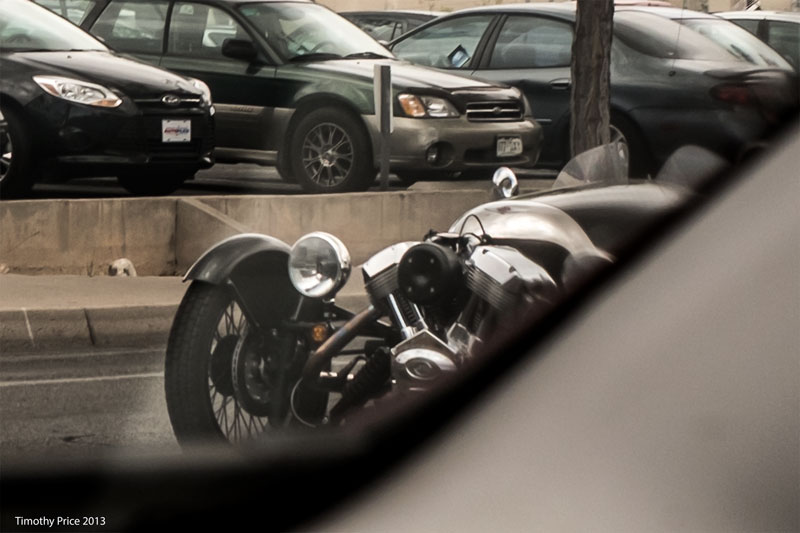
A drive by of one of the volcanos through a dirty window.
A drive by of one of the volcanos through a dirty window.

Between photographing Katarina, Jackie, David and Rudy playing with the kids in Family Promise on Saturday, I photographed the turtles sunning themselves under the partly cloudy sky, and swimming around in the duck pond. Thinking about the turtles, and all the playing and happiness those kids and students were having spending the afternoon together reminded me of The Turtles song “So Happy Together” — www.youtube.com/watch?v=Zv85y08aA2w


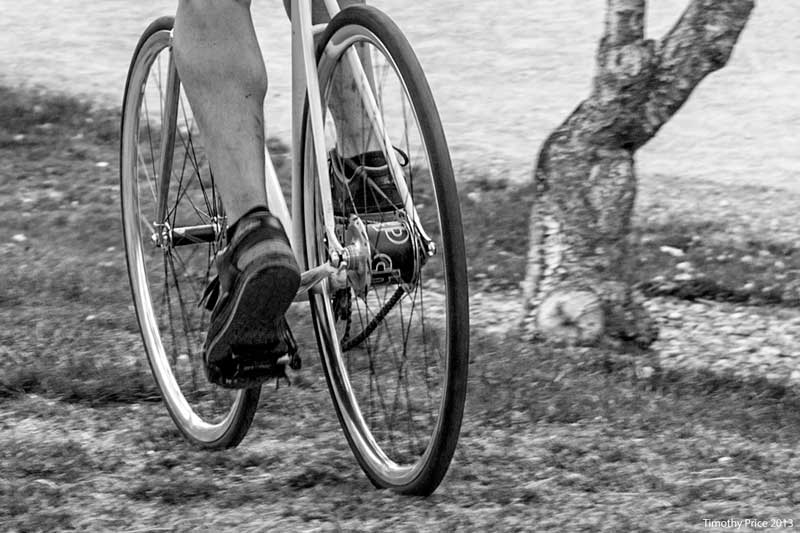
Photos of bicycles in downtown Albuquerque and the Duck Pond at UNM.


What does homeless bring to mind? Indigent street people, addicts and alcoholics with mental issues that are not to be associated with, like the Samaritans in the first century CE? While many of the homeless individuals you might encounter on the street have serious issues that contribute to their often perpetual homelessness, there is another, almost invisible, side of homelessness — homeless families. Homeless families tend to be “normal” people who have had some kind of catastrophic event that caused them to become homeless. Fortunately, there is Family Promise of Albuquerque (FPA) to help. FPA is made up of churches that temporarily house homeless families and volunteers who help support the families. Instead of ignoring these families, FPA, offers them life sustaining water.
Now he had to go through Samaria. So he came to a town in Samaria called Sychar, near the plot of ground Jacob had given to his son Joseph. Jacob’s well was there, and Jesus, tired as he was from the journey, sat down by the well. It was about noon. When a Samaritan woman came to draw water, Jesus said to her, “Will you give me a drink?” (His disciples had gone into the town to buy food.) The Samaritan woman said to him, “You are a Jew and I am a Samaritan woman. How can you ask me for a drink?” (For Jews do not associate with Samaritans.) Jesus answered her, “If you knew the gift of God and who it is that asks you for a drink, you would have asked him and he would have given you living water.” “Sir,” the woman said, “you have nothing to draw with and the well is deep. Where can you get this living water? (John 4: 4-11 NIV).
Central United Methodist Church hosted two families this past week, and Laurie and I volunteered to help yesterday afternoon. When we got to CUMC, we had a pleasant surprise — there were four students from UNM playing with the kids as part of the 11th Annual Spring Storm Event put on by the Associated Students of the University of New Mexico (ASUNM) who volunteer in a one day service project. The students, Katarina, Jackie, David and Rudy, were wonderful. They played and played the the kids, and had a lot of fun. I was really impressed that they took a day off from their heavy class loads to play with kids — the kids were so happy, and their mom got a nice break. By giving up some of their precious time yesterday, Katarina, Jackie, David and Rudy helped make earth a little more like Heaven.


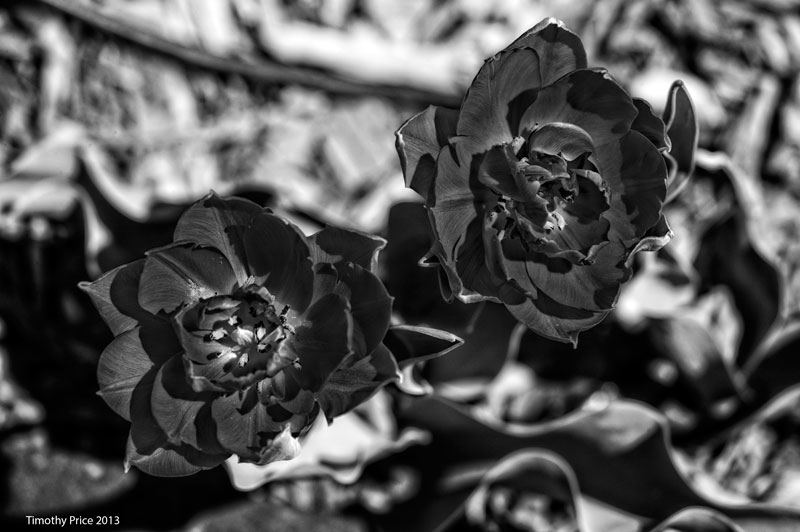
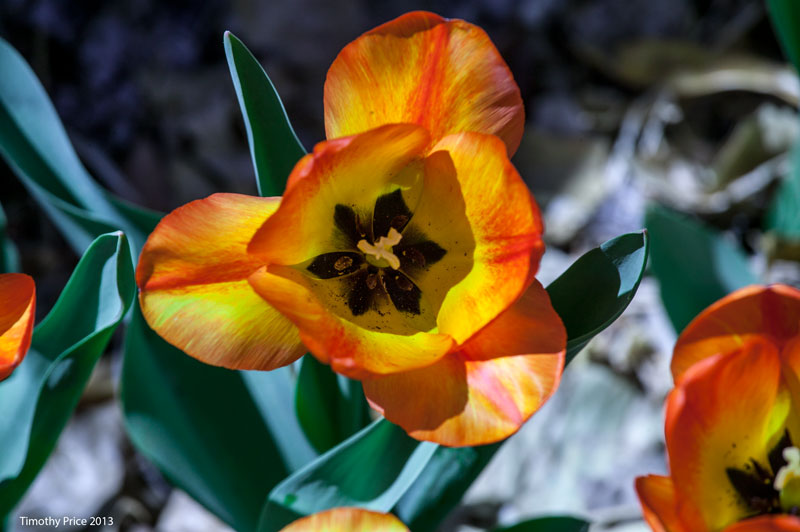
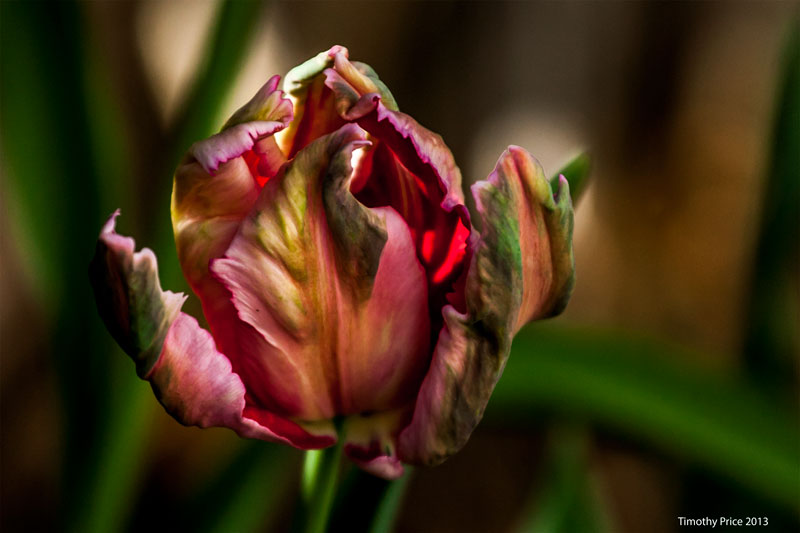
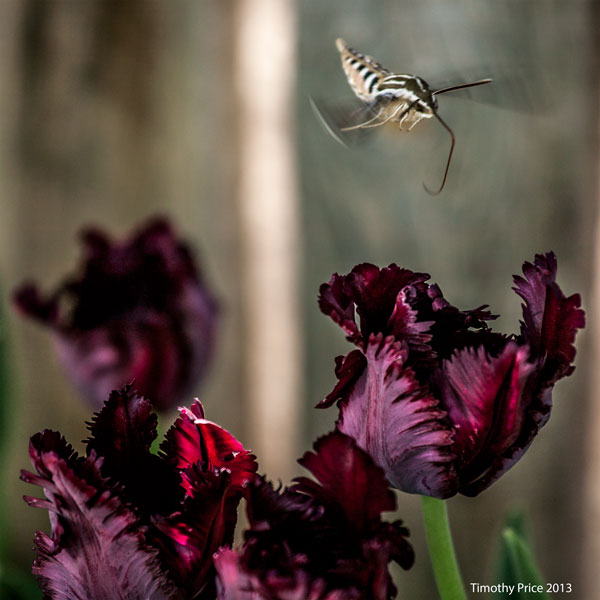
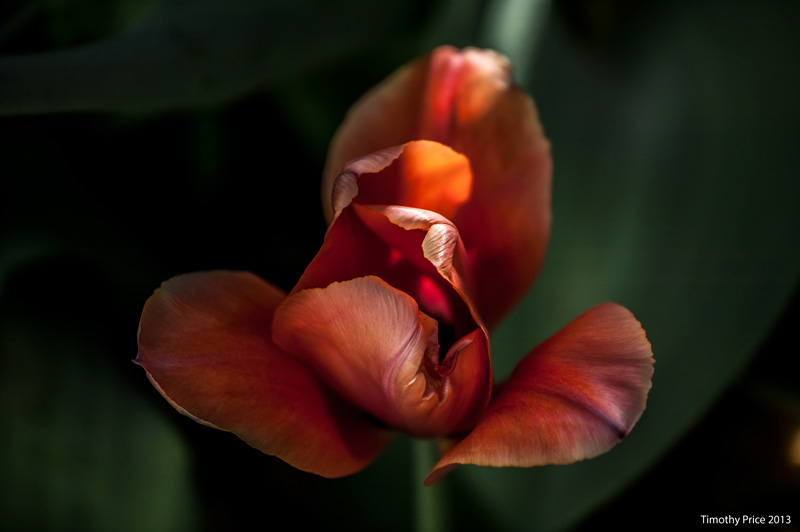
Austrian Copper put on its first bloom yesterday. We had hard frost the past few nights, so some of the older tulips are showing cold damage. The purple parrot tulips finally bloomed, despite hanging their heads from the cold the past few mornings; and a hummingbird moth was making the rounds when I was out photographing the tulips.


Sadly, the 2013 Institute For Medieval Studies’ Spring Lecture Series is over. The final lecture was “Holy Terrors: Gargoyles on Medieval Buildings” by Janetta Rebold Benton of Pace University. Ms. Rebold Benton’s lecture was wonderful, with a lot of great photos of gargoyles and grotesques (non-water spouting gargoyles). I had never though about it before, but true gargoyles are water spouts that drain roofs, and the name is derived the same root word that gives us the term “gargle”.
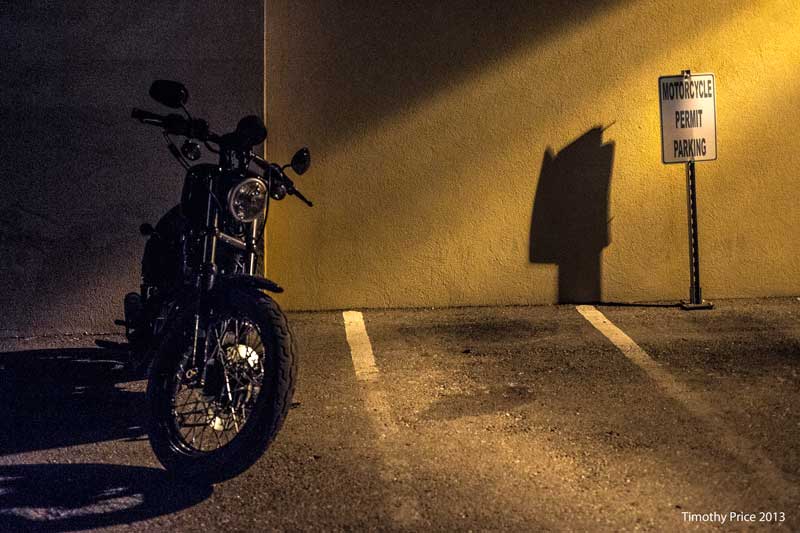
We got home very late from a wonderful reception celebrating the conclusion of this years lecture series, so I only took time to process a photo of a Lotus Elise that was in the parking lot when I left the office, heading to the Lecture series last night.
The two lectures tonight on “The Uses of Norse Mythology” by Rory McTurk, University of Leeds and “”Real’ Monsters: Medieval Belief, Wonder, and the Wonders of the East” were fantastic.
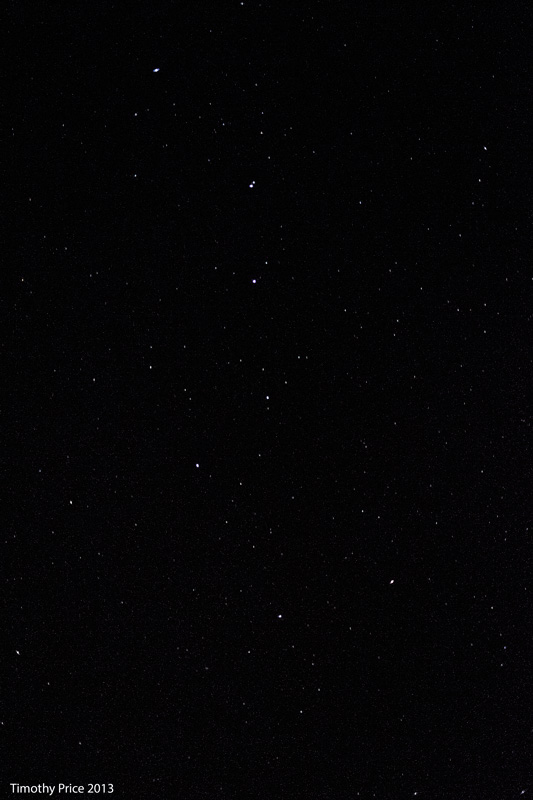
Water was turned into the irrigation ditch 5 weeks ago, and after more than a dozen attempts to irrigate, I finally got every irrigated yesterday. I had gotten up between 2:00 am and 4:00 am every morning since last Saturday, went out with the monsters, and attempted to irrigate 3 times before I got everything watered. I also got a decent shot of the Big Dipper in the pitch blackness in the early morning.
A couple of the photos are somewhat monstrous today, with a monsterously strange car with a v-twin engine in front of the radiator, but I only got a partial shot of it from a quick drive-by I snapped as I crossed Central on my way to class. I also discovered that a host of “light demons” had attacked my camera on one of my shots of the lecture of the Staffordshire Hoard on Tuesday night, after I downloaded the photos from my second camera tonight.

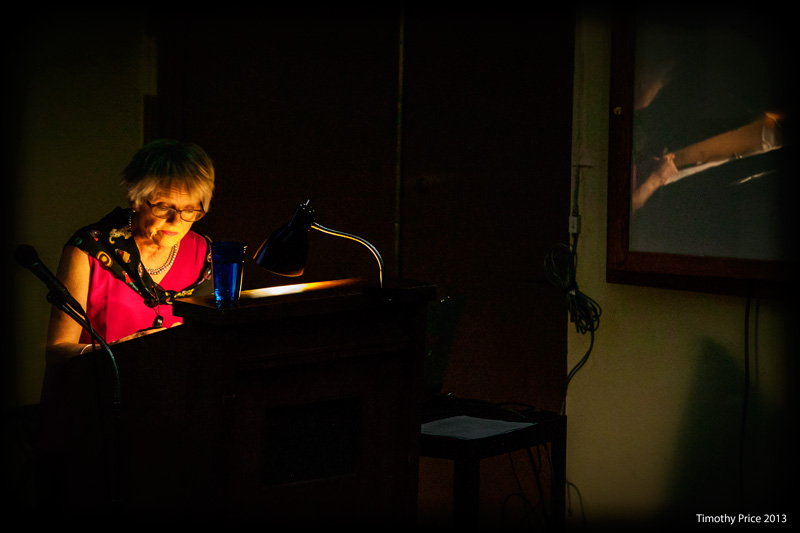
Leslie Webster’s talk on “The Staffordshire Treasure: Art and Power in the Seventh-Century Anglo-Saxon England” was wonderful. The Staffordshire Treasure was buried in a remote spot near the old Roman road o Walting Street near the end of the 7th century. It was discovered in July 2009 by a local with a metal detector. The stash consists of over 10 pounds of gold and 3 pounds of silver military accouterments, such as parts from swords, studs and trim for horses and saddles, buckles, crosses, helmets and so on. It’s the largest and richest assemblage of treasure from the early Anglo-Saxon Period.

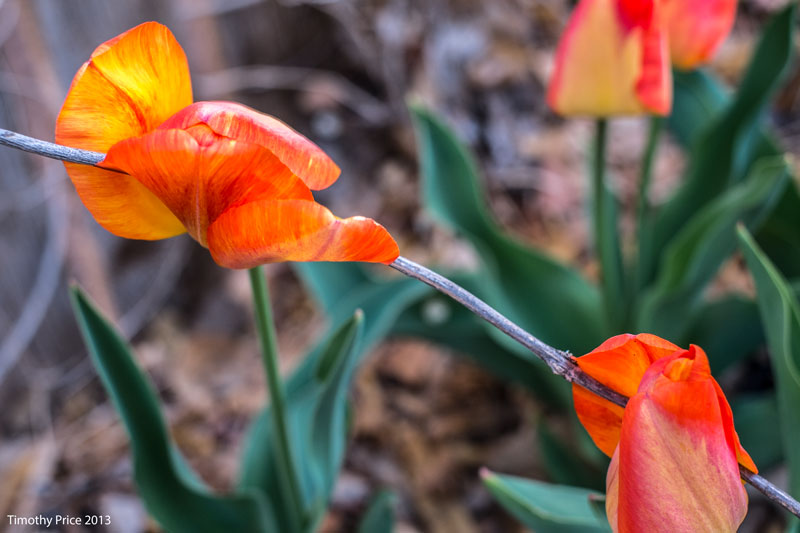
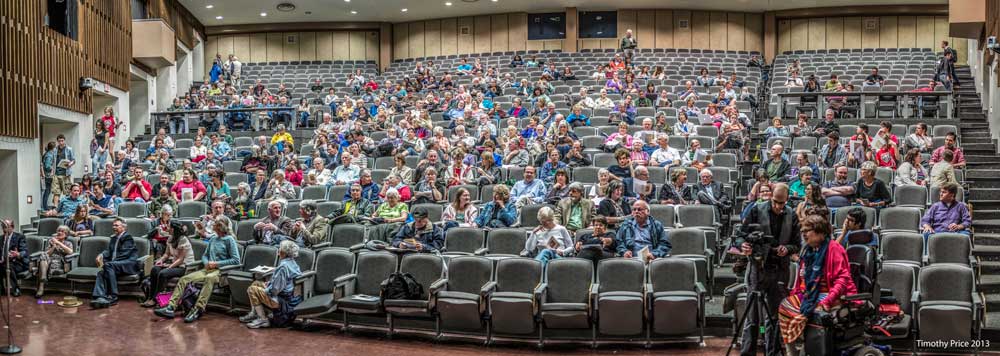
The tulips were chomping on a branch from a trumpet vine yesterday morning. We went to the first lecture of the Institute of Medieval Studies spring lectures series, “Medieval Myths & Monsters” last night. The speaker was Leslie Webster from the British Museum and her topic was “Myth and Mission: The Riddle of the Franks Casket”. It was a wonderful lecture. Tonight there will be two lectures. The first lecture is by Tomás Ó Cathasaigh from Harvard University speaking on “Early Irish Origin Legends”. The second lecture is by Leslie Webster on The Staffordshire Treasure. The lectures begin at 5:15 in Woodward Hall at UNM. Woodward Hall is just west of the Student Union Building, across from the Fine Arts Building. As you can see from the photo below the first lecture was well attended, but there were still lots of open seats.
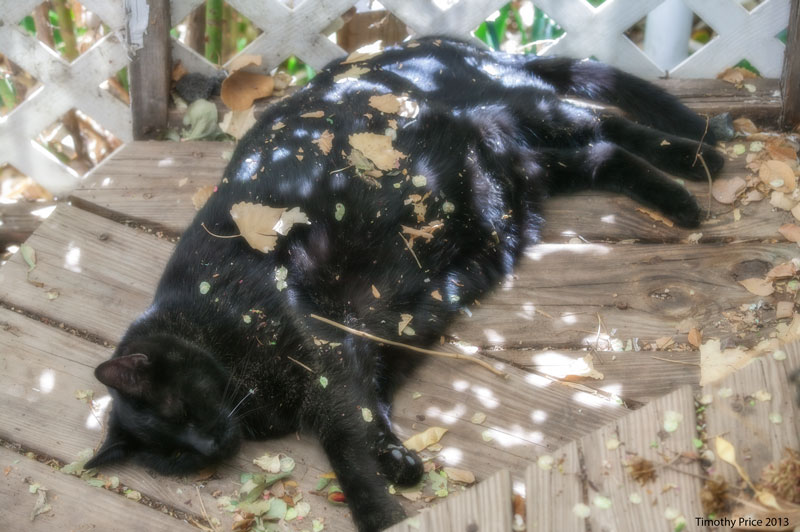
Guidenstern came up with a new kitty fashion for laying around on the deck — “Leaves and Filtered Light.” Kitty fashion is like sand painting — it only lasts one day.