

See more photos of Spunk, Sasha and Najar at http://photos.tandlphotos.com/blog/2016/1/compuspunk
See more photos of Spunk, Sasha and Najar at http://photos.tandlphotos.com/blog/2016/1/compuspunk

More photos at http://photos.tandlphotos.com/blog/2016/1/hoodie-on-a-heater-vent
A Fence, a rose, Sasha http://photos.tandlphotos.com/blog/2016/1/a-fence-for-julie
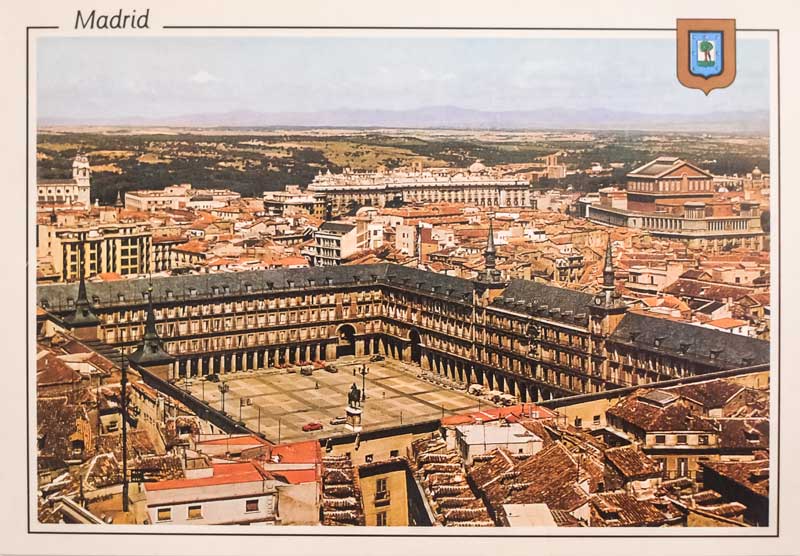
While I found the round abouts to be an interesting part of the urban design in the last post, I found the prostitutes in the open space to be even more curious as part of my first impressions of Madrid.
April 18, 1996
Parks and Open Space
Madrid is really great about parks, playgrounds and open space in among the dense urban environment. Almost every plaza has a park with benches and a playground. The Spanish haven’t decided that swings, slides and monkey bars are unimaginative, or too dangerous. They have play equipment that was outlawed in the States years ago. The kids love the play equipment and the playgrounds. The playgrounds are always full of kids playing, families hanging out and people walking dogs basically all day. You see more families starting about 6:00 pm on until 10:00 pm or later. During the day you see groups of kids on recess, adults swinging and walking their dogs, and moms with younger kids in the playgrounds. People tend to really use public areas. You do a lot of living and playing in the city streets, parks and cafe bars, as opposed to sitting at home and watching television (although, I think a lot of people sit at home and watch TV also).
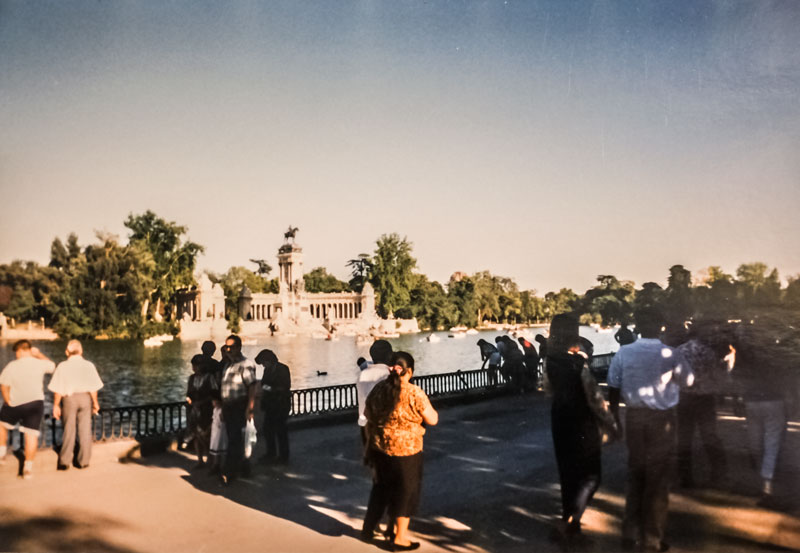
The Parque de Retiro is on the eastern side of the centro. This is a large park with all kinds of stuff: trees, well kept gardens, pathways for walking and running, streams, fountains, sculpture, lakes, a crystal palace, birds, ducks, swans, geese, extremely tame squirrels, cafe bars and sports facilities. You can rent boats to row on the larger lake and there are paved streets used for skating, cycling, and roller blading. We spend quite a bit of time in Retiro. It is a very nice park to hang out and relax in. I walk 10 kilometers every morning, and the majority of the walk is in Retiro.
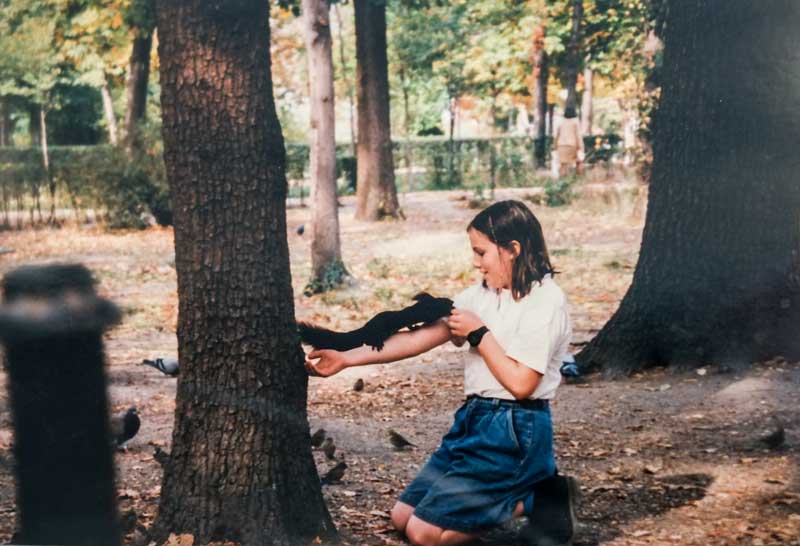
Another beautiful park is Parque de Oeste. Oeste is 3 kms. west of us on the edge of the Rio Manzanares valley. Oeste is much more wild than Retiro, It has relatively steep slopes and many hills covered with grass, a large variety of trees and wild shrubs. There are pathways winding up, down and over the hills, and monuments dispersed among the foliage. You feel like you are in the mountains. There are information placards the describe many of the trees and bushes, their history, usage, and origins.

Just across the river, west of the centro, is a huge open space called Casa de Campo. This is were you train if you ride a road bike, plus it also has really good mountain bike trails. The area is very hilly and covered with pine trees. There is a long (2.5 kms) aerial tram (Teleferico) that runs from Parque de Osete on the east side of the river to about a third the way into Casa de Campo. The Teleferico is reasonably priced and really fun to ride. It gives you a great view of Madrid, the Guadarama mountains, and Casa de Campo. From the looks of the place, it is set up to handle a lot of people picnicking, camping, playing, hiking, biking and going to the zoo and the amusement park located along the south side of the park. We walked up to the zoo once, but it cost 1500 ptas per person to go in. We said no thanks; however, we have been assured by the natives that the zoo/aquarium are well worth the price. There are playgrounds, soccer fields, trails, picnic tables, campsites, and a lot of trash cans. I’ll bet the park will have a million or so people at any given time in the summer. We’ll have to see.
The one curious thing we noticed about Casa de Campo as we were walking from the eastern end of the park up to the zoo, were prostitutes on every intersection and along the roadways in that end of the park. I started referring to them as PnP (putas in the park). The first one I noticed was an attractive Spanish woman standing along the road under her umbrella (it was a rainy day). As we headed west, the number of prostitutes increased and they were primarily black women (African). We were in the park during siesta, so I’m guessing that men take their siesta time to go out to Casa de Campo to hire a hooker, go off in the bushes, or park in a remote area, have some whoopee, and then go back to work. It is really strange to see prostitutes advertising themselves in a wooded open space. The only other place we have seen prostitutes, on a regular basis in Madrid, is at Gran Via and Calle Hortaleza. We joke about Gran Via at Hortaleza not being a good spot for a rendezvous. I use to think that tourists who can’t or don’t read local papers were the main client’s of these horrid looking, unhealthy, obviously drugged out street creatures; however, I have seen several men who were older, not very good looking and often handicapped (with a lame arm or leg) making deals with these ladies. I have to pass by there quite often to get to may guitar lessons and into the centro, and you can’t help noticing what’s going on. Prostitution is apparently legal here. When I was looking for apartments in the classified section of the paper, the largest section in the classified’s was for prostitutes of all types: male, female, young, old, all nationalities. They even had classified’s advertising non-professional hookers.
Retiro and Casa de Campo are the two main parks we have been to. The map shows many other large parks, hundreds of small parks, and a large area to the northwest that looks like the equivalent to a national forest in the U.S. We are scouting out horse lessons for Tristan, and that will take us to mountains around Madrid.
Another interesting space in Madrid is the Atocha train station. There is an indoor rain forest at the train station where you can go and hang out. It is very pleasant, the air is clean, and the trees and plants are large, thick and healthy. There are benches all over the area were you can sit and read, think or just watch people. There is a lily pond with gold fish and turtles that keeps Tristan entertained. There is a cafe bar, a few shops, travel agencies, and a car dealer in the rain forest. The car dealer only has two cars on display at any time inside and there are usually two to four very attractive sales ladies wearing short yellow skirts with matching blazers, black tights, and white blouses showing off the cars and answering questions. When we are making calls from the phone place off Calle de Atocha, or doing other business along Calle de Atocha or Paseo del Prado, we will walk over and use the restrooms in the train station and sit in the rain forest and relax a bit.
Next public restrooms…

You can see all three photos and more at http://photos.tandlphotos.com/blog/2016/1/sunflower-with-a-mohawk
The second year has begun! http://photos.tandlphotos.com/blog/2016/1/a-year-of-climbing-dangerously
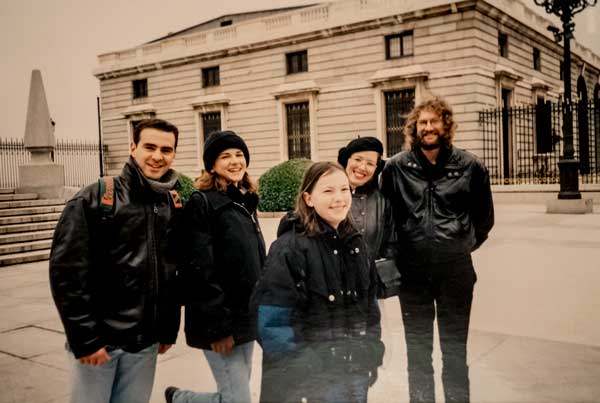
As I move from flamenco shows and the music scene to cover other areas of Madrid, I’m starting with my initial reactions to, and brief descriptions of, the Natural History Museum, Archaeology Museum and the Prado. We visited the Prado almost weekly and other art museums often. Most museums had free days, and we would go to those museums over and over on free days, so in future letters I will have more detailed descriptions of museums and exhibits.
April 18, 1996
Museums
We visited the natural history museum a few weeks back. It is pretty lame compared to what we have in Albuquerque. The first part of it is more of a history of natural science from the time when Carlos III dedicated the museum. The exhibits on this side of the building have animal specimens that are stuffed, mounted, dried, and bottled. There are books, notes, and letters about scientific principles, ideas, theories, and observations, along with examples of the tools and instruments used at the time. This stuff was fairly interesting. The rest of the exhibits on the north side of the building dealt with conservation and was not particularly new or interesting. We were about to suffocate in the enviro-better-feel-guilty-about-being-a-human theme when we made our escape over to the south side of the building where they had dinosaur bones, geologic and paleontologic exhibits. These we better, but still generally lame. The most interesting fossil was one of a dinosaur bird found in Spain. They had the fossil and a model of the bird. It was about the size of a robin with a beak full of teeth. All the other fossils were replicas of fossils and skeletons of dinosaurs that came from the U.S. and Argentina, of course. The exhibit on prehistoric man was good, which I would expect, since a lot of the remains of Neanderthals, Habilis, Erectus, and other early humans have been found in Spain. I think there are a few direct decedents of early man still walking the streets around here.
There is an excellent Archaeology Museum and a very good museum about the history of Madrid very near where we live. Spain has a great deal of historical treasures and just about every major civilization has been through and occupied Spain at one time or another. These museums are full of priceless artifacts and art works from prehistoric times through more recent times. There are also great art museums such as the Prado, the Reina Sofia and the Thyssen, plus a multitude of small art museums.
We go to the Prado almost every week end. It’s a good thing we looked at Goya’s paintings at the Prado the first few times we went. There is now a commemorative exhibit of his paintings celebrating 250 years since his birth that costs 1000 ptas/person to see, and the lines to get in are long. His black paintings done later in Goya’s life are interesting. These paintings are dark, loosely painted and powerful. They’re very expressionist and deal with mythology, religion, and war. There is one very modern painting of a dog buried up to his neck with the background painted like a sand dune. We also found the Bosch paintings. I figured Tristan would like Bosch since his paintings are so weird, with fantasy characters, landscapes and strange objects. Bosch was very disturbed from looking at his paintings. He has fantastic creatures, characters and scenes, that are full of action and layers of demented symbolism depicting the creation, earthly existence and hell. His explicit, lewd subject matter depicts a world view of the religious sect he belonged to. Nudity and sexual freedom are true to the creation, while marriage and clothing corrupt man and lead him to war and hell. Interesting world view for the 1600’s. Peter Brueghal the Elder depicted war as death winning. He also shows a very dim and demented view of life and grim depiction of war about 40 years after Bosch. Death’s army of skeletons are killing everyone, herding them into a coffin like structure that outputs more skeletons to join the war against humanity. Cities are on fire, men are hung on torture wheels, nailed through the head to trees and are being executed by skeletons. Death gets little resistance as his army sweeps over the land killing everything that lives. I’m glad not to have lived during the 1600’s, from these painters’ depictions of life.
Next architecture and planning…
Videos
Exposición: Goya en Madrid https://www.youtube.com/watch?v=PQi4O3fL1dk (English subtitles)
Hieronymus Bosch – Trittico del Giardino delle Delizie (spiegato ai truzzi) https://www.youtube.com/watch?v=DbXDmcVnAl8 (narration in Italian)
The Triumph of Death – Pieter Bruegel The Elder https://www.youtube.com/watch?v=kjhLgI3WsX8

 Off Center & Not Even