Our new neighbors pointed out the the “Never” and “Loving” on the stop sign at the post office was the only graffiti they had seen in Corrales, and it was positive. It’s been there for months so either the Village or the PO can’t decide whose responsibility it is to remove it or since it’s not offensive there is no reason to remove it. I had ignored it all this time, but tonight I thought it was appropriate to start off the week of Valentine’s Day. I also noticed that people are putting up “Valentine’s lights” in the fashion of Christmas lights in Corrales. Out of the lights I noticed on my way home tonight, the bicycle with flowers was the most interesting.
A silver chopper was parked in front of Cafe Giuseppe this afternoon, but it was blocked by a planter and a truck, so I only got a portion of it. I would of had to stand out in the middle of the street to get the whole of it, but I was loaded down with stuff and had deadlines that precluded risking getting ran over by a bus for another view of a chopper.
There was a mud plastering workshop at the Historic Martinez House in Corrales today. I would have liked to participate in the workshop, but I had too many things to do with helping Laurie plant bulbs, pulling weeds, making a new batch of carne adovada stew, and practicing guitar. But I was able to drop by the workshop this afternoon to get some photos and even help a little.
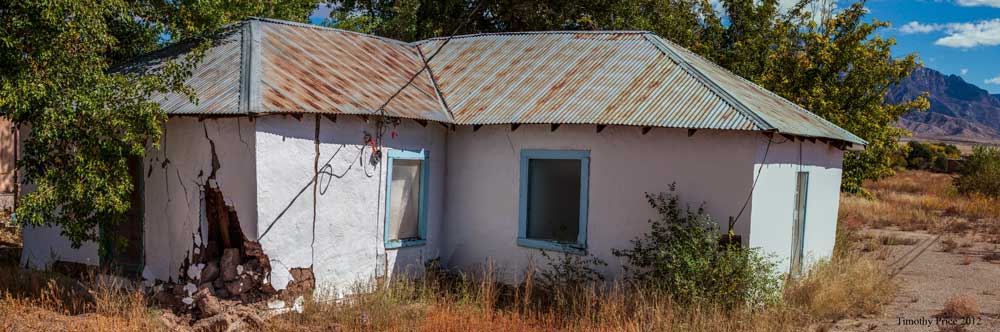
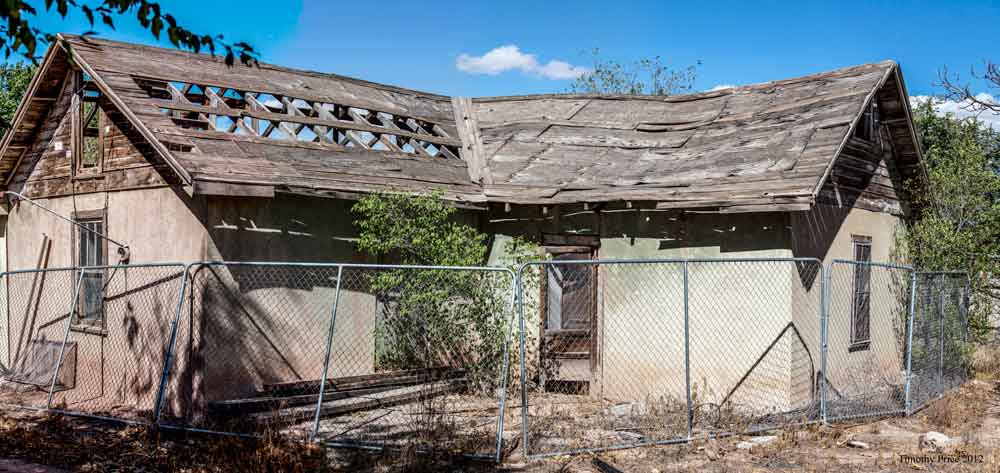
Since our demolition project this summer where we had two houses torn down that were old adobes with frame and block additions, we have become much more aware of the issues involving the problems with maintaining old adobe houses. Before we had the houses on our property torn down, Susan (friend and fellow photographer) photographed the houses, made the casita look really cute in her photos, pasted a couple of them on Facebook, and mentioned the casita was going to be torn down. Many people commented that it should be saved, because it looked so cute in the photo, but they didn’t understand that the casita was an old goat shed my grandfather had turned into a little house over 50 years ago. The house had no foundation and we had one wall propped up with a concrete buttress and the other walls were propped up by the roots of an old cottonwood tree. We had explored various options to renovate the casita, but it was just not economically viable to save it. It takes a lot of work to maintain old adobe houses, and when they are not maintained, they end like the old adobes in the last two photos in the series.
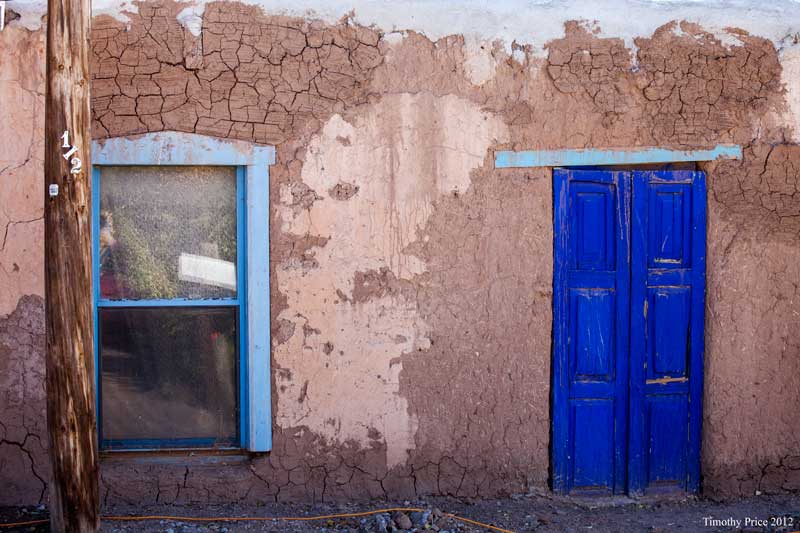
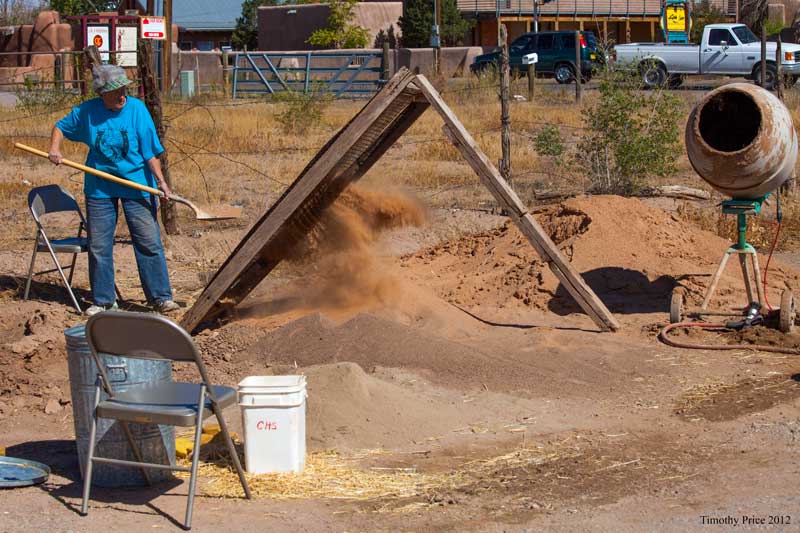
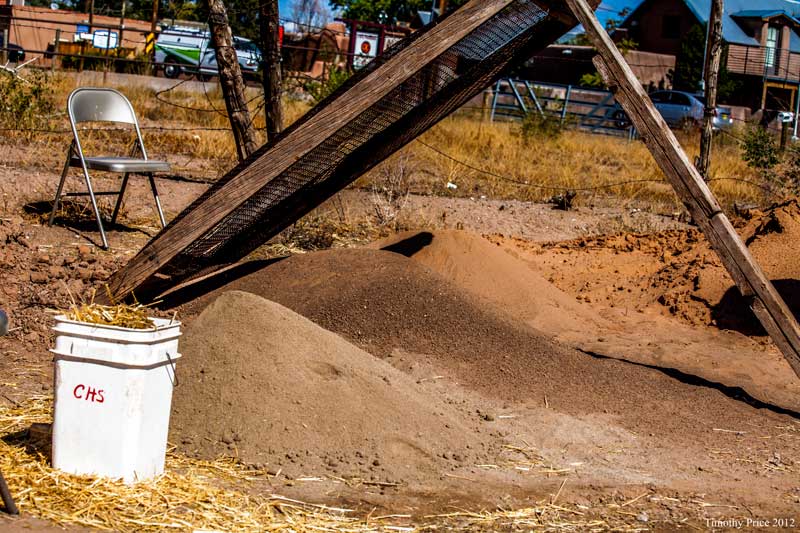
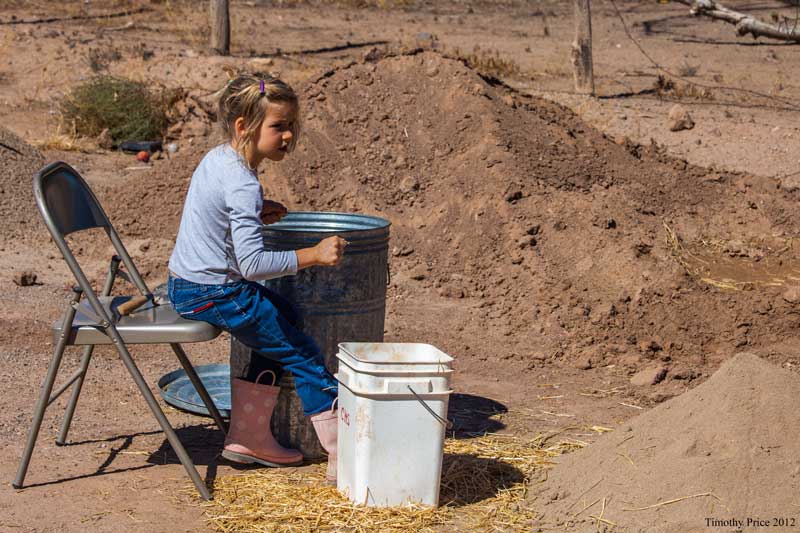
The old Martinez house is historic, and maintaining the mud plaster at a reasonable cost takes volunteers who are willing to donate a day or two of hard labor. The first eight photos in the series illustrate part of the process. The first photo shows the north wall ready for new mud plaster. The cracked mud around the window and door is new mud put on last week to replace loose plaster and even out the walls in preparation for new mud. The second photo shows Mary Davis, the organizer of the Mud Plaster Workshop, sifting dirt to separate out rocks, sticks and dirt clods. The third photo shows a pile of sand, a pile of sifted caliche and a pile of sifted fine “wind blown” red clay used to make the mud plaster. The mixture they were using for the mud was 4 shovels of the fine red clay, 4 shovels of caliche, 4 shovels of sand and straw. The fourth photos shows a young volunteer breaking up the straw that is added to the mud mixture to help as a binding agent. The fifth photo shows Mary shoveling dirt into the cement mixer to make mud. Since the plaster on the south wall was drying out too quickly and cracking, a volunteer told Mary to increase the sand by two shovels full. In the old days the mud would be mixed on the ground in a burned up area.
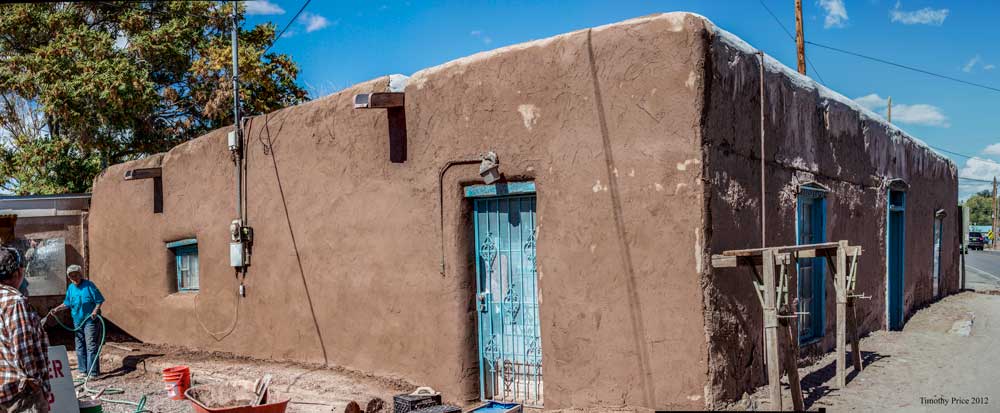
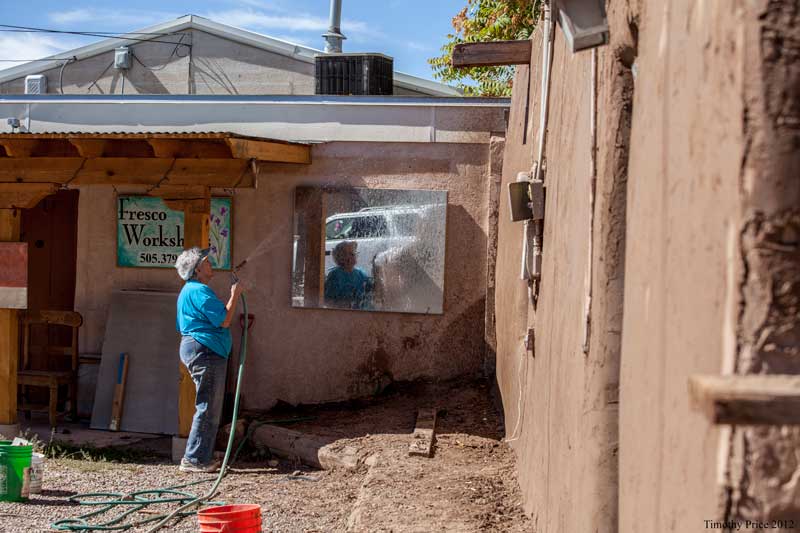
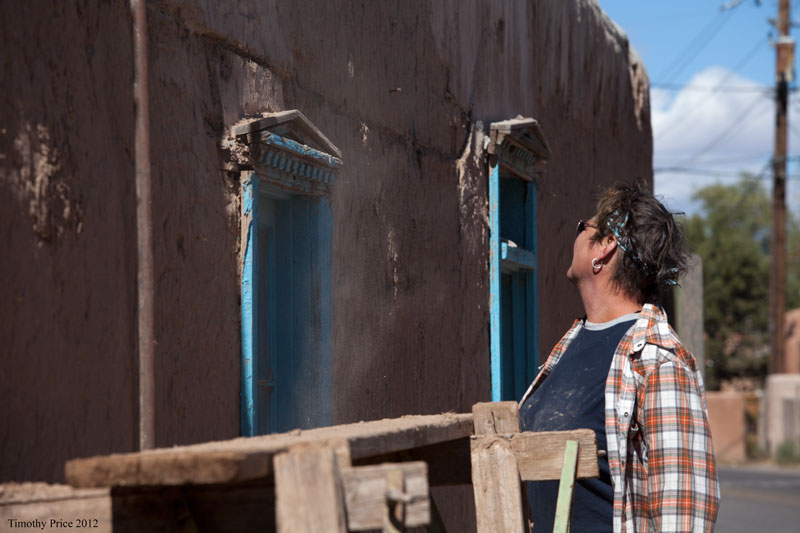
The sixth photo is a panorama of the newly plastered south wall and the east wall, which was the next to be plastered. The seventh photo shows Mary spraying the new plaster to help keep it from cracking more. While it was cool today, the sun was intense on the south wall, and a cool, dry wind was present most of the day. The eighth and final photo in the mud plastering series shows a volunteer inspecting loose mud around the windows on the east wall before starting to plaster it.
Historic Martinez House new mud plaster on south wall




 Off Center & Not Even