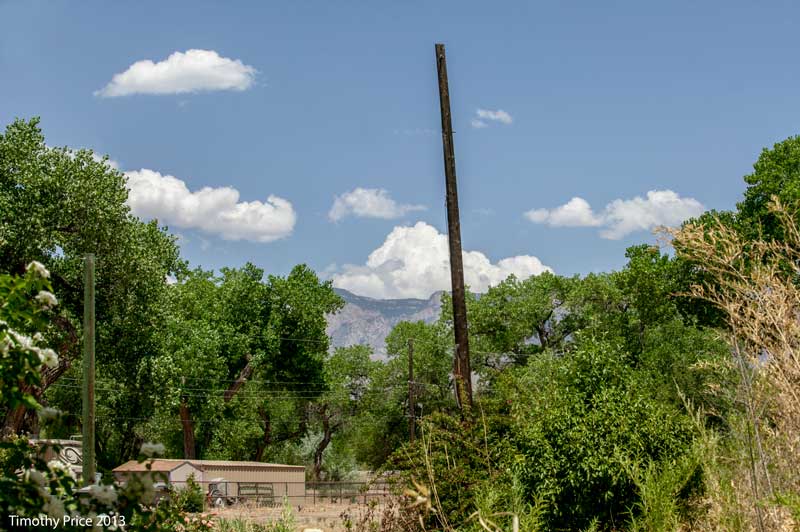
I went out to check the status of water in the ditch (not running) and got photos of our neighbor’s barn at sunset, the best view I can get of the Sandias without breaking the law, a photo of the law and a nice reflection of the standing water in the ditch. I did see an big, old, finned Cadillac on the way home. The car was so big that with two lanes between us on Coors Road, it barely fit in field of view of a 55mm lens. Seeing an old Cadillac on the road reminded me of Loquillo’s song “Cadillac Solitario” where he is singing about being drunk in a Cadillac while parked under the three crosses on a hill overlooking Barcelona after his girlfriend dumped him. We discovered Loquillo in 1996 when we happened upon one of their concerts in Plaza Mayor during the San Ysidro festival. The crowd was huge, and the performance and sound was amazing. We learned later that Loquillo was a huge star in Spain with 25 records/CDs on the market at that time. We went to at least one more live performance by Loquillo while living in Madrid, and brought back several of his CDs.
Category: Abstract
Dragonfly Red
Fifty Shades of Pink
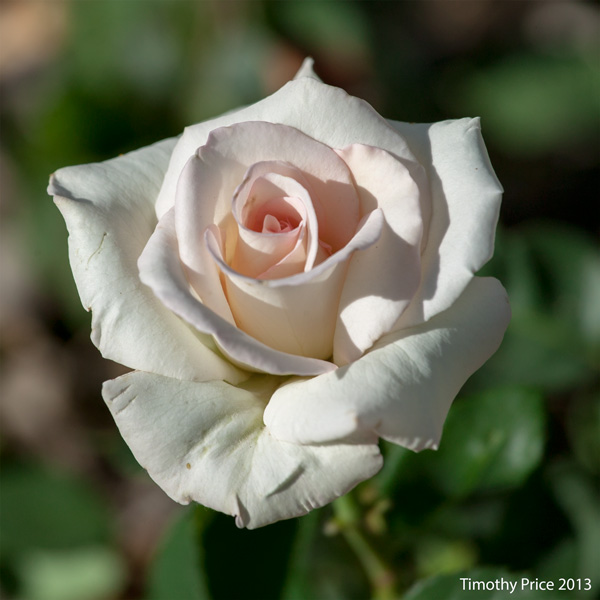
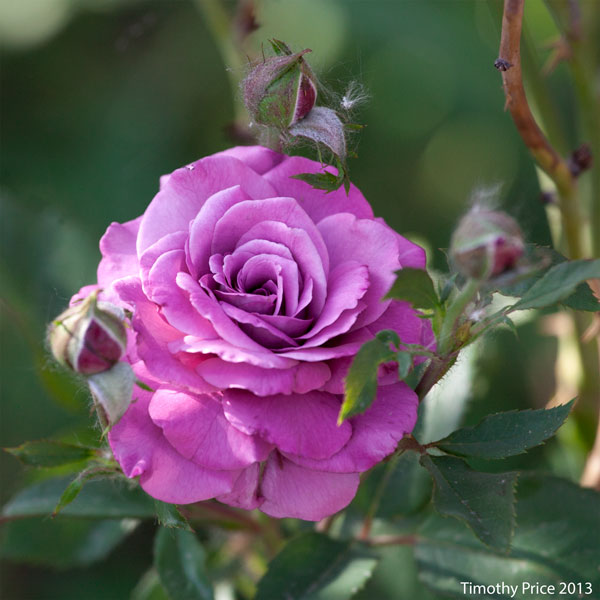
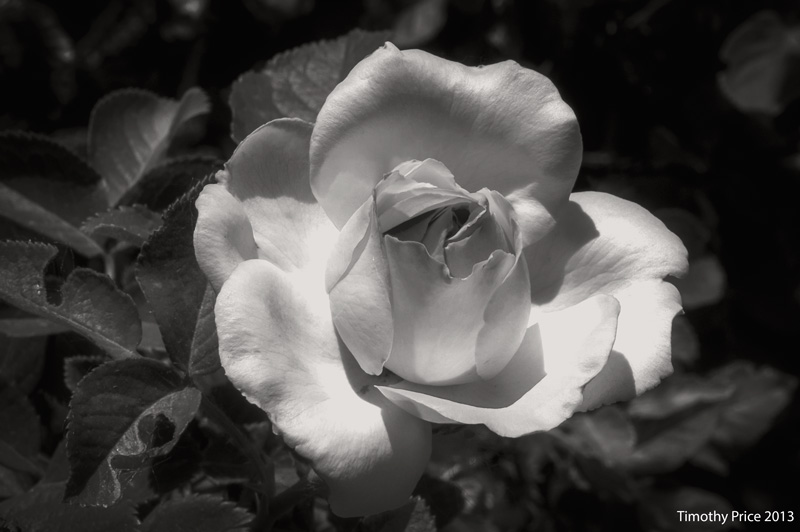
If you were expecting to find something kinky, sorry to disappoint! Instead you get photos of sexy pink roses, hollyhocks and a bumblebee. The first rose is a David Austin that we don’t have labeled, so I don’t have a name for it. The bumblebee is on volunteer hollyhocks that are very happy in the dry conditions. The third photo is of Pink Promise — under New Mexico sun, Pink Promise is milky white with subtle shades of pink. It is the official rose of the National Breast Cancer Foundation. The fourth photo is of Rainbow Sorbet, which offers a wide range of pinks with a bit of yellow in the base. The last photo is of Simply Marvelous which is more lavender colored than pink, but it has a few shades of the lower 50 pinks.
R&G in B&W
Six Differences
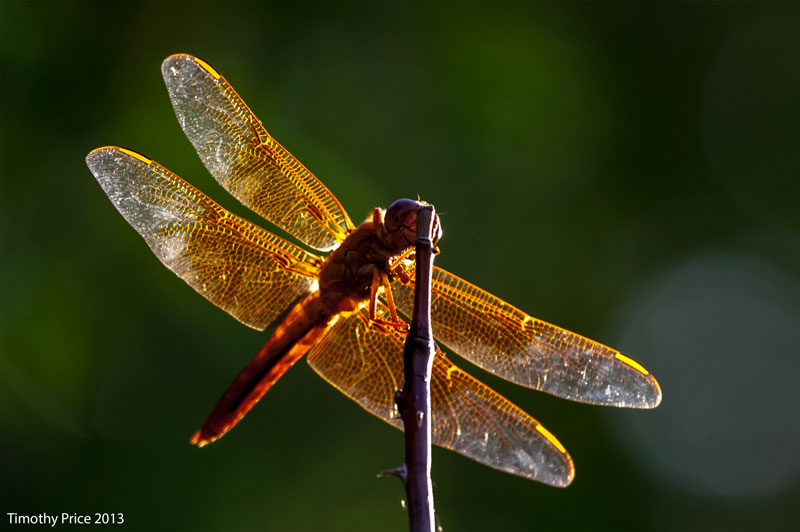
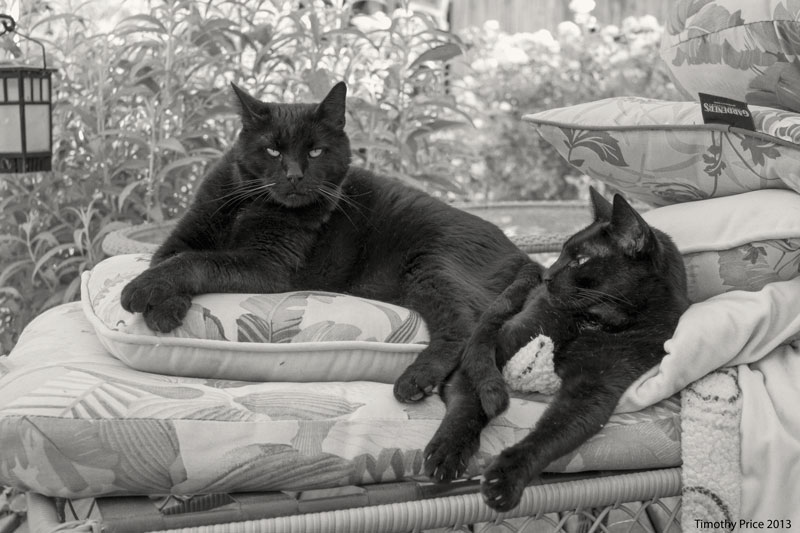
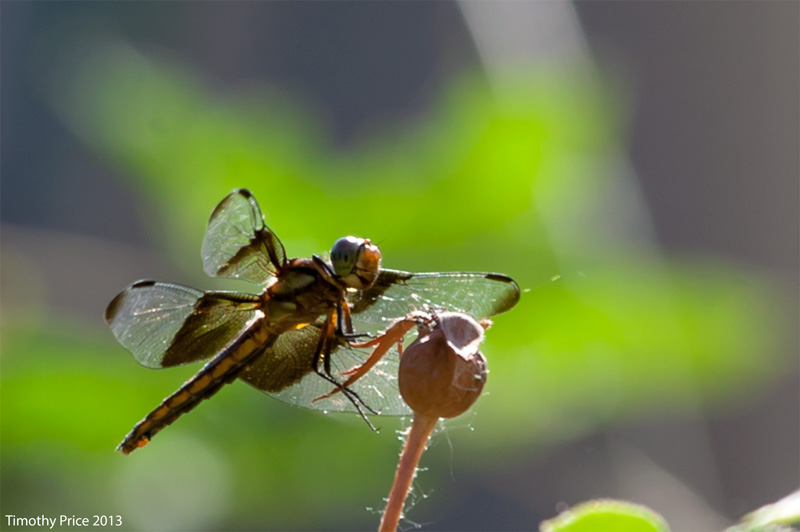
A happy dragon fly was flitting around this morning. We did a lot of yard work today. Can you find six differences between the 2nd and 3rd photos? Rosencrantz was sitting in the window by the front door wanting in, but I was on the deck. Instead of going through and letting him in, I photographed him through the glass in the door to the sunroom. He finally gave up and walked around the house to join us on the deck and lay on the table with Guildenstern.
France Day 28 Of Art and Architecture
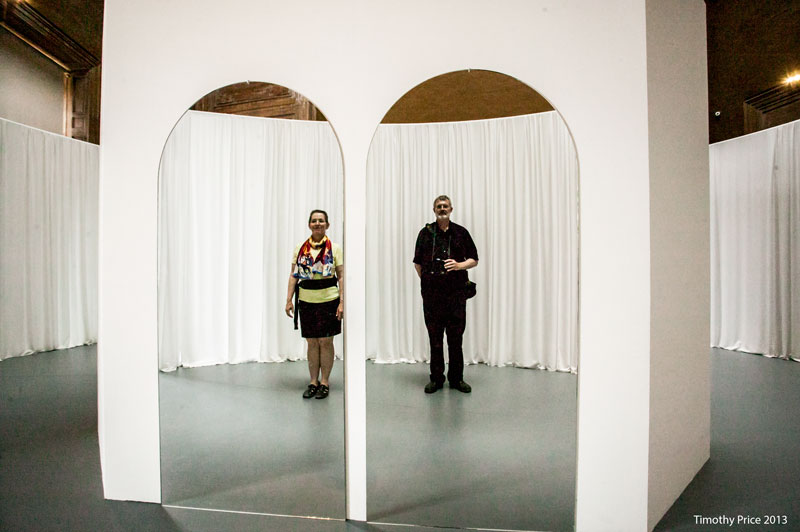
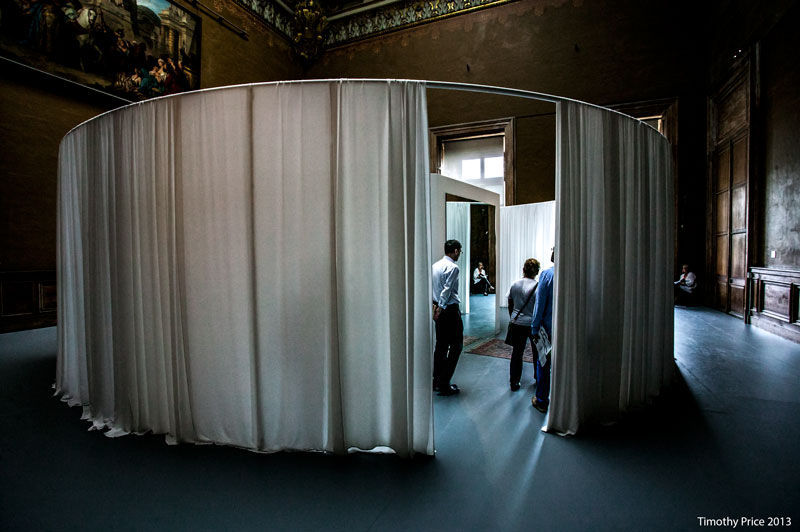
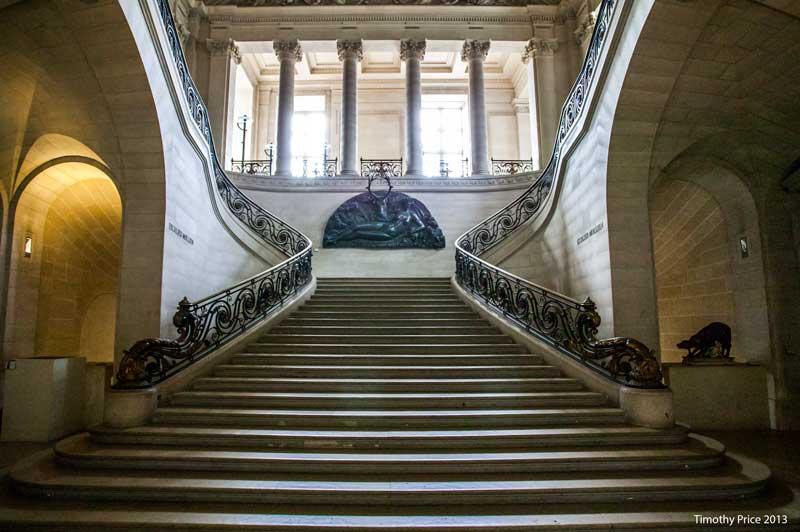
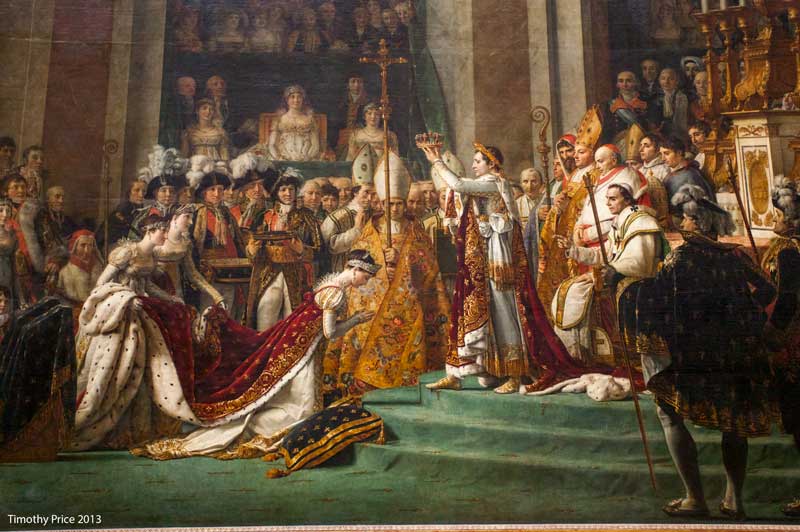
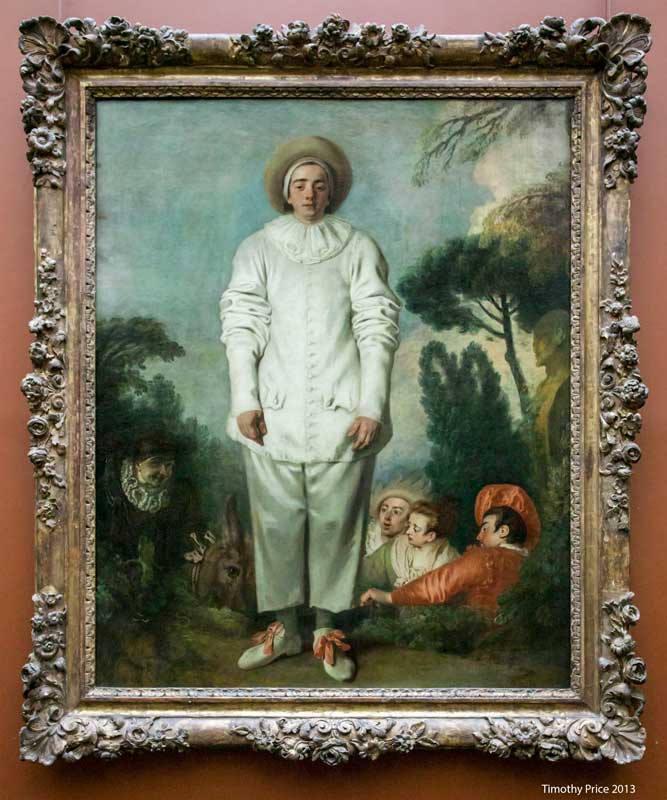
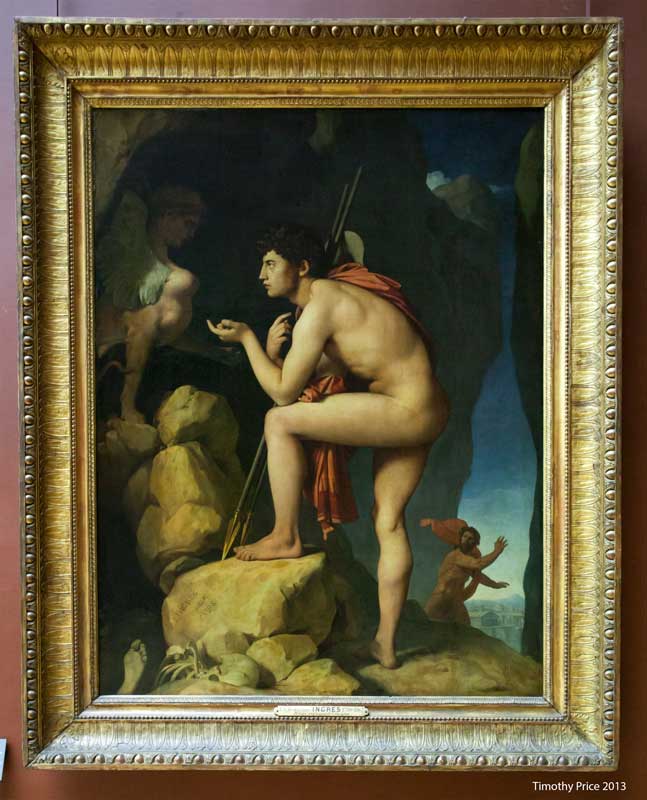
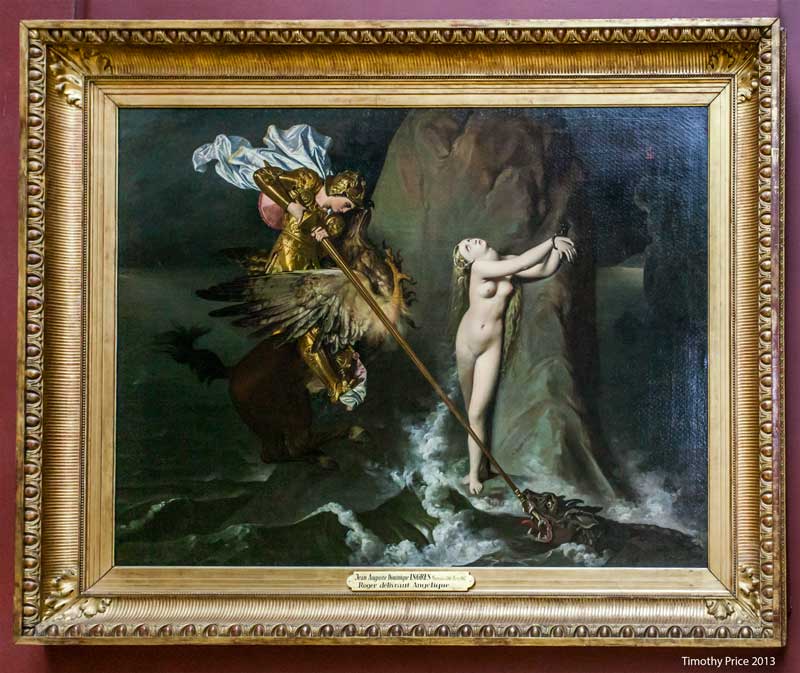
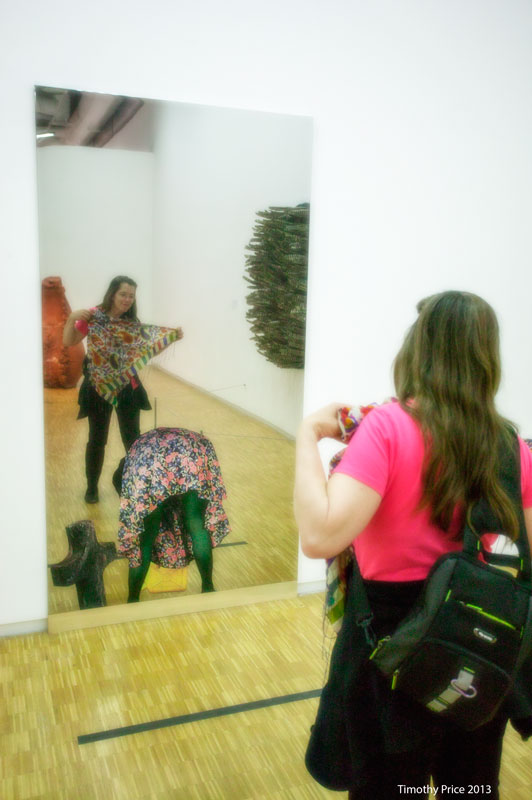
One project of Henry IV was to extend the Louvre along the right bank of the Seine and join the Louvre to the Palais des Tuileries (the Palais des Tuileries was destroyed in the upheaval of the Paris Commune in 1871). The resulting addition was more than a quarter mile long and 100 feet wide making it the longest edifice in the world at the time. After the addition was completed Henry invited artists to live and work in the spaces on the lower floor, a tradition that continued for 200 years until Napoleon III put a stop to it. Today King Henry’s addition is part of the Denon Wing that houses a lot of the permanent collection, including the Mona Lisa. We made another trip to the Louvre yesterday afternoon, and the photos today include interiors, staircases, ceilings and selections of artwork from the French master’s in the Sully Wing (oldest remaining section of the Louvre) and the “Grand Format” paintings in the Denon Wing. I also included photos of two more installations by Michelangelo Pistoletto near the “Grand Format” paintings. The first one (2nd photo) shows Laurie and I in the mirrors that represent the Law (Judaism) in an installation that represents the four major world religions. The second one (4th photo) shows the world religion installation from its outside, and the third Pistoletto is the last photo in the series.
France Day 27 The Assassin
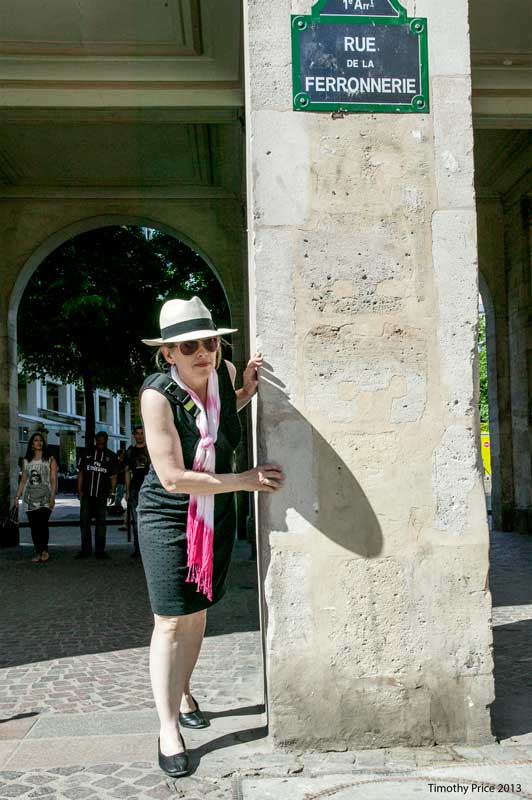
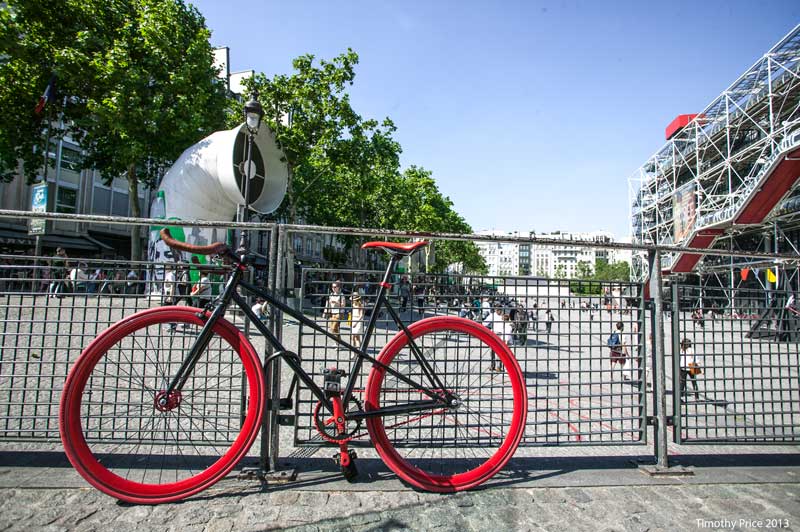
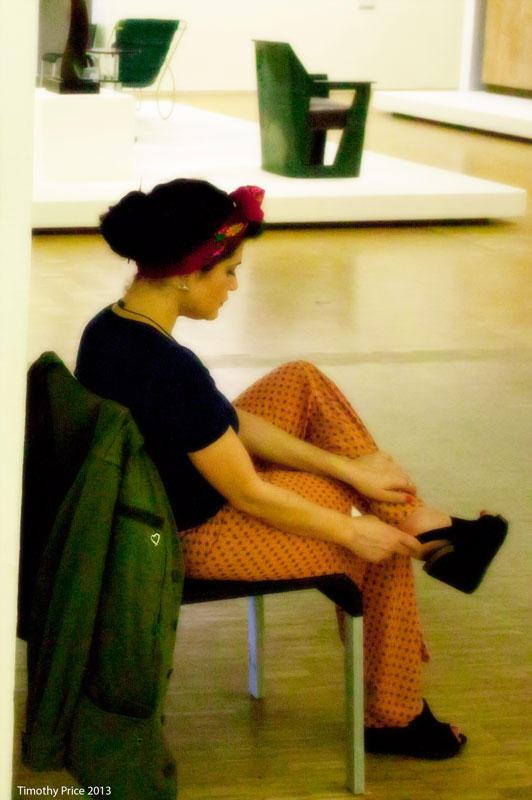
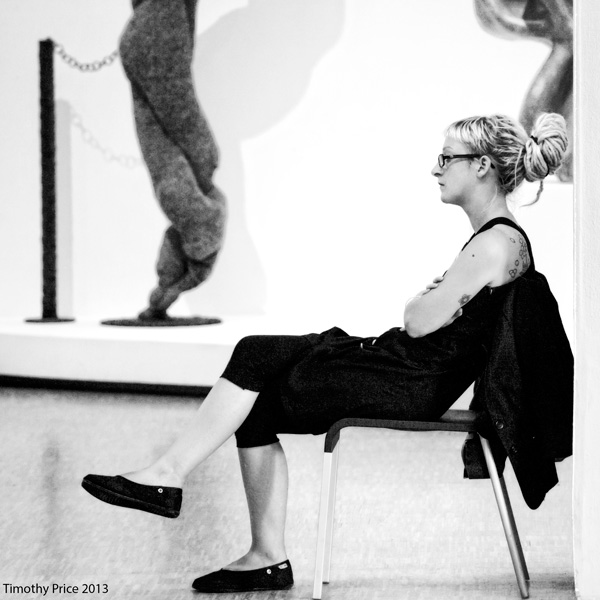
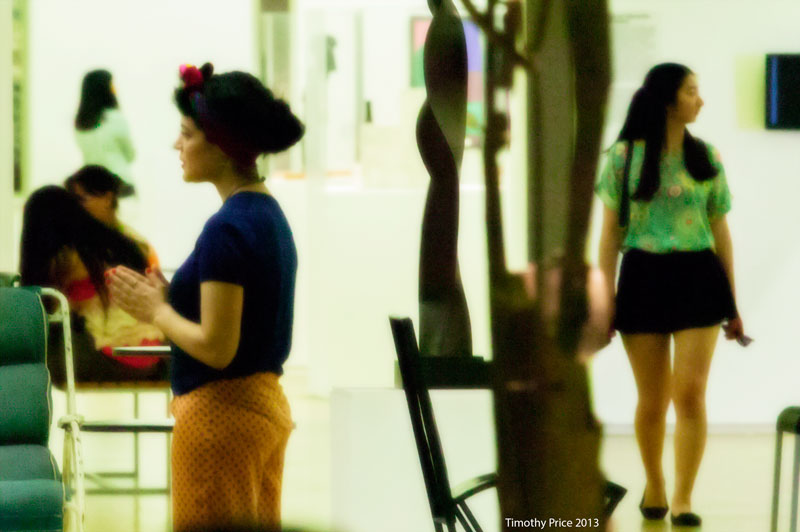
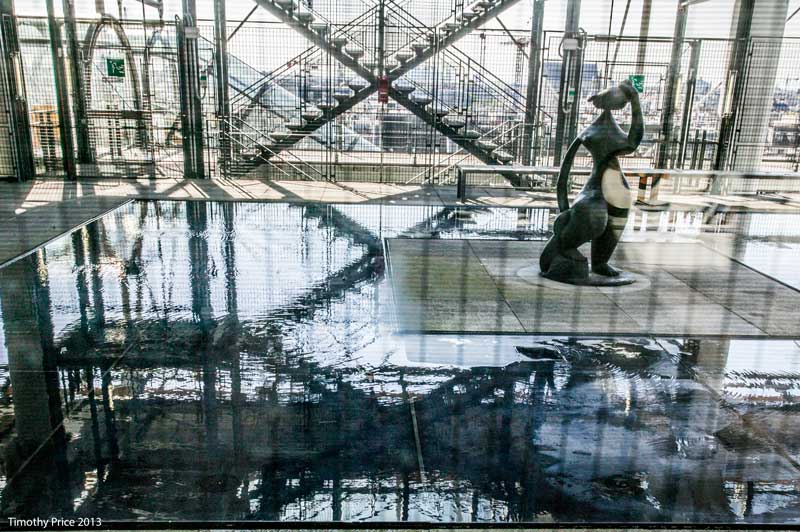
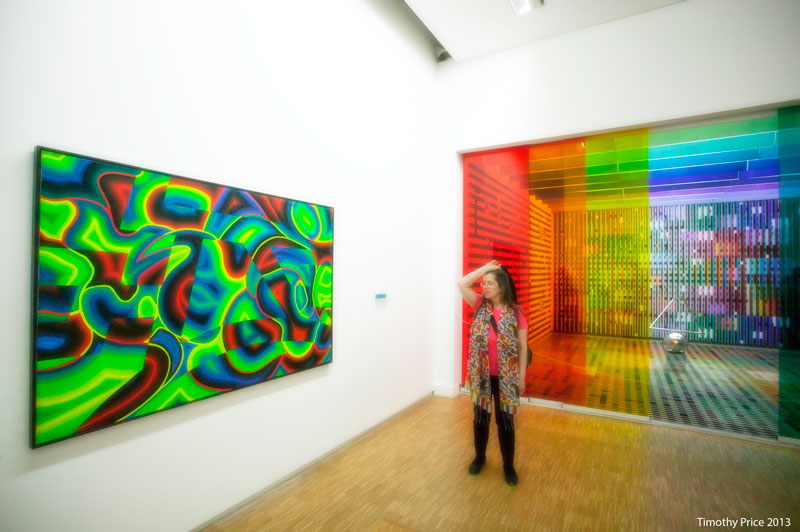
On our way to the Center Pompidou, we found Rue de la Ferronnerie, the street Henry IV was assassinated on. The Louvre has its contemporary elements, but they are very formal compared to the Pompidou, whose skinless superstructure is as much of a bike locked to a fence as it is a building. I also notice that once you are in the gallery spaces inside the Pompidou, you and everything else in those spaces become part of the art and exhibits: the guards who watch the exhibit spaces in their informal dress and hairstyles, the visitors, the views, the elements of the building, the sculptures and the paintings all interact to make the Pompidou a dynamic, contemporary art space.
While the Pompidou works well as a contemporary art space, it’s not the best when it comes to circulation and comfort — especially the tubes on the west side of the structure that contain the escalators that give people access to the different levels of the building. They look cool from the outside, but the are very hot, and not much fun to be in on a sunny afternoon.
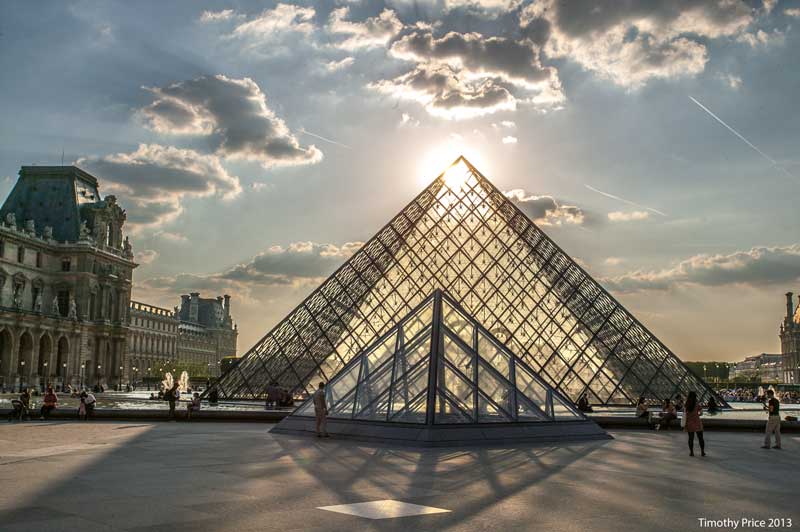
The second and last photos are contemporary elements of the Louvre — the light structure of the pyramids and the heavy X of the escalators are so well ordered and formal compared to the pipes, cables and tubes that make the Pompidou look rather a mess.
France Day 25 Of Men and Modernity
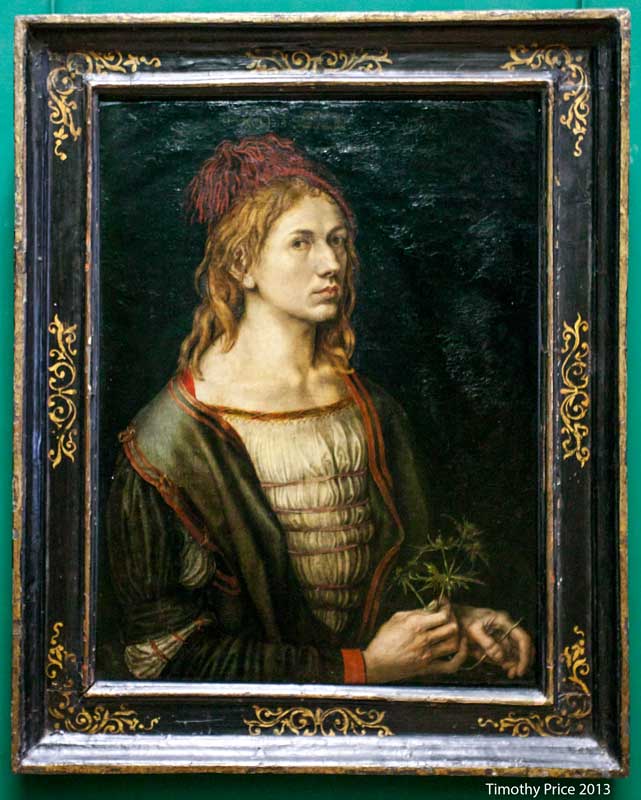
While going through the 15th and 16th century paintings from the Netherlands and Germany in the Richelieu wing of the Louvre, I started looking at the many portraits of men and wondered if I could find a painting of a man similar to the Mona Lisa. The problem with most portraits of the period is that the subjects tend to be in a detached, documentary pose and are rarely looking at the viewer. I was about to give up on the idea, but then I came across a self portrait of Albrecht Dürer which struct me as Mona Lisa-like. It was Dürer’s first painted self portrait, done when he was 22 years old and most likely to be sent to his fiancée, Agnes Frey. A marriage had been arranged for Dürer while he was living with his brother in Basel in 1493, and Dürer and Ms. Frey were married upon his return to Nuremberg in 1494. While Dürer’s self portrait predates Mona Lisa by about 10 years, he paints himself in a similar pose and light, and he engages the viewer with his direct eye contact and pleasant countenance. I may find other male Mona Lisa’s, but so far Dürer’s self portrait is the front runner.
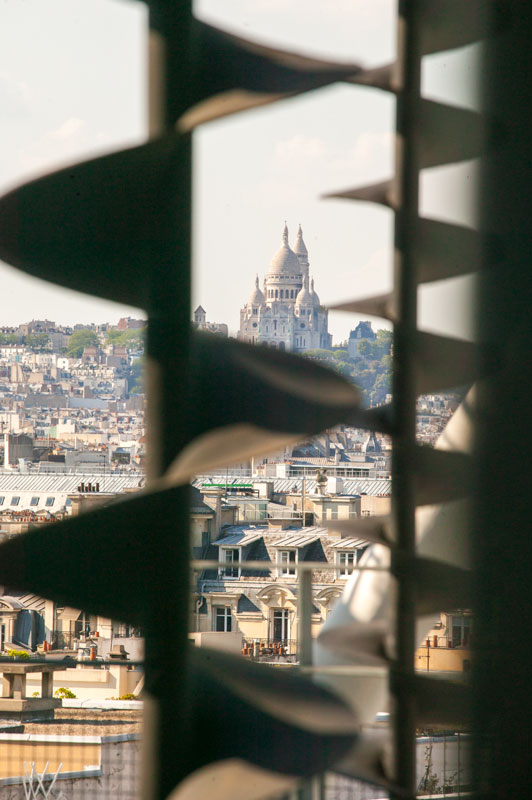
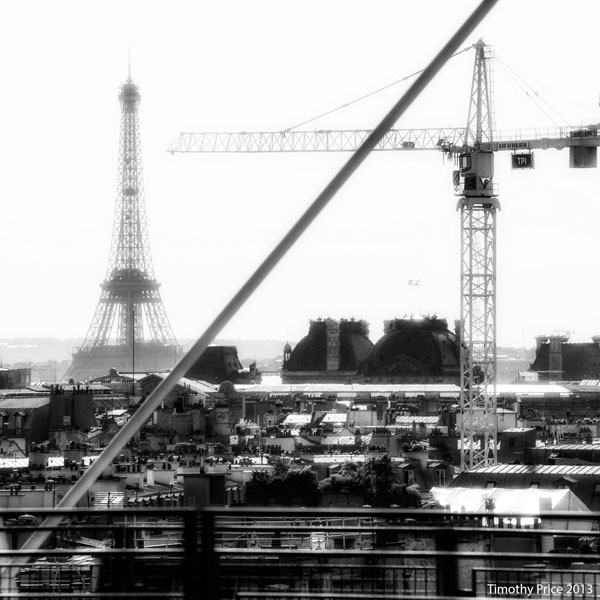
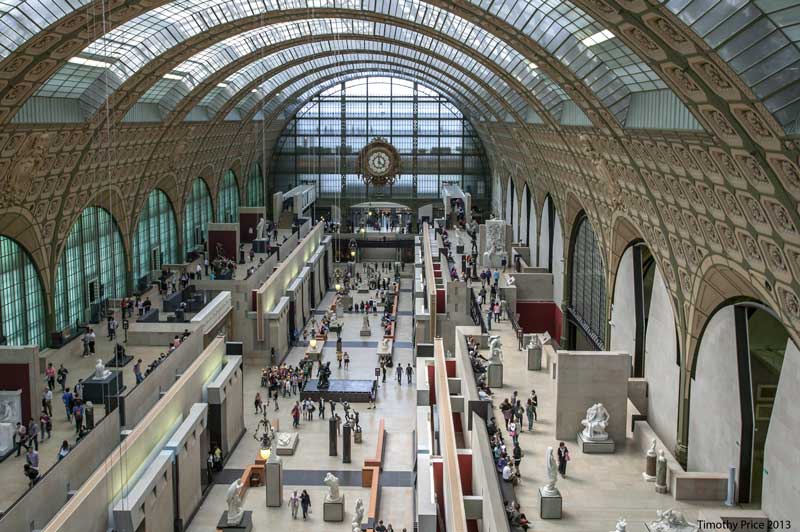
After the Louvre we went to the Musée l’Orsay, which is an old train station converted into a museum. Photographs are prohibited in the Orsay, but I managed to get a shot of the inside and the shot through the clock looking at the northern skyline of Paris. One commentator described train stations as being secular cathedrals to modernism with the clocks being their alters. In the evening we went to the Center Pompidou, and looked at the modern art. It’s interesting to go from the Louvre and Orsay’s formal, hands-off settings to the Pompidou’s modern, more interactive environment. You get a nice view of the Paris skyline from the Pompidou and the last photo with the Eiffel Tower in the distance is from the 4th level inside the Pompidou.
France Day 11 Arles Roaming Where The Romans Roamed
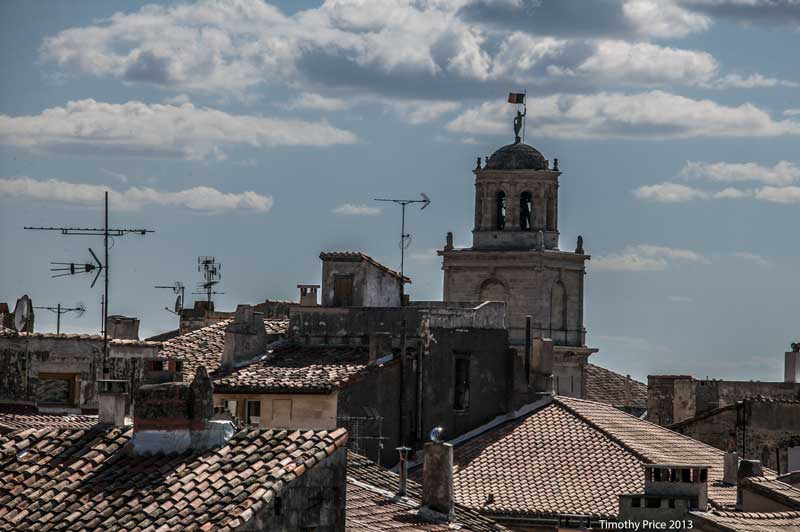
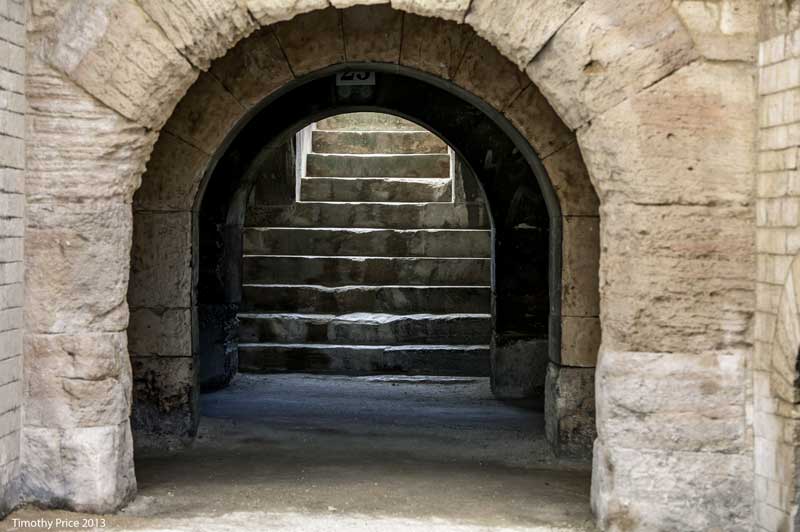
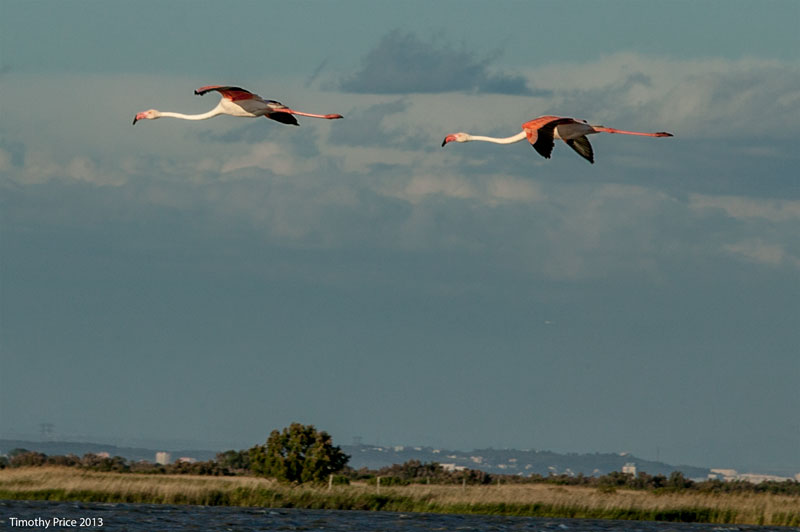
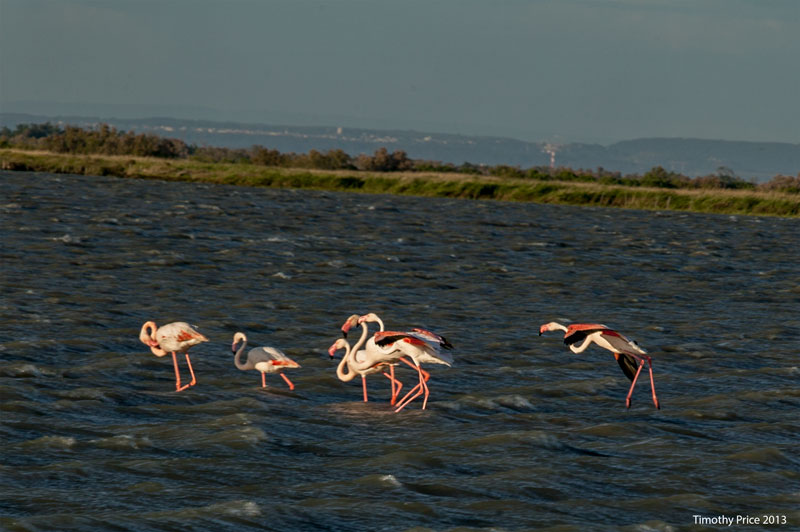
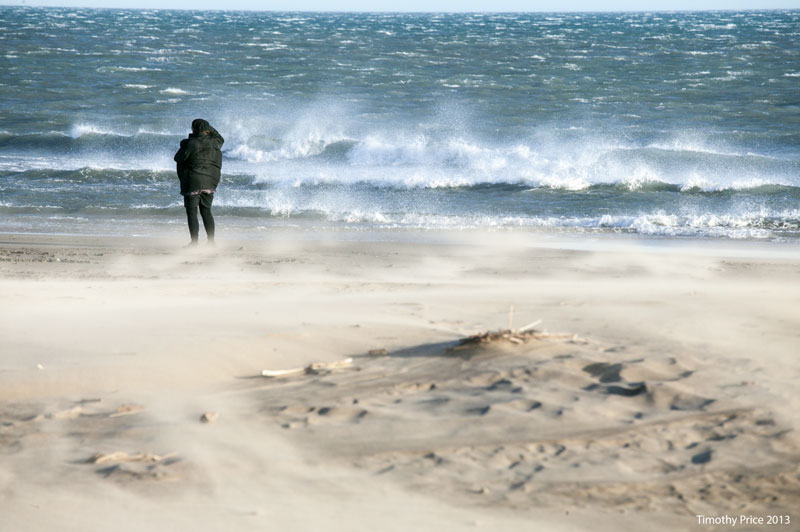
We went to Arles yesterday where there is a lot of really well preserved Roman ruins, Arles has a lot of interesting old architecture as does all the old cities in Provence. After Arles, we drove down the Rhone peninsula to a little strip of beach. The area is a large nature preserve with flamingos. The wind blew hard all day and is was really strong on the peninsula — it was so strong that I was having trouble getting clear photos of the flamingos.
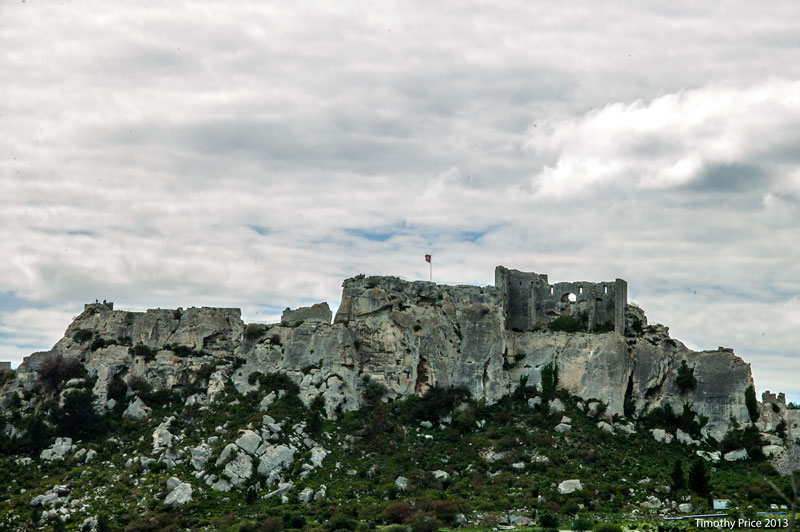
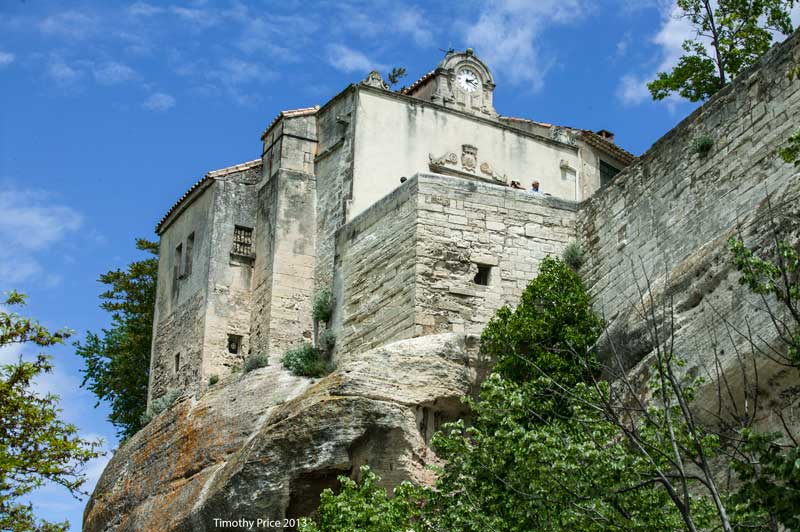
France Day 10 Les Baux de Provence
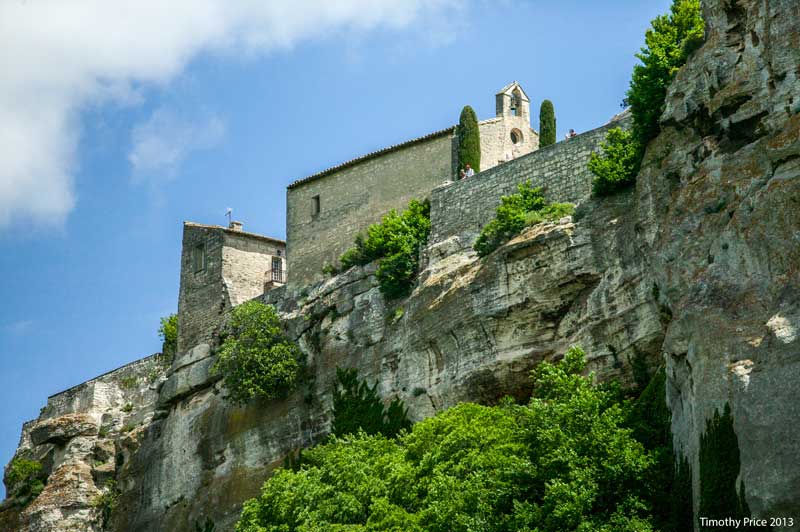
Yesterday was a free day, so we did laundry, then our hostess drove us to the TGV station where we got our tickets back to Paris on the 28th and where we picked up a rental car for the rest of the week. After talking to locals and getting recommendations of places to see, Laurie and I decided we needed to rent a car so we could get out in the countryside and really explore the area. So we are still going to the same places as the class, but we are going to do a lot more exploring. After we picked up the car, we drove out to Les Baux de Provence, an old fortified city built on top of a rock at a pass in the hills, which was highly recommended. You can only get there by car or hired tour bus.
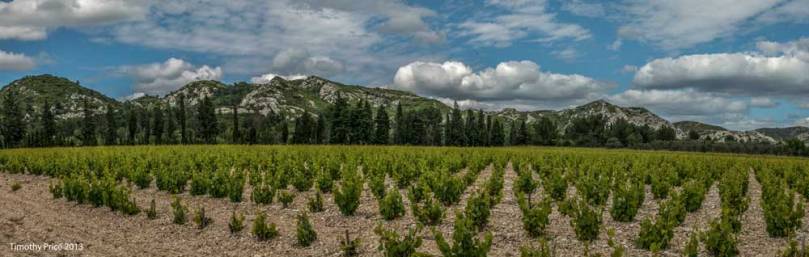
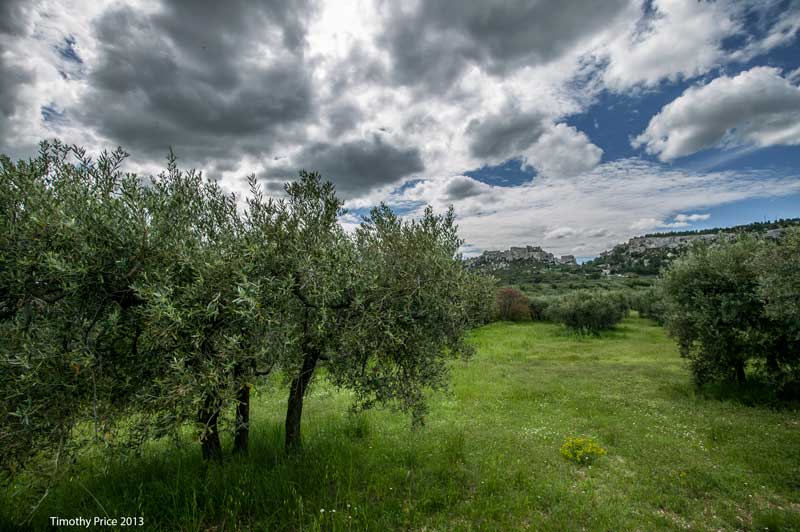
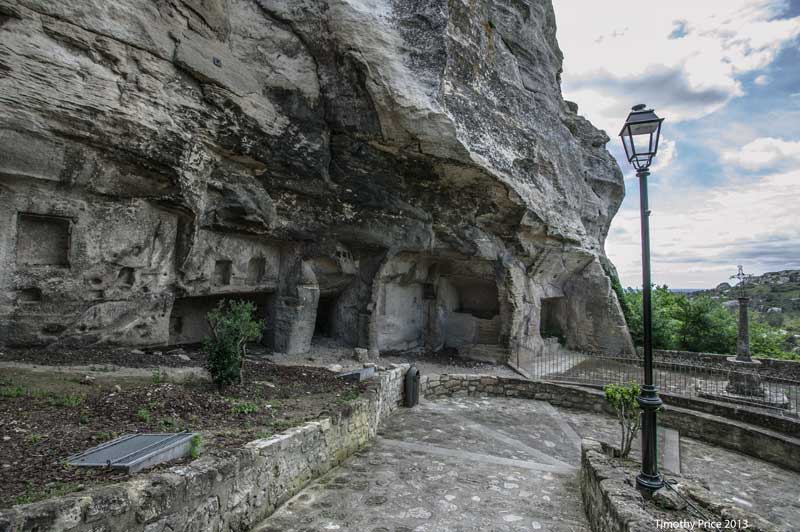
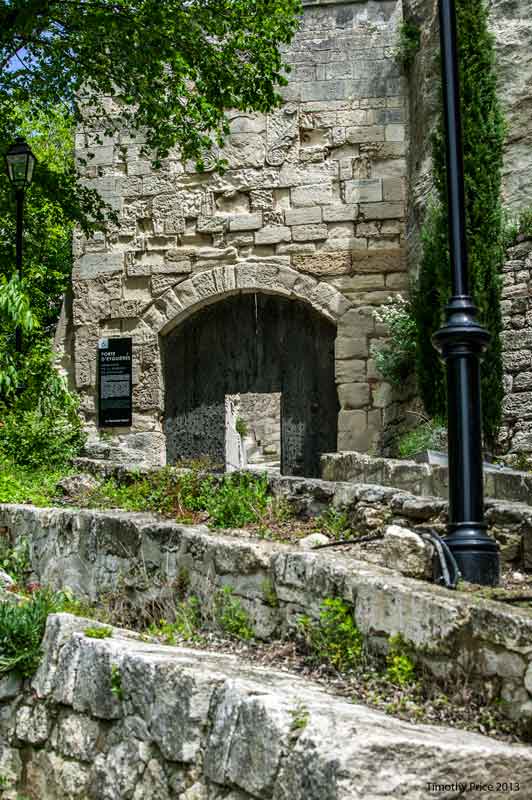
Baux is a popular village. There were a lot of people visiting the village, a lot of large groups of bicyclists slowly making their way up the hills into the city, and lots of tour buses. We parked in the village in the valley below Baux and walked up on the the stone stairways that brought us to gate 6. Just below the gate there were areas where buildings had been built into the rock that were now just cutouts in the rock that reminded us of the cliff dwellings at Bandelier National Monument. We were going to go into the old fort that would have given us access to the highest points on the ruins of the old fortification, but two or three groups of about 100 schools kids were going in, so that slowed down the process of getting in, and we had limited time as we had to get back by 6:00 at the latest for cooking class.
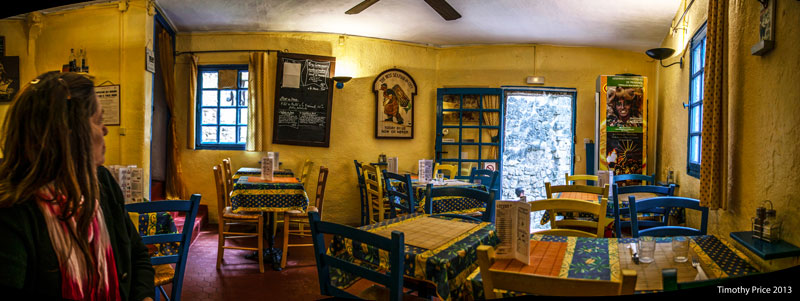
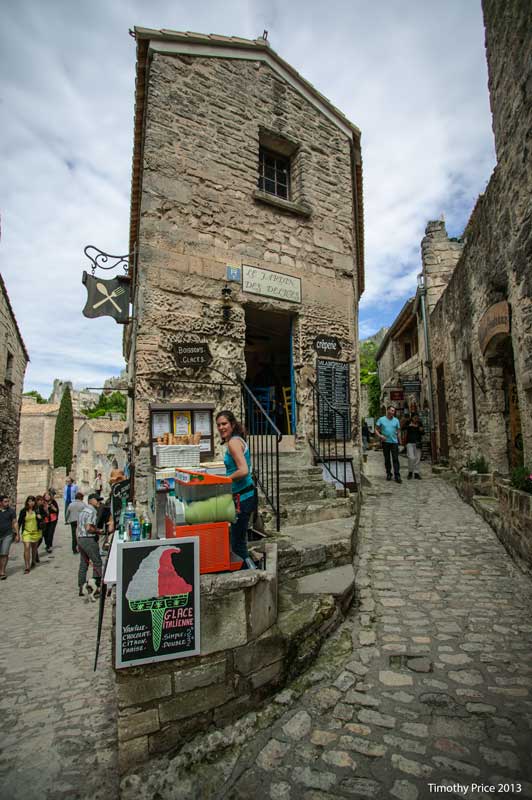
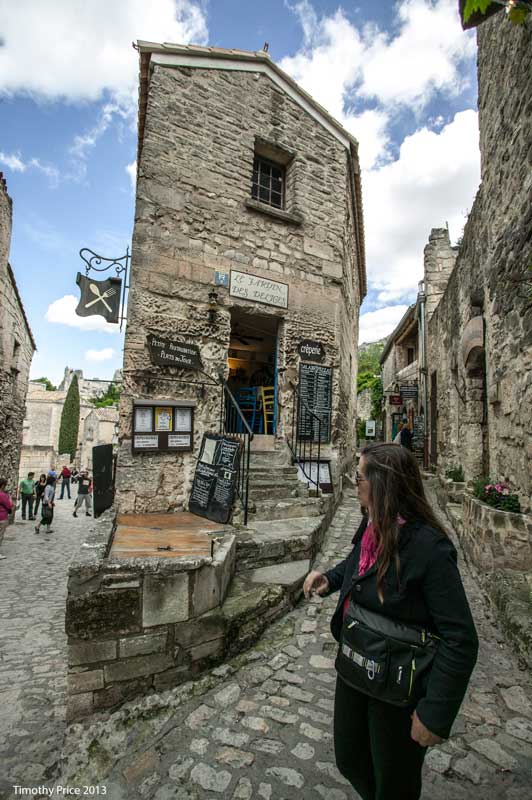
There are a lot of shops and restaurants tucked into odd shaped places and on terraces. We ate crepes in the narrow, almost triangular building (photos 7, 8, 9). It was pretty late so we and another person were the only people in the restaurant. The crepes were excellent and while were eating, the waitress and cook where busy bringing things in and taking things out the door. When we left, they had set up an ice-cream machine and slush machines and had a soft drinks available on the street. The weather was cool, but I’m sure when all those kids came back through after touring the fort, she would get a lot of business.
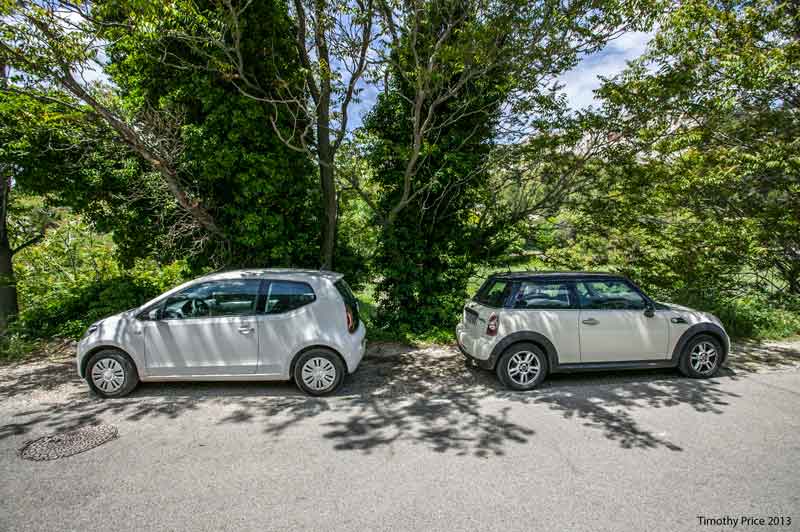
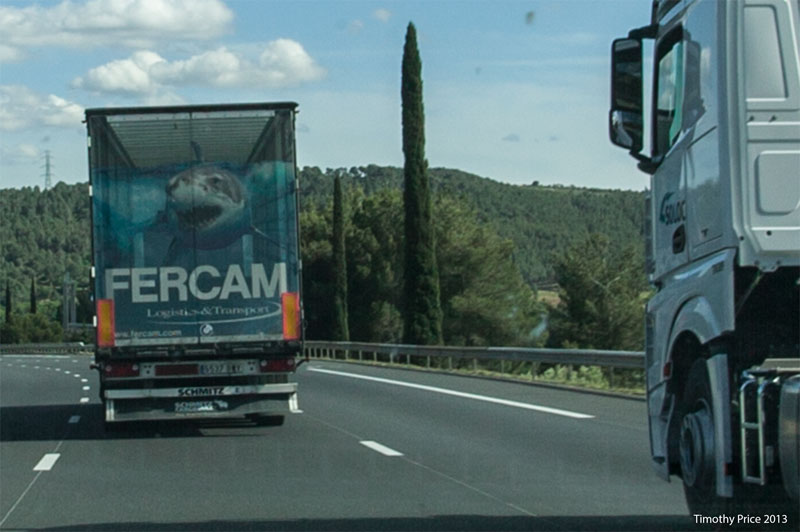
We also stopped and explored some of the vinyards and olive groves along the way, and I got my first French drive-by photo of the shark on the truck — the drives can be quite wild in France, but drivers seem quite wild everywhere. BTW we are driving the VW Up! to the left of the Mini Cooper in the second to the last photo.