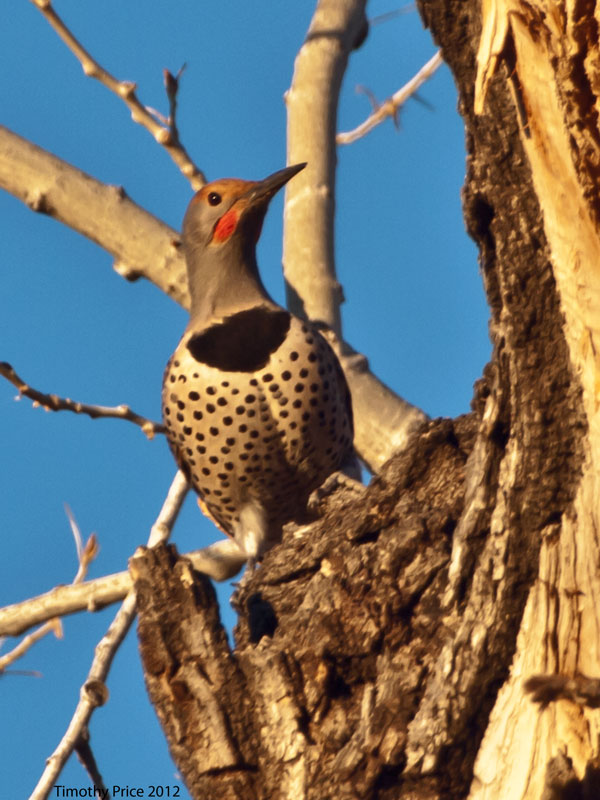
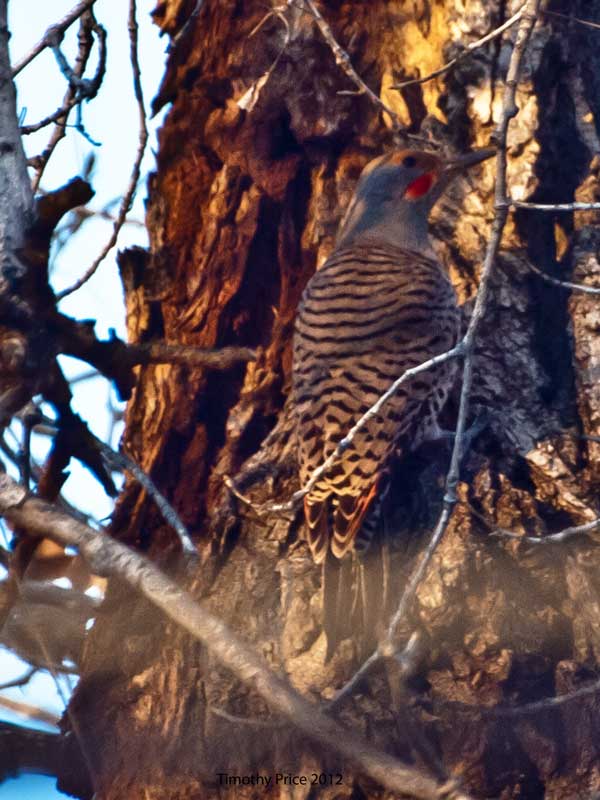
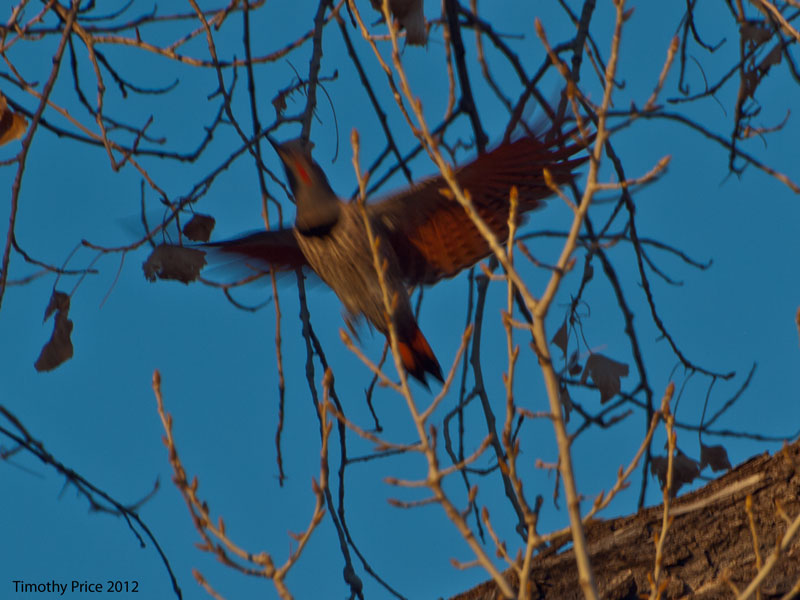
What I always thought of as a woodpecker turned out to a Red Shafted Flicker, which is about the size of a common dove, and has a dove-like appearance. Unlike a dove, that will sit perfectly still on a branch or power line, this flicker flitted and hopped around the cottonwood tree searching for food for a few minutes before it flew to another branch or different tree. After doing a little research, I’m surprised this flicker is this far north this time of year. According range maps of the red and yellow shafted flickers, they breed in Canada in the spring, can be found throughout the continental US during the summer months and spend the winter months in Texas and Mexico, southwestern Arizona and Eastern California. This one was quite active in the cold rays of the late afternoon sun.
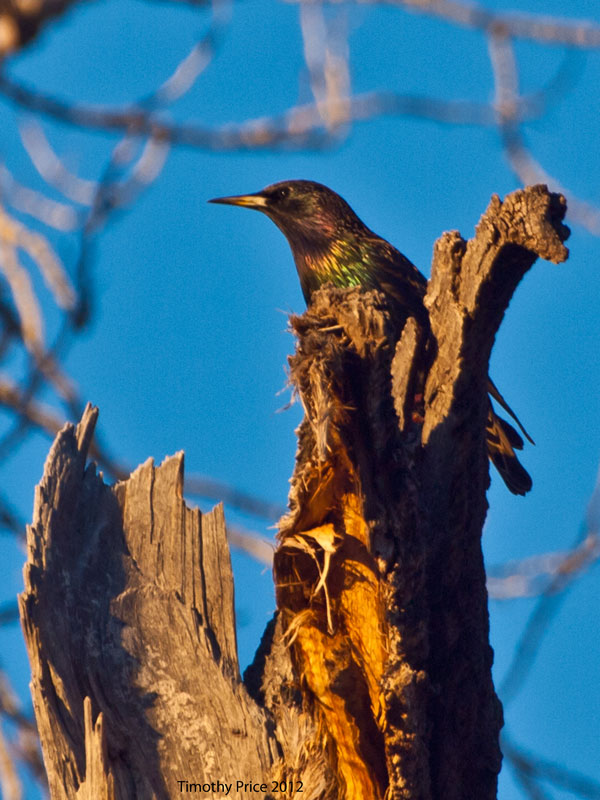
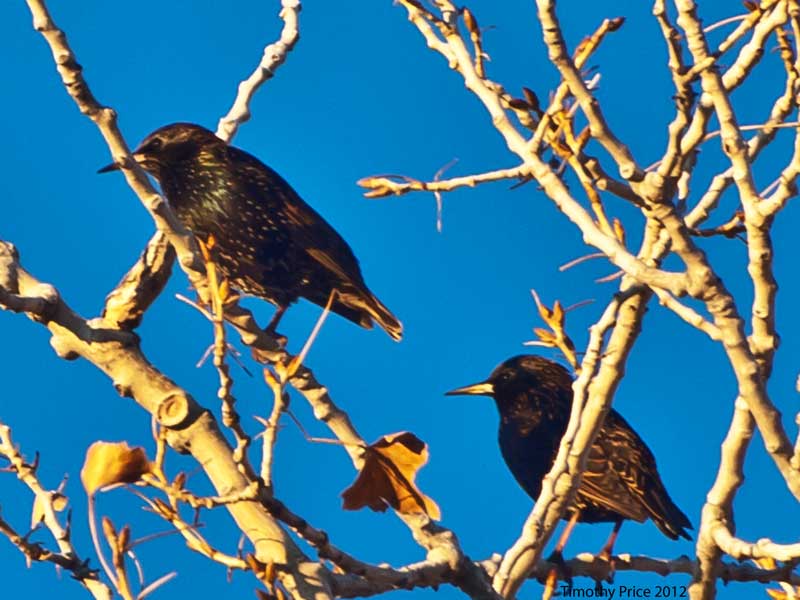
The European Starlings pictured below the photos of the flicker are common to the area and range throughout the continental US year-round. I believe they are considered pests in many areas, but they seem to prefer to stay in the top of the cottonwood trees around us. I discovered they have a nice iridescent sheen in the low afternoon sun, which I couldn’t see with my naked eye from 60 to 70 feet below their perches.
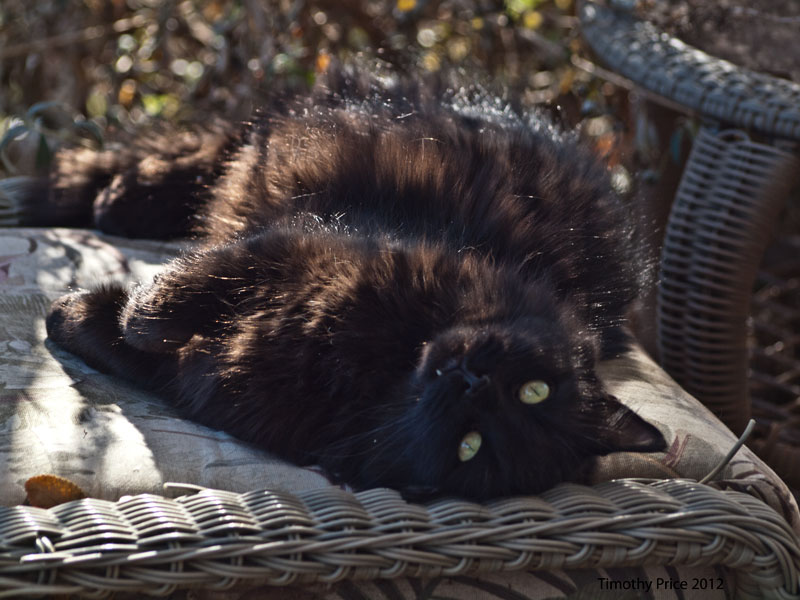
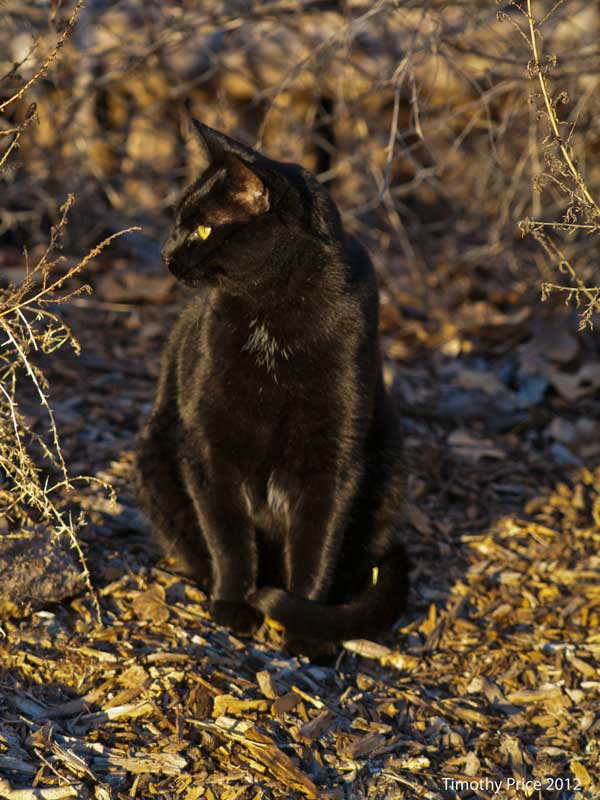
Puck likes to lay out on one of the ottomans on the deck and catch the rays that filter through the leafless trees and find their way under the canopy. Rosencrantz followed me around while I was photographing the flicker and starlings and talked to me the whole time. I think he was trying to tell me that the birds where out of reach. When I finished with the birds, I started walking back to the house, turned to look for Rosencrantz and saw him seated in a sunbeam watching Puck who was slinking around in the garden.
 Off Center & Not Even